Dutch Customs and the West Bank Settlement Goods Ban: Scope, Timing, and Importer Checks
 Import Export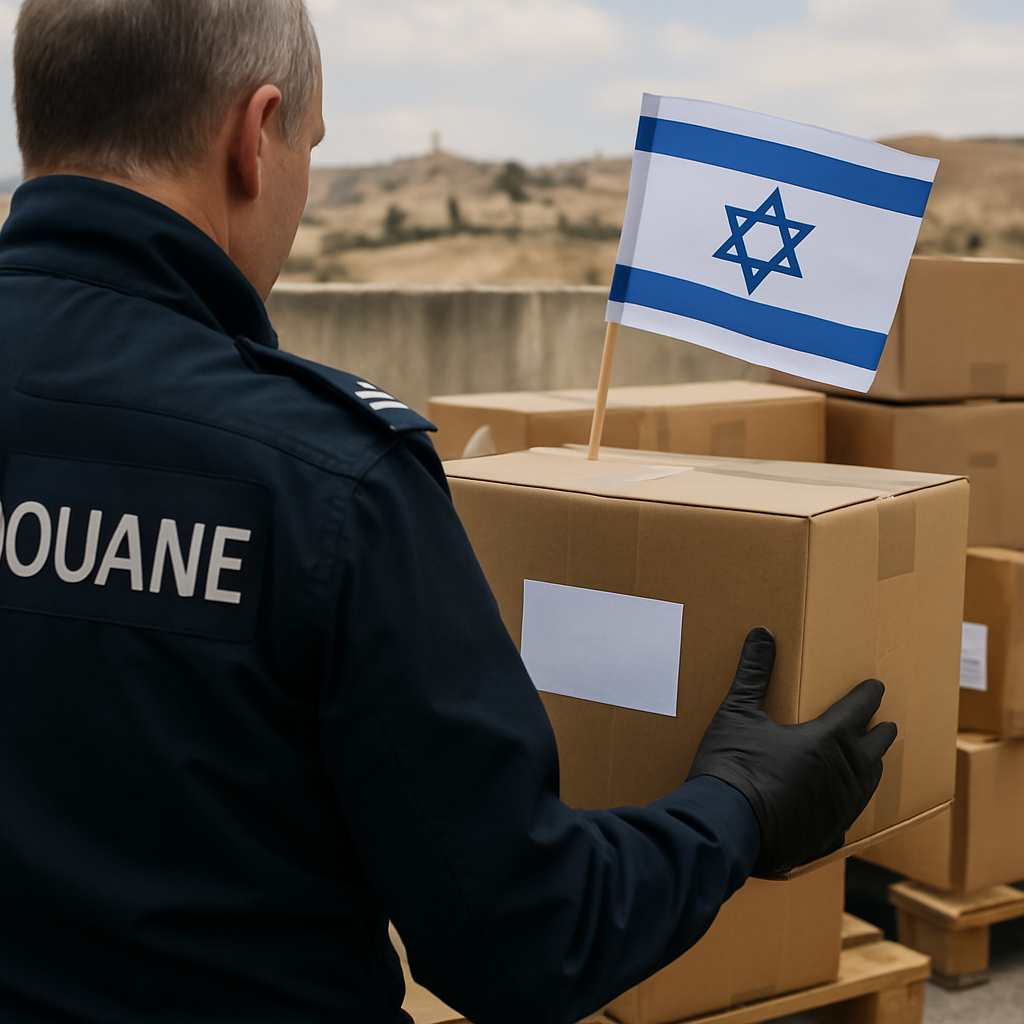
Reporting on the Dutch customs and West Bank goods ban describes a goods-focused Dutch restriction on trade involving products from Israeli settlements in occupied Palestinian territories. The supplied reporting specifically identifies settlements in the West Bank and the Syrian Golan Heights. It does not support describing the measure as a ban on all Israeli products. For importers, sellers, and logistics providers, the durable compliance issue is therefore the product's actual production or obtaining location, supported by reliable records, rather than broad marketing descriptions or a label alone.
The legal and operational position should be checked against the enacted Dutch measure and official implementation guidance for the particular transaction. The materials available for this article do not include the final legal text, a Dutch Customs notice setting out an enforcement process, an affected HS-code list, or a prescribed evidentiary standard. This guide explains the reported scope, the distinctions that matter in supply-chain controls, and a prudent screening process. It is not a substitute for written official guidance or transaction-specific legal advice.
What Is the Reported Dutch Ban on West Bank Settlement Goods?
According to reporting by Anadolu Agency, the Dutch Council of Ministers approved a measure on 22 May 2026 to ban trade in goods from Israeli settlements in occupied Palestinian territories. That report identifies the West Bank and Syrian Golan Heights and describes the measure as applying to goods. It also reports that a broader restriction on services and investments remained under review.
Later Al Jazeera reporting on a related legal challenge described the ban as announced in July, due to take effect on 22 September, and intended to run for three years. These are different milestones: reported cabinet approval, announcement, planned commencement, and active enforceability are not interchangeable. Anadolu Agency further reported that the three-year period could be extended or amended through legislation.
The available sources do not establish whether the planned commencement occurred exactly as reported, whether it was stayed or altered by litigation, or what Dutch Customs procedure applies to a specific consignment. Importers should not treat a news report as proof that a shipment will be admitted, detained, released, or penalised in a particular way.
What the available reporting supports
| Question | Careful answer from the supplied material |
|---|---|
| Is this a ban on all Israeli goods? | No. The reporting describes a measure directed at goods from settlements, not all goods marketed as Israeli or originating in Israel. |
| Which territories are supported by the live sources? | The West Bank and Syrian Golan Heights are specifically named in the supplied reporting. |
| Does the evidence establish an East Jerusalem scope? | No. Some search-result wording is broader, but the supplied live sources do not independently establish that scope for this guide. |
| Does the evidence establish rules for services or investments? | No. Anadolu Agency reported that broader services and investments restrictions remained under review. |
| Has Dutch Customs published a settlement-specific process in the supplied material? | No. The supplied official Customs page is general sanctions and strategic-goods context, not implementation guidance for this measure. |
Other operational edge cases also remain unresolved in the available authoritative material. Do not assume the treatment of purchase and resale, products partly obtained in a settlement, mixed-origin or processed goods, stock already in the Netherlands, transit, bonded warehousing, free-zone activity, re-export, penalties, seizures, appeals, or product categories without checking the applicable legal text and official guidance.
Origin Labelling Is Not the Same as Permission to Trade
A central compliance distinction is between an origin-labelling obligation and an outright trade restriction. Al Jazeera reported that EU rules have required goods from settlements in the occupied West Bank to be labelled with origin Palestine rather than as a product of Israel, while the EU had not imposed an outright bloc-wide ban on trading with settlement goods. A national Dutch goods restriction, if applicable to a transaction, is a separate question from what appears on a product label.
That distinction matters because labels can be incomplete, commercially imprecise, or inconsistent with the underlying production chain. Conversely, a product's broad Israeli association does not itself demonstrate that it came from a settlement. The practical enquiry is more specific: where was the item produced, grown, manufactured, extracted, or otherwise obtained, and what evidence supports that answer?
Normal customs-origin documentation and commercial documentation may help, but the supplied research does not provide an official Dutch standard proving production location for this measure. A certificate, supplier declaration, invoice, or label should therefore be assessed in context rather than assumed to settle a settlement-location issue by itself.
What Importers, Sellers, and Forwarders Should Check
Until authoritative Dutch implementation material sets out a definitive procedure, businesses can use a conservative, repeatable due-diligence workflow. This is prudent risk management, not a Dutch Customs-mandated checklist or a substitute for legal advice.
- Identify the product and producer. Record the SKU or product description, manufacturer, grower, processor, exporter, and any trading company involved. A brand name, distributor address, or country selected in an online marketplace is not enough.
- Map the actual production or obtaining location. Determine where the goods were made, grown, extracted, harvested, or obtained. For processed goods, map material inputs and processing steps sufficiently to identify whether a settlement connection may be relevant.
- Obtain supplier evidence before shipment. Ask for a clear origin and production-location declaration, supported where available by manufacturing records, farm or facility details, traceability records, invoices, packing lists, and product labels.
- Reconcile the transaction documents. Compare the purchase order, supplier declaration, commercial invoice, packing list, transport documents, customs data, and labelling. Investigate differences in producer name, address, place of production, product description, or quantities.
- Retain an auditable file. Keep the documents, your enquiries, supplier responses, screening result, escalation decisions, and approval or hold decision together. A later review is much easier when records show what was known and why a decision was made.
- Isolate potentially affected goods. Where a credible settlement link is identified or cannot be resolved, separate the stock operationally and prevent import, sale, purchase, or onward distribution until the issue is reviewed.
- Escalate uncertain cases before acting. Seek written guidance from the relevant Dutch authority or customs representative and qualified trade counsel. Do not rely solely on media reporting, a label, or an informal assurance from a supplier.
Businesses seeking to make this process repeatable can review systems for screening import transactions. The objective is not merely to collect documents, but to identify exceptions, inconsistencies, and missing evidence before goods move through the supply chain.
Traceability should support, not replace, legal analysis
Traceability tools can make it easier to connect a finished product to a producer, facility, shipment, or source record. They do not, by themselves, determine legal origin or establish whether a restriction applies. For further background on the recordkeeping side of this work, see our guide to supply-chain traceability and origin records.
Larger importers may also embed supplier questionnaires, documentary checks, approval controls, and exception holds in a compliance platform. Our overview of customs-compliance software for screening workflows explains considerations for system-supported controls. Technology can improve consistency, but it cannot supply missing production-location evidence or resolve an unclear legal scope.
When to Pause a Transaction
A pause is generally the safer operational response when information indicates that goods may be linked to a settlement, but the facts or legal scope are unclear. Common triggers include a producer or facility address in a potentially affected area, supplier documents that identify Israel only without a production location, conflicting labels and invoices, unexplained changes in exporter or manufacturer, or a supplier unwilling to provide location evidence.
Pausing a transaction does not mean that goods have been seized, rejected, or found non-compliant. It is an internal risk-control decision while the importer verifies the facts and obtains advice. This distinction is important: an internal hold, a carrier delay, a customs query, and a formal customs action are different events with different consequences.
Where professional support is needed, it is useful to understand when to involve a customs broker or freight forwarder. A broker or forwarder may assist with documentation and customs communications, but neither should be expected to provide legal conclusions outside its role. Obtain appropriately qualified advice where the restriction's scope or the goods' location of production remains uncertain.
Dutch Customs, Sanctions Context, and What Is Not Yet Known
The Dutch Customs Central Import and Export Office (CDIU) page provides useful general context. It explains that Dutch sanctions regimes can include trade restrictions and that strategic goods and strategic services can require licences or notifications. However, that page does not state that a CDIU licence applies to the reported settlement-goods measure.
Accordingly, businesses should not invent a licensing, declaration, detention, release, or penalty process from general sanctions information. The available research does not supply an affected HS-code list, a required declaration field, proof thresholds, a transitional-stock rule, or a Dutch Customs procedure for transit and re-export. Those questions must be checked against the final legal instrument and any later official guidance.
EU Context, Legal Challenge, and What Remains Unsettled
The reported Dutch measure should not be confused with an EU-wide ban. Anadolu Agency reported that a broader EU proposal did not secure unanimous backing, and Al Jazeera reported that the EU had not imposed an outright bloc-wide trading ban on settlement goods. The reported Dutch action is therefore a national measure in the supplied material, not proof of a uniform EU customs rule.
Anadolu Agency also reported that the Dutch government intended to seek cooperation with countries including Belgium to strengthen enforcement. That is not the same as evidence that joint enforcement arrangements were in force.
Al Jazeera reported that Christians for Israel and its Israel Product Centre brought summary proceedings against the Dutch state, arguing that a national ban conflicts with the EU principle of free movement of goods. The claim is a litigant's argument, not a legal conclusion. A Ground News aggregation excerpt additionally reported the Israel Product Centre's assertion that it had not been given enough time to sell existing stock. The supplied sources do not establish the outcome of the proceedings, whether implementation was stayed, or any final judicial interpretation.
For commercial context only, Al Jazeera reported an estimate of settlement trade to the EU of up to $400 million a year. It also reported a Global Echo analysis finding that about 30% of identified settlement shipments were destined for, or passed through, the Netherlands. These are reported estimates and findings, not official Dutch Customs statistics. They may help explain why origin verification and recordkeeping matter, but they do not determine the treatment of an individual shipment.
A Practical Decision Framework for Affected Goods
For each potentially affected product, separate the factual question from the legal question. First, establish the best-supported production or obtaining location. Second, compare that result with the territorial and activity scope in the applicable Dutch legal text and official guidance. Third, document the decision and retain the evidence. If any stage remains uncertain, stop the transaction and escalate it before customs entry, sale, purchase, or distribution.
- Clear evidence of an unaffected location: retain the evidence and continue normal compliance checks, while remaining alert to changes in the supply chain.
- Evidence of a possible settlement connection: isolate the goods, obtain further evidence, and seek written guidance or legal advice before proceeding.
- Conflicting or incomplete evidence: treat the origin question as unresolved rather than selecting the most convenient document.
- Unclear legal scope: do not assume that a goods restriction answers questions about services, investments, transit, warehousing, re-export, existing inventory, or mixed-origin goods.
This approach remains useful even if formal rules change because it is based on a durable customs-compliance principle: restrictions tied to location or origin require credible, consistent, and retrievable supply-chain evidence. For the Dutch customs and West Bank goods ban specifically, the decisive details must still come from authoritative Dutch legal and customs material, not from search snippets or press coverage alone.