Can You Import BYD to the USA? Rules, Costs, and Mexico Loophole Limits
 Import Export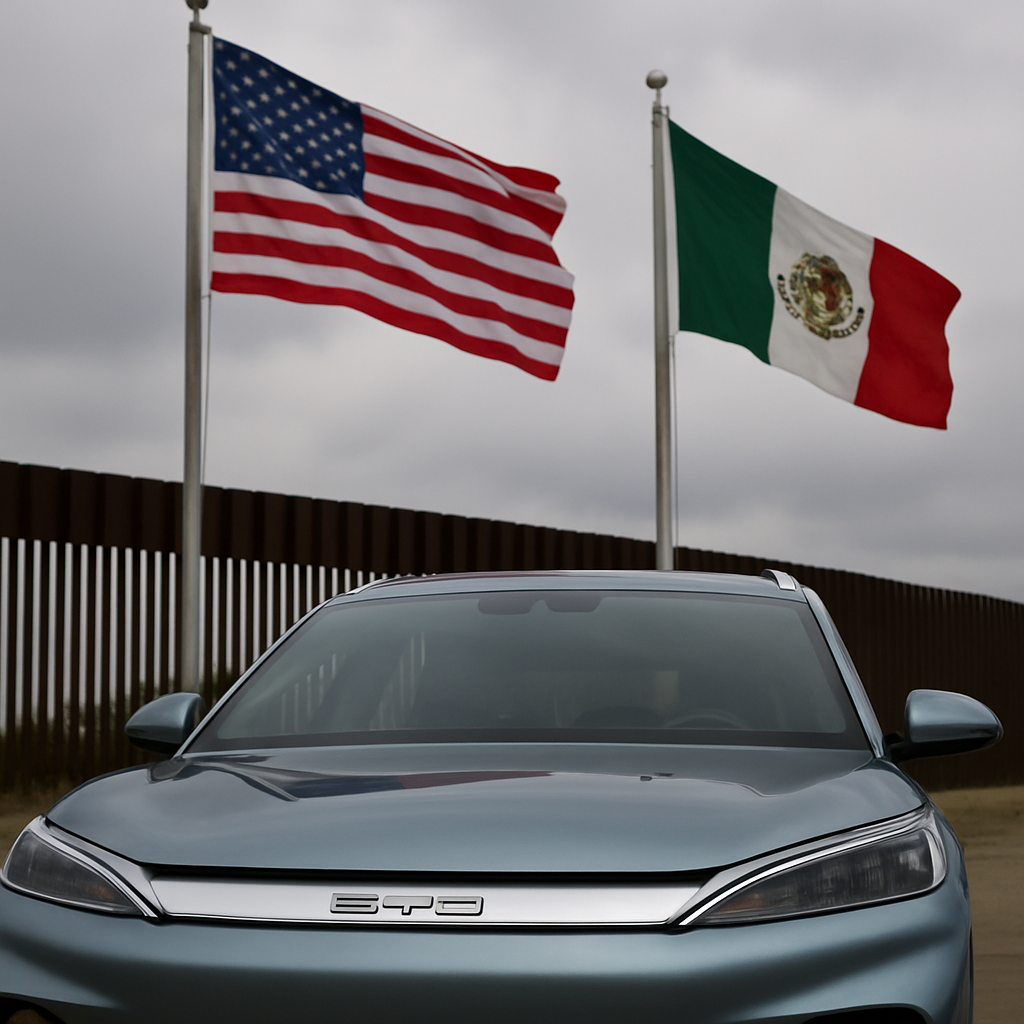
Short answer: not for normal street use, not by simply buying one abroad, and not by assuming a Mexican or Canadian purchase makes it legal in the United States. There is currently no ordinary U.S. consumer path for buying a BYD passenger car at a U.S. dealership, and any newer BYD would still have to clear federal customs, safety, and emissions rules before it could be permanently titled and registered for everyday road use.
If you are asking can you import BYD to USA, the practical answer is that a newer BYD passenger car is usually blocked by a combination of U.S. customs entry rules, NHTSA safety compliance, EPA emissions compliance, and the fact that BYD does not have a standard U.S. consumer sales channel for passenger cars. If you are asking because you saw a BYD in Mexico or heard about BYD EVs reaching U.S. roads through Mexico, that does not automatically mean a normal buyer can permanently import and register the same vehicle in the United States.
Can You Import a BYD to the USA?
For a regular consumer, the answer is generally no for routine U.S. road use. BYD does not officially sell passenger cars through authorized U.S. consumer dealerships, and a foreign-market BYD is not automatically eligible for U.S. title and registration just because it can be purchased overseas. The key issue is not only availability; it is whether the car can satisfy U.S. federal import requirements for safety and emissions.
That means the question is not just “can I find a BYD for sale somewhere?” but “can that exact vehicle be lawfully brought into the United States, cleared by Customs, and then registered for public roads?” For most newer BYD passenger cars, the answer remains no unless a very specific compliance route exists and is arranged in advance. In practice, that is why articles such as Can I Import BYD to the USA? What to Know emphasize tariffs, federal safety rules, and the lack of a normal U.S. sales path.
Why BYD Cars Are Hard to Bring Into the U.S.
BYD cars are not difficult to bring into the U.S. because they are physically impossible to ship. They are difficult because the legal path for a newer passenger vehicle is demanding and often expensive. A vehicle has to clear federal entry rules and, for normal road use, needs to meet safety and emissions requirements that are checked by different agencies and at different stages.
The main barriers are:
- Federal safety compliance: the car must satisfy NHTSA-related import rules.
- Emissions compliance: the car must satisfy EPA-related import rules.
- Customs entry: the vehicle must be declared correctly and may be held if documents are missing.
- Tariffs and duties: import charges can add a large amount to the landed cost.
- No ordinary U.S. consumer dealer network: you cannot simply buy a BYD from a normal U.S. showroom.
BYD’s presence in the U.S. has been much more visible in the commercial space than in passenger cars. One useful distinction is that commercial or fleet-related activity does not mean a consumer can buy any BYD model and register it for private daily use. The absence of a standard U.S. passenger-car sales pathway is one of the biggest reasons the brand remains a “how would I even do this?” question for American buyers.
The 25-year rule is the exception people keep asking about
When people ask why a BYD cannot be imported, they are often really asking about the 25-year rule. That rule is the main age-based exemption many car importers already know about: once a vehicle is at least 25 years old, it can generally qualify for import without meeting the same Federal Motor Vehicle Safety Standards that newer vehicles must satisfy. That does not mean every older car becomes automatically easy to register in every state, but it does explain why older classics often have a clearer route than modern models.
The important point is that the 25-year exemption does not help most current BYD models. A newer BYD Seal, BYD Seagull, or any other recent model is not old enough to rely on that age exemption. If the car is under 25 years old, the importer usually needs a valid compliance route, and that is where the process becomes difficult, slow, and costly. For a concise explanation of the general import logic, see Can You Import A BYD Car To USA? | Why Most Imports Fail.
Can You Buy a BYD in Mexico and Bring It to the U.S.?
This is one of the most common follow-up questions, and the answer needs a careful distinction: temporary driving in the United States is not the same as permanent import and registration for U.S. road use.
A foreign-registered vehicle may, in some circumstances, be allowed into the U.S. for temporary personal use. The supplied research indicates that a Mexican-registered vehicle can be driven in the United States for up to one year in some cases, provided the vehicle remains properly registered abroad and the visit is temporary. That does not create a general loophole for permanently keeping the car in the U.S., titling it domestically, and using it as an ordinary American daily driver.
So if you buy a BYD in Mexico, drive it across the border, and see it on U.S. roads, that situation can be temporary and lawful in a limited sense. But temporary presence does not equal permanent admissibility. The legal answer still comes back to U.S. safety and emissions compliance if your goal is to keep the car in the country and register it for normal use.
That same logic applies to a Chinese EV bought in Mexico, whether it is a BYD or another brand: foreign plates and foreign registration do not automatically override U.S. import rules. The vehicle’s market of purchase does not by itself solve the compliance problem.
A number of discussions online, including the general scenario described in Can I buy a BYD car in Mexico and drive it to the USA?, make the same distinction: temporary use on foreign plates is not the same as a straightforward permanent import for road registration in the United States.
What about buying a BYD in Canada?
The Canada question is really the same issue in a different country. Buying a BYD in Canada does not automatically make it U.S.-legal. The federal compliance question still controls whether the car can be imported and titled for permanent use in the United States. In other words, changing the country of purchase does not magically change the vehicle’s eligibility under U.S. rules.
If you are comparing Mexico, Canada, and the U.S., the core lesson is the same: cross-border geography does not replace federal import compliance.
How Much Does It Cost to Import a BYD to the USA?
There is no single universal price for importing a BYD to the United States. The total cost depends on the model, route, shipping method, age of the vehicle, and whether the car needs compliance work. Still, the cost stack is usually much broader than simply booking ocean freight.
Typical cost components can include:
- ocean freight or international transport
- port handling and terminal charges
- customs broker fees
- duty or tariff costs where applicable
- storage risk if the car is held at port
- inland transport from the port
- safety compliance work
- emissions testing or certification work
- state title and registration steps
This is why the apparent bargain of a cheaper BYD abroad can disappear quickly once you add the real import stack. In some cases, the import and compliance costs can push the total price high enough that buying a used domestic EV makes more financial sense.
If you want a broader sense of why duties and tariffs can change the economics of an import, our guide on customs duties and tariffs in the USA is useful background. For Mexico-linked shipments and duty concepts, customs duties for Mexico-to-USA imports helps explain the broader cross-border framework, even though vehicle imports are much stricter than ordinary goods.
The point is not that importing is impossible in every scenario. The point is that the landed cost can become so high, and the compliance burden so heavy, that the “cheap BYD” idea no longer looks cheap by the time it is actually road-legal in the United States.
What Paperwork and Compliance Rules Would a BYD Need?
If someone tried to import a newer BYD for U.S. road use, the paperwork and compliance process would usually involve several layers. The exact route depends on the vehicle, its age, and how it is being entered, but the general framework is familiar:
- CBP entry: customs entry must be filed correctly.
- HS-7 form: this is the NHTSA declaration used for imported vehicles.
- EPA Form 3520-1: this is the emissions declaration commonly referenced in vehicle imports.
- Registered Importer (RI): may be needed for a nonconforming vehicle’s safety compliance path.
- Independent Commercial Importer (ICI): may be involved in emissions-related work, depending on the vehicle and route.
In practice, a vehicle that lacks the right certification documents can be flagged at the border. That is why compliance has to be planned before shipping, not treated as an after-the-fact registration fix. Once the vehicle is already on the water or already at the port, the importer’s options may be much more limited.
For readers who want the general role of brokers in this process, our resource on customs broker guidance is a useful related reference. If the shipment itself is being prepared, details such as marks and shipping documentation also matter; see shipping marks and shipping paperwork for background on shipment identification and document basics.
What happens if the car is nonconforming?
If a BYD does not meet U.S. standards as built, the importer may need a compliance pathway through a Registered Importer for safety and, separately, emissions-related work through the relevant emissions channel. That can mean modification, testing, paperwork, and additional waiting. It is not simply a matter of paying a fee and driving away.
This is why the mainstream advice in the research is consistent: for most newer BYD models, the compliance route must already be lined up before the car ships. If it is not, the vehicle may be delayed, refused, or become uneconomical to complete.
Which BYD Models People Ask About
U.S. searchers often focus on specific models such as the BYD Seagull and BYD Seal because those vehicles are part of the broader conversation around affordable EVs and attractive foreign-market options. But the model name itself does not change the legal framework.
In other words, whether the car is a Seagull, a Seal, or another BYD model, the same question still applies: can that exact vehicle be legally imported, cleared, and registered for U.S. street use? Interest in the model is useful because it explains why the question keeps coming up, but it does not create a special exemption.
The same applies to broader searches for BYD cars in general. Curiosity about the brand is growing, but curiosity is not compliance. The legal answer depends on the vehicle’s conformity to U.S. rules, not on how popular the model is or how affordable it looks overseas.
What You Should Check Before You Spend Money
If you are seriously considering a BYD import, do not assume the answer will become easier after the car arrives. Check these points first:
- Is the exact model eligible under U.S. import rules?
- Is the vehicle old enough for the 25-year exemption?
- Can you document safety and emissions compliance?
- Do you have the correct CBP, NHTSA, and EPA paperwork ready?
- Will a Registered Importer or emissions specialist actually take the job?
- Does the full landed cost still make economic sense?
If the answer to any of those is uncertain, pause before shipping. A BYD that looks like a bargain overseas can become a costly and complicated project if the compliance route is weak or missing.
The Bottom Line
You can sometimes see BYD vehicles in foreign markets, and some foreign-registered vehicles may be driven temporarily in the United States under limited conditions. But for normal U.S. consumer ownership, the answer to can you import BYD to USA is usually no for newer passenger cars unless a specific legal and compliance path is already in place. Buying one in Mexico or Canada does not automatically make it importable, the 25-year rule does not rescue most current models, and the real cost can rise sharply once shipping, duties, compliance, and registration are added together.
If your goal is a BYD for ordinary U.S. road use, the deciding issue is not whether the car exists elsewhere. It is whether that exact vehicle can satisfy U.S. customs, safety, and emissions rules well enough to be legally titled and driven in the United States.