What Are The Best Systems For Screening Import Transactions And Duties?
 Import Export
The Definitive Guide to Selecting Systems for Screening Import Transactions, Managing Duties, and Integrating FTZ Compliance.
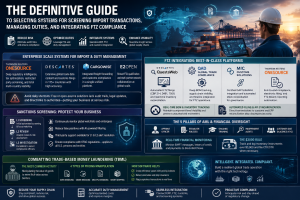
Enterprise-scale global trade demands specialized software to accurately screen import transactions, calculate complex duties, and ensure rigid regulatory compliance. Selecting the right platform heavily depends on an organization's existing architecture and operational footprint. Top-tier suites like Thomson Reuters ONESOURCE provide deep regulatory intelligence for tax optimization, while logistics-centric firms heavily favor CargoWise for integrated freight management. Conversely, vast manufacturing operations running SAP or Oracle environments should naturally gravitate toward native modules like SAP Global Trade Services (GTS) or Oracle GTM for seamless execution. By aligning software capabilities with supply chain realities, companies can permanently eliminate audit risks and secure favorable duty structures.
What Are The Best Systems For Screening Import Transactions And Duties?
Evaluating Enterprise Scale Systems for Import and Duty Management
Navigating the modern cross-border supply chain requires technology capable of parsing thousands of overlapping regulatory jurisdictions in real-time. Systems such as Thomson Reuters ONESOURCE Global Trade lead the market by providing unparalleled tax and legal content, automated restricted party screening, and total multi-country import visibility. Descartes Systems Group also excels in this arena, offering extensive global trade data content and executing customs filings across more than 175 countries with extreme precision. Corporate leaders often wonder how these databases actually function beneath the user interface, questioning what exactly sanction tools are doing to mitigate organizational risk on a daily basis. In reality, these engines continuously map every single purchase order against rapidly shifting federal watchlists to prevent illicit entities from infiltrating legitimate commercial channels.
Organizations handling massive physical freight volumes require a slightly different technological approach. CargoWise stands out as the premier solution for logistics providers and high-volume importers because it successfully combines complex freight forwarding mechanics and customs compliance within a single, unified database. For multinational supply chains demanding robust free trade agreement qualification and massive multi-partner network collaboration, E2open Global Trade Management delivers unmatched performance. To understand the broader vendor ecosystem, executives regularly evaluate the best customs brokerage software to ensure their chosen platform aligns perfectly with their specific operational payload. By utilizing these specialized platforms, companies can accurately forecast landed costs and drastically reduce the friction associated with international border crossings.
Smaller importing firms frequently attempt to bypass the cost of these premium enterprise systems by searching for cheap workarounds. Management teams consistently ask if there is a free, available platform that can adequately handle global trade management. The stark reality is that open-source or deeply discounted software solutions severely lack the necessary cryptographic audit trails, continuous legal updates, and direct data links to federal authorities required to run a safe logistics network. Attempting to manage millions of dollars in cross-border cargo with inadequate software exposes a company to devastating financial penalties and potential criminal prosecution. Relying on commercial-grade platforms represents the only viable method for ensuring total legal adherence while maximizing operational efficiency.
Which Platforms Are Considered Best for FTZ Integration with ERP and Customs Systems?
A highly specific operational challenge arises when manufacturers establish physical operations inside a Foreign Trade Zone. When supply chain directors ask which platforms are considered best for FTZ integration with ERP and customs systems, the industry standard points directly to Descartes QuestaWeb FTZ Software, QAD Global Trade Compliance, MIC Customs Solutions, and Thomson Reuters ONESOURCE. A designated zone allows companies to defer, reduce, or entirely eliminate customs duties, but only if they can mathematically prove that their physical inventory perfectly matches their digital records. Without flawless synchronization between the zone's inventory software and the corporate enterprise resource planning infrastructure, authorities will immediately freeze shipments and initiate a massive federal audit.
For intense global manufacturing environments, QAD Global Trade Compliance provides an exceptional architecture for tracking bill of materials data down to microscopic component levels. It connects directly with supply chain, inventory, and corporate finance modules to ensure complete transparency across the production lifecycle. Similarly, MIC Customs Solutions offers deeply certified integration for enterprise environments running SAP S/4HANA, allowing massive organizations to maintain rigid governance and automate stock reconciliation seamlessly. These high-end platforms execute scheduled or real-time API and SFTP synchronizations to prevent any stock discrepancies between the physical goods sitting in a warehouse and the official financial books. Any slight deviation instantly triggers internal alerts before a government inspector ever sets foot on the property.
Automated regulatory filing represents another massive benefit of utilizing these top-tier zone management platforms. Both Thomson Reuters ONESOURCE and Descartes QuestaWeb excel at providing direct, automated electronic transmission for critical customs documentation, including zone admissions on CBP Form 214 and weekly entry processing via Form 3461 or 7501. Multinational corporations explicitly require these robust audit trails to maintain their special tax status and easily generate automated annual reporting for the FTZ Board. By fully digitizing the reporting process, logistics directors eliminate human data entry errors and dramatically accelerate the speed at which raw materials can enter the manufacturing pipeline.
- Real-time BOM and Inventory Tracking: Maintaining absolute visibility down to individual component levels allows manufacturers to safely manipulate or assemble goods inside a designated zone. This specific capability prevents the accidental leakage of uncleared parts into domestic commerce, safeguarding the enterprise from severe customs penalties.
- Automated Electronic Filing and API Synchronization: Native hooks directly transmit zone admissions and weekly entry processing forms to customs authorities without requiring manual data entry. Simultaneously, these advanced integrations reconcile physical zone inventory counts against corporate financial books, stopping discrepancies long before they trigger a government audit.
Understanding What is the Best Software for Sanctions Screening
While managing physical inventory represents a massive logistical hurdle, protecting the enterprise from conducting business with embargoed individuals requires entirely separate systemic capabilities. Determining exactly what the best software for sanctions screening is depends heavily on how rapidly your organization processes new vendor applications and international payments. Modern platforms ingest massive volumes of data from global regulatory bodies, continuously updating their algorithms to reflect the latest geopolitical embargoes. Executives frequently misunderstand the legal scope of these mandates, incorrectly assuming that small businesses are exempt from federal oversight. To clarify exactly who is required to do OFAC checks under federal law, the answer includes every single U.S. citizen, permanent resident, domestic corporation, and foreign entity operating within the United States.
Inside these advanced software environments, analysts process security alerts through structured escalation tiers, officially known as L1, L2, and L3 in transaction monitoring. The initial screening happens at the L1 and L2 stages, where the system utilizes fuzzy matching algorithms and phonetic spelling variations to flag potentially dangerous shipments or wire transfers. If a flagged hit appears credible and cannot be easily dismissed by a junior analyst as a false positive, the software immediately escalates the file to L3 for intensive manual investigation by senior compliance officers. Because this daily alert volume can easily overwhelm an internal logistics department, numerous third-party companies offer services for L1 and L2 alert resolution to offload the repetitive burden.
The sheer volume of daily false positives generated by global shipping manifests takes a heavy psychological toll on compliance personnel. Constantly evaluating ambiguous shipping documents and suspicious vendor names creates an incredibly stressful job-screening environment for analysts. By implementing sophisticated artificial intelligence engines found in industry-leading software suites, organizations can automatically suppress low-risk alerts and dramatically reduce analyst fatigue. Consulting detailed reports on the best transaction screening software vendors allows corporate leadership to identify platforms capable of filtering out the noise. Ultimately, empowering human analysts with high-grade technology ensures that actual regulatory threats never slip through the cracks.
Navigating the 5 Pillars of AML and Financial Oversight in Trade
Securing a global supply chain requires viewing physical cargo movements through the strict lens of financial regulatory compliance. Every highly effective import screening architecture actively incorporates the 5 pillars of AML, which mandate appointing a dedicated compliance officer, establishing internal policies, conducting ongoing training, running independent audits, and performing rigorous customer due diligence. When an international buyer attempts to hide their true corporate identity using offshore shell companies, stringent KYC triggers compliance protocols designed to halt the transaction immediately. The software automatically freezes the procurement cycle until human investigators can successfully peel back the layers of corporate ownership and verify the ultimate beneficiary.
The operational requirements for monitoring these financial risks vary wildly depending on the size of the institution managing the capital. The massive difference between top 10 banks and smaller regional freight forwarders lies directly in their exposure to billions of dollars in global letters of credit. Major financial institutions must determine exactly which tool used for real-time SWIFT message parsing will instantly block illicit capital flows before a cargo vessel even leaves its port of origin. These Tier 1 banking entities integrate their trade compliance systems directly with their core banking software, ensuring that the movement of physical goods perfectly matches the underlying financial documentation backing the trade.
Simultaneously, compliance software must account for strict recordkeeping thresholds mandated by federal law enforcement agencies. The software must inherently recognize the $3000 rule banking requirement, automatically tracking and logging the purchase of monetary instruments like cashier's checks or money orders used in international settlements. When a seemingly legitimate importer attempts to pay for a massive shipment using anomalous financial instruments, it generates an immediate, blazing red flag within the system dashboard. When analysts confirm that these financial irregularities are directly tied to cross-border cargo movements, they must quickly file a CTR or STR document with federal authorities, permanently memorializing the suspicious behavior.
Identifying the Most Common Money Laundering Activity in Global Supply Chains
Criminal syndicates continually exploit the massive volume of international shipping to quietly move illicit value across borders, completely bypassing traditional financial oversight mechanisms. Trade-based money laundering represents a sophisticated threat where the cargo itself acts as the vehicle for transferring criminal wealth. The absolute most common money laundering activity within the trade sector involves manipulating the stated value of physical goods on a commercial invoice. By heavily misrepresenting the true market price of a commodity, bad actors can transfer millions of dollars in value between international subsidiaries without ever triggering a standard bank alarm.
To combat this insidious threat, modern compliance software must aggressively target the specific pricing anomalies utilized by global smuggling rings. The specific components targeted by TBMl include four types of pricing manipulation: over-invoicing, under-invoicing, multiple invoicing, and short-shipping. High-end trade software combats these four types of fraud by automatically cross-referencing declared customs values against massive databases of historical commodity pricing indexes. If an importer attempts to declare a shipping container full of scrap metal at a price mirroring high-end electronics, the system instantly generates severe trade transaction flags and halts the customs clearance process entirely.
Anticipating these sophisticated smuggling routes requires continuous geopolitical awareness and advanced data analytics. Elite compliance analysts spend countless hours monitoring exactly how five sanctioned countries perform economically to anticipate sudden shifts in transshipment vectors and the sudden emergence of new front companies. Implementing software that actively tracks these geopolitical shifts is essential for protecting the corporate bottom line. Organizations seeking to upgrade their digital infrastructure should thoroughly review guides on evaluating the best platforms for integrated customs import validation to secure the most effective tools on the market. By deploying intelligent, highly responsive screening architecture, multinational enterprises can completely fortify their supply chains against the relentless threat of financial crime and regulatory disruption.