Is Duty the Same as Tariff? Meaning, Differences, and Who Pays
 Import Export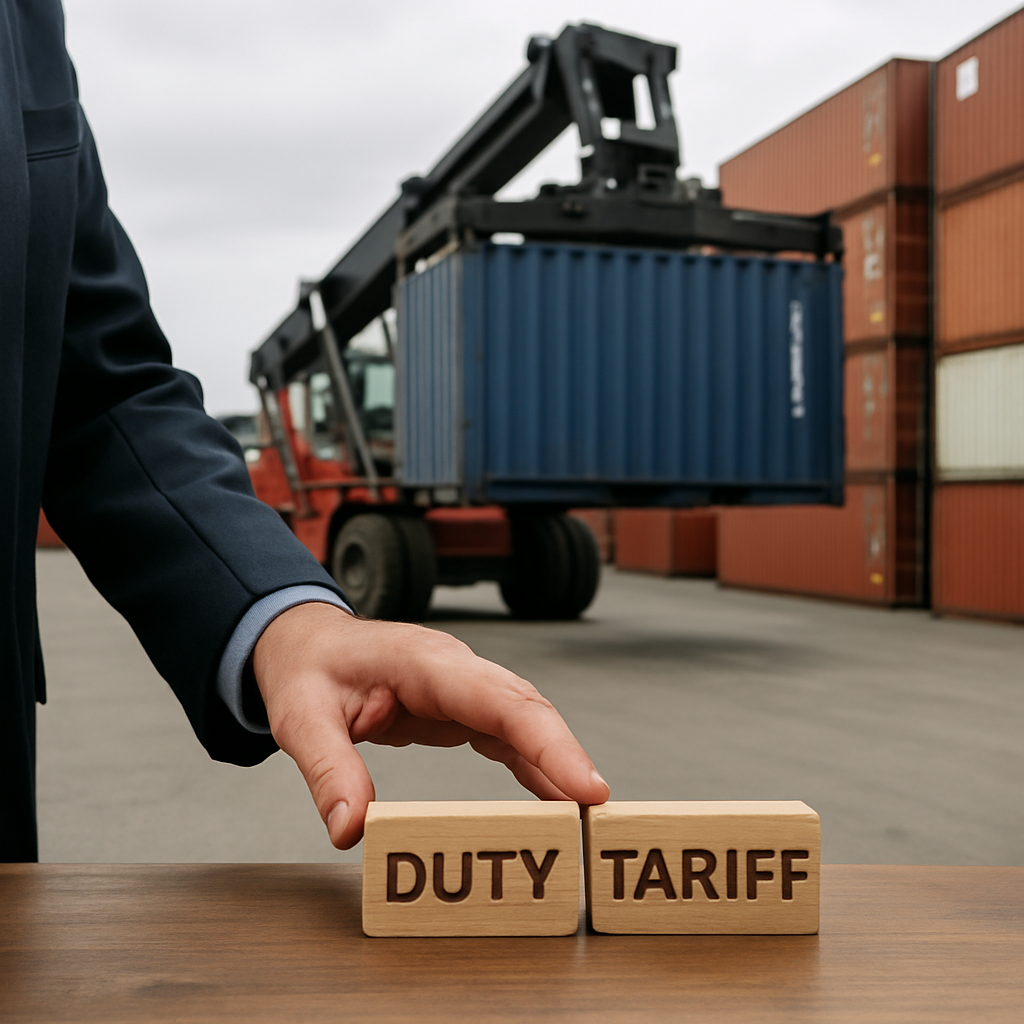
Short answer: duty and tariff are closely related, but they are not always used in exactly the same way. In everyday customs and import conversations, a tariff is usually a type of duty or import tax on goods crossing a border. However, duty is often the broader term, while tariff more specifically refers to an import charge or the official schedule of charges applied to imports.
That means the safest answer to is duty the same as tariff is: not perfectly, but they overlap heavily. In many trade and customs contexts, the words are used interchangeably; in other explanations, duty is the wider label and tariff is the more specific import-related charge.
Are duty and tariff the same thing?
To put it plainly, a tariff is a charge placed on imported goods, while duty is a broader term that can cover taxes or charges collected on goods entering a country. One useful way to think about it is:
- Tariff = the import charge itself, or the policy/schedule that sets that charge.
- Duty = the wider customs tax or charge category.
That distinction is why you will sometimes see authoritative trade sources describing tariffs as duties, while others explain that duties cover a broader set of import charges. For example, the Council on Foreign Relations explains tariffs as a tax on foreign-made goods, while the U.S. government’s Import Tariffs & Fees overview notes that tariff and duty are often used interchangeably in trade settings. At the same time, other trade and logistics guides distinguish them by scope, with tariff treated as a specific type of duty rather than a perfect synonym.
If you want the simplest practical rule: all tariffs are duties in the import sense, but not every use of the word duty will mean tariff.
How tariffs differ from taxes, duties, and customs charges
Tariffs are not the same as general taxes such as sales tax, VAT, or GST. Those taxes can apply more broadly inside a country or at the point of sale, depending on the jurisdiction. Tariffs, by contrast, are tied to imported goods and trade policy.
That matters because the total amount due on an import is often more than just the tariff. Depending on the country and shipment, an importer may also face:
- customs fees or processing charges
- import taxes such as VAT or GST
- local or national sales taxes
- brokerage or carrier administration fees
A useful reference point is the U.S. government’s trade guidance, which separates tariffs from other import-related costs and explains that rates depend on product classification and destination. The Pitney Bowes customs, duties, taxes, and tariffs guide also breaks these charges into distinct categories so businesses can estimate landed cost more accurately.
So if you are asking whether a tariff is the same as a tax, the answer is no in the general sense. A tariff is a tax-like charge on imports, but it is not the same thing as every other tax a buyer or importer might pay.
Who actually pays the tariff on an imported item?
In most cases, the importer of record is legally responsible for paying the tariff or duty. That is usually the business or person bringing the goods into the country, not the foreign exporter and not the foreign government.
That said, legal responsibility and economic burden are not always the same thing. The importer may pay the tariff at customs, but then recover some or all of that cost by:
- raising the wholesale price
- passing the cost to a retailer
- building the cost into consumer pricing
- absorbing the cost as lower margin
So the party who pays the customs invoice is not always the party that ultimately feels the expense. The Oregon State Bar’s business law article on tariffs notes that payment responsibility lies with the importer of record, while the real economic burden may move through the supply chain. The same practical point is echoed in supply-chain guidance from DCL Logistics.
Simple example: if a U.S. retailer imports headphones from overseas and the shipment is subject to a tariff, the retailer is usually responsible for the customs payment. But the retailer may later include that cost in the sale price, which means the consumer may end up bearing part of it indirectly.
If you are dealing with courier-billed imports, our related guides on import duty payment required for delivery and FedEx customs charges after delivery explain how these charges can show up in real shipments. For online shopping and parcel imports, you may also find our guide on pay tariffs on AliExpress orders useful.
Does duty free mean no tariffs?
Not always in a universal sense. In customs language, “duty free” usually means no duty is charged for a qualifying item under the relevant rule or exemption. But that does not automatically mean every possible import-related charge disappears in every situation.
A good U.S. example is CBP’s de minimis treatment for certain qualified imports. U.S. Customs and Border Protection explains that shipments meeting the applicable threshold can receive an administrative exemption from duty and tax in qualifying cases. In practice, that means some imports may enter without duty or tax, but only if they meet the conditions for the exemption.
That is why it is risky to assume that “duty free” means “no charges of any kind” without checking the specific rule. Depending on the country, the product, and the shipping method, other costs may still apply, including customs handling fees or taxes that are separate from duty itself.
The key takeaway is simple: duty free is context-specific. It can mean no duty for that shipment or product under a valid exemption, but it is not a blanket promise that every import charge is eliminated everywhere.
Tariff examples and how they work in real imports
Here is a straightforward example.
Suppose a business imports a batch of clothing worth $10,000. If the applicable tariff rate is 10% and the tariff is calculated as an ad valorem charge, the tariff would be $1,000. The importer would then need to pay that amount, subject to any other applicable customs charges or taxes.
That is the basic logic behind many tariffs: the rate is applied to the declared value of the imported goods. But tariffs do not always work the same way. Trade sources note that tariffs can be:
- ad valorem — a percentage of the item’s value
- specific — a fixed amount based on weight, quantity, or another unit
- compound — a combination of value-based and unit-based elements
The Tax Foundation glossary on tariffs and Smart Warehousing’s tariff and duty comparison both explain that tariffs are taxes on imported goods and may be calculated in different ways depending on the rule and product type.
So when someone asks for a “tariff example”, the practical answer is: a tariff is the extra import charge that can be added when a product crosses a border, and the amount depends on the product classification, origin, value, and the country’s tariff schedule.
How tariffs on imports are identified and calculated
Tariffs apply to imports, not to all goods in general. To determine whether a shipment owes duty or tariff, customs authorities rely on the product’s classification code, usually the HS code or, in the United States, the HTS code.
The HTS system sets out tariff rates and statistical categories for merchandise imported into the United States. In other words, the code helps customs determine the correct rate for the exact product being imported. That is why classification matters so much: a small change in the product description can sometimes lead to a different duty rate.
Tariff rates can also vary by:
- product type
- country of origin
- trade agreement or preference programme
- import value or quantity
And tariffs are often only one part of the total border cost. Depending on the market, the importer may also pay local taxes, national sales taxes, customs fees, or carrier administration charges in addition to the tariff itself.
If you want to see how this plays out in a shipment process, our article on China customs clearance and import duty shows how classification, documentation, and clearance can all affect the final outcome. For importers trying to manage costs legally, our guide on legally reduce U.S. customs duty explains why classification and origin are so important.
Why governments use tariffs and what they do to prices
Governments use tariffs for several policy reasons. The most common are:
- to protect domestic industries from foreign competition
- to influence trade flows
- to create leverage in trade negotiations
- to generate revenue in some cases
That is why tariffs are often debated as being either “good” or “bad”. The honest answer is that they can do both, depending on perspective and policy goal.
On the one hand, tariffs may help domestic producers by making imported goods less price-competitive. On the other hand, they can raise the cost of imports for businesses and consumers. That means tariffs can support one part of the economy while increasing prices elsewhere.
The CFR backgrounder on tariffs and the Fictiv guide to tariffs and import duties both explain that tariffs are used as trade tools, but they can also increase consumer prices and affect supply chains. The Tax Foundation likewise describes tariffs as trade barriers that can raise prices and reduce the availability of imported goods.
So if you are asking whether tariffs are good or bad, the best answer is: they are a policy tool with trade-offs. They may help some domestic industries, but they can also make imported goods more expensive and disrupt pricing for importers and consumers.
Quick comparison: duty, tariff, tax, and customs fee
| Term | What it usually means | Typical use |
|---|---|---|
| Duty | A broader customs charge or import tax | General import duty language |
| Tariff | An import charge or the schedule that sets import charges | International trade and customs |
| Tax | A broader government charge, such as sales tax, VAT, or GST | Domestic or border-related taxation |
| Customs fee | A processing or administrative charge linked to import clearance | Border processing and shipment handling |
This table is only a practical guide. Countries do not always use the same labels in the same way, and some official resources use duty and tariff interchangeably. The important point for importers is to understand which charge applies to the shipment, how it is calculated, and who is responsible for paying it.
The practical takeaway for importers and buyers
If you are trying to work out what you owe on an import, start with three questions:
- What is the product’s HS or HTS code?
- Is the shipment subject to a tariff, duty, tax, or all three?
- Who is the importer of record and therefore legally responsible for payment?
Once you know those answers, it becomes much easier to estimate landed cost and avoid surprises at delivery. If the shipment is handled by a courier, you may also want to understand how that carrier bills customs charges after arrival, because the invoice may come before, at, or after delivery depending on the service and paperwork.
In short, duty and tariff are related, but not always identical in scope. For most everyday import questions, you can think of a tariff as a type of duty tied to imported goods. But when you need to calculate costs, clear customs, or dispute a charge, the exact terminology and the HS/HTS classification matter.