Proforma Invoice vs. Commercial Invoice: Differences, Timing, and Customs Use
 Import Export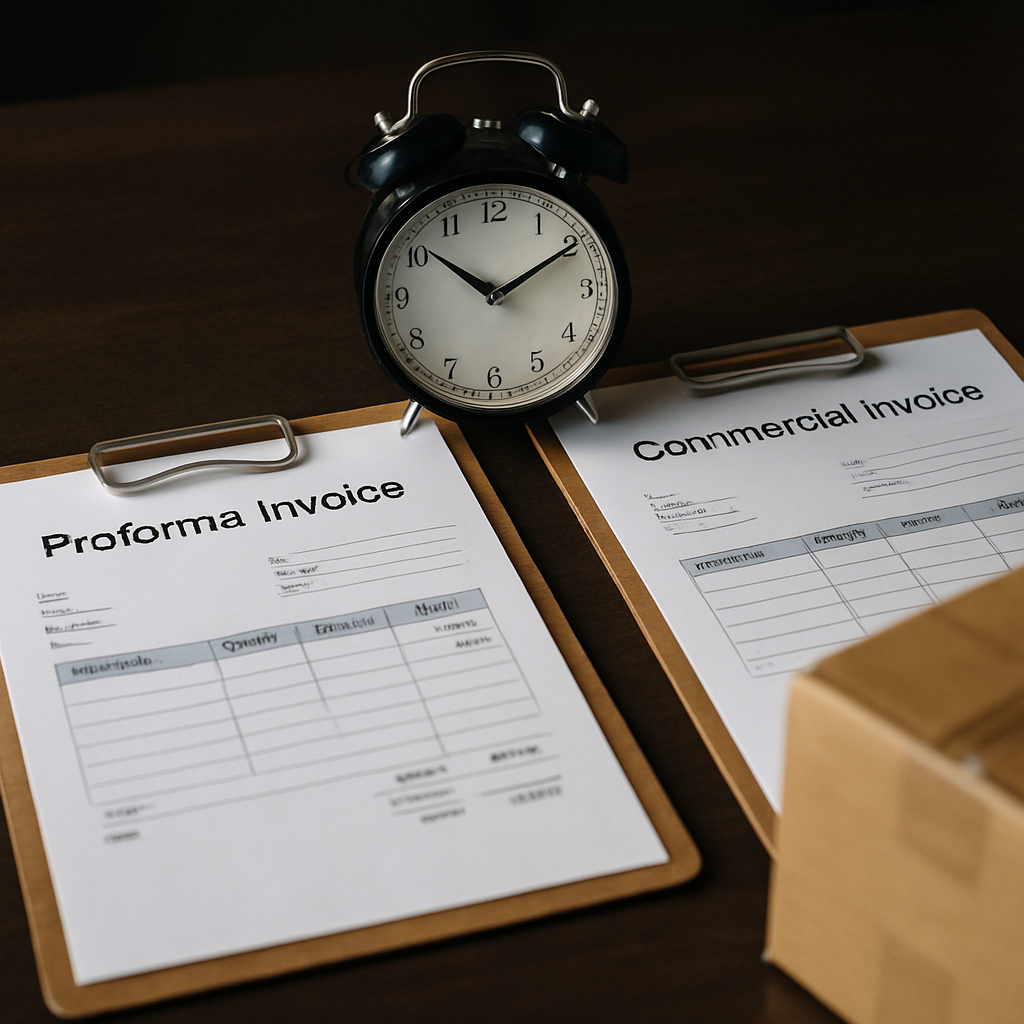
The key difference between a proforma invoice and a commercial invoice is the stage of the sale they represent. A proforma invoice is a detailed pre-sale quotation or estimate that helps a buyer review proposed prices, quantities, and terms. A commercial invoice records the final sale, generally requests payment, and supports an international shipment and customs process where applicable. They can look very similar, but they are not interchangeable documents.
Proforma Invoice vs. Commercial Invoice: The Key Difference
A proforma invoice sets expectations before a transaction is final. It gives the buyer a clear proposed cost and transaction outline, so they can assess, approve, or budget for the purchase. A commercial invoice is issued once the transaction details have been finalised and records what was actually sold.
In general business use, an invoice is a broad term for a bill that requests payment. A commercial invoice is a more specific type of final invoice or bill of sale used particularly for international goods shipments. The decisive difference is therefore not the document's layout, but its status and role in the transaction.
| Point of comparison | Proforma invoice | Commercial invoice |
|---|---|---|
| Primary purpose | Sets out a proposed sale and its expected terms. | Records the completed sale and supports a payment request. |
| Stage of sale | Before the sale is finalised and usually before shipment or delivery. | After the parties have finalised the transaction details, commonly when goods are ready to ship or have shipped. |
| Prices and quantities | Proposed or estimated; they may change before the sale is final. | Finalised details of the actual sale. |
| Payment role | Helps the buyer plan and approve a prospective purchase; it is not the final completed-sale payment record. | Generally serves as the seller's document for requesting payment. |
| Accounting role | Supports budgeting and planning rather than the final accounting record. | Supports payment processing, cash-flow records, and accounting entries for the completed transaction. |
| International shipping and customs | May assist planning and, in some contexts, help with an estimate of the goods' value. | Provides final transaction information used in international shipping and customs processes. |
As this comparison of proforma and commercial invoices explains, the central distinction is status and timing: the proforma document supports pre-sale planning, while the commercial invoice records the final transaction. The two documents may both identify the seller, buyer, goods, quantities, prices, shipping details, and payment terms, which is why confusing them is easy.
Legal effect, tax treatment, and document rules can depend on the parties' agreement and the applicable jurisdiction. It is therefore safer not to assume that every proforma invoice is universally non-binding or that every commercial invoice has the same legal effect in every transaction.
When Should You Use a Proforma Invoice?
Use a proforma invoice before the sale is finalised, and before shipment or delivery, when the buyer needs a detailed proposed price, quantity, and set of terms. It is especially useful when a buyer must obtain internal approval, plan a budget, or confirm that the proposed deal is acceptable before placing or finalising an order.
A proforma invoice can help both sides work from the same proposed transaction details. It should normally cover the goods or services, proposed quantities and prices, and relevant payment and shipping terms. If freight, quantities, delivery details, prices, or other terms change before the transaction is finalised, the proforma invoice may need to be revised.
A practical export-sale sequence
- A buyer makes an enquiry or discusses a proposed purchase with the seller.
- The seller issues a proforma invoice showing the proposed goods, quantities, prices, and terms.
- The buyer reviews the proposal for approval, budgeting, or planning.
- The buyer accepts the terms or submits a purchase order, and the seller accepts the order.
- The seller prepares the goods for shipment or delivery.
- The seller issues a commercial invoice with the final transaction details.
- The commercial invoice supports payment processing and, for an international goods shipment, may be used in shipping and customs processes.
Shipping Solutions describes this sequence as moving from a buyer's enquiry and accepted proforma terms to a commercial invoice when the goods are ready to ship. The proforma invoice should not be represented as the final payment-demanding record of a completed sale.
What Is Considered a Commercial Invoice?
A commercial invoice is the final seller-issued invoice or bill of sale for a finalised transaction, particularly where goods are being sent internationally. It should describe the actual sale rather than a preliminary estimate: the goods, quantities, and amounts should match the final transaction details.
Its practical roles are twofold. First, it generally supports a request for payment and the buyer's payment processing. Second, it provides transaction information used as goods move internationally. Customs authorities may use commercial-invoice information to identify applicable duties, taxes, other import fees, and relevant compliance considerations. As this international-trade overview notes, the commercial invoice is used for customs declarations as well as payment collection.
This does not mean a commercial invoice is merely a proforma invoice with a different title. It is issued at a different stage and must reflect finalised sale information. Using a preliminary estimate where a carrier, customs authority, buyer, or logistics provider needs the completed-sale document can create confusion if the estimates do not match the actual transaction.
Customs, carrier, and destination-country requirements vary by shipment and jurisdiction. Readers who need the practical next step can consult our commercial invoice required fields and customs checklist. It is important not to treat any single field list or customs rule as universal without checking the requirements that apply to the specific shipment.
How the Documents Fit Into an Export Sale
Viewed as a workflow, the proforma invoice is the document for agreeing what may be sold, while the commercial invoice is the document for recording what was sold. The first supports buyer approval and seller-buyer alignment; the second supports the operational and financial steps that follow a finalised sale.
This distinction also matters for records. A proforma invoice helps the buyer forecast the expected cost and helps both parties validate the proposal, but it is not the final accounting record of the completed sale. A commercial invoice states the final amount due and supports more precise cash-flow and accounting records. FreshBooks similarly distinguishes pre-sale budgeting from the final invoice used for payment and accounting entries.
Once the final documents are prepared, they may be shared with a freight forwarder or logistics provider as part of arranging an international movement. For a broader explanation of that hand-off, see how freight forwarding fits into an international shipment.
Which document should you send?
- Send a proforma invoice when the purpose is to set expectations before the deal is final: proposed goods, quantities, prices, and terms for buyer approval, budgeting, or planning.
- Issue a commercial invoice when the terms are final and the document is needed to record the sale, request payment, and support the international shipment process where applicable.
That decision rule avoids a common operational problem: treating a preliminary quote as if it were the final sales and shipping record. If the transaction changes after the proforma invoice is issued, the final commercial invoice should show the completed transaction rather than the earlier estimate.
Are There Only Three Types of Invoices?
No. There is no single universally recognised set of only three invoice types. Invoice categories vary by business model, billing method, payment timing, industry, and the purpose of the document.
For this comparison, the three terms readers are most likely to encounter are:
- Proforma invoice: a pre-sale document setting out a proposed transaction.
- Commercial invoice: a final transaction document particularly associated with international goods sales and customs information.
- Final or standard invoice: a broader billing concept for a completed sale or delivered service, which may be used in domestic, service, or other business transactions.
A commercial invoice can therefore be understood as a type of final invoice with a particular international-trade function; not every ordinary invoice is automatically a commercial invoice. Other invoice categories can include credit, mixed, interim, past-due, and recurring invoices, illustrating why a fixed three-type classification is incomplete.
In short, use a proforma invoice to present a proposed deal before it is final. Use a commercial invoice to document the final sale, request payment, and provide final transaction information for an international shipment and customs process where required.