FedEx "Returned to Facility for Inspection": What It May Mean, Customs Clues, and Next Steps
 Import Export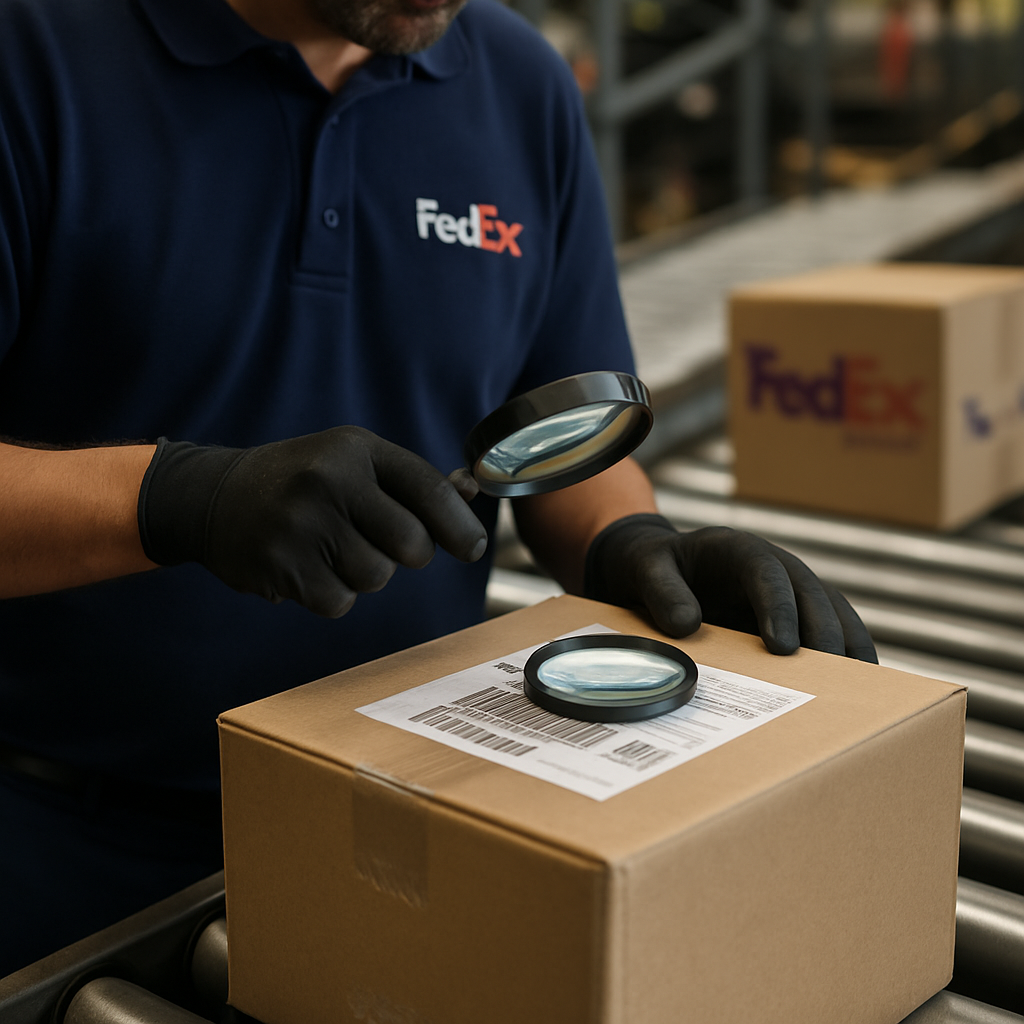
If FedEx tracking says "returned to facility for inspection", it indicates that delivery has been interrupted and the parcel is back at a FedEx facility for an inspection-related review. It is not confirmation of delivery. Crucially, the wording alone does not identify the precise reason for the inspection, who is conducting it, what the outcome will be, whether you must act, or when delivery will resume. It should not be treated as proof that a shipment is damaged, lost, seized, prohibited, or necessarily held by customs.
What "Returned to Facility for Inspection" Usually Tells You—and What It Does Not
This is best read as a description of the shipment's current tracking stage, rather than a diagnosis. The parcel has been routed or returned to a facility instead of continuing through the delivery process, and an inspection-related step is indicated. That is the useful practical meaning of the status.
It does not provide a universal explanation for why the parcel went back to the facility. The available evidence does not include a current FedEx tracking-status glossary for this exact wording, nor does it map the phrase to a single cause code across every country, FedEx service, or shipment type. An inspection-related return could potentially involve carrier operations, a government authority, or another review process, but the scan itself does not establish which pathway applies.
In particular, do not infer any of the following from this update alone:
- that customs has detained the shipment;
- that the contents have been rejected, confiscated, or seized;
- that the parcel is damaged or missing;
- that a security issue, prohibited item, or documentation error has been confirmed; or
- that delivery will occur on a particular date.
FedEx's service-news information confirms, in its stated context, that shipments may be selected for inspection. However, it does not define this exact tracking event or provide a universal list of reasons for it. The package-specific explanation, if one is available, must come from the current tracking record or a direct communication from FedEx or the relevant authority.
Why did my FedEx package go back to the facility?
The status supports only a limited answer: it went back to a facility because an inspection-related interruption occurred before delivery was completed. It does not reveal why that inspection was triggered or whether it is a carrier review, customs activity, or another government-agency process. A return to the facility is therefore not, by itself, a finding against the sender, recipient, or contents of the shipment.
Keep a record of the tracking number, every scan, and the time each update appeared. Also read any email, text message, or tracking notice carefully for a reference number, a request for information, or instructions that apply specifically to the shipment. For cross-border shipments, first establish whether the notice names customs or another authority; for domestic shipments, avoid assuming that customs is involved.
If the status appeared after "Out for Delivery"
A status change from "out for delivery" to an inspection-related facility scan means the operational position has changed. It is not a promise that the parcel will still arrive that day, and the supplied evidence does not establish a standard re-delivery interval. For the limits of an earlier delivery-stage update, see what an earlier out-for-delivery scan does and does not mean.
How long does FedEx take to investigate a package?
No dependable time estimate can be drawn from "returned to facility for inspection". The available source material provides no FedEx investigation duration, maximum hold period, service standard, or package-specific resolution process for this status. Avoid relying on online estimates such as a set number of hours or days. Current tracking and verified direct communications are the appropriate sources for any shipment-specific timing.
What to Do Now
The most useful response is measured and evidence-based. Do not send documents, make payments, or disclose personal information in response to an unverified message that merely refers to an inspection.
- Save the details. Retain the tracking number, scan history, screenshots, and any shipment reference numbers.
- Check whether the shipment is domestic or cross-border. This helps distinguish a possible international authority review from a carrier-facility process, without assuming either one.
- Read notices for a direct request. Look for a specific request, reference number, authority name, or stated action. Do not assume that an inspection automatically requires paperwork or payment.
- Use verified contact channels. Use FedEx's current official tracking and contact channels, or the verified contact details of any authority named in a genuine notice, to ask for the reason associated with that tracking number.
- Respond only to a direct, verified request. If additional information or documents are requested, provide only what the verified sender or authority asks for, through the channel it confirms.
This approach preserves the evidence you may need while avoiding unsupported assumptions about the nature of the hold.
Could It Be Customs? Distinguish Customs From Other Inspection Holds
Customs is one possible explanation for an international shipment, but "returned to facility for inspection" does not prove that customs is the authority involved. Customs inspection, agricultural or biosecurity inspection, and a carrier operational inspection are distinct pathways. Each can affect a cross-border parcel, but the tracking phrase does not establish the applicable process, criteria, documents, charges, or timing for an individual shipment.
FedEx's Hong Kong service-news page says that shipments selected for inspection may include, but are not limited to, plants, edible products, animal products, artwork, artificial flavourings, and timber. This is a non-exhaustive example from that specific FedEx service-news context; it is not a worldwide FedEx inspection list and does not show why a particular parcel was selected. A package containing one of those categories is not automatically subject to inspection, and an inspection does not, by itself, imply wrongdoing.
Customs, other government agencies, and carrier reviews are not the same
| Possible pathway | What the tracking wording can establish | What it cannot establish on its own |
|---|---|---|
| Carrier operational inspection | An inspection-related facility interruption is indicated. | The operational reason, outcome, or when onward movement will occur. |
| Customs inspection | It may be relevant to a cross-border shipment if a customs notice or scan identifies it. | That customs is involved, the reason for review, or whether clearance will be granted. |
| Other government-agency inspection | An authority may have a role where a notice identifies that authority. | Which agency is involved, the applicable requirements, or whether a charge applies. |
The same FedEx notice provides an Australia-specific example of a non-customs authority role. It states that, effective 5 October 2026, FedEx will introduce a Processing and Inspection Fee for low-value inbound shipments to Australia valued at AUD 1,000 or less when Australia's Department of Agriculture, Fisheries and Forestry selects them for inspection. That notice is limited to its stated destination, value context, agency, and effective date. It does not mean that the fee applies in other countries, applies to all Australian imports, or applies to your shipment.
If later tracking specifically says that customs clearance or release has occurred, the next stage is different from the current inspection-related hold. In that circumstance, read what happens after customs clearance, but do not use it to estimate how long the present inspection will last.
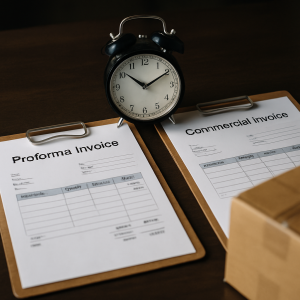
For cross-border senders who receive a direct, verified request for customs documentation, our guide to commercial invoice requirements for international shipping may help. An inspection does not automatically mean that a commercial invoice is missing or that supplying one will resolve the hold.
Is This a FedEx Shipment Exception?
An inspection-related return to a facility is the type of tracking disruption that may appear alongside a broader shipment-exception message. However, the available research does not verify that "returned to facility for inspection" is always an official FedEx exception code or that it has the same meaning in every FedEx network.
If your tracking record explicitly displays "shipment exception", consult our guide to FedEx shipment exception meaning and next steps. Treat the explicit scan and any accompanying package-specific notice as more informative than a generic interpretation of a similar status.
What Not to Assume While You Wait
An inspection-related status is understandably frustrating, but it is not a reliable forecast. There is no supplied evidence supporting a standard investigation timeline, a guaranteed delivery date, or a universal escalation sequence for this wording. Likewise, an unverified reference to an "11 hour rule" should not be treated as an explanation for the scan: the available evidence does not define such a FedEx rule or connect it to parcel inspection.
Until a verified update provides more detail, the sound conclusion is narrow: the shipment is not shown as delivered and is undergoing an inspection-related interruption at a facility. Preserve the tracking history, check for a direct request, and obtain any package-specific explanation through verified current FedEx or authority communications.