
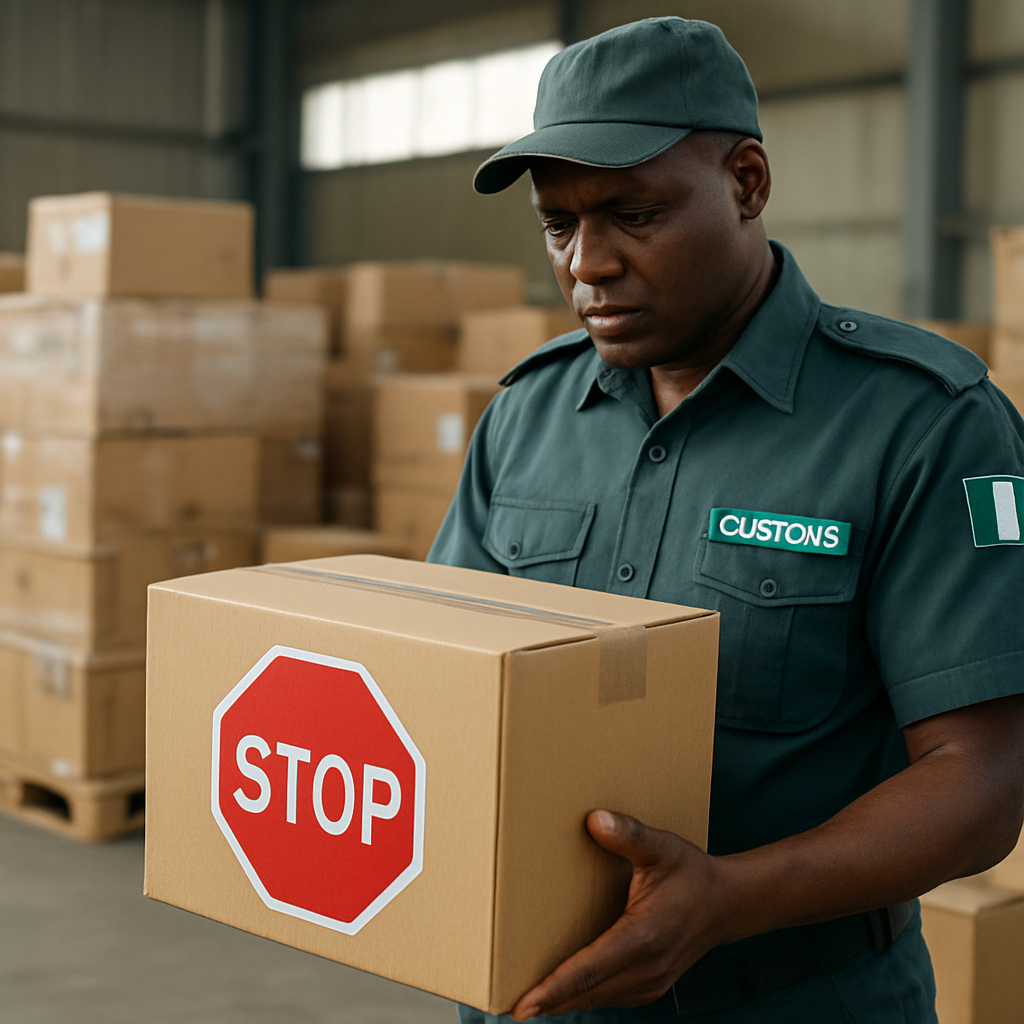
If you are asking what goods are prohibited from importing into Nigeria in 2026, the short answer is that Nigeria still maintains an import prohibition list, but you should verify the current status of any product against the latest Nigeria Customs Service database before shipping. Based on the supplied current sources, the commonly prohibited or tightly restricted goods include live or frozen poultry and birds, pork and beef, bird eggs other than hatching eggs, refined vegetable oils and fats, retail-pack sugar, cocoa products, spaghetti and noodles, fruit juice in retail packs, bottled water and soft drinks, beer and other alcoholic drinks, bagged cement, retail soaps and detergents, certain footwear and bags, used refrigerators and air conditioners, and listed medicines.
The important point in 2026 is that the exact legal status depends on the product description, the HS code, and the current customs database. Some items are outright prohibited, while others are restricted or only allowed in specific circumstances. Do not rely on an old copied list, a screenshot, or a PDF circulating online without checking the current official source first.
What goods are prohibited from importing into Nigeria in 2026?
Using the current live sources supplied for this brief, the goods most clearly identified as prohibited or heavily restricted for import into Nigeria include the following:
- Live or frozen poultry and birds
- Pork and beef
- Bird eggs, except hatching eggs
- Refined vegetable oils and fats, including mayonnaise
- Retail-pack sugar
- Cocoa products such as cocoa butter, powder, and cakes
- Spaghetti and noodles
- Fruit juice in retail packs
- Bottled water and soft drinks
- Beer and other alcoholic drinks
- Bagged cement
- Retail soaps and detergents
- Certain footwear and bags
- Used refrigerators and air conditioners
- Listed medicines, with some medicines outright banned and others restricted to local manufacturers or special conditions
The current prohibition picture is supported by the supplied customs and trade sources, including the Nigeria - Prohibited and Restricted Imports guide, the Trade.gov Nigeria country commercial guide, the FCCPC’s import prohibition list, and the Pryme summary of Nigeria’s 2026 import prohibition list.
How the Nigeria customs prohibition list works in 2026
The most useful way to understand the current Nigerian rule is this: the customs prohibition list is classification-based. That means the deciding factor is not just the common name of the item, but the exact customs classification and how the goods are described in the tariff system. In practice, that matters because two products that look similar in everyday language may fall under different legal treatment once their HS code is checked.
Several of the supplied sources stress this point. A live database is more reliable than a copied list because tariff-line entries can change, and because the prohibited or restricted status may depend on the exact customs heading. If you are unsure, verify the item in the current Nigeria Customs Service database and then confirm the classification with a licensed customs broker before you apply for Form M or ship the cargo.
For a broader explanation of screening items before shipment, you can also read our guide on prohibited items and restrictions and our article on customs rules and prohibited items.
Prohibited goods versus restricted goods
Not every item on a customs prohibition page is treated in the same way. Some goods are banned outright. Others may be restricted, reserved for local manufacturers, or allowed only under particular conditions. Medicines are the clearest example in the supplied research: some are reported as totally banned, while others are restricted to local manufacturers or special purposes. That is why you should avoid treating every item in a copied list as if it had identical legal status.
This distinction also matters when you are checking whether a shipment can be cleared at all. A prohibited item can lead to seizure or refusal of entry. A restricted item may require additional documentation, a different licensing route, or a different supplier arrangement. The practical answer is always the same: confirm the current status before buying or shipping.
Is Nigeria’s banned-items list 41 items, 42 items, or something else in 2026?
It is understandable to search for a tidy number such as 41 banned items or 42 banned items in Nigeria. However, the number you see online depends on what is being counted. Some sources count broad product categories. Others count tariff-line entries. Some older lists are simply copied and reposted without updating the legal status. That is why one report can refer to 17 categories, while another live customs database check can show a much larger number of tariff-line entries.
In other words, the count is not the real compliance issue. The real issue is whether your exact product, under its exact HS classification, is permitted, restricted, or prohibited under the current customs rules. A PDF list may be convenient, but if it is outdated it can mislead you and create unnecessary customs problems.
If you are looking for a downloadable list, the safest approach is not to trust a copied PDF on its own. Use the current official customs source and cross-check it with the product’s tariff classification. A list that was accurate last year may no longer be accurate in 2026.
Which food, drink, and household goods are banned or restricted?
The most searched consumer categories are usually food, drinks, household consumables, and a few everyday goods that people assume are harmless. In Nigeria’s current prohibition framework, several of these are specifically named in the supplied trade sources.
Food and drink items commonly flagged
The goods most often identified in the sources include:
- Live or frozen poultry and birds
- Pork and beef
- Bird eggs, except hatching eggs
- Refined vegetable oils and fats, including mayonnaise
- Retail-pack sugar
- Cocoa butter, cocoa powder, and cocoa cakes
- Spaghetti and noodles
- Fruit juice in retail packs
- Bottled water and soft drinks
- Beer and alcoholic drinks
These are the types of consumer goods that often appear in shipping inquiries because they look ordinary, but they may fall into a prohibited or restricted category under customs rules. The key lesson is that retail packaging can matter. A product that is acceptable in bulk, industrial, or non-retail form may be treated differently once it is packaged for consumer sale.
The supplied sources also point to imported retail consumer products such as soaps and detergents, which are part of the wider import-prohibition picture. If your business deals in household consumables, check the exact form of the product, not just the product family.
Household goods and everyday consumer products
Household goods can be caught by the prohibition list too. The supplied sources identify retail soaps and detergents, some footwear, bags, used refrigerators, and used air conditioners as items that fall within the current restriction or prohibition framework.
This matters for mini-importers and small traders because these are exactly the kinds of products that are often purchased from overseas marketplaces without a full customs review. If you are importing household items into Nigeria, screen them before payment, not after dispatch.
Is furniture importation banned in Nigeria?
Furniture is a good example of why a simple yes-or-no answer can be misleading. The supplied trade sources show that furniture appears on the prohibited or restricted list, but there are important exclusions and special categories. In other words, you should not say that all furniture is banned in Nigeria.
According to the supplied sources, some furniture-related items are excluded from the blanket treatment, including baby walkers, laboratory cabinets such as microscope tables, fume cupboards, laboratory benches, stadium chairs, certain adjustment devices, base sledges, seat frames, control mechanisms, arm guides, head guides, and some skeletal parts of furniture such as blanks and unfinished or upholstered parts of metal, plastics, veneer, or chair shells. Motor vehicle seats and some other seat types are also separately carved out in the supplied guidance.
That means the classification question is crucial. A finished commercial furniture product may be treated differently from a furniture component, a laboratory fitting, or a specialised seating item. If you are importing furniture into Nigeria, do not rely on the generic word “furniture” alone. Check the precise description and HS code before you ship.
What should mini-importation traders do before shipping to Nigeria?
If you run a mini-importation business, the compliance workflow should be simple and disciplined. First, identify the exact product you want to buy. Second, check its HS code. Third, compare that code against the current Nigeria Customs prohibition database. Fourth, if the classification is unclear, ask a licensed customs broker before you send money or book shipping.
This process is especially important for small traders because mini-importation deals often move quickly, and the temptation is to trust the supplier’s description or a social-media list. That is risky. A product that looks profitable can become a seizure risk or a customs delay if it falls under a prohibited or restricted category.
If you are still researching how prohibited items fit into shipping compliance, our article on prohibited items and restrictions gives a practical overview of what to check before you ship.
Practical checks before you import into Nigeria
Before you place an order or ship goods into Nigeria, use this short checklist:
- Confirm the exact product name and its intended use.
- Find the correct HS code rather than relying on a generic description.
- Check the current Nigeria Customs Service prohibition database.
- Look for any restriction, exception, or special condition attached to the item.
- Verify whether the goods are retail-packed, bulk, used, or new, because that may affect status.
- Consult a licensed customs broker if the classification is uncertain.
This approach is the safest way to avoid delays, detention, seizure, or compliance problems. It is also the best answer to the broader question of “what are the rules for importing?” in Nigeria: the rule is not just to import carefully, but to classify correctly and confirm current status before the shipment moves.
Bottom line for 2026
The current answer to what goods are prohibited from importing into Nigeria in 2026 is that Nigeria continues to restrict or prohibit a range of foods, drinks, consumer goods, used appliances, and listed medicines, with the exact treatment depending on the product and its tariff classification. The most commonly identified goods include poultry, pork, beef, bird eggs, refined vegetable oils, retail sugar, cocoa products, spaghetti and noodles, fruit juice in retail packs, bottled water and soft drinks, beer, bagged cement, soaps and detergents, certain footwear and bags, used refrigerators and air conditioners, and some medicines.
Do not treat an internet list count such as 41 or 42 as the deciding factor. The real issue is the current customs status of your exact product. Check the live Nigeria Customs source, match the HS code, and if needed speak to a customs professional before shipping.