
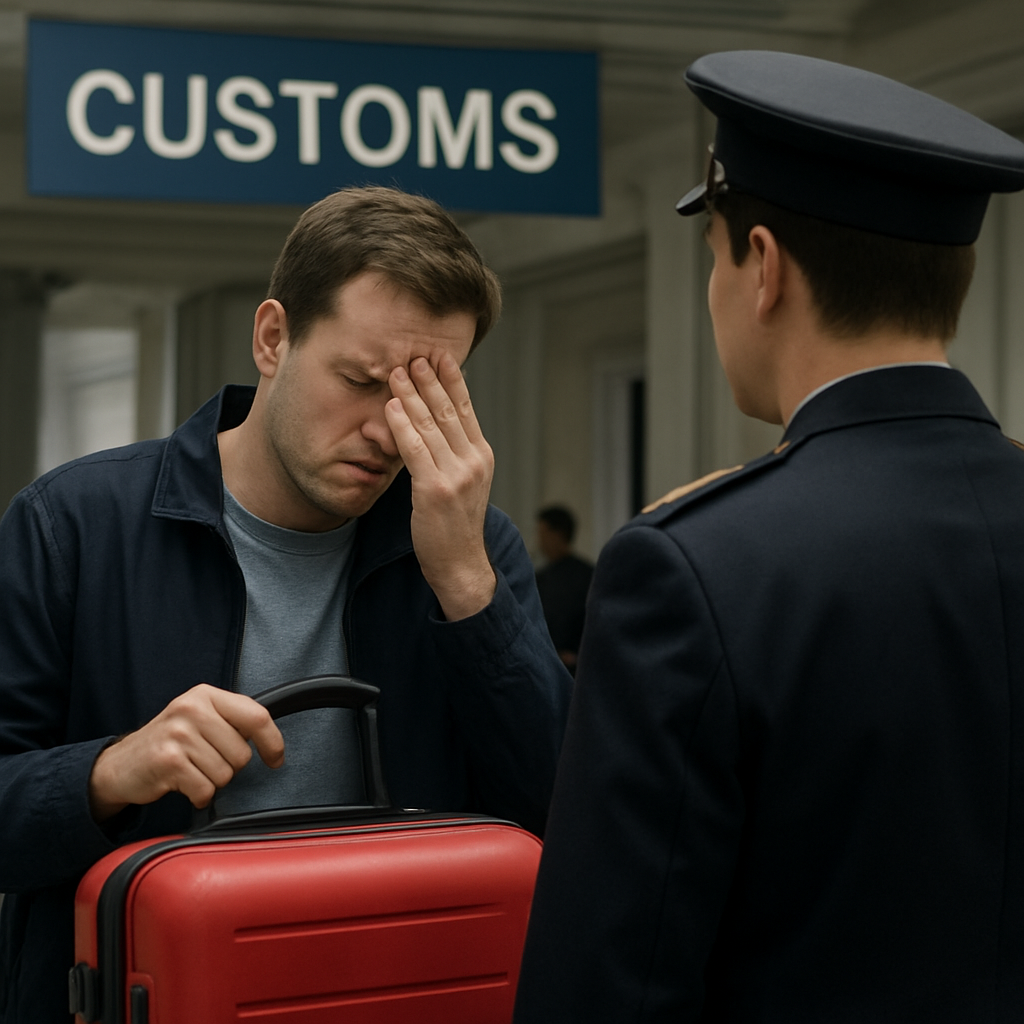
If you forgot to declare items at U.S. customs, the short answer is that the item can be seized or forfeited, and you may also face a personal penalty tied to the value of the undeclared merchandise. In other words, forgetting is not automatically harmless. In the U.S. customs context, even an accidental omission can still be treated as a violation, so the safest move is to correct the mistake as early as possible and tell the officer before inspection begins.
For returning travellers, the key distinction is between duty-free treatment and declaration. A duty-free allowance may reduce or eliminate what you owe, but it does not mean every item is exempt from being declared. If you are unsure, declare it.
What Happens If You Forgot to Declare Items at Customs?
Under U.S. customs law, a failure to declare merchandise can trigger forfeiture of the undeclared item and a penalty equal to the domestic value of that item. Customs authorities do not have to treat an omission as a harmless mistake just because you say it was accidental. A customs violation can still exist if the item was not included in the declaration and was not mentioned to CBP before examination of your baggage began.
The practical outcome depends on the item, the circumstances, and how the officer handles the case. In some situations, a traveller may be allowed to declare the item, pay any duty owed, and continue. In other situations, the item may be detained or seized, and a penalty may follow. The important point is that undeclared items are not automatically forgiven.
You can read the underlying customs-law discussion in this explanation of failure to declare under 19 U.S.C. § 1497, and CBP’s own guidance also states that if you do not declare something that should have been declared, you risk forfeiting the item.
What Items Do You Have to Declare at Customs?
One of the most common mistakes travellers make is assuming that a small or personal item never needs attention at customs. That is not a safe assumption. The declaration rule depends on the item category, its value, and what the officer is asking you to report.
For returning U.S. residents, the $800 duty-free exemption is a key threshold. Goods above that threshold must be declared. But the main lesson is not simply “under $800 is fine”. The better rule is: the threshold may affect whether duty is due, but declaration obligations can still apply depending on what you are carrying and whether CBP asks for details.
Common items that often raise declaration questions include:
- Clothes bought overseas
- Souvenirs and gifts
- Candy and other food items
- Snacks
- Alcohol
- Agricultural products
CBP guidance specifically flags foods, plants, agricultural items, wildlife-related items, and general merchandise as categories travellers should pay attention to. If you brought back purchases, gifts, or food items, do not assume they are automatically outside the declaration rules just because they feel personal or small.
If you want a deeper look at the duty-free threshold and what it does and does not cover, see CBP’s guidance on what to expect when you return.
Common examples travellers ask about
| Item | Typical issue | What to remember |
|---|---|---|
| Clothes | Often personal, but still merchandise | May need declaration if they are purchases and especially if value pushes you over the allowance |
| Souvenirs | Common gifts or purchases | Should be declared if you are asked about goods brought back from abroad |
| Candy | Food item | Food is a category that often needs extra attention |
| Snacks | Food item | Do not assume small packaged foods are exempt from declaration |
| Alcohol | Commonly subject to allowances and controls | Check what you are carrying and declare where required |
How to Declare Items at Customs
The declaration process for U.S. arrivals is straightforward, but it needs to be done honestly and completely. Travellers are normally required to complete CBP Declaration Form 6059B and itemise purchased merchandise and agricultural products. Depending on the entry point and your travel status, this may be done on paper or electronically.
Supported entry methods mentioned in CBP guidance include:
- A paper CBP Declaration Form 6059B
- A Global Entry kiosk, where applicable
- An Automated Passport Control kiosk, where available
Keep your receipts close at hand in your carry-on bag or another easy-to-reach place. That makes it easier to answer questions, support the value of the item, and allow CBP to calculate any duty that may be due.
The safest rule is the old customs advice: if in doubt, declare it. Being overly cautious usually costs you only a little time. Failing to mention an item can create a much larger problem later.
CBP’s return-travel guidance also explains that if you do not declare something that should have been declared, you risk forfeiting it. You can review that guidance directly at What to Expect When You Return.
What to say if the officer asks whether you have anything to declare
If you are asked whether you have anything to declare, answer truthfully. If you are carrying purchases, gifts, food, or anything else that might be relevant, say so clearly. Do not rely on silence, a rushed interaction, or the hope that the item will not be noticed.
The key point is that customs declaration is not the same as airport security screening. If you have seen advice about TSA, that is a different process. TSA deals with security screening; customs declaration is handled by customs authorities at entry.
What Are the Penalties for Incorrect Customs Declarations?
An incorrect customs declaration is not just a paperwork issue. If the declaration is incomplete or false, CBP can treat it as a violation. The supported consequences in the research are forfeiture of the undeclared merchandise and a personal penalty equal to the domestic value of the undeclared article.
That means the risk is not limited to paying a duty bill later. Depending on the facts, the item itself can be taken, and an additional penalty can follow. The penalty is value-based, not a one-size-fits-all flat amount, so it is better not to assume there is a single universal fine for every traveller.
The CBP mitigation guidance for passenger failure to declare addresses this point directly, and customs-law commentary explains that the violation applies whether the omission was deliberate or accidental. You can review the CBP mitigation document here: CBP mitigation guidelines for passenger failure to declare.
If you want to understand how that penalty framework works in plain English, the important distinction is this:
- Forfeiture means the undeclared item may be lost.
- Penalty means you may owe an additional amount based on the value of the undeclared item.
- Duty is different again; it is the import charge that may apply even when the item is properly declared.
What To Do If You Forgot to Declare Something at Customs
If you realise your mistake while you are still in the customs process, the safest step is to disclose the item immediately. Do not wait to see whether it is discovered. Customs guidance and customs-law commentary both point in the same direction: be truthful, thorough, and proactive before examination begins.
If you have not yet completed the declaration or have not yet been fully examined, tell the officer what you forgot. If you are asked about items and you remember something you left out, correct the record then and there. That is a much better position than having the omission found later during inspection.
If the item is discovered after the fact, the risk increases. The item may be seized, and a penalty may be assessed. Self-correction is not a guarantee of a clean outcome, but it is safer than silence.
A useful practical habit is to keep all purchase receipts together before you reach customs and to review your bag contents against the declaration form before you enter the customs area. If you are carrying gifts or purchases that you are not fully sure about, declare them and let the officer decide how they should be treated.
Do You Need to Declare Items Under $800?
This question is often misunderstood. The $800 figure is best understood as a duty-free threshold for returning U.S. residents, not as a blanket promise that nothing under $800 ever needs to be mentioned. The amount matters for duties, but it does not erase the need to answer customs questions honestly or to declare items when required.
So, the safe answer is:
- No, $800 is not a magic “nothing to do” line.
- Yes, it can affect whether duty is owed on your goods.
- Still yes, you may need to declare goods, especially if they are food, gifts, agricultural items, or merchandise that CBP asks about.
If you are not certain how your purchases fit within the allowance, treat the uncertainty as a reason to declare rather than a reason to stay quiet.
Practical Examples: Clothes, Souvenirs, Candy, and Snacks
Travellers often worry about ordinary items because they do not feel like “imports” in the commercial sense. But customs does not only care about formal cargo. Personal luggage can still contain merchandise that must be reported.
Do I have to declare clothes at customs?
Clothes are a common example because they can be both personal items and overseas purchases. If you bought clothing abroad and are bringing it back into the United States, it may count as merchandise for customs purposes. Whether it triggers a duty charge depends on value and other rules, but you should not assume clothing is invisible to customs just because it is wearable.
Do I have to declare souvenirs at customs?
Souvenirs are one of the most common declaration questions. If the souvenir is something you bought abroad and are bringing home, it is part of the merchandise you should be prepared to mention. If you are asked whether you have anything to declare, souvenirs belong in that answer.
This also matters when gifts are intended to remain in the country rather than being personal items you will keep using during the trip. For gift-focused customs rules, you may also find this article useful: gift limits and customs rules.
Do I need to declare candy or snacks at US Customs?
Candy and snacks fall into the food category, and food is one of the categories CBP says travellers should declare carefully. That does not mean every packet will be treated the same way, but it does mean you should not dismiss food items as too small to matter. If you are carrying packaged sweets, snacks, or other edible goods, declare them when asked and be ready to describe them.
Food items can be sensitive because customs and agriculture rules may apply. If you are unsure, the safest answer is to tell the officer exactly what you have.
What to Do After Customs If You Are Charged Duty or a Fee
If CBP assesses duty or another customs charge after inspection, that is separate from the original question of whether you declared correctly. You may still need to pay the amount due, and the payment timing matters. If you are ever unsure about what happens if you miss a customs duty payment deadline, see our guide to what happens if you miss a customs duty payment deadline.
If you want the practical payment side explained, you can also read how to pay customs duties and taxes. And if you are wondering why a customs charge appeared in the first place, this article explains why you may be charged a customs fee.
Key Takeaways
- Forgetting to declare items at U.S. customs can still lead to seizure or forfeiture and a penalty tied to the value of the item.
- Accidental omission is not a guaranteed defence in the U.S. customs context.
- The $800 figure is a duty-free threshold, not a blanket rule that removes every declaration obligation.
- Declare merchandise, food, agricultural items, and gifts honestly and completely.
- If you realise you forgot something, tell the officer before inspection begins.
- If in doubt, declare it.
That simple habit is usually the difference between a routine customs check and a much more complicated problem.