
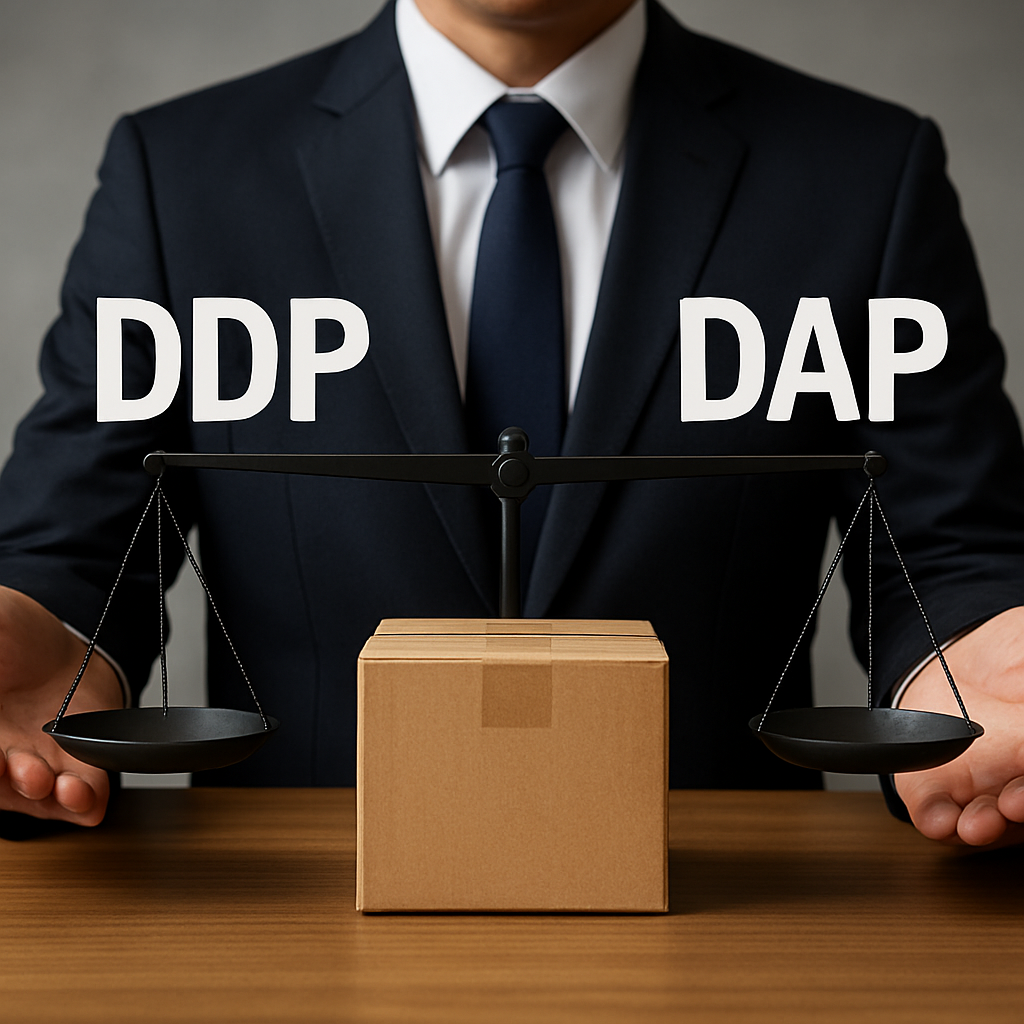
If you need the short answer: neither DDP nor DAP is universally better. DDP is usually better when you want the seller to handle import duties, taxes, and customs clearance for the buyer’s benefit. DAP is usually better when the buyer wants customs control or when the seller cannot realistically manage destination-country import obligations. The right choice depends on who should carry the compliance burden, who should pay import charges, and what kind of delivery experience you want to create.
In simple terms, DDP makes the seller responsible for a much larger share of the import process, while DAP shifts import clearance and import charges to the buyer. That difference is often what decides which term is better for a specific shipment.
DDP vs DAP: Which Is Better?
Think of DDP and DAP as two different ways to divide responsibility at the destination country. Under Delivered Duty Paid (DDP), the seller takes on the heavy lifting: transport to the named place, import clearance, and payment of import duties and taxes. Under Delivered at Place (DAP), the seller still delivers to the named destination, but the buyer handles import clearance and pays the import charges.
So the better term depends on your business model:
- Choose DDP if you want a smoother buyer experience, predictable checkout, and fewer surprises at delivery.
- Choose DAP if the buyer has customs capability, wants control over import clearance, or if the seller cannot manage local import formalities.
That is why DDP is often preferred in e-commerce and small-parcel sales, while DAP is often a stronger fit for B2B shipments or buyers with their own customs broker. For a deeper explanation of DDP itself, see our guide on what DDP means in shipping.
One important clarification: if you are comparing DDP vs FOB, that is not a direct like-for-like comparison. FOB is a different Incoterm category and is mainly used for sea or inland waterway shipments. DDP and DAP are delivery-based terms that determine who handles destination delivery and import obligations. So FOB may matter in some trade contracts, but it does not replace the DDP vs DAP decision framework.
What DDP Means in Shipping
DDP stands for Delivered Duty Paid. It is the Incoterm that places the greatest responsibility on the seller. In practice, the seller arranges the shipment to the named destination and covers the import side of the transaction, including duties, taxes, and related import formalities, so the buyer usually receives the goods without paying import fees at delivery.
Under DDP, the seller is expected to deliver the goods ready for unloading at the named place. The buyer’s role is generally limited to taking delivery and unloading, unless the parties agree otherwise. That is why DDP is often seen as the most buyer-friendly option: it reduces friction, surprise charges, and the need for the buyer to manage customs details.
However, DDP also increases the seller’s compliance burden. The seller must understand destination-country rules, customs procedures, tax treatment, and the practicalities of paying duties and taxes in the destination market. In some countries, the seller may also face restrictions on acting as importer of record, which means DDP may not be workable everywhere.
For a broader breakdown of seller responsibilities, see what DDP means in shipping terms.
What DAP Means in Shipping
DAP stands for Delivered at Place. Under this term, the seller still delivers the goods to the agreed destination, but the buyer is responsible for import customs clearance, import duties, taxes, and related destination charges.
In other words, DAP is not a buyer-pickup term. The seller still carries most of the transport responsibility up to the named place. The crucial difference is that the buyer takes over at the import stage. The buyer must be prepared to handle customs formalities, pay the charges due in the destination country, and clear the goods for release.
DAP is often useful when the buyer wants to control customs clearance directly, or when the seller wants to reduce paperwork, liability, and compliance exposure in the destination market. It can also be the more realistic choice where a foreign seller cannot practically manage local import obligations.
Who Pays Duties and Tariffs Under DDP vs DAP?
The answer is straightforward:
- Under DDP, the seller pays the import duties, tariffs, VAT, and related import charges.
- Under DAP, the buyer pays the import duties, tariffs, VAT, and related import charges.
That includes the broader import-cost picture: customs duty, tariffs, VAT or sales tax where applicable, customs clearance charges, and any similar import fees that arise when the goods enter the destination country. If you need a practical way to estimate those charges, our guide on how much customs duty you may pay is a useful next step.
The buyer-experience difference is important. DDP usually avoids surprise charges at delivery because the seller has already taken responsibility for the import side. DAP can create a bill at import entry or delivery time, depending on how the destination market and clearance process work.
From a cost perspective, it is better to ask whose cost you are measuring. DAP is usually cheaper for the seller because the buyer absorbs the import charges. DDP is usually more expensive for the seller because the seller must either prepay, estimate, or absorb those import costs and the related administration.
Customs Clearance and Importer of Record: DDP vs DAP
The biggest functional difference between DDP and DAP is who handles import customs clearance.
- DDP: the seller assumes import clearance responsibility.
- DAP: the buyer assumes import clearance responsibility.
That difference matters because customs clearance is not just a label. It involves documentation, broker coordination, compliance checks, and in some cases local registration or legal presence. Under DAP, the buyer is typically the importer of record. Under DDP, the seller may need to act as importer of record or otherwise manage the import formalities required in the destination market.
This is where legal and operational reality can override commercial preference. Some customs authorities or local regulations do not allow a foreign seller to complete import clearance easily, or at all, under DDP. In those cases, DAP may be the only practical structure. For a deeper explanation of the legal role, see who can be the importer of record.
In practice, the decision often comes down to whether the seller can manage:
- local registration or importer-of-record arrangements,
- customs broker relationships,
- accurate destination-country paperwork,
- tax and duty cash flow in the local currency, and
- compliance risk in the destination country.
If those pieces are in place, DDP may be workable. If not, DAP is usually the safer and simpler option.
When DDP Is the Better Choice
DDP is usually the better option when the seller wants to create a frictionless buying experience and has the operational capability to support it.
Situations where DDP often works well include:
- E-commerce orders where the customer expects a simple checkout and no surprise charges on delivery.
- Small-parcel shipments where the seller can estimate duties and taxes more easily.
- Air-freight deliveries, especially for samples or direct-to-customer shipments, where the seller wants a smoother recipient experience.
- Large and frequent shipments where the seller has an established compliance structure and can manage destination-market obligations efficiently.
DDP can also be attractive when customer experience is the priority. Buyers often prefer knowing the total cost upfront rather than receiving an unexpected duty bill at the door. That can improve conversion rates in online sales and reduce disputes after shipment.
But DDP is only a good choice if the seller can handle the burden. The seller takes on more financial exposure, more paperwork, more liability, and more sensitivity to local tax changes. DDP can also be affected by exchange-rate movements if duties and taxes must be paid in the destination currency. If the local currency rises, the seller’s real cost can increase.
For a practical perspective on the seller side, see the discussion of DDP and shipment strategy in the DAP vs DDP international shipping guide and the ecommerce-focused comparison from Shippo?rHQ’s DAP vs DDP guide for ecommerce stores.
When DAP Is the Better Choice
DAP is usually the better option when the buyer is better placed to handle customs clearance, or when the seller does not want to take on destination-country import obligations.
Situations where DAP often makes more sense include:
- B2B shipments where the buyer already has an import process in place.
- Buyers with their own customs broker who want direct control over clearance.
- Destinations where seller-led import clearance is difficult or restricted by local customs rules.
- Sales models where the seller wants to reduce paperwork, liability, and compliance exposure in the destination country.
DAP can also be useful when the buyer may be able to reclaim taxes or manage import costs more efficiently within their own accounting or tax structure. In those cases, the buyer may prefer to control the import entry rather than have the seller build duties and taxes into the delivered price.
The downside is that the buyer must be ready to pay and organise the import side properly. If clearance is not arranged in time, the shipment can be delayed, and storage or demurrage-type charges may follow depending on the transport mode and local process. In other words, DAP gives the buyer more control, but it also gives the buyer more responsibility.
For a direct comparison of operational burden, see the explanation in A2B Fulfillment’s DAP vs DDP guide and the more technical comparison from TecEx on DDP, DAP and DPU differences.
Cost, Risk, and Cash Flow Differences
If you are asking, “Is DAP more expensive than DDP?”, the only accurate answer is: it depends on whose costs you are measuring.
| Topic | DDP | DAP |
|---|---|---|
| Who pays import duties and taxes | Seller | Buyer |
| Who handles import customs clearance | Seller | Buyer |
| Buyer experience | More predictable, fewer surprises | More responsibility, possible surprise charges |
| Seller cost exposure | Higher | Lower |
| Seller paperwork and compliance burden | Higher | Lower |
| Buyer customs control | Lower | Higher |
From the seller’s perspective, DAP is usually cheaper because the seller does not pay the import charges and does not carry the same customs burden. From the buyer’s perspective, DDP can feel more expensive in the quoted price, but it may be better value if the buyer wants certainty and fewer landed-cost surprises.
Cash flow matters too. Under DDP, the seller may need to fund duties and VAT in the destination currency before the buyer ever receives the goods. That creates exposure to exchange-rate changes and tax fluctuations. Under DAP, the buyer carries that currency and payment burden instead.
This is why “cheaper” is not the same as “better”. DDP may cost the seller more but simplify the customer journey. DAP may protect the seller’s margin but leave the buyer to manage the import bill.
If you want a practical breakdown of how customs charges affect the landed cost, our article on why a customs fee is charged and our guide to customs broker versus freight forwarder can help you plan the operational side more accurately.
Which Is Better for Buyers, and Which Is Better for Sellers?
If you are the buyer, DDP is often better because it reduces delivery friction and gives you a more predictable total price. You are less likely to be surprised by a customs bill, and the shipment usually feels simpler to receive.
If you are the seller, DAP is often better because it reduces your liability, compliance burden, and cash-flow exposure. You do not have to take on the same level of import responsibility in the destination country.
That said, the best choice is not always the one that looks easiest on paper. A seller may choose DDP to win customers in competitive online markets. A buyer may prefer DAP because it gives them import control and may allow them to recover taxes more efficiently. The real answer depends on who is better equipped to handle the destination-country import process.
What About Sea Freight vs Air Freight, and E-Commerce vs B2B?
You do not need a separate rule for every transport mode, but some patterns are useful.
DDP is commonly used in e-commerce and small-parcel or air-freight situations because it simplifies the buyer’s experience. DAP is often preferred in larger B2B or bulk sea-freight transactions because the buyer may already have customs processes, local tax arrangements, and broker relationships in place.
That is not a universal rule. The most appropriate term still depends on the shipment, the destination country, and the parties’ operational capability. But as a practical guide:
- Use DDP more often when the buyer expects a fully delivered, low-friction experience.
- Use DAP more often when the buyer wants customs control or when the seller cannot handle import formalities reliably.
For guidance on how shipment structure affects the choice, the BSI Freight comparison of DDP and DAP offers a helpful mode-based overview, including why DDP is often more common in e-commerce and why DAP is often preferred in larger B2B arrangements.
Final Decision Framework: How to Choose Between DDP and DAP
If you want a practical way to decide, ask these questions:
- Who should control the import process? If the buyer wants control, DAP is usually the better fit. If the seller wants to manage the full delivery experience, DDP may be better.
- Who is prepared to handle duties, taxes, and customs clearance? If the seller can manage that well, DDP is possible. If not, DAP is safer.
- Does the destination country allow the seller to act as importer of record or complete the import formalities? If not, DAP may be required.
- Is buyer convenience a major sales factor? If yes, DDP can improve the customer experience.
- Is seller risk and compliance burden the main concern? If yes, DAP is usually the lower-risk option.
In short, DDP is better when the seller can truly support destination import obligations and wants to give the buyer a seamless experience. DAP is better when the buyer should handle customs clearance, or when the seller cannot realistically manage the import side. Neither term wins every time. The right choice is the one that matches your compliance capability, your customer expectations, and the realities of the destination market.