
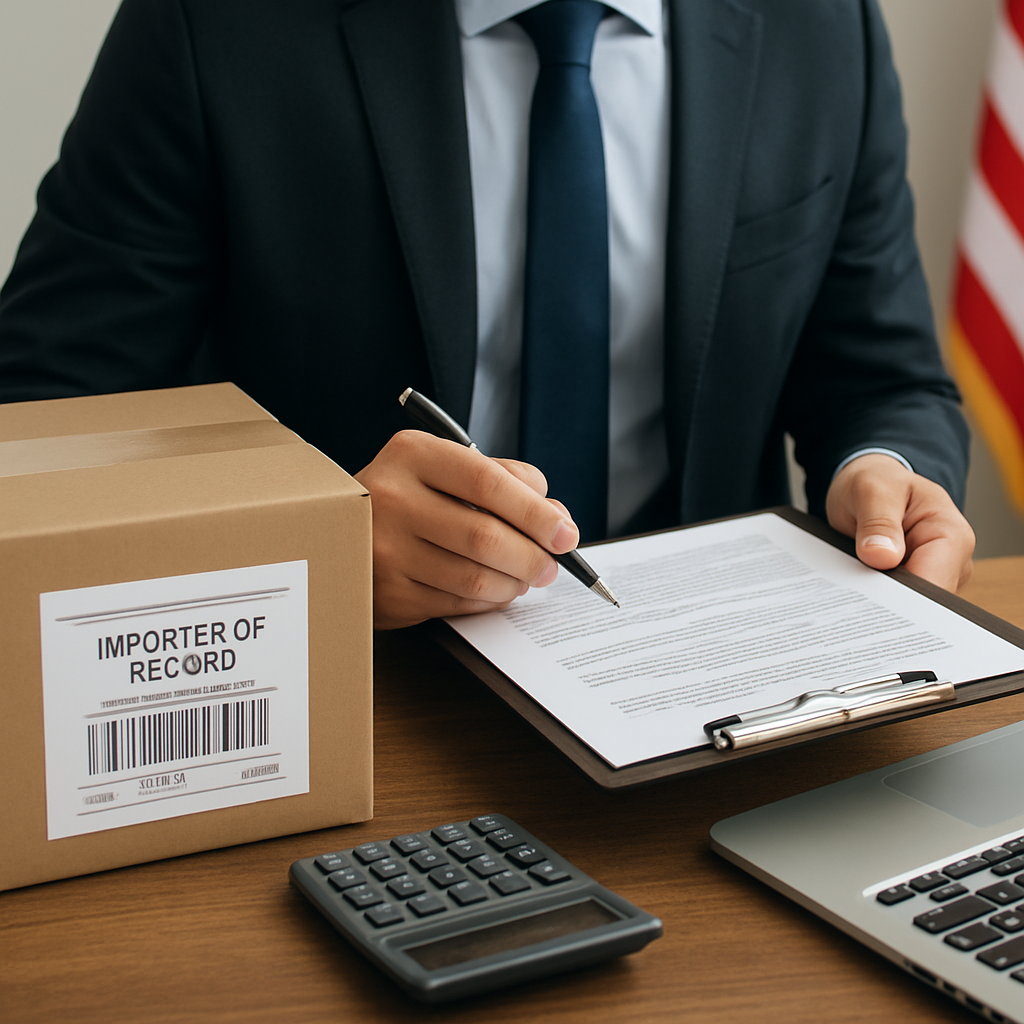
The importer of record is the party legally responsible for the customs entry, compliance, and payment of import duties, taxes, and fees. In U.S. imports, that is not automatically the shipper, buyer, or consignee; it is the entity that is legally allowed to take responsibility for the entry and be held accountable by U.S. Customs and Border Protection (CBP). If a customs broker is handling entry on behalf of a nominal consignee, CBP guidance shows that the broker may need to be listed as the importer of record in that specific situation.
In practice, the right name on the entry depends on legal eligibility in the destination country, not on convenience. If you want the safest short answer to who should be listed as the importer of record?, list the party that is legally responsible for the import transaction and can properly authorize the entry.
Who should be listed as the importer of record?
The importer of record should be the party that accepts legal responsibility for the shipment entering the country. For U.S. imports, CBP says that even when a broker is used, the importer of record remains ultimately responsible for the correctness of the entry documentation and for the applicable duties, taxes, and fees. That means the named importer is the party customs will look to if classification, value, origin, or payment issues arise.
As a general rule, the importer of record is not chosen because it is the easiest name to put on the paperwork. It must be the entity that is legally eligible to serve in that role in the destination country. In the U.S. context, that usually means the owner of the goods, the purchaser, or a licensed customs broker appointed by one of those parties through power of attorney, depending on the entry structure and the facts of the shipment. You can read CBP’s general importer guidance in its importer tips and the U.S.-focused overview at Importer of Record USA: Guide for Businesses and Foreign Sellers.
Who can act as the importer of record?
Not anyone can be named as importer of record. The supplied evidence is clear that the role is limited by customs law and local eligibility rules. In the U.S. material reviewed here, only three parties can legally serve as the importer of record for a shipment entering the United States: the owner of the goods, the purchaser, or a licensed customs broker appointed by either of those parties through power of attorney.
That eligibility point matters because the importer of record is not just a commercial label. It is a legal status tied to the customs entry. A company or person must be able to take that responsibility properly, including authorizing the broker where needed and accepting the obligations that come with the filing. The live sources also note that an importer of record needs to be locally registered in the destination country, which is why a foreign company cannot simply be named everywhere without checking the local rules first. See the discussion in What Is an Importer of Record?, What Is an Importer of Record?, and What is an Importer of Record (IOR)? Meaning and Guide.
Why not just list any party?
Because the importer of record must be legally able to serve in that role. If the named party is not eligible under the destination country’s customs rules, the entry may be invalid, delayed, or non-compliant. The practical test is simple: can this party lawfully take responsibility for the customs entry, and is it properly registered or authorized to do so? If the answer is no, it should not be listed as the importer of record.
What are the importer of record responsibilities?
The importer of record is the legally responsible party for ensuring that imported goods comply with the customs and legal requirements of the country of import. The responsibilities supported by the supplied sources include correct tariff classification, correct valuation, correct country of origin, payment of duties and fees, and retention of required records. CBP also makes clear that the importer remains responsible for the correctness of the entry documentation, even when a broker is used.
That distinction is important: a customs broker can prepare or file the entry, but the broker does not take over the importer of record’s ultimate accountability unless the legal structure of the entry says otherwise. In other words, the broker may do the work, but the importer of record still owns the risk and the legal duty to get the entry right. The responsibilities are described in the CBP importer guidance and in the general explanations from UPS Supply Chain Solutions, Dimerco’s overview of U.S. importer of record responsibilities, and Shapiro’s responsibilities guide.
In practical terms, the importer of record may need to manage or confirm:
- the correct HS or HTS classification
- the declared customs value
- the country of origin
- all duties, taxes, and fees due on import
- supporting documentation and record retention
- any customs bond or entry requirements needed to complete the filing
If you need to understand how entry paperwork fits into this process, our guide on CBP Form 3461 and Form 7501 explains the customs release and entry-document flow.
Importer of record vs consignee: are they the same?
No. The importer of record and the consignee are not automatically the same party. The consignee is the party named to receive the goods, while the importer of record is the party customs holds responsible for the import entry. Those roles may overlap in some shipments, but they do not have to.
CBP’s directive on nominal consignees gives a useful exception. If a nominal consignee designates a customs broker to make entry on its behalf, the broker must be listed as importer of record in that specific scenario. That is a reminder that the name on the transport paperwork does not alone determine who customs expects to carry the legal responsibility.
So, do not assume the consignee name on the bill of lading or commercial invoice automatically makes that party the importer of record. The decisive question is which party is legally responsible for the entry and authorized to handle it. CBP’s own importer guidance and the directive in S-01 Customs Directive No. 3530-002A are the most relevant sources for this distinction.
Why the consignee and importer can differ
A consignee may simply be the recipient of the goods, whereas the importer of record is the customs-accountable party. That matters when a shipment is structured through agents, brokers, or nominal consignees. The customs entry must reflect the correct legal responsibility, not merely the commercial destination of the freight.
Under DDP or DAP, who is the importer of record?
Commercial delivery terms such as DDP and DAP do not by themselves decide who the importer of record is. The importer of record depends on who is legally able to import into the destination country and who is authorized to accept the customs responsibilities. In other words, Incoterms may influence who pays freight or who arranges delivery, but they do not automatically override customs eligibility rules.
That is the safe practical takeaway for both DDP and DAP: check the legal import structure first. A seller may quote DDP and still need a locally eligible importer of record, or the buyer may be the only party that can lawfully serve in that role. Likewise, under DAP, the seller may arrange transport to the destination, but the named importer of record may still be the buyer or another authorized party depending on the country’s customs rules.
Because the supplied evidence is U.S.-grounded and focused on legal responsibility rather than a universal Incoterms rulebook, it would be inaccurate to state a one-size-fits-all rule for every DDP or DAP shipment. The better rule is this: the Incoterm does not determine the importer of record on its own; destination-country customs law does. That is consistent with the U.S.-focused guidance from USI Ship, the general explanation from TecEx, and the practical compliance framing in CBP’s importer tips.
How do I know who the importer of record is?
To identify the importer of record, do not guess from the shipping label or invoice alone. Start with the customs entry and the authorizations behind it. The right party is the one who is legally responsible for the entry, who is eligible to act in the destination country, and, where relevant, who has appointed or been appointed through a customs broker arrangement.
A practical checklist is:
- Check who is named on the customs entry documentation.
- Confirm who legally owns the goods or who purchased them, if those facts matter under the destination-country rules.
- Confirm whether a customs broker has been appointed under a valid power of attorney.
- Check whether the named party is locally registered or otherwise eligible to act as importer of record.
- Verify who is taking responsibility for duties, taxes, fees, and compliance records.
If any of those points do not align, the importer of record designation may be wrong. That is why customs entry documents matter so much. If you need a practical next step on the cost side, our article on customs bond requirements explains a related compliance item that often comes up when entry is filed.
Can the shipper be the importer of record?
Yes, but only if the shipper is also legally eligible to serve in that role under the destination country’s rules. The shipper role and the importer of record role are not automatically the same thing. A shipper may be the exporter, the seller, or the party arranging the outbound movement, but that alone does not make it the customs importer.
The key question is not whether the shipper arranged the export or appears on the transport documents. The key question is whether the shipper is the legally responsible and authorized party for the import entry. If it is not, it should not be listed as the importer of record merely for convenience.
This is particularly important in trade structures where the seller is overseas and the buyer is in the destination country, or where a logistics provider is handling multiple legs of the shipment. The importer of record should be the party that can lawfully accept the customs obligation, not simply the party nearest to the shipment physically.
Importer of record example: who gets named in practice?
Here is a simple U.S.-focused example. A U.S. buyer purchases goods from a foreign seller. The goods arrive in the United States. If the buyer is the owner or purchaser and is eligible to import, the buyer may be listed as the importer of record. The buyer then remains responsible for the accuracy of the entry, duties, and supporting records, even if a customs broker prepares the filing.
Now change one fact. Suppose the shipment is consigned to a nominal consignee, and that nominal consignee appoints a customs broker to make entry on its behalf. In that CBP scenario, the broker must be listed as importer of record. The example shows why the importer of record is determined by legal responsibility and the customs structure, not simply by who sold the goods or whose name is printed on the shipping documents.
A second practical example: a foreign seller offers DDP terms to a U.S. customer. The seller may promise a delivered price, but that commercial promise does not automatically make the seller the importer of record. The actual named importer still depends on whether the seller is legally eligible in the destination country or whether another eligible party must be named.
What should you check before naming the importer of record?
Before you finalise the entry, check three things: legal eligibility, authorization, and responsibility. If those do not line up, the wrong party may be named and the import could face problems with release, duty payment, or post-entry compliance.
| What to verify | Why it matters |
|---|---|
| Eligibility in the destination country | The importer of record must be legally able to serve in that role. |
| Power of attorney or appointment of broker | A broker can act only where properly authorized. |
| Entry documentation | The customs entry should reflect the correct accountable party. |
| Responsibility for duties and fees | The importer of record must be the party responsible for payment obligations. |
| Recordkeeping obligations | The named importer must retain the required import records. |
If you need to model the financial side of that responsibility, our landed cost breakdown guide is a useful companion, because the importer of record is typically the party looking after duties, taxes, fees, and other import costs.
Why this matters for compliance and payment
The importer of record designation affects more than just a name on a form. It determines who CBP will hold responsible if there is an error, who must answer for unpaid duties or fees, and who needs to keep the import records. That is why the wrong designation can create compliance problems long after the goods have cleared.
If duties must be paid after entry, the importer of record is usually the party that must deal with those charges. For practical guidance on the payment side, see our article on how to pay import customs duty online. And if you are reviewing current rule changes, our update on new CBP tariff requirements is a useful reference point for changing entry rules.
Key takeaways
- The importer of record is the party legally responsible for the customs entry, compliance, and import duties, taxes, and fees.
- In the U.S. context, the owner of the goods, the purchaser, or a licensed customs broker appointed by either party may serve as importer of record, depending on the facts and authorization.
- Not anyone can be named as importer of record; the party must be legally eligible in the destination country.
- The importer of record remains responsible even when a customs broker handles the filing.
- The importer of record and the consignee are not automatically the same party.
- Under CBP’s nominal-consignee guidance, if a broker makes entry on behalf of a nominal consignee, the broker must be listed as importer of record in that scenario.
- DDP and DAP do not by themselves decide importer of record status; customs law and eligibility do.
- If you are unsure, check the customs entry, the power of attorney, and the destination-country eligibility rules before filing.
If you are still deciding who should be listed, the safest approach is to name the party that is legally able to accept customs responsibility and has been properly authorized to do so. That is the party customs will treat as the importer of record.