Where Can I Find a Wholesale Clothing Factory in China? Best Places, Suppliers, and Buying Tips
 Import Export
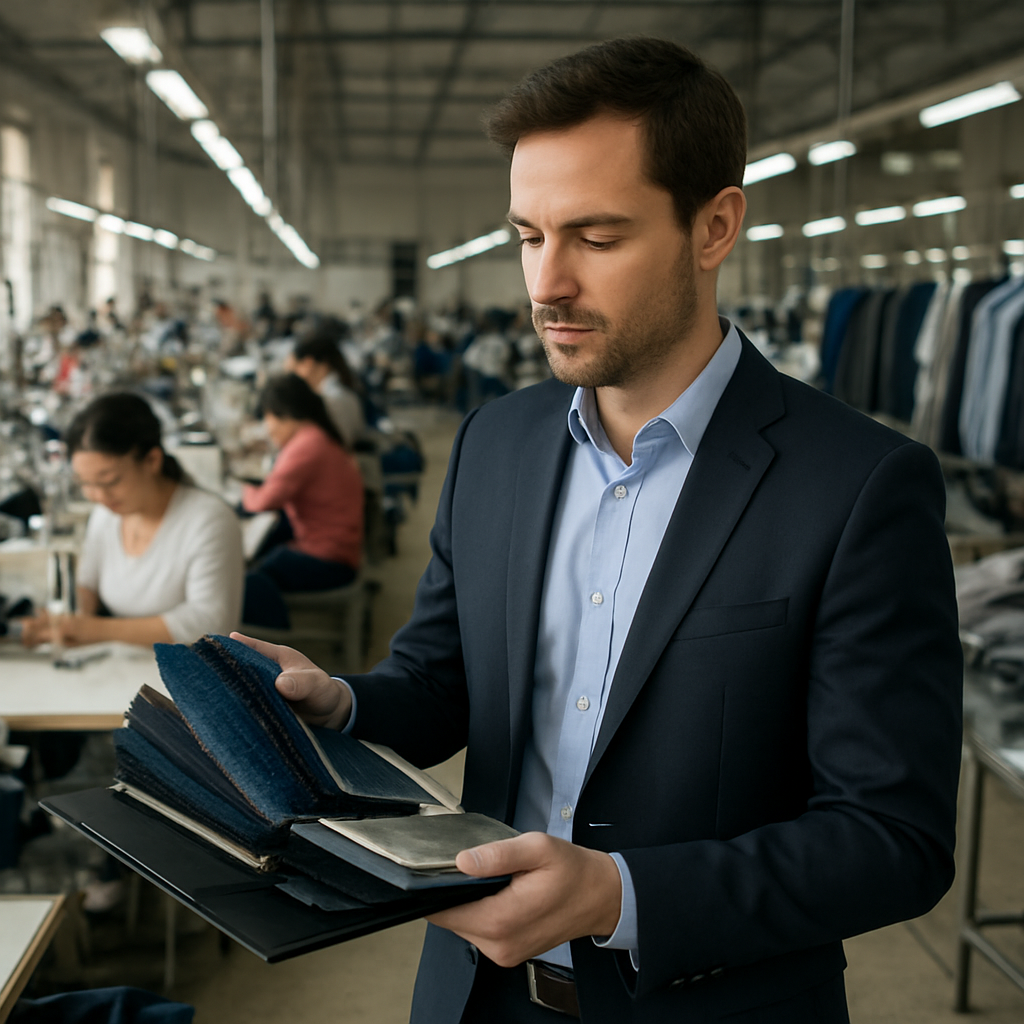
If you want to find a wholesale clothing factory in China, the most practical places to start are Alibaba, Made-in-China, factory-direct websites, and major sourcing hubs such as Guangzhou. The key is not just finding a listing that says “factory” or “manufacturer”, but verifying whether the seller is a true clothing factory, a wholesaler, a distributor, a trading company, or a marketplace seller. That distinction matters because each option gives you a different price structure, lead time, minimum order quantity, and level of customisation.
For buyers who want to buy directly from Chinese manufacturers, it is often best to combine online searching with verification steps such as sample requests, OEM/ODM checks, and business credential review. If you want a deeper explanation of what direct factory buying involves, see our guide on buy directly from Chinese manufacturers.
Where to find wholesale clothing factories in China
The main places buyers actually use are B2B marketplaces, factory-direct wholesale websites, and wholesale sourcing hubs. In practice, that means platforms such as Alibaba and Made-in-China, plus websites and market networks that position themselves as factory-direct or OEM/ODM suppliers. Guangzhou is especially important because it is one of the best-known clothing wholesale and sourcing centres in China.
If your goal is to source directly from a manufacturer, start by searching product-specific terms rather than only generic phrases like “clothing supplier”. Search for the garment type, target customer, and business model you need, for example women’s dresses, men’s T-shirts, streetwear, or children’s wear. Then check whether the seller is a factory, a wholesaler, or a sourcing company.
It also helps to understand that not every “wholesale supplier” is a factory. Some listings are genuine manufacturers, while others are trading companies, distributors, or directories that connect you to multiple sellers. That is why verification matters before you place an order.
Best online platforms for finding China clothing factories and suppliers
If you cannot travel to China, online sourcing is the fastest way to find options. The strongest names appearing in current buyer searches include Alibaba, Made-in-China, DHgate, AliExpress, Trendsi, and factory-direct websites such as Apparelcn and LIUHUA Mall. Each channel serves a slightly different purpose.
| Platform or channel | What it is best for | What to check carefully |
|---|---|---|
| Alibaba | Large supplier base, factory leads, OEM/ODM options | Whether the seller is a real manufacturer or a trading company, MOQ, samples, and lead times |
| Made-in-China | Supplier discovery and certified manufacturer listings | Factory status, product scope, and verification details |
| DHgate | Smaller-order wholesale and marketplace buying | Whether the listing is direct factory supply or marketplace resale |
| AliExpress | Low-quantity buying and test orders | Pricing, shipping terms, and whether the seller is a true factory |
| Trendsi | Buyer guides and wholesale vendor discovery | How the platform defines its supplier relationships and shipping terms |
| Apparelcn | Factory-direct and custom clothing manufacturing | Product scope, OEM/ODM support, and sample process |
| LIUHUA Mall | Guangzhou-linked wholesale market presence and sourcing | Whether the listing is a market seller, factory-direct supplier, or sourcing service |
Alibaba’s China wholesale clothing supplier pages are a common starting point because they aggregate factories, distributors, and companies in one place. Made-in-China also lists wholesale clothing distributors and manufacturers. For readers comparing sourcing channels, our article on Alibaba, Global Sources, and China sourcing agents explains how those options differ and when a sourcing agent may be worth using.
Use these platforms as discovery tools, not as proof of factory status. A listing that says “factory direct” can be useful, but it does not automatically guarantee that the seller owns the factory. Ask for evidence before you commit.
What to look for on online supplier listings
- Manufacturer or factory label: Useful, but not enough on its own.
- OEM/ODM capability: Important if you want your own brand, private label, or product changes.
- Product catalog: Check whether the supplier specialises in your garment category.
- MOQ: Make sure the minimum order fits your budget and sales plan.
- Sample policy: A serious supplier should be able to provide samples.
- Lead time: Confirm how long production will take after approval.
- Verification signals: Business credentials, consistent company information, and clear contact details.
If you are negotiating pricing or terms on a marketplace like Alibaba, it helps to understand how supplier conversations usually work. See our guide on negotiate on Alibaba for a practical approach.
What “free shipping worldwide” usually means
Some sellers advertise “free shipping worldwide” on wholesale clothing listings. Treat that carefully. In most cases, it is a marketplace or seller offer, not a universal rule for all China factory sourcing. It may apply only to selected products, limited order sizes, specific destinations, or certain shipping methods.
Before you rely on such an offer, ask what is actually included. Is the freight built into the unit price? Is it only for sample orders? Does it cover duties, taxes, or only transport to your country? In wholesale sourcing, the cheapest-looking listing is not always the cheapest landed cost.
Where to source wholesale clothing in Guangzhou and other China hubs
Guangzhou appears so often in China clothing sourcing because it is a major wholesale and manufacturing hub for apparel. Buyers use Guangzhou to search for wholesale markets, factory-direct suppliers, OEM/ODM manufacturers, and sourcing services. If you see LIUHUA mentioned in search results, it is best understood as a Guangzhou wholesale-market and sourcing destination that also markets itself online.
Guangzhou is especially useful when you want to compare many sellers quickly, inspect product quality in person, or build relationships with suppliers on the ground. It is not the only clothing sourcing location in China, but it is one of the most visible and practical places for apparel buyers.
When a physical market visit makes sense
- You need to compare fabrics, stitching, sizing, and finish in person.
- You want to meet suppliers face to face and confirm who actually owns the production line.
- You are sourcing larger volumes and want to negotiate more confidently.
- You need to see how a supplier handles customisation, sampling, and order revisions.
When online sourcing is the better option
- You cannot travel to China.
- You need to shortlist suppliers quickly.
- You are testing product ideas with small orders or samples.
- You want to compare many factories before deciding which ones to contact directly.
Online and offline sourcing are often complementary. Many buyers start online, shortlist a few factories, then visit Guangzhou or request samples before placing a larger order.
How to verify a China clothing factory before you buy
Finding a supplier is only the first step. Buying wholesale clothes from China is a process of vetting, sampling, comparing terms, and then placing the order. If you want to know how to find a clothing factory in China, the answer is not just “use a marketplace”. It is: search, verify, sample, compare, and negotiate.
Simple verification workflow
- Confirm the seller type. Ask whether the supplier is a manufacturer, wholesaler, distributor, trading company, or sourcing agent.
- Check OEM/ODM capability. If you need branding or product customisation, confirm that the supplier can actually do it.
- Request samples. Sample quality tells you far more than the listing description.
- Compare MOQ and lead times. A factory that looks perfect may not fit your order size or delivery schedule.
- Review credentials and contact details. Make sure the business information is consistent across the listing and correspondence.
- Negotiate terms before paying. Clarify payment method, production schedule, inspection expectations, and shipping responsibilities.
When a seller claims to be “factory direct”, ask for proof that matches the listing. That can include product catalogues, business registration details, customisation examples, factory photos, and a clear explanation of the production process. A true factory should usually be able to explain how your order moves from sample approval to production.
Factory, wholesaler, distributor, and trading company: what is the difference?
| Seller type | What it usually means | Why it matters to you |
|---|---|---|
| Factory / manufacturer | The business makes the clothing itself or controls production directly | Better for customisation, OEM/ODM, and direct pricing discussions |
| Wholesaler | Buys stock in bulk and resells it | May offer fast availability, but usually less customisation |
| Distributor | Moves products from manufacturers to other buyers or channels | Good for supply access, but not always factory pricing |
| Trading company | Sources from factories and manages export or sales | Can simplify communication, but the seller may not own production |
| Marketplace listing | A listing hosted on a platform rather than a direct factory website | Requires extra verification because the platform itself is not the producer |
For many buyers, a trading company is not automatically a bad choice. It can be useful if you need communication support, mixed product categories, or export handling. The main point is to know what you are buying and from whom.
What factory direct and OEM/ODM really mean
These terms are often used in search results, but they are not interchangeable.
Factory direct usually means you are buying from the source of production rather than from a retail layer. That can reduce mark-ups, but it does not always mean lower total cost once sampling, freight, and order minimums are included.
OEM means the factory manufactures products to your specification, often with your brand or packaging. ODM means the factory offers existing designs that can be adapted or branded for your use. If you want a private label clothing line, OEM or ODM capability is especially important.
Before you commit, ask exactly what can be customised: fabric, colour, sizing, labels, tags, packaging, stitching, prints, embroidery, and trims. A supplier may claim “OEM/ODM” but still only support limited changes.
How to get wholesale clothes from China if you are buying for women’s or men’s apparel
The sourcing channels are broadly the same whether you are buying women’s or men’s clothing. The difference is in the product requirements: fabric, style, size grading, fit, compliance expectations, and market positioning.
If you are sourcing women’s clothing, you may need more variation in styles, colours, and seasonal drops. If you are sourcing men’s clothing, you may focus more on fit consistency, basics, workwear, or specific category performance. In both cases, the smart move is to search by product category, not only by gender.
So instead of asking only “where can I find a wholesale clothing factory in China?”, search for the exact item you want, such as women’s blouses, men’s trousers, activewear, or kids’ apparel, and then verify the supplier type and production capability.
Common China clothing manufacturer terms you will see in search results
Search results for clothing sourcing in China often use overlapping terms, and understanding them helps you read supplier pages correctly.
- Manufacturer: A business that produces goods, ideally with its own production or controlled production lines.
- Factory: Often used interchangeably with manufacturer, but you should still verify what it means in practice.
- Supplier: A broad term that can refer to factories, wholesalers, trading companies, or distributors.
- Wholesaler: Usually sells in bulk, but may not make the goods.
- Distributor: Moves goods through the supply chain, often without manufacturing them.
- OEM: Original equipment manufacturing; the supplier makes to your spec.
- ODM: Original design manufacturing; the supplier offers ready-made designs that can be branded or adapted.
This is why a page can call itself a “custom clothing manufacturer”, “wholesale supplier”, or “factory direct” source and still require verification. The label alone does not prove ownership of the factory or the quality of the production line.
Practical next steps for buyers
If you are serious about sourcing clothing from China, start with a shortlist of platforms and suppliers, then move through a verification process. A practical path looks like this:
- Search by product category and business type.
- Shortlist suppliers that claim factory, manufacturer, OEM, or ODM capability.
- Request samples and confirm specification details.
- Compare MOQs, lead times, and shipping terms.
- Check whether the supplier is truly factory direct or actually a wholesaler/trading company.
- Place a controlled first order before scaling up.
If you need to compare supplier routes more broadly, it may help to revisit the differences between marketplaces, sourcing agents, and direct manufacturers before you commit to a large order. The best place to buy wholesale clothing in China is not the same for every buyer; it depends on your volume, product type, need for customisation, and how much verification you are willing to do.
Used correctly, Alibaba, Made-in-China, Guangzhou-linked wholesale hubs, and factory websites can all lead you to real suppliers. The winning strategy is to treat the search result as a starting point, not the final answer.