
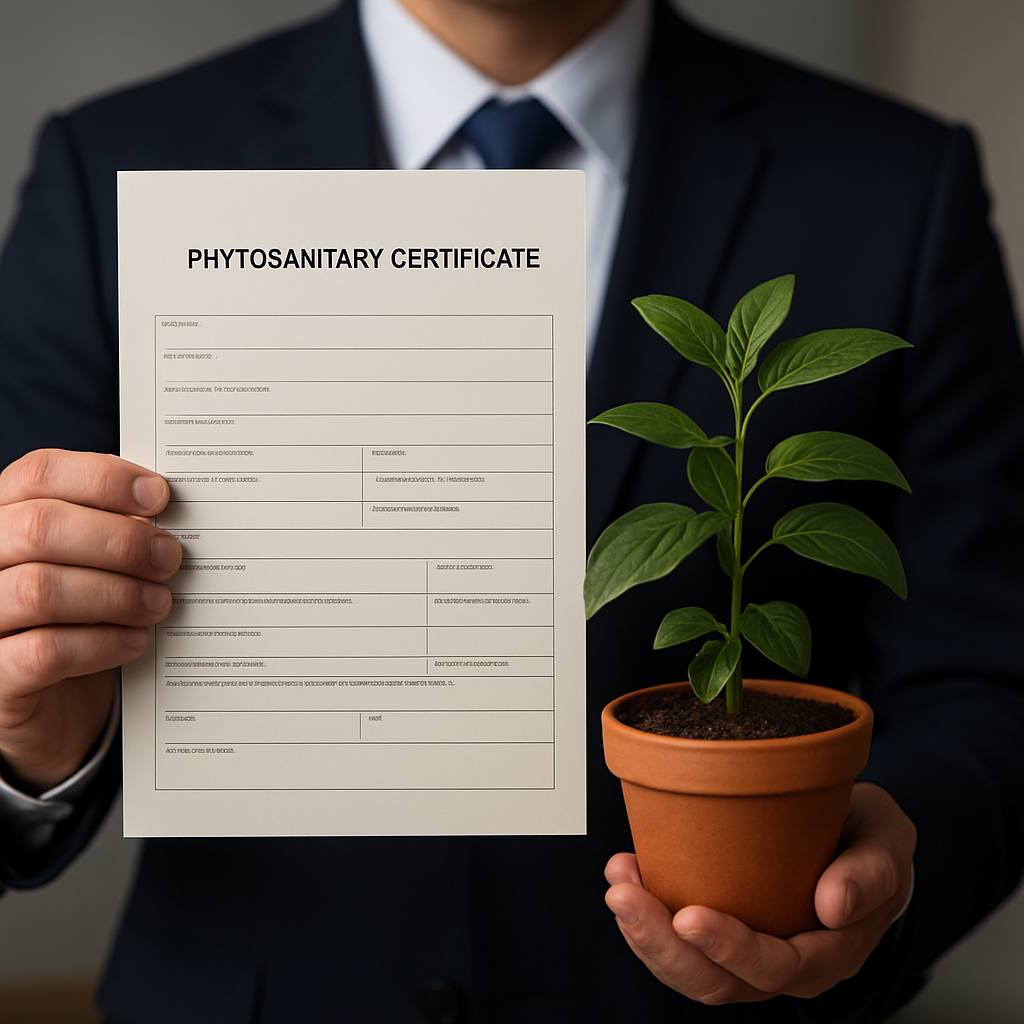
A phytosanitary certificate is the official plant-health document that may be required when importing plants and plant products into the USA. It is issued by the exporting country’s plant protection authority, or NPPO, and it shows that the shipment has been inspected and is considered to meet the destination country’s plant-health requirements. It is important, but it is not the same thing as a U.S. import permit, and it does not automatically guarantee entry.
In practice, the United States uses plant-health controls to reduce the risk of introducing pests, weeds, and plant diseases through imported goods. Depending on the commodity, origin, and intended use, you may need a phytosanitary certificate, a USDA/APHIS import permit, both, or other routing and inspection steps before the shipment can enter.
What a phytosanitary certificate is and why the USA requires it
A phytosanitary certificate is an official document used in international plant trade to confirm that a shipment of plants or plant products has been inspected under the exporting country’s plant-health system. It normally states details of the consignment, inspection results, and any required phytosanitary declaration. In simple terms, it is evidence that the shipment has been checked for regulated pests and is considered compliant with the importing country’s plant-health rules.
This matters because plant pests can move quickly through international trade. Live plants, seeds, flowers, bulbs, roots, and other plant material can carry insects, fungi, bacteria, weeds, or disease organisms that are not present in the USA. That is why the certificate is tied to a specific shipment and specific goods, rather than acting as a blanket approval for all plant imports.
For a practical overview of what the certificate is and what it usually contains, see this explanation of phytosanitary certificates in global trade. It describes the document as an official certificate issued by the exporting country’s authorised plant-health authority and shows the kinds of shipment details typically included.
What plant products are typically covered by phytosanitary rules
The exact U.S. requirement depends on the commodity and the importing conditions, but the kinds of products that commonly fall under phytosanitary controls include:
- live plants and plants for planting
- plant cuttings
- bulbs and tubers
- seeds for propagation
- grains
- fresh fruits and vegetables
- herbs
- fresh-cut flowers and decorative foliage
- roots and nursery stock
- wood and some wood products
- cotton
- growing media and other plant parts
These categories are often discussed because they can carry pests or disease. However, not every processed or packaged plant product is treated the same way. Some processed items may not require the same documentation, while regulated articles often do. The key point is that APHIS controls are commodity-based and risk-based, so you should not assume that one rule covers every plant-related product.
If you want a broader plant-product perspective, this government guidance on fruit and vegetable exports is useful because it explains how plant-health authorities classify regulated, notifiable, and unregulated products, and why many fresh plant foods need certification while some processed items do not.
Is a phytosanitary certificate enough to import plants into the USA?
No. A phytosanitary certificate alone is not automatically enough to bring plants into the USA. It is one important document, but the shipment may still need USDA/APHIS approval, an import permit, inspection, treatment, or routing to the correct entry channel before it can be released.
This is the point many importers and travellers miss: the certificate proves the shipment was inspected and described as compliant by the exporting country’s plant-health authority, but U.S. authorities still decide whether the item may enter under U.S. rules. If the shipment is not directed correctly, if the commodity is restricted, or if a required permit is missing, the plants can be held, rejected, confiscated, or returned.
That is why a document check is not enough on its own. The shipment must also match the correct U.S. process. For example, some goods need inspection by USDA/APHIS, and some need the right permit before shipment moves. A useful comparison of how inspection holds can affect parcel movement is covered in this guide to inspection holds and what they can mean.
When you need a USDA/APHIS import permit as well as a phytosanitary certificate
Some plant shipments require both a phytosanitary certificate and a USDA/APHIS import permit. The permit requirement depends on the product category and the applicable APHIS programme or commodity rule. There is no single universal permit for every plant import.
Special permits may apply to certain plant materials, including plants that APHIS has identified as parasitic plants or weeds. Some plant products also fall under APHIS PPQ controls, which means the importer may need to complete permit steps before the goods are shipped.
The safest workflow is:
- Check the exact U.S. import requirements for the commodity.
- Apply for a USDA/APHIS import permit if the product category requires one.
- Arrange the phytosanitary certificate from the exporting country’s plant-health authority.
- Make sure the shipment is routed to the correct inspection or entry process.
In other words, the permit and the certificate do different jobs. The permit is generally the U.S. authorisation to import a specific regulated commodity under defined conditions. The phytosanitary certificate is the exporting-country document that shows the shipment was inspected and meets the importing country’s plant-health requirements.
For readers who want a broader explanation of how different shipping documents are used in import compliance, this comparison of bill of lading versus bill of entry helps separate transport paperwork from regulatory paperwork.
Can you cross the border with plants?
Not safely unless you have checked the specific U.S. rules first. Crossing the border with plants is not the same as carrying ordinary personal items, because plant material can be restricted, inspected, or refused even if you have some paperwork.
A phytosanitary certificate may help, but it does not guarantee entry by itself. Border or port officials may still require a permit, a specific inspection route, or additional documentation. If the shipment is not presented properly, it may be confiscated or destroyed. In some cases, it may be sent back at the importer’s expense.
This is especially important for travellers carrying small quantities of plants, seeds, cuttings, bulbs, or roots in luggage or vehicle cargo. The practical rule is simple: do not assume that because the item is small or for personal use, it is automatically allowed. Check the commodity-specific U.S. requirements before you travel.
If a plant or plant product is not declared correctly, there can also be customs consequences. For more on that risk, see what happens if you forget to declare items at customs.
How long it takes to get a phytosanitary certificate
There is no single official U.S. turnaround time that applies to every shipment. The timing depends on the commodity, inspection workload, and the exporting country’s plant-health authority.
As a practical guide, some products can be processed within a few days if the paperwork and inspection schedule are straightforward. For seed shipments, however, the lead time may be longer. The evidence supplied for this article shows that exporters may need to apply two to three days in advance for many products, and around eight to ten days in advance for seed shipments so inspection and checking can be completed properly.
The safest approach is to plan early and confirm the timing with the relevant plant-health authority or NPPO before the shipping date. If the shipment is moving on a tight deadline, build in extra time for inspection, document review, and any corrective action that may be needed before export.
Which products are regulated by APHIS and which may need extra controls
APHIS oversight is not based simply on whether something is a plant. It is based on the commodity, its use, and the risk it may pose. Products such as fruits, vegetables, flowers, plants, seeds, and other plant products may fall under APHIS PPQ controls. In some cases, the intended use matters too: propagation material may be treated differently from items for consumption, decoration, or processing.
That means you should not assume the same documentation applies to every plant-related item in the same way. A nursery plant, a packet of seeds, a decorative flower shipment, and a processed wood product can each face different requirements. The exact rule depends on the specific item, origin, and import purpose.
If you are trying to avoid compliance mistakes, it helps to review the broader shipping process as well. This guide to common import shipping mistakes is useful for understanding how documentation gaps, incorrect Incoterms, and poor planning can lead to delays or rejection.
What happens if the paperwork or routing is wrong
If the shipment is not documented correctly, not directed to the right inspection channel, or not covered by the required permit, the consequences can be serious. Based on the supplied evidence, possible outcomes include delay, confiscation, destruction, or shipment return.
In practice, the issue is often not the absence of one document alone. It may be a mismatch between the certificate, the permit, the commodity description, the inspection path, and the actual goods being shipped. That is why importers should verify the exact requirements before the goods leave the origin country.
If a package is held for inspection, the next steps usually depend on the customs or plant-health authority’s instructions. You should not assume a hold means the shipment will be released automatically. Treat it as a compliance signal and respond quickly.
Practical checklist before importing plants into the USA
- Identify the exact plant or plant product being imported.
- Check whether it is regulated by APHIS or subject to special conditions.
- Confirm whether a USDA/APHIS import permit is required.
- Arrange the phytosanitary certificate from the exporting country’s plant-health authority.
- Make sure the certificate matches the shipment, commodity description, and destination requirements.
- Allow enough lead time for inspection and document issuance.
- Confirm the correct border, port, or inspection routing before shipping.
- Keep all transport and regulatory documents aligned so the shipment is not held unnecessarily.
As a general rule, the more sensitive the plant product, the more important it is to verify the exact compliance path before dispatch. That is particularly true for live plants, propagating material, seeds, bulbs, and any shipment that may fall under special APHIS controls.
The short answer
If you are asking, “What is the phytosanitary certificate required for importing plants into the USA?”, the short answer is that it is the official plant-health certificate issued by the exporting country’s plant authority to show the shipment has been inspected and meets the importing country’s requirements. For many plant imports, it is required; for some shipments, a USDA/APHIS import permit is also needed; and for others, additional routing or inspection steps apply.
So the safest approach is not to treat the phytosanitary certificate as the only document that matters. Check the commodity-specific U.S. requirements first, then secure the permit if needed, then obtain the certificate, and only then ship the plants.