
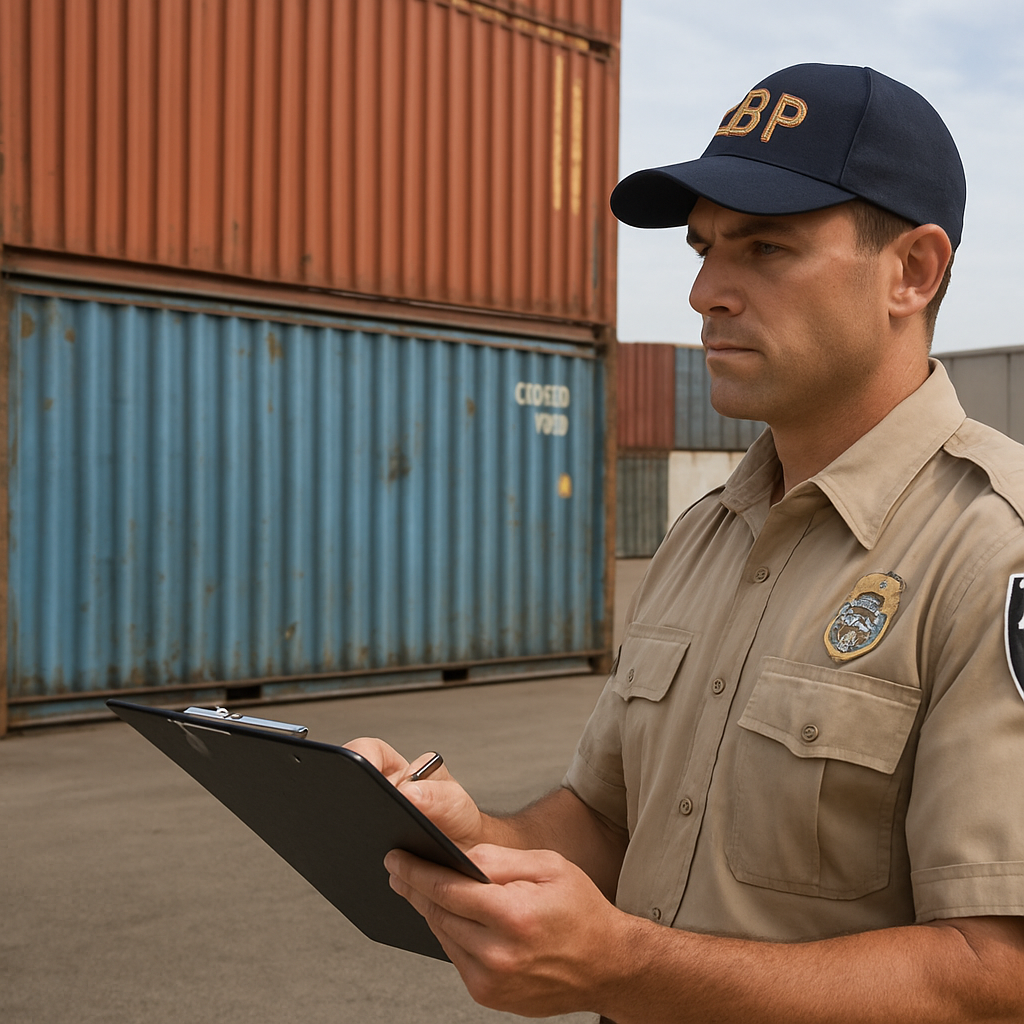
CBP in shipping means U.S. Customs and Border Protection. It is the U.S. federal agency that regulates and facilitates international trade at ports of entry, reviews import paperwork, inspects cargo when needed, and may assess duties and taxes before goods are released into the United States.
CBP is not a shipping line, freight forwarder, or customs broker. It is the customs and border authority that sits at the centre of U.S. import clearance, so if your shipment is entering the United States, CBP is usually the agency deciding whether it can move forward. For a deeper look at the compliance side of this process, see our guide to customs compliance basics.
What CBP Means in Shipping
In the shipping context, CBP stands for Customs and Border Protection, the U.S. agency responsible for border control, customs enforcement, and trade facilitation. The practical shipping meaning is simple: CBP is the authority that checks whether imported goods can enter the country legally and whether they meet the required customs rules.
According to CBP’s own trade guidance, the agency secures legitimate trade, enforces U.S. trade laws, and protects the American economy while allowing lawful commerce to continue. In other words, CBP is not just about security at the border; it is also a core part of import clearance for commercial shipments entering the United States. You can read more on the agency’s trade role on the official CBP trade page.
CBP is part of the U.S. Department of Homeland Security. It is a law-enforcement and customs authority, not a logistics provider and not a customs broker.
How CBP Affects Import Clearance
When a shipment arrives in the United States, CBP may review the import documentation, check the cargo, and decide whether the goods can be released from CBP custody. That process can also include collecting duties, taxes, and trade data where applicable. Under CBP’s statutory authority, the agency can require documentation and information needed to determine whether merchandise may be released, assess duties, and collect accurate statistics.
In practice, that means clearance is not just a payment issue. It is a compliance process. If the paperwork is incomplete, the valuation looks wrong, the classification is unclear, or another requirement is missing, CBP can delay release until the issue is resolved.
Timing can vary depending on the type of goods, the shipment value, and the transportation mode. A low-risk shipment may clear quickly, while a more complex shipment may need extra review or inspection. Trusted-trader participation can sometimes help reduce friction, but it does not guarantee immediate release.
If you want a practical explanation of the charges that may arise during clearance, see our guide on how to pay duties and taxes for imported goods.
What CBP may check on an incoming shipment
- Import documents and supporting information
- Cargo details and physical contents
- Admissibility under U.S. customs rules
- Duty and tax liability, where relevant
- Compliance with other import requirements
This is why documentation quality matters. Late or inaccurate filings can slow the process and create avoidable costs. If your issue is specifically around filing deadlines, our article on late filing penalties explains the risks in more detail.
CBP vs Immigration and Other Similar Terms
CBP is often confused with immigration agencies because it works at the border and enforces both customs and immigration-related regulations in that setting. But it is still its own agency with a customs-and-border mission. In the shipping context, the meaning remains Customs and Border Protection.
Is CBP the same as ICE? No. They are different agencies. CBP handles border control, customs enforcement, and trade facilitation at ports of entry. ICE is a separate agency within Homeland Security that has a different enforcement role. The letters are easy to mix up, but they are not the same thing.
If you came here because you were thinking about immigration rather than cargo, the overlap is that CBP does work at the border. However, for shipping and import clearance, the relevant meaning is customs clearance, admissibility, and trade compliance — not immigration processing in general.
Also, CBP can mean other things outside logistics in other industries, but those meanings are not relevant to shipping.
How to Check CBP Status
If someone asks about “CBP status” in shipping, they usually mean the current customs-clearance state of an import shipment. In practical terms, that means where the shipment is in the CBP review process: documents received, under review, selected for inspection, awaiting release, or cleared.
The sources available for this article do not provide a specific public CBP tracking portal or a status-code list, so it would be misleading to invent one. The safest way to check the status is to confirm the latest customs and release information with the people handling the shipment, such as the importer, customs broker, or carrier, and to review the filing records and shipment documents already submitted.
Safe next steps when you need a status update
- Ask the importer or broker whether CBP has requested additional information.
- Check whether the entry documents were filed correctly and on time.
- Confirm whether the shipment is awaiting inspection, review, or release.
- Review the cargo description, value, and supporting paperwork for inconsistencies.
If the shipment seems delayed, that does not automatically mean it has been rejected or seized. It may simply be in review. The difference matters, because a customs hold is not the same as a final enforcement action.
CBP, Customs Brokers, and Trusted-Trader Programmes
It is also important to separate CBP from a customs broker. CBP is the government authority. A customs broker is a separate professional role that helps prepare and submit import information, manage documentation, and coordinate the clearance process.
If you want to understand that distinction more clearly, our guide on customs broker requirements explains what brokers do and what individuals can do on their own.
Trusted-trader programmes can also matter. CBP recognises compliance and security programmes such as CTPAT, and participation can help speed clearance when the relevant compliance criteria are met. That said, faster processing is not guaranteed. CBP still has the authority to review documents, inspect cargo, and hold goods when needed.
For a more detailed look at the programme side of this topic, see our article on CTPAT requirements.
What to Remember About CBP in Shipping
In shipping, CBP means U.S. Customs and Border Protection. It is the agency that controls customs clearance for goods entering the United States, and its role includes document review, cargo inspection, duty assessment, and release decisions. The better your paperwork and compliance are, the smoother the process is likely to be.
If you are dealing with a shipment that is stuck, delayed, or awaiting release, the key question is usually not just “What does CBP mean?” but “What does CBP need from this shipment before it can be cleared?” That is the practical question behind most import delays.