
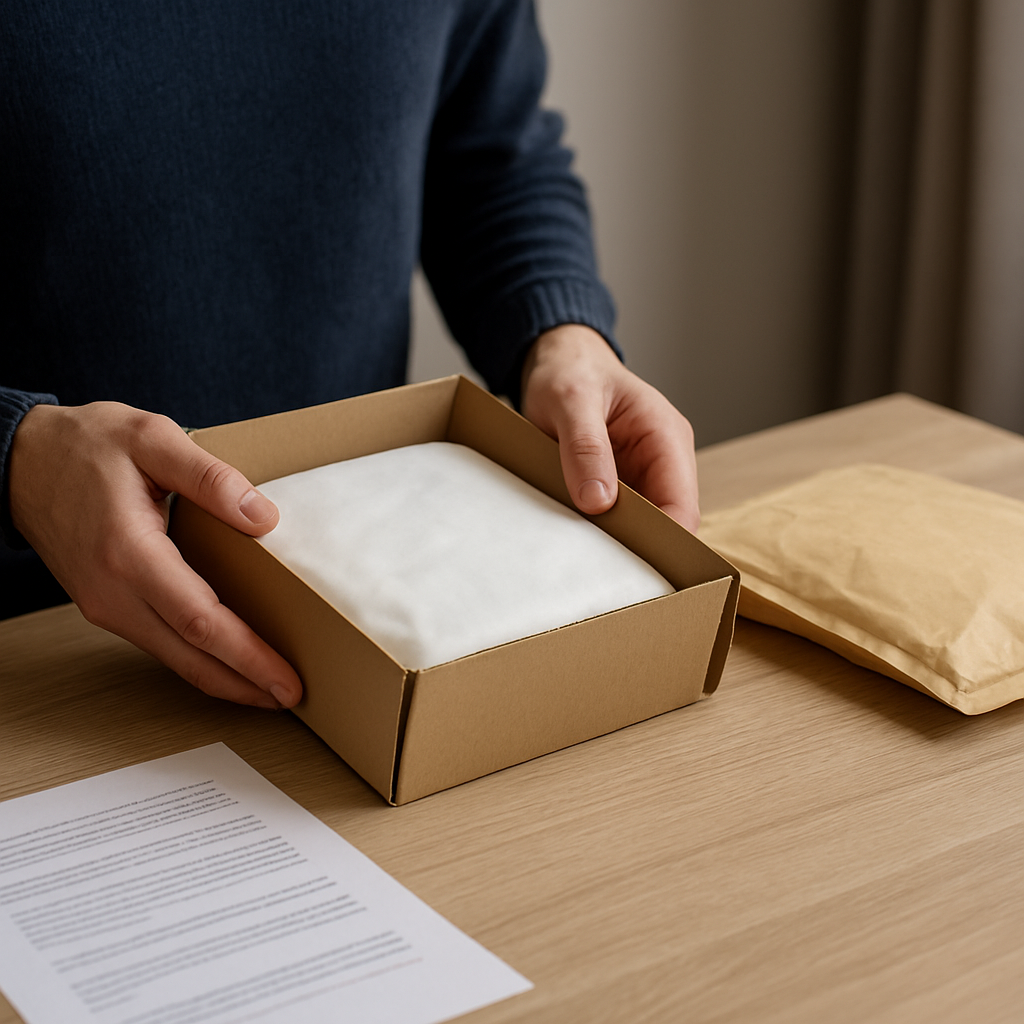
If the item was truly unordered merchandise, the FTC says you do not have to pay for it and you do not have to return it. But if the sender actually fulfilled your order incorrectly, that is a different situation, and you should not automatically assume the item is yours to keep.
The key question is simple: was this a genuine unsolicited item, or was it the wrong item shipped against an order record? That distinction matters because the FTC rule applies to unordered merchandise, not every delivery mistake in every retail situation. For the consumer-law explanation, the FTC’s guidance on unordered merchandise is the most important source.
Do you have to return an item sent by mistake?
Usually, no if it was truly unordered merchandise. Under the FTC rule, companies cannot send unordered merchandise and then demand payment. You also do not have to return it, and you are legally entitled to keep it as a free gift.
However, do not stretch that rule too far. A retailer shipping the wrong item for an actual order is not always the same thing as unsolicited merchandise arriving out of the blue. The safest approach is to check your order history, delivery confirmation, and any messages from the seller before deciding what to do next.
What the FTC rule says about unordered merchandise
The FTC explains that companies cannot send unordered merchandise and then demand payment for it. In practical terms, that means:
- you do not have to pay for unordered merchandise;
- you do not have to return unordered merchandise;
- you may keep it as a free gift;
- the sender should not later treat it as a debt simply because it was delivered to you.
The FTC also advises consumers to keep track of purchases and resolve delivery mistakes early if they spot an issue with the address or order details. That is sensible, because the cleanest way to avoid a dispute is to identify the problem before it turns into a billing or fulfilment argument.
If you want to read the rule in full, the FTC’s consumer guidance on what to do if you get unordered products is the authoritative reference.
Unordered merchandise vs a wrong item shipped in an actual order
This is where many people get confused. The legal treatment can differ depending on what actually happened.
| Situation | What it usually means | What you should do |
|---|---|---|
| Unordered merchandise | You received an item you never ordered and there is no valid purchase record tying it to your order. | You generally do not have to pay for it or return it under the FTC rule. |
| Wrong item shipped | You placed an order, but the seller sent the wrong product, size, colour, quantity, or variation. | Check the seller’s instructions and contact support before taking action. |
| Extra item included | The parcel contained an additional item beyond what you ordered. | Review the order details and the seller’s communication to decide whether it is truly unsolicited or part of a fulfilment mistake. |
That distinction matters because the FTC rule is designed for unordered merchandise, not to create a universal rule that every shipping mistake becomes a free item. If there is an actual order behind the delivery, you may be dealing with a retailer error rather than a true unsolicited shipment.
What to do if the wrong item came from Amazon or another retailer
If the wrong item came from Amazon or another marketplace, treat it as a process question first and a legal question second. Amazon’s standard return policy is not the same thing as the FTC rule for unordered merchandise. Amazon states that most items can be returned for a refund or replacement/exchange within 30 days of delivery if they are in original or unused condition, subject to eligibility rules. You can review that policy on Amazon’s help page for Amazon returns.
That policy is useful as a practical reference, but it does not answer every wrong-item scenario. If you received the wrong product, the better next step is to follow the seller’s or platform’s instructions rather than assuming the normal “I do not like it” return route applies automatically.
Practical next steps if the delivery looks wrong
- Check your order history. Confirm what you actually ordered and whether the item matches the listing.
- Look at the packing slip and label. These may show whether the parcel was mispicked, mislabelled, or misdelivered.
- Take photos. Photograph the unopened parcel, the contents, and any labels or inserts.
- Keep messages. Save emails, chat transcripts, and support responses.
- Contact the seller or platform. Ask whether they want the item returned, replaced, or kept.
- Follow the written instructions. Do not guess when a marketplace process is involved.
If a delivery issue turns into a formal dispute or a more serious shipment problem, it can also help to understand how logistics issues escalate. For related context on formal shipment problems, see what to do if a shipment is formally disputed or held. If you are trying to understand a status message rather than a mistaken delivery, our guide to customs clearance status may also help.
What happens if you accidentally send the wrong item back to Amazon?
This is a separate problem from receiving the wrong item in the first place. If you return the wrong item, the seller or platform may misidentify the return, reject it, or think the correct product was not sent back. That can create delays, account friction, or a refund dispute.
The safest approach is to match the return label to the exact item, keep proof of what you packaged, and retain tracking information. If the retailer says the wrong thing was returned, your evidence matters.
In practice, this is why return instructions are so important. A platform return portal may be designed for a specific item, and if the item inside the box does not match the return record, the process can go wrong even when you intended to comply.
Do you get a refund on shipping if you return an item?
There is no universal rule in the supplied sources that says shipping will always be refunded. In most cases, whether you get your original shipping back, whether return postage is reimbursed, and whether any restocking charges apply depends on the seller policy, the platform rules, and the reason for the return.
That means the answer is usually “it depends” rather than a blanket yes or no. If the return is because the seller made an error, the seller or marketplace may treat the shipping differently from a standard change-of-mind return. But you should not assume every mistaken delivery comes with free return postage or a guaranteed shipping refund unless the seller says so in writing.
If you are dealing with a marketplace return and the rules are unclear, ask support whether the return label is prepaid, whether original shipping is refundable, and whether the item must be sent back at all.
Is return abuse a crime?
Return abuse is a separate issue from receiving unordered merchandise. The evidence supplied here does not establish a universal criminal-law rule for return abuse, so it would be inaccurate to claim that every misuse of a return process is a crime.
What can be said safely is that return abuse can cause practical consequences, including account restrictions, rejected returns, or suspicion of fraud in some situations. If someone repeatedly misuses return systems, the matter may become more serious. But that is not the same thing as the FTC rule on unordered merchandise, and it should not be treated as the same issue.
If your concern is a one-off mistake, focus on the platform process and document what happened. If the concern is repeated misuse or a dispute over whether a return was legitimate, the issue may need direct platform escalation.
What if the company says the item was fraudulently ordered in your name?
This is a different scenario again. If the company says the item was fraudulently ordered in your name, you should not automatically apply the FTC unordered-merchandise rule and assume the item can simply be kept. The supplied sources do not fully resolve that situation.
The sensible approach is to preserve everything: order records, tracking data, screenshots, emails, and any identification details on the shipment. Then ask the seller or platform what process they want you to follow before moving or returning the item.
In other words, a fraud allegation is not the same as a true unsolicited delivery. Treat it as a separate dispute and ask for written instructions.
A simple decision rule you can use
If you are still unsure whether you have to return the item, use this quick check:
- Did you order it? If yes, this is likely a fulfilment or return-policy issue, not a pure unsolicited-merchandise question.
- Was it sent with no purchase record and no request from you? If yes, the FTC rule on unordered merchandise may apply.
- Did the seller label it as a mistake and ask for it back? Follow the seller’s written instructions and keep proof.
- Are you dealing with a fraud allegation in your name? Treat it as a separate dispute and preserve all records.
- Are you trying to return it through Amazon or another marketplace? Follow the platform process carefully so the return is not misidentified.
That approach keeps you on the safest footing: verify the facts, separate consumer-law rights from platform policy, and do not assume every mistake is covered by the same rule.
Bottom line
If the item was truly unordered merchandise, you generally do not have to return it or pay for it. That is the FTC rule. But if the item was simply the wrong product shipped for an actual order, the answer can depend on the seller’s return process, the marketplace rules, and the facts of the shipment. When in doubt, check the order record, keep proof, and follow the seller’s instructions before you act.