
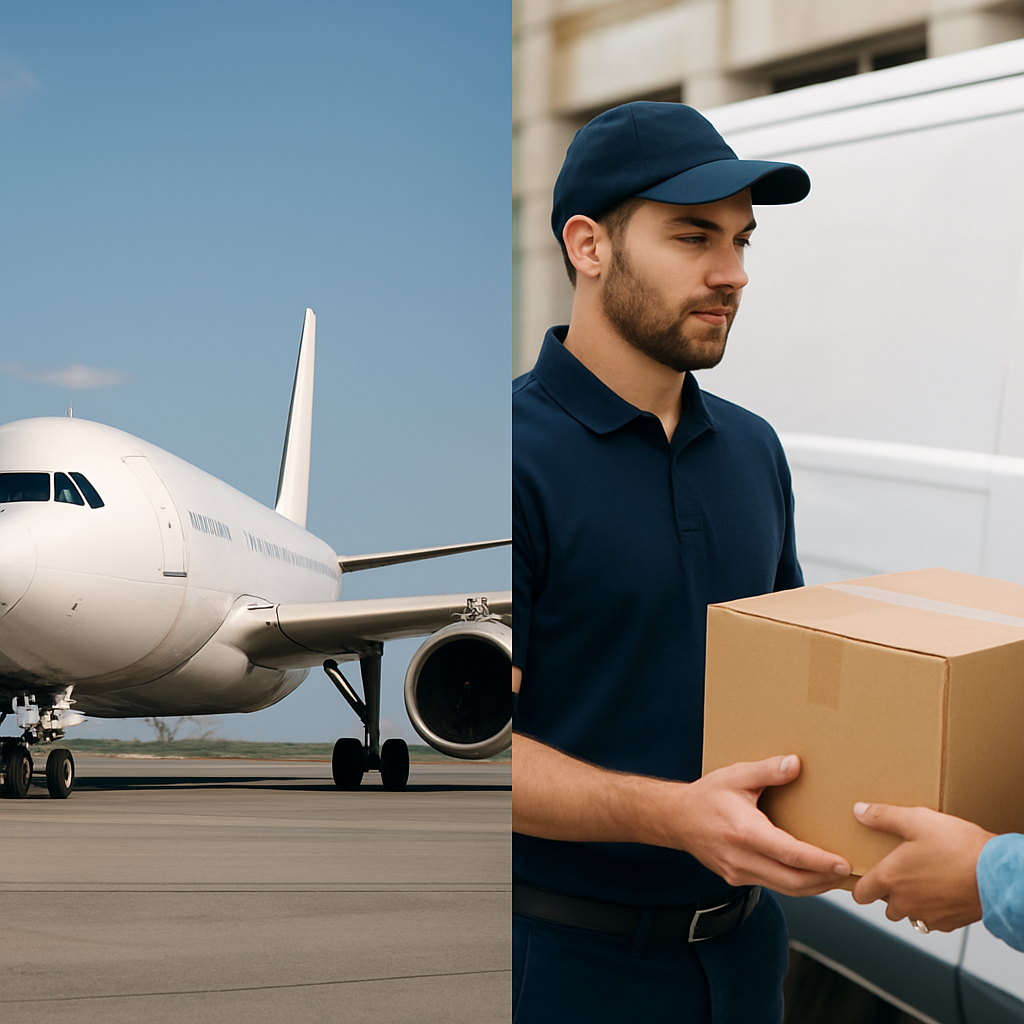
If you are deciding between air freight and courier shipping, the short answer is this: air freight is usually the better fit for larger, heavier, or bulkier shipments handled through a freight-forwarding model, while courier shipping is usually the better fit for smaller, urgent parcels that need a door-to-door service. The right choice depends on shipment size, urgency, value, customs involvement, and how much logistics coordination you want to manage yourself.
Air Freight vs Courier Shipping: The Core Differences
Although both services use aircraft, they are not the same thing. Air freight generally refers to cargo moved by air in a freight-forwarder-led process, often with an airport-to-airport structure and more separate handling steps. Courier shipping or air express is usually an integrated door-to-door service run by a courier or express carrier such as DHL, FedEx, or UPS, where pickup, transport, customs handling, and final delivery are bundled into one service.
That distinction matters because it changes how the shipment is handled, who does the paperwork, how the price is built, and how much work the shipper must do. A useful plain-English rule is:
- Air freight = better for bigger commercial cargo, often with more coordination.
- Courier shipping = better for documents, samples, parcels, and urgent small shipments.
If you want a broader explanation of how shipment movement and documentation fit into the wider process, it may also help to read import customs clearance and how it affects delivery timing.
In other words, when people say “courier freight” or “air courier”, they are usually talking about an express air delivery model rather than traditional freight forwarding. The terms are often confused, but they are not interchangeable in practice.
Courier Freight Meaning and What “Air Courier” Usually Means
Courier freight is not a strict technical term with one universal meaning. In ordinary shipping language, it usually refers to a courier service carrying freight-like items, but still operating as an express parcel network rather than a classic freight-forwarding service. That is why the phrase can be confusing: a courier may carry parcels that are too large for standard mail, but the service model is still built around speed, simplicity, and door-to-door delivery.
Air courier usually means an express air service that moves goods quickly between origin and destination with minimal administrative burden for the shipper. The live research sources consistently describe air express as a door-to-door service with fixed transit times, customs handling included, and higher cost per kilogram than many freight options. For a concise technical comparison, see this explanation of air freight versus air express.
So if you are trying to decide whether a shipment should go by courier or by air freight, the main question is not just “Which uses a plane?” The real question is “Which service model fits the shipment size, urgency, and handling requirements?”
Speed, Transit Time, and Predictability
Courier shipping is usually built for speed and predictability. It often comes with fixed transit times, simplified booking, and a more integrated end-to-end process. Air freight is also fast compared with ocean shipping, but the overall timeline can be less straightforward because it may include separate pickup arrangements, airport handling, customs processing, and final-mile delivery.
That means a shipment can be “in transit” without being delivered yet. Shipping does not automatically mean delivered. In practice, shipping status usually means the goods have entered the transport or processing chain, but they may still be waiting for departure, customs clearance, local release, or last-mile delivery. If you need a fuller view of where delays occur, see how long customs clearance takes.
The safest way to think about timing is:
- Courier: typically faster and more predictable for urgent small shipments.
- Air freight: typically fast, but the end-to-end timeline depends more on handling steps.
Do not assume a universal delivery promise from either mode. Actual transit time depends on the lane, the service level, customs, and whether pickup and delivery are included.
When Air Freight Makes More Sense Than Courier
Air freight usually becomes more attractive as shipment size and weight increase. In the supplied research, a practical rule of thumb is that courier is often used for lighter consignments, while air freight becomes more cost-effective once cargo gets larger. Directional thresholds mentioned in the research include shipments under about 45 kg for courier in some B2B use cases, under about 70 kg in some express contexts, and over roughly 100-150 kg where air freight often starts to look more economical.
These are not universal cut-offs. They are only practical guides. The right choice still depends on the dimensions, service level, route, and whether your cargo is dense or bulky.
Air freight is usually the better fit when:
- the shipment is heavy or bulky;
- the cargo is commercial rather than just a small parcel or document;
- you want more flexibility in freight handling and routing;
- the shipment is large enough that courier pricing starts to look expensive;
- you are able to manage or delegate more logistics coordination.
Courier shipping is usually the better fit when:
- you are sending documents, samples, or small parcels;
- the shipment is urgent;
- you want minimal administrative work;
- door-to-door convenience matters more than freight-style handling.
If you are comparing air freight with other modes as part of a bigger sourcing or importing decision, you may also find air freight versus sea freight useful once you have narrowed down the shipment profile.
Cost Differences: Why Courier Is Not Always Cheaper
One of the most common mistakes is assuming courier is always cheaper because it feels simpler. In reality, courier shipping can be more expensive per kilogram, especially for larger or heavier cargo. At the same time, air freight can also become expensive if the shipment needs extra handling, brokerage, pickup, or delivery support.
Courier services often use all-in, zone-based pricing. That can be convenient because it is easier to quote upfront, but the final invoice may still include surcharges such as fuel surcharges, remote area fees, or premium service charges. Air freight pricing can look lower on a per-kilogram basis for bigger shipments, but it may also involve separate charges for trucking, terminal handling, customs brokerage, and delivery.
This is why there is no meaningful universal answer to “How much is 1 kg of cargo?” A one-kilogram shipment can cost very different amounts depending on:
- origin and destination;
- actual weight and volumetric weight;
- service type;
- customs requirements;
- pickup and delivery needs;
- fuel and remote area surcharges.
For a deeper look at how duties and import charges fit into the total landed cost, see customs duty and how it is calculated separately from freight charges.
Chargeable Weight and Volumetric Weight
Whether you use courier or air freight, pricing often depends on chargeable weight, not just actual scale weight. This matters because a light but bulky shipment can be charged as if it were heavier than it really is.
Both methods typically use volumetric weight calculations, but the formulas and billing logic can differ by provider. As a directional example from the supplied research, air freight often uses one volumetric ratio and courier another, meaning the same carton can be priced differently depending on the service. The exact formula and divisor are carrier-specific, so you should always check the quote rather than assume a standard rule.
Practical takeaway: if your cargo is bulky but not very heavy, do not rely on actual kilograms alone. Compare the chargeable weight under both services before you decide.
Customs Clearance and Paperwork: Courier vs Air Freight
Customs handling is one of the biggest operational differences between the two services. Courier shipping usually includes simplified customs handling, which reduces the shipper’s administrative work. The carrier or integrator generally manages a streamlined express clearance process for many small parcels at once.
Air freight often requires more customs coordination. Depending on the lane and shipment structure, you may need a customs broker or freight forwarder to coordinate paperwork, clearance, and release. This does not mean air freight is difficult by default, but it does mean the shipper is more likely to face extra steps and more coordination.
Put simply:
- Courier: more integrated, less administrative burden for the shipper.
- Air freight: more flexible for larger cargo, but often with more paperwork and coordination.
This is also where it helps to separate customs clearance responsibility from transport responsibility. The company carrying your shipment is not always the same entity handling the customs side, and clearance is not the same thing as physical movement. If you want a practical explanation of what customs processing involves, read how long customs clearance takes.
Freight and Logistics Are Not the Same Thing
Another common point of confusion is the relationship between freight and logistics. They are not the same thing.
Freight refers to the transportation of goods. It is the movement itself. Logistics is the broader planning and management process around moving goods, including storage, routing, documentation, scheduling, customs coordination, and delivery planning.
This distinction matters because air freight is a transport method, while logistics is the wider system that supports it. A shipment can be moved by freight, but the surrounding planning may still involve logistics partners, customs brokers, warehouse teams, and transport providers.
So when someone asks whether freight and logistics are the same thing, the answer is no: freight is one part of logistics, not the whole process.
Is FedEx a Carrier or Courier?
FedEx is best understood as a transportation and logistics company that is commonly used as a courier or express carrier, although it also offers other services that may sit closer to freight forwarding or air freight depending on the product. The label depends on which FedEx service you are talking about.
For example, an express parcel service behaves like a courier service: integrated, door-to-door, and suited to urgent parcels. A freight-related product may be structured more like freight transport, with different handling and coordination requirements. So it is more accurate to say that FedEx operates across several service models rather than forcing one rigid label onto every offering.
The practical lesson is simple: do not classify the company before you classify the service. The product you book determines whether it behaves like courier shipping, air freight, or another logistics service.
Quick Comparison Table
| Factor | Air Freight | Courier Shipping |
|---|---|---|
| Typical shipment profile | Larger, heavier, bulkier cargo | Smaller parcels, documents, samples |
| Delivery model | Often airport-to-airport, with separate handling steps | Usually door-to-door |
| Speed | Fast, but end-to-end timing depends on more steps | Usually faster and more predictable for small urgent shipments |
| Customs handling | May require more shipper coordination and brokerage support | Usually simplified and integrated |
| Cost logic | Can be more economical for larger shipments | Often higher per kilogram, but convenient |
| Best fit | Commercial cargo, heavier or bulkier consignments | Urgent small shipments, parcels, documents |
How to Choose the Right Option
If you are still undecided, use this simple decision process:
- Start with size and weight. If the shipment is small and light, courier is usually worth considering first. If it is larger or bulkier, air freight may be better value.
- Check urgency. If the shipment must move quickly with minimal coordination, courier is often the simpler answer.
- Compare chargeable weight. Bulky but light cargo can be priced surprisingly high if volumetric weight applies.
- Review customs needs. If you want fewer paperwork steps, courier often has the edge.
- Look at the total landed cost. Include customs duty, import tax, brokerage, and delivery charges where relevant.
The most important point is that “cheaper” depends on the shipment profile, not just the shipping label. A courier may look expensive per kilogram, but still be the best option for a very small urgent parcel. Air freight may look more complicated, but it can make much more sense for larger commercial cargo.
If you need help separating transport charges from import charges, a useful next read is import tax and customs fees.
Bottom Line
Air freight and courier shipping are both air-based transport options, but they solve different problems. Air freight is usually the better choice for larger, heavier, or bulkier cargo that can justify freight-style handling. Courier shipping is usually the better choice for smaller, urgent shipments that benefit from a simple door-to-door model and easier customs handling.
If you remember only one thing, remember this: courier is about convenience and speed for smaller shipments; air freight is about scalable handling for larger cargo. Once you compare size, urgency, customs effort, and chargeable weight, the right option usually becomes much clearer.