
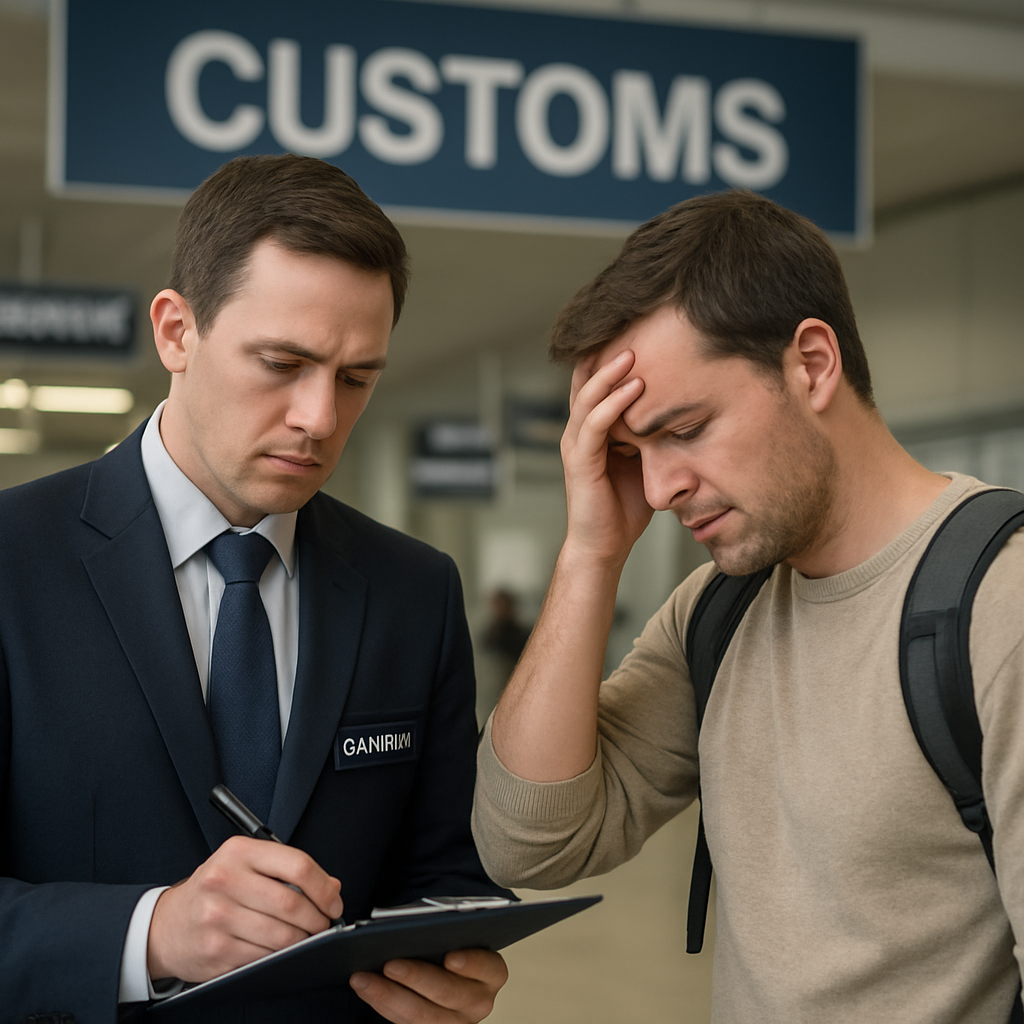
Customs clearance usually takes anywhere from a few hours to a few days, but there is no single fixed time. For routine, compliant shipments, a common range is around 1 to 3 business days, and some clear in 1 to 2 days. If customs needs more information, if documents are incomplete, or if a shipment is inspected, clearance can take longer — sometimes several days, weeks, or more.
This article is about customs clearance time, not the full delivery timeline from checkout to your door. A parcel can be moving quickly with the carrier and still be waiting for customs release, so it helps to separate customs processing from final transit.
How long customs clearance usually takes
The most accurate answer is that customs clearance is variable. Industry guidance consistently places routine clearance in the range of a few hours to several days, with many compliant shipments released within 1 to 3 business days after entry filing. FedEx notes that customs clearance usually takes one to two days when goods comply with customs requirements, while other logistics sources describe standard U.S. clearance as 1 to 3 business days after filing. UPS also notes that customs clearance can range from a few hours to several days, and sometimes longer.
That wide range exists because customs is not a shipping service with a guaranteed delivery clock. It is a review and release process. A shipment that is complete, accurately described, correctly valued, and not selected for inspection may clear quickly. A shipment with missing paperwork, a valuation question, a compliance issue, or an inspection can take much longer.
If you are searching about how long does customs clearance take USPS, how long does customs clearance take Shein, how long does customs clearance take Temu, or how long does customs clearance take AliExpress, the same basic rule applies: the carrier or marketplace does not control the customs timetable. Those are simply common parcel contexts where clearance still depends on the shipment and on customs review.
For more context on standard import timelines, see UPS’s customs clearance guide, FedEx’s explanation of what cleared by customs means, and FreightAmigo’s overview of U.S. customs clearance timelines.
What happens during U.S. customs clearance
In the United States, customs clearance is the review-and-release process handled by U.S. Customs and Border Protection (CBP). It is not a single physical place. Instead, the review happens through the port, airport, mail facility, entry point, and brokerage systems involved in the shipment.
The basic U.S. customs workflow usually looks like this:
- Entry filing or submission — the importer, broker, or carrier files the required information with CBP.
- Review — CBP checks the declaration, description, value, origin, and other shipment details.
- Possible request for more information — if something is unclear, CBP or the carrier may ask for supporting documents or clarification.
- Possible inspection — some shipments are selected for examination or additional agency review.
- Release — once the shipment is compliant and any issues are resolved, customs releases it for onward movement.
If you want a broader explanation of the U.S. process, USA Customs Clearance’s guide to speeding up customs clearance is a useful reference for the basic workflow and what can slow it down.
So, when people ask where customs clearance is in the USA, the practical answer is that it happens at the point of entry and through CBP’s review process — not at one single office or warehouse. If you ask how long does it take to get through customs in the USA, the same process applies whether the shipment enters by air, sea, mail, or courier.
Why customs clearance takes longer than expected
When customs clearance is slow, the cause is usually one of a few common issues. The biggest delay drivers are incomplete paperwork, inconsistent information, inspection, and regulatory review.
- Missing or incomplete documents — customs cannot release a shipment if the required information is not there.
- Inconsistent declarations — discrepancies between the invoice, description, value, quantity, or HS classification can trigger questions.
- Inspection — customs may physically inspect the goods or hold them for a secondary review.
- Additional agency checks — some products are subject to other government reviews before release.
- Customs questions or holds — CBP or the carrier may need clarification before the shipment can move on.
These are not unusual in global trade. They are the reason two similar parcels can have very different clearance times. One may clear the same day; another may sit for days while customs waits for documents or completes an inspection.
For a deeper look at the hold side of the process, read what “shipment declared at customs clearance” means. If you are dealing with document accuracy problems, false customs declaration penalties explain why errors can create serious delays and enforcement risk. And if a carrier is asking for extra identity or tax information, why a carrier may ask for more information is a useful related guide.
How long a package can stay in customs and what happens next
There is no single universal maximum for how long a package can stay in U.S. customs in the evidence supplied here. A package may remain there for a short period, several days, weeks, or longer depending on what is being reviewed and how quickly the issue is resolved.
What usually happens to a stuck parcel is one of three things:
- A routine hold while customs reviews the shipment.
- A request for more information from the importer, broker, shipper, or carrier.
- An inspection or secondary review before release.
A delayed package is not automatically lost or seized. In many cases, it is simply waiting for a document, clarification, or clearance step to be completed. The practical question is whether the hold is ordinary and temporary, or whether it is becoming a more serious compliance issue.
When customs finally clears the shipment, the parcel is released and moves back into the carrier network for final delivery. In other words, customs clearance is not the end of the journey — it is the hand-off point from government review back to the logistics chain.
If the delay appears to be escalating, what happens if customs escalates the issue explains the difference between a normal delay and a formal enforcement problem.
What to do if your shipment is stuck at customs
If your parcel has been in customs longer than expected, the best next step is usually to check for missing information before assuming the package is lost.
- Review the tracking status — look for wording such as “held,” “awaiting information,” or “customs clearance in progress.”
- Check your email and messages — the carrier, broker, or seller may have asked for documents or confirmation.
- Verify the invoice and declaration details — incorrect values, vague descriptions, or mismatched information often slow release.
- Respond quickly to requests — the faster you supply missing documents, the faster clearance can continue.
- Use the right contact point — in some cases the carrier handles the request; in others the broker or importer of record must act.
Who is responsible depends on the shipment structure. If you are unsure whether the importer, shipper, or receiver should respond, see who is responsible for customs clearance.
The key point is that a delay does not automatically mean a seizure. Many packages are simply waiting for a paper trail to be completed. At the same time, customs will not release a shipment if the information is still incomplete or inconsistent.
How long does export customs clearance take?
Export customs clearance is a separate question from import clearance. The timing can also vary based on the country, the goods, the paperwork, and whether additional review is required.
In general, export clearance is not something you should assume takes the same amount of time everywhere. Some exports clear quickly, while others require more time because of licensing, commodity controls, origin checks, or country-specific export rules. The supplied evidence does not support a single universal export number, so the safest answer is that export customs clearance can be quick for routine shipments but can also take longer when there are compliance checks or missing documents.
If you are planning both sides of a move, it helps to treat export clearance and import clearance as separate steps in the overall shipment timeline rather than one combined event.
Is two hours enough time to clear customs?
Sometimes, yes — but not reliably enough to treat as a guarantee. Two hours may be enough in a routine situation where the documents are complete, the shipment is low-risk, and customs does not request any additional review. But inspection, missing paperwork, or a more detailed check can easily make two hours insufficient.
This is especially important because customs clearance is not the same as passenger immigration processing, even though people often use the phrase “get through customs” for both. For shipment clearance, the practical answer is conservative: two hours might work in a simple case, but it is not a safe universal expectation.
If you are booking transport or planning a tight connection, build in buffer time and do not assume customs will always move within a fixed two-hour window.
How to speed up customs clearance legally
The most reliable way to speed up customs clearance is not a shortcut — it is preparation.
- Use accurate descriptions for the goods.
- Match the invoice, packing list, and declaration so they do not conflict.
- Classify the goods correctly and use the right customs code.
- Provide all requested documents quickly.
- Work with an experienced customs broker when the shipment is complex or high value.
Logistics guidance consistently shows that complete documentation and responsive handling are the fastest ways to avoid unnecessary delay. In practice, that matters more than carrier name or platform name. A parcel from USPS, Shein, Temu, or AliExpress may move quickly if the paperwork is clean — and may slow down if customs needs more information.
For a broader planning context, see ocean freight cost and planning context if you are comparing parcel, air, and container shipments and want to understand how freight mode affects the broader timeline.
Quick answer: what to expect
| Situation | Typical customs clearance time | What it usually means |
|---|---|---|
| Routine, compliant parcel | A few hours to 1-3 business days | Shipment is reviewed and released without major issues |
| Shipment needing extra checks | Several days | Customs or the carrier needs more information or review |
| Inspection or unresolved documentation issue | Days to weeks, sometimes longer | Release is delayed until the issue is resolved |
The most important takeaway is that customs clearance is a variable review process, not a fixed countdown. If your shipment is moving normally, clearance may be quick. If customs pauses it, the delay usually points to paperwork, compliance, or inspection rather than final loss of the goods.