
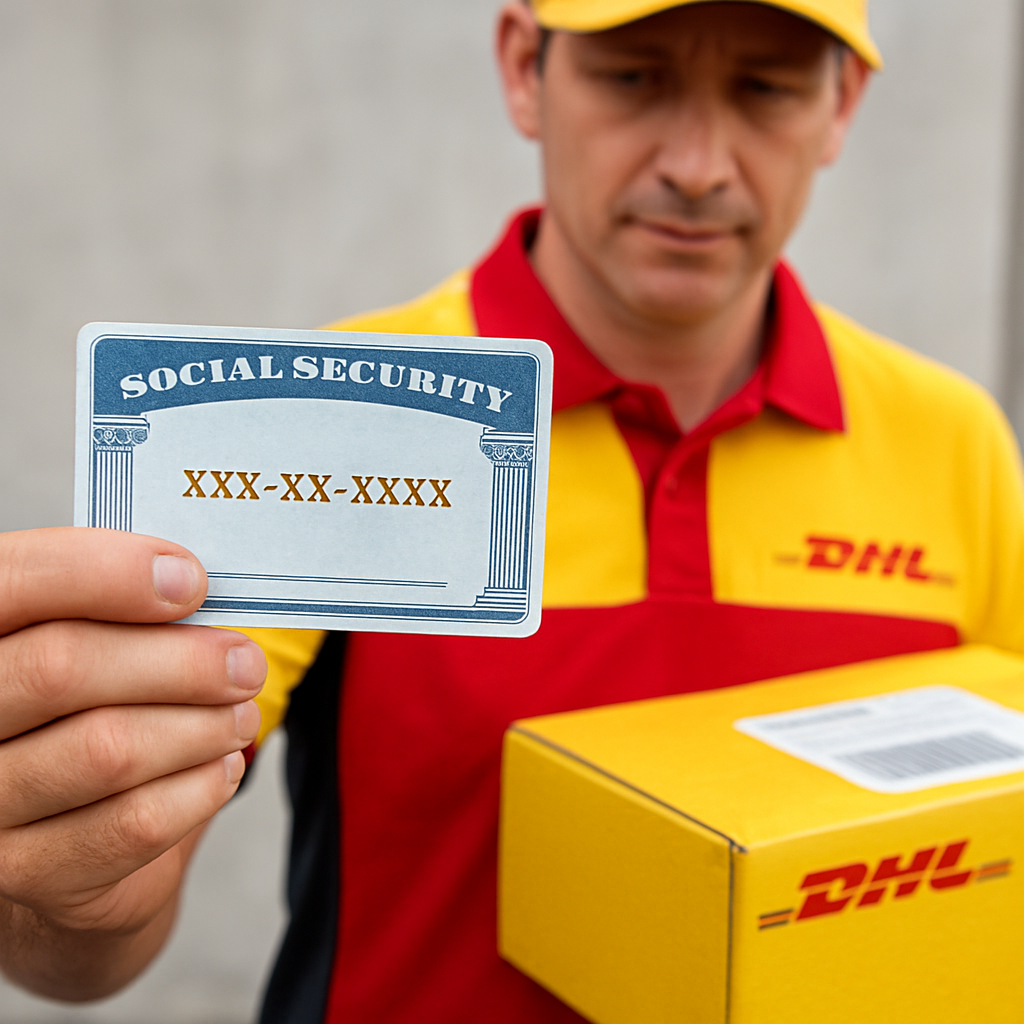
DHL may ask for your Social Security Number because U.S. Customs and Border Protection (CBP) requires an identification number for certain import entries, and DHL is collecting that information to clear the shipment into the United States. In other words, the request is usually about customs clearance and importer identification, not ordinary customer service. That said, you should still verify that the request is genuine before sharing any personal information.
If the shipment is being imported by an individual, an SSN may be used; if the importer is a business, an EIN is often the relevant identifier. If you are unsure why the request appeared, check the customs notice, the shipment status, and the channel DHL used to contact you before you respond.
Why DHL Is Asking for Your Social Security Number
The most common reason DHL asks for an SSN is that the shipment needs customs clearance in the U.S. CBP requires an identification number for the ultimate importer in certain entries, and an individual importer may use a Social Security Number while a business importer may use an EIN. DHL is often acting as the carrier or customs intermediary that relays that requirement to the recipient.
This is why the request often appears when a parcel is moving through clearance rather than at the point of delivery. DHL may need the number to complete customs paperwork, match the importer to the entry, or avoid a clearance delay. You can see the underlying customs logic in CBP’s guidance on importer identification numbers for formal entries and in DHL’s own customs questions and clearance guide.
For DHL’s side of the process, the company’s import guidance also notes that individual shippers may use a Social Security Number, while business shippers use the relevant business identifier. DHL’s required import documents guidance and its customs industry guide both point to identification numbers as part of the customs documentation process.
Individual importer vs business importer
| Importer type | Typical identifier | Why it matters |
|---|---|---|
| Individual person | Social Security Number | May be used for customs entry and importer identification |
| Business | EIN | Used instead of an SSN for company imports |
That distinction matters because many people assume DHL is asking for an SSN in a random or intrusive way. In reality, the carrier may simply be trying to complete the identifier that customs expects for the party bringing the goods into the country. If you are trying to work out who counts as the importer, it helps to confirm whether the shipment is in your name as an individual or in a business’s name.
If you are dealing with a forwarding service or a parcel intermediary, the same principle can apply. Services such as forwarders may ask for an identification number because it is part of the U.S. customs entry process, not because they need the number for their own commercial use. The key point is that the request should be tied to customs clearance, not to unrelated account administration.
Why Customs May Require an SSN or EIN for U.S. Imports
CBP’s requirement is the real reason the question comes up. For some import entries, customs needs an importer identification number so the shipment can be processed correctly. If the importer is an individual, an SSN may be used; if the importer is a business, an EIN is generally used instead.
This is also why overseas merchants and logistics intermediaries sometimes ask for the number upfront. They know customs may need it, so they collect it before the shipment reaches the final clearance stage. That can feel surprising to consumers, but the information is being requested to satisfy the import entry process.
Importantly, the SSN is being requested for customs identification purposes, not because DHL needs it as a customer loyalty, billing, or marketing identifier. The distinction is worth keeping clear: the carrier is helping process a customs requirement, not creating a separate personal-data request for its own convenience.
What DHL is actually using the number for
- To complete customs paperwork for the shipment
- To link the entry to the correct importer
- To reduce the chance of a clearance delay
- To support the release of the shipment when customs information is required
If you are shipping in a business context, it is worth checking whether an EIN should be used instead of an SSN. If the shipment is being handled by a customs broker, freight forwarder, or other intermediary, the customs paperwork may also be tied to other requirements such as a power of attorney or supporting import documentation. For a fuller explanation of that paperwork, see our guide to customs POA requirements.
How DHL Uses Your SSN in Customs Clearance and Why It Can Delay Delivery
DHL may ask for the SSN before or during customs clearance when it needs additional information to complete the entry. The request does not necessarily mean something has gone wrong; it may simply mean the shipment cannot move forward until the customs record is complete.
DHL’s customs documentation process can involve gathering information, validating it, and transmitting it electronically before the shipment reaches the destination gateway. Its customs industry guidance explains that DHL personnel review the paperwork and enter data while shipments are still in transit, so the clearance process can start before the parcel physically arrives. If information is missing, the carrier may need to contact the receiver or importer to avoid delay.
That is why an SSN request can appear alongside a tracking update or a customs status change. The request may come through the official shipment workflow, not as a generic email or a random text message. If the customs entry is incomplete, the shipment may stay on hold until the missing information is supplied.
What the timing usually means
- Before arrival: DHL may be preparing customs paperwork in advance
- During clearance: the shipment may need extra importer information before release
- After a status update: the request may be triggered by missing or incomplete customs data
It is also useful to distinguish a customs delay from a loss or seizure. A delay means the parcel is waiting for paperwork, duty payment, or further review. It does not automatically mean the goods are lost. If you want to understand the shipping side of the process more broadly, our article on DHL delivery issue next steps may also help if the shipment has stalled.
How to Tell a Legitimate DHL Request from a Scam
This is an important question because DHL also warns about fraud. The company’s fraud-awareness guidance notes that scammers may ask for Social Security Numbers, payments, and other personal details. That means you should never share your SSN just because a message claims to be from DHL.
A legitimate customs request should make sense in context. It should relate to a real shipment, a real customs clearance issue, or a real import document request. The contact should also come through an official DHL channel rather than an unverified phone number, random social media account, or suspicious link.
Checks to make before sharing your SSN
- Confirm the shipment is actually in DHL’s system and being imported into the U.S.
- Review the tracking status for a customs hold, customs clearance update, or document request.
- Check whether the request refers to customs paperwork, importer identification, or duties.
- Use the official DHL website or official customer service route rather than replying to an unverified message.
- Do not send your SSN through an unofficial link or to an email address you have not confirmed.
DHL’s official fraud-awareness page is a useful reference point here: it makes clear that requests for Social Security Numbers can be part of scam behavior, which is why the channel and shipment context matter so much.
A safe rule of thumb is simple: if the request is connected to a real customs clearance need and arrives through an official DHL process, it may be legitimate. If it is vague, urgent, or detached from a real shipment, treat it with caution and verify it first.
What to Do When DHL Requests Your SSN or Import Duty Payment
If DHL asks for your SSN and also mentions import duties, handle the two issues separately but promptly. The SSN request is about customs identification; the duty request is about payment for the release of the shipment. Both can affect whether the parcel is delivered.
If duties are unpaid, the shipment may not be released. If required customs information is missing, the shipment may be held until the paperwork is complete. DHL’s customs guidance and import documentation materials both point to the same practical outcome: unresolved customs issues can slow or block clearance.
What happens if you do not pay the import duties?
If you do not pay valid import duties or related charges, the shipment may remain on hold and final delivery may be delayed. Depending on the situation, the parcel may not move forward until the invoice or customs issue is resolved. The evidence supplied here supports the practical effect on release and delivery, but it does not support stronger claims beyond that.
Do not ignore a customs invoice or document request. If the charges are valid and the shipment is yours, resolve them through the official DHL workflow. If something looks wrong, ask DHL to confirm the shipment reference and explain what is needed before making payment or sharing data.
Practical next steps
- Check the tracking page and customs status
- Confirm whether the request is for an SSN, an EIN, or another importer identifier
- Review any customs notice, invoice, or document request carefully
- Use the official DHL contact route if you need confirmation
- Pay any valid duties or fees through the official process
- Provide personal information only if the request is clearly tied to legitimate customs clearance
If you want to understand the broader cost side of an import, our guide to import tax and customs fees explains the difference between duties, taxes, and carrier charges. You can also use our article on whether you’ll have to pay customs if you are trying to anticipate charges before the parcel arrives.
Can You Refuse to Provide Your Social Security Number?
The supplied evidence supports the fact that CBP may require an identification number for certain entries, but it does not provide enough authority to give a definitive answer on refusal rights, alternative identifiers, or the exact consequences of refusing. The safest statement is that if the SSN is genuinely required for the customs entry, the shipment may not clear without the information.
In practice, that means the refusal question is often less about whether you want to share the number and more about whether the shipment can proceed without it. If customs entry information is missing, clearance may stall. If you are uncomfortable, ask DHL or the customs intermediary to explain why the number is needed, whether an EIN or other identifier is appropriate, and how the information will be used.
Because this is a personal-data question as well as a customs question, it is reasonable to pause and verify the request. But if the request is tied to a legitimate customs entry, delaying the response can delay the shipment.
Related customs questions that often come up
Is the SSN request the same as a customs bond or POA?
No. An SSN request is about importer identification. A customs bond and a power of attorney are separate customs-compliance topics, though they may appear in the same clearance workflow. If your shipment involves broader import compliance, you may also want to read our guides on customs bond requirements and customs POA requirements.
Why do forwarders sometimes ask for the same information?
Forwarders and parcel intermediaries may request identification numbers because they need the information for U.S. customs entry processing. That is the same underlying logic as DHL’s request: the customs authority requires an identifier for the importer, so the service handling the shipment asks for it to complete the entry.
Why does the request seem new or unexpected?
Many recipients only encounter this when a shipment first reaches a customs-sensitive stage, when the declared value or document type triggers extra paperwork, or when the importer is an individual rather than a business. That is why the request can feel sudden even though it is tied to a standard customs process.
If you are trying to understand the importer side of the transaction more clearly, our guide to who counts as the importer is a helpful next read. For readers dealing with wider import procedures, our broader U.S. import compliance guide covers the bigger customs picture.
The short answer
DHL is usually asking for your Social Security Number because CBP requires an identification number for certain U.S. import entries, and DHL needs that information to complete customs clearance. For an individual importer, the SSN may be the identifier used; for a business importer, an EIN is often used instead. Verify the request, make sure it relates to a real shipment, and only provide the information through the official DHL process if it is genuinely needed for customs.