How Is a Customs Bond Amount Calculated? U.S. Rules, Requirements, and Costs
 Import Export
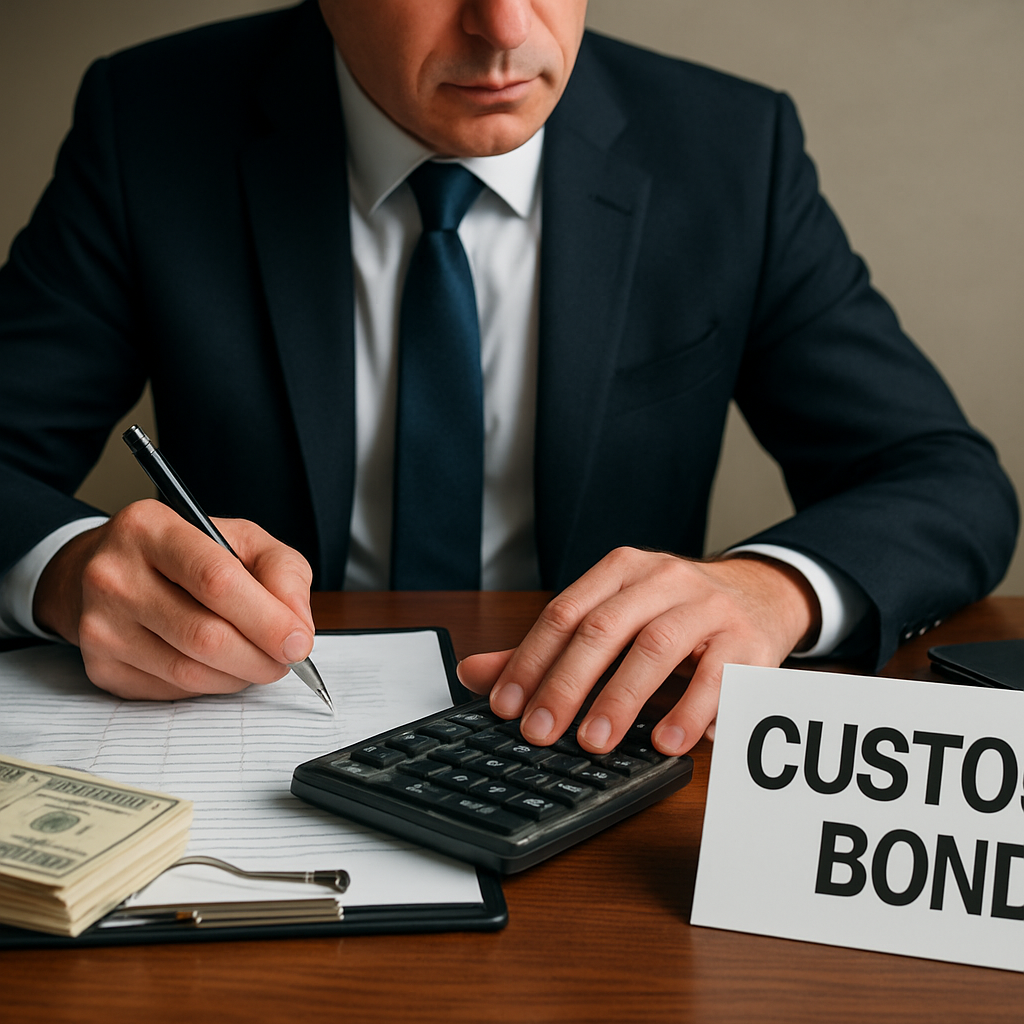
If you are asking how a customs bond amount is calculated, the short answer is: it depends on the bond type. For a continuous customs bond, CBP generally bases the amount on your duties, taxes, and fees over a 12-month period, with a minimum of $50,000 for the common importer bond type. For a single-entry bond, the amount is tied to the entered value of the goods plus the applicable duties, taxes, and fees for that shipment. The bond amount is the coverage requirement, not the price you pay to the surety.
That distinction matters because the customs bond helps guarantee that duties, taxes, and fees will be paid and that the entry can move through customs properly. If you are trying to work out how much your bond should be, you need to first know whether you need a continuous bond or a single-entry bond.
How U.S. Customs Bond Amounts Are Calculated
The calculation starts with the kind of import activity you are doing. U.S. Customs and Border Protection uses different bond formulas for different purposes, but the two most common for importers are continuous bonds and single-entry bonds.
A helpful way to think about it is this:
- Continuous bond = based on annual duties, taxes, and fees.
- Single-entry bond = based on the value of one specific shipment plus its duties, taxes, and fees.
CBP’s public guidance explains that bond amounts are set according to the applicable bond type and that CBP may require a higher amount if a sufficiency review or risk-based assessment shows more coverage is needed. In other words, the formula is the starting point, not always the final word.
For a deeper official explanation of how CBP sets bond amounts, see CBP’s guide for the public on bond amounts.
When Is a Customs Bond Required?
A customs bond is not only for large or high-value shipments. The requirement is tied to the import entry and the type of goods, not just the physical size or commercial value of the cargo.
As a general rule, CBP requires a customs bond for commercial imports worth more than $2,500. A bond may also be required for certain commodities or shipments subject to other government agency requirements, even where the shipment would otherwise seem straightforward.
That means two shipments with the same invoice value may not have the same bond requirement if one is subject to another agency’s controls. For example, regulated goods may require extra clearance steps and a bond even when the entry is otherwise routine.
You can review CBP’s published guidance on when a customs bond is required for the core threshold rule and related conditions.
Continuous Customs Bond Formula, Minimums, and Rounding
A continuous bond covers all U.S. import entries over a rolling 12-month period and normally renews each year unless it is terminated. It is the standard choice for regular importers because it avoids arranging a separate bond for every shipment.
For the common importer bond type, the standard CBP approach is:
Continuous bond amount = 10% of the total duties, taxes, and fees paid in the previous 12 months, subject to a $50,000 minimum.
If you are a new importer and do not have a prior 12-month import history, the calculation is generally based on your estimated duties, taxes, and fees for the next 12 months. That estimate still cannot fall below the applicable minimum where CBP requires one.
Some practical guides also note that continuous bonds are rounded in increments: typically $10,000 increments up to $100,000, then $100,000 increments above that range. This rounding convention is useful when you are translating the formula into an actual bond amount that a surety will write.
The key point is that continuous bond sizing is not based on the invoice value of the goods. It is based on your annual customs duty exposure and related charges. That is why import volume, duty rate, and import frequency all matter.
Simple example of a continuous bond calculation
If your total duties, taxes, and fees paid over the previous 12 months were $420,000, then 10% would be $42,000. Because the common importer continuous bond has a $50,000 minimum, your bond would need to meet that minimum instead of the lower calculated figure.
If your annual duties, taxes, and fees were $780,000, then 10% would be $78,000. In that case, the required bond amount would be above the minimum and would normally be set at a level that reflects the applicable rounding or increment rules used in practice.
For a plain-language explanation of the calculation logic, see the sources on continuous bond amounts and how to calculate customs bond size.
How Single-Entry Customs Bonds Are Calculated
A single-entry bond is used for one specific shipment rather than all imports over a year. This is often the better fit for occasional importers, one-off shipments, or situations where a continuous bond would be unnecessary.
The usual calculation is:
Single-entry bond amount = entered value of the merchandise + applicable duties, taxes, and fees for that entry.
That makes the calculation more shipment-specific than a continuous bond. Instead of looking at your annual import activity, you look at the value and duty exposure of the individual entry.
For some entries, the written amount may be influenced by CBP or the port director, so it is not always a one-size-fits-all number. In practical terms, that means the bond amount can be adjusted upward in some cases depending on the shipment and any agency requirements linked to it.
When a single-entry bond makes sense
- You only import occasionally.
- You want coverage for one shipment only.
- You do not need an annual bond for repeated entries.
- The shipment has special entry conditions that make a single-entry bond the better fit.
For more on this calculation approach, see the guidance from Trade Risk Guaranty and the overview from Descartes Finale.
What a Customs Bond Costs Versus What the Bond Amount Is
It is easy to confuse the bond amount with the bond fee, but they are not the same thing.
The bond amount is the coverage amount, also called the penal sum in surety language. It is the maximum liability the bond is written to cover.
The bond fee or premium is the amount you actually pay to the surety company for issuing the bond.
No regulation sets the premium in the same way CBP sets the bond amount. The premium is set by the surety based on risk and underwriting factors. Those factors commonly include:
- your creditworthiness,
- your financial strength,
- your compliance history, and
- the surety’s risk assessment of your import profile.
Market guides often describe customs bond premiums as a percentage of the bond amount, but that is a commercial pricing point, not a CBP rule. In other words, a higher bond amount does not automatically mean a fixed premium. Pricing depends on the surety.
For a source-backed discussion of the cost side, see this overview of customs bond costs and premiums and this guide to customs bond cost and bond amounts.
How to Get a U.S. Customs Bond
Once you know the likely bond amount, the next step is arranging the bond itself. In practice, this is usually handled through a customs broker or a surety company rather than as a completely self-service process.
The usual steps are straightforward:
- Choose the right bond type: continuous or single-entry.
- Calculate or estimate the bond amount.
- Contact a CBP-approved surety company or a licensed customs broker.
- Complete CBP Form 301.
- Pay the premium.
- Receive the bond certificate for customs entry purposes.
If you want a practical guide to the process, the most useful starting points are the bond overview from Descartes Finale and the application discussion from Mercury Shipping.
If your broker is handling the clearance, you may also find our article on customs POA requirements useful, because power of attorney often sits alongside the bond arrangement in the clearance process.
How to Check Customs Bond Status
If you need to confirm whether a bond is active or sufficient, the safest practical approach is to check with your surety, your customs broker, or the relevant customs entry records. That is especially important if you are trying to determine whether the bond still covers your current import volume or whether CBP might view it as insufficient.
At the moment, it is best not to assume there is a simple public CBP lookup tool for bond status unless you have been given one by your broker or surety. The sources available here support checking through the parties who manage the bond, rather than promising a universal public search workflow.
If a shipment is waiting on clearance and a bond issue is involved, that can contribute to delays. In that case, our article on FedEx clearance delay may help explain the next operational steps.
Why CBP Can Require a Higher Bond Amount
The formula gives you a starting point, but CBP can require more coverage in some situations. That can happen if CBP completes a sufficiency review or if your import profile suggests greater exposure.
Reasons that may affect the bond amount include:
- higher duty exposure than before,
- increased import volume,
- changes in duty rates,
- compliance issues, or
- other risk-based concerns CBP identifies.
This is important because the bond amount is meant to protect the government’s ability to collect duties, taxes, and fees. If your imports grow or your risk profile changes, the original amount may no longer be enough.
Which Bond Type Should You Use?
If you import frequently, a continuous bond is usually the more efficient option because it covers all entries over the year. If you only import once in a while, a single-entry bond may be simpler and cheaper from an administrative standpoint.
| Bond type | How it is calculated | Best suited for |
|---|---|---|
| Continuous bond | 10% of annual duties, taxes, and fees, subject to minimums | Regular importers with ongoing entries |
| Single-entry bond | Entered value of the goods plus applicable duties, taxes, and fees for one shipment | Occasional or one-off shipments |
That comparison is the quickest way to decide which formula applies before you start doing the math.
Why the Bond Exists in the First Place
A customs bond is not just an administrative formality. It is a financial guarantee that duties, taxes, and fees owed to CBP will be paid and that customs requirements tied to the entry will be met. That is why bond amount and customs clearance are so closely linked.
When the bond is in place, the entry can proceed through the customs process with the required financial backing behind it. For a broader explanation of what happens after entry approval, see our guide on import customs clearance completed.
If you are importing through a brokered process, our article on cleared and delivered by broker may also help connect the bond to the wider clearance workflow.
Bottom Line
How a customs bond amount is calculated depends on the bond type. Continuous bonds are generally based on 10% of the prior 12 months of duties, taxes, and fees, with a minimum of $50,000 for the common importer bond type. Single-entry bonds are based on the entered value of the goods plus the duties, taxes, and fees for that shipment. The bond amount is not the same as the premium you pay, and CBP can require more coverage if your situation calls for it.
If you know your import pattern, duty exposure, and whether the shipment is a one-off or an ongoing flow, you can usually narrow down the right bond size quickly. From there, a customs broker or surety can help you complete the paperwork and issue the bond needed for clearance.