What Is the HS Code for Filters? Air, Water, Oil, and Filter Elements Explained
 Import Export
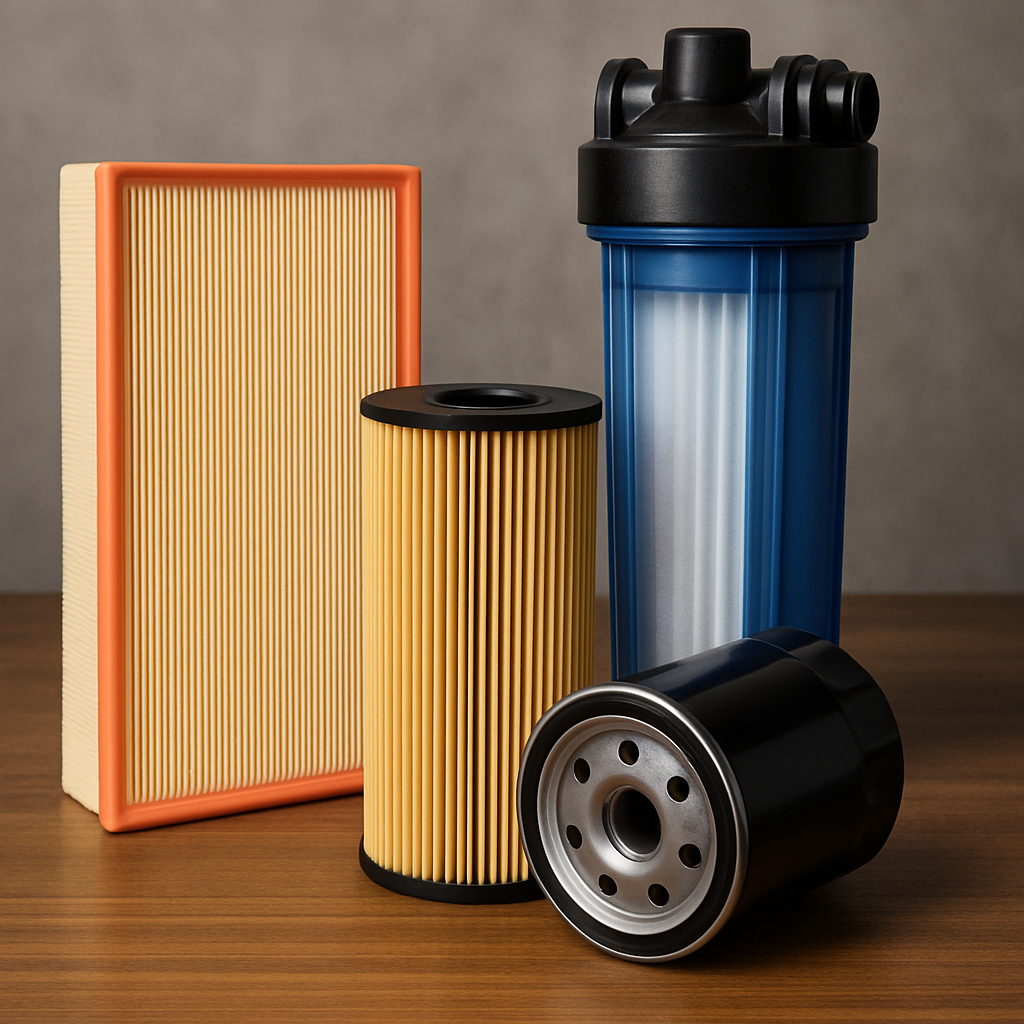
The short answer is that there is no single HS code for all filters. The correct code depends on the exact product: what it filters, how it works, whether it is a complete filter or a replaceable element or cartridge, and which country you are importing into or exporting from. The first six digits of an HS code are standardized internationally, but the final digits vary by country, so you must verify the final tariff code in the destination market before filing customs documents. For official guidance on the HS framework, see the U.S. International Trade Administration’s HS code overview and the U.S. Harmonized Tariff Schedule.
In practice, “filter” is too broad to classify on its own. Air filters, water filters, oil filters, fuel filters, hydraulic filters, filter cartridges, filter elements, and optical filters may all fall into different tariff families depending on the product description and use.
What Is the HS Code for Filters?
An HS code, or Harmonized System code, is the international product classification system used by customs authorities to identify traded goods. It is designed to support duty assessment, trade statistics, and regulatory processing. The key point for filter products is that customs classify the specific item, not the generic word “filter”.
That is why the answer changes from one product to another. A complete liquid filter, a vehicle air intake filter, and a replacement filter element can all be classified differently. In some cases, the product may fall under heading 84.21 for filtering or purifying machinery and apparatus; in other cases, it may belong elsewhere depending on its construction and purpose. The Canadian Customs memorandum on filters notes that filtering or purifying machinery and apparatus are covered in heading 84.21 regardless of how they function, which is a useful reminder that function matters more than marketing language. You can review that guidance in CBSA’s Memorandum D10-14-43 on the tariff classification of filters.
Why one filter product can have different codes
- Function: air filtration, liquid filtration, fuel filtration, oil filtration, or optical use.
- Construction: complete assembly, housing, cartridge, membrane, or element.
- Use environment: vehicle, household, industrial, laboratory, or optical equipment.
- Destination country: national tariff digits differ beyond the first six HS digits.
If you are preparing shipping paperwork, match the tariff description to the exact item. Our guide on commercial invoice customs basics explains why the product description on the invoice should match the actual goods being shipped.
HS Code for Air Filters
Air filters are a distinct product category and should not be lumped together with general liquid filters. In search results and trade references, air intake filters and cabin air filters often appear as separate classification examples, which shows how specific the product description needs to be. A filter used in an engine intake system is not the same as a cabin air filter, and neither should be assumed to share the same code as a water or oil filter.
As a practical example, some trade references list air intake filters under 8421.31, but this should be treated as an example classification signal rather than a universal answer for every air filter. The exact code still depends on the item’s design, end use, and the destination country’s tariff schedule. Likewise, cabin air filters may be classified differently from intake filters.
What to check for air filters
- Is it an engine intake filter or a cabin air filter?
- Is it a complete assembly or only the replaceable media?
- Is it for automotive, industrial, or household use?
- Which national tariff schedule applies to the shipment?
If you are working on vehicle-related classification issues, it is worth checking the customs compliance tools article for practical ways to reduce classification errors before filing.
HS Code for Water Filters
Water filters commonly fall under heading 84.21 for filtering or purifying machinery and apparatus for liquids or gases, but the exact classification still depends on the product. This is especially important for complete water-filter systems, countertop units, under-sink systems, filter housings, and replacement components.
The important distinction is between a complete water filter and a replacement part. A full system may be treated differently from a cartridge, membrane, or housing part. The CBSA memorandum supports the broader principle that filtering or purifying machinery and apparatus are covered in heading 84.21, which makes this a common starting point for liquid filtration products. For product-level lookup, the official U.S. tariff schedule remains the best verification tool.
Water filters: what matters for classification
- Whether the item is a complete machine or a replacement component.
- Whether it is used for potable water, industrial liquids, or another fluid.
- Whether it is a cartridge, membrane, housing, or assembled filtration unit.
- What the official schedule says in the import country.
For U.S. importers, start with the official CBP guidance on determining duty rates and finding your HS code, then confirm the final code in the HTS. If you are dealing with a shipment after the code has been entered, our article on shipment release import meaning may help you understand the customs workflow that follows.
HS Code for Oil Filters and Oil Filter Elements
Oil filters are another separate use case. They should not be treated as interchangeable with air or water filters, because oil filters may be designed for engine oil, hydraulic fluid, or another lubricant or medium. The exact tariff classification depends on the filter’s function, construction, and whether it is a complete unit or a replacement element.
This distinction matters because a complete oil filter housing may not be classified the same way as an oil filter element. A filter element is a part or consumable component, while a full oil filter can be an assembled product. Customs rulings and tariff notes often focus on those details, rather than the broad label “oil filter”.
Oil filter classification points
- Complete oil filter: may be classified differently from a standalone element.
- Oil filter element: may fall under a parts-style classification depending on the product and jurisdiction.
- Medium filtered: engine oil, hydraulic oil, or another fluid can matter.
- Destination country: always verify the national tariff code.
A ruling example in the supplied research shows a filter element classified under a parts-style heading in a specific jurisdiction, which reinforces the broader point: replacement elements can be treated differently from complete filters. That said, you should not assume one ruling automatically applies to every oil filter element in every country.
HS Code for Fuel Filters
Fuel filters should be treated as their own product category. A fuel filter is built for a specific purpose and may be classified differently from air, water, or oil filters. The product’s construction and end use matter, and the final code should be checked against the destination country’s tariff schedule.
In practical terms, do not assume that because a product is a filter, it belongs in the same heading as another type of filter. Fuel filters may share some structural similarities with other filtration products, but customs classification is based on the exact article, not the family name.
Fuel filter checklist
- Is it for petrol, diesel, or another fuel system?
- Is it a complete assembly or a replacement element?
- Is it designed for motor vehicles or industrial equipment?
- Does the national tariff schedule specify a more precise subheading?
HS Code for Hydraulic Filters
Hydraulic filters are an industrial-use category and should be classified on their own merits. They are not simply “another filter” for tariff purposes. Their purpose is usually to protect hydraulic systems by removing contamination from hydraulic fluid, and that use case can lead to a different classification from air or water filtration products.
Here again, the difference between a complete hydraulic filter assembly and a replaceable element matters. If the item is a part of machinery rather than a full filtering machine, that can influence the classification outcome. The official tariff schedule in the destination market is the final authority.
Hydraulic filter considerations
- Complete unit versus replaceable part.
- Industrial machinery application versus general-purpose filtration.
- Whether the product description matches the actual engineering specification.
- Any country-specific notes or exclusions in the tariff schedule.
HS Code for Filter Cartridges and Filter Elements
Filter cartridges and filter elements are one of the most common sources of classification confusion. A cartridge or element is often a replaceable component, not a full filtration system. Because of that, it may classify differently from a complete filter housing or machine.
This distinction is central to customs classification. The same general product family can include a complete machine, a housing, a cartridge, a membrane, a mesh insert, or a consumable element. Customs authorities care about which of those items is being imported or exported.
What matters for filter elements and cartridges
- Is it a standalone filter or a replaceable part?
- Does it fit inside a housing or machine?
- Is it for liquid filtration or gas filtration?
- Is it mounted or unmounted?
- What does the official national tariff schedule say?
A customs ruling in the supplied research shows a filter element classified under a parts-style subheading in one jurisdiction. That is useful because it demonstrates the principle, but it does not create a universal code for every filter element worldwide. The correct result still depends on the exact item and the importing country’s rules.
What About Micron Filters?
Micron describes filtration rating or pore size, not a tariff code by itself. In other words, a micron filter is not classified solely because it is rated at a certain micron level. The code still depends on the product’s function, medium, construction, and whether it is a complete filter or only a part.
This is a common mistake in customs paperwork. A buyer may know the micron rating but still not know whether the product should be treated as a liquid filter, a gas filter, a cartridge, or a part. The micron specification may help describe the product, but it does not determine the HS code on its own.
Micron filter rule of thumb
- Micron rating is a performance specification.
- HS code is a customs classification.
- The same micron rating can appear in different product families.
- The product description and function still drive the final code.
Optical Filters: A Different HS Code Family
Not every product called a filter belongs in the same HS family as air, water, oil, or machine filters. Optical filters are a separate example. They are classified in a different product family from liquid and gas filtration equipment, which is why the word “filter” alone can be misleading.
Search results and tariff lookup tools often surface optical filter examples under heading 9002-style classifications rather than 84.21-style filtering machinery. That is a strong reminder not to classify by name alone. An optical filter used in instruments or apparatus is not the same product as a water filter or an engine air filter.
As a result, if your item is an optical product, do not rely on the same logic used for mechanical or liquid filtration. Start with the product’s technical description and verify the correct tariff family in the destination market.
How to Verify the Final HS or HTS Code
The safest way to classify filters is to follow a simple workflow:
- Identify the exact item. Determine whether it is an air, water, oil, fuel, hydraulic, or optical filter, or a filter element or cartridge.
- Confirm its function. Ask what it filters, where it is used, and whether it is a complete unit or a part.
- Check the destination country’s tariff schedule. The first six digits are internationally shared, but the national suffixes differ.
- Use official tools. For the U.S., consult the HTS and Schedule B resources rather than relying only on generic lookup sites.
- Match the invoice description. Make sure the commercial invoice and supporting documents describe the product accurately.
The U.S. Census and trade guidance note that exporters often use Schedule B, while importers use the Harmonized Tariff Schedule for duty and statistical classification. The official HTS database is therefore the proper place to confirm the final classification for U.S. imports, while Schedule B is used for export reporting where applicable. You can start with the official trade.gov HS code guidance and then confirm the entry details in the HTS search tool.
If you are shipping from or into the United States and want to understand how classification information affects the clearance process, our article on customs clearance process is a useful next read.
Quick Comparison: Common Filter Types and How to Think About Them
| Filter type | Typical classification approach | Important caution |
|---|---|---|
| Air filters | Classify by use case and construction; engine intake and cabin filters may differ | Do not assume all air filters share one code |
| Water filters | Often linked to heading 84.21 for liquid filtration equipment | Complete systems and replacement parts may classify differently |
| Oil filters | Classify by medium, system, and whether it is a full unit or element | Engine oil filters and oil filter elements are not automatically the same |
| Fuel filters | Separate product category based on fuel-system use | Do not copy the code from an air or water filter |
| Hydraulic filters | Industrial-use filtration product; function and construction matter | Complete assembly versus part can change the result |
| Filter cartridges / elements | May be treated as parts or replacement components | Do not classify every cartridge as if it were a complete machine |
| Micron filters | Micron size is only a specification | Micron rating alone does not determine the HS code |
| Optical filters | Different HS family from mechanical/liquid filters | Do not assume heading 84.21 applies |
What to Put on the Commercial Invoice
Once you identify the likely tariff classification, the next step is to make sure the invoice and shipping documents describe the product accurately. That is especially important for filter elements, cartridges, and specialised filters, because vague wording can trigger customs questions or misclassification.
Good invoice descriptions usually include:
- Exact product name
- Use or function
- Whether it is a complete filter or a replacement part
- Material or construction details
- Model number or technical identifier where relevant
If you want a broader explanation of how customs information should be presented on documents, see our guide to HS code lookup and the harmonized schedule.
Key Takeaway
If you are asking, “What is the HS code for filters?”, the real answer is: it depends on the exact filter. Air filters, water filters, oil filters, fuel filters, hydraulic filters, filter cartridges, filter elements, micron filters, and optical filters can all sit in different classification families. The first six digits of the HS code are internationally standardized, but the final code must be confirmed in the destination country’s official tariff schedule.
Use the product’s exact description, function, and construction to narrow the classification, then verify it in the official tariff database before filing customs documents. That approach is far safer than relying on a generic filter label or a single code found on an unverified website.

