Why Are International Shipments Taking So Long? Causes, Customs Delays, and Next Steps
 Import Export
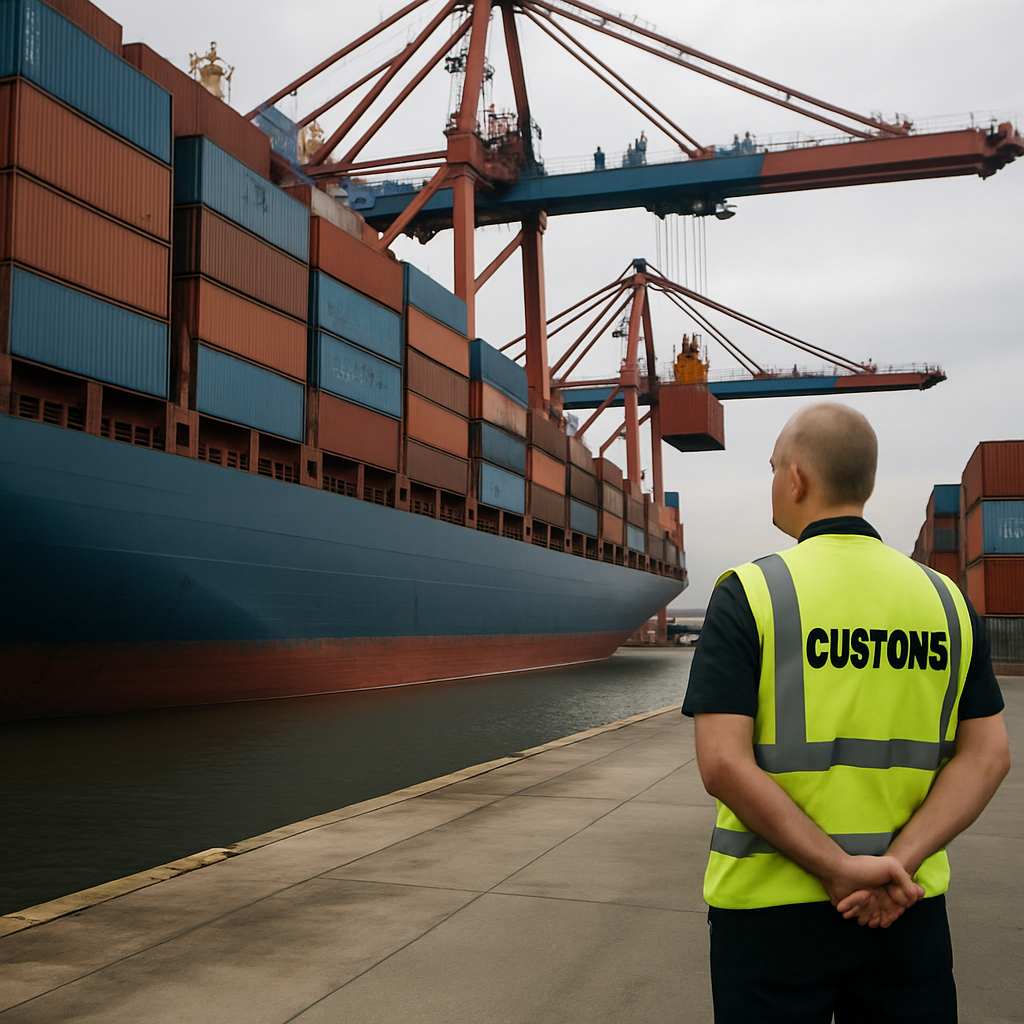
International shipments usually take so long because they pass through more stages than domestic parcels: origin pickup, export processing, long-distance transport, import customs review, hand-offs between carriers, and final-mile delivery. In many cases, nothing is “wrong” at all — the parcel is simply moving through a slower cross-border network. But if tracking seems stalled for days, the most common causes are customs checks, missing or incorrect paperwork, tax or duty issues, restricted goods screening, or carrier/network congestion.
If your parcel looks stuck, the key is to work out where it has slowed down. A package can be delayed in transit without being lost, and a slow tracking update does not automatically mean the shipment has failed.
Why international shipments take so long
International shipping is inherently slower than domestic shipping because the parcel may move through more than one carrier, one or more countries, and several inspection points. That extra hand-off time adds risk at every stage. A shipment might leave the origin country on time, wait in a transport queue, pause at customs, or sit for final-mile handover after arrival in the destination country.
Broad logistics issues also matter. Weather routing, port congestion, and network strain can slow more than one shipment at once, especially when multiple lanes or hubs are under pressure. In other words, a delay is often a chain of small slowdowns rather than one dramatic failure.
For a plain-language explanation of why shipping speed and cost are linked, it helps to remember that faster services cost more because they use quicker routing and more urgent handling. Standard international service is cheaper, but it is usually slower because it is built for economy rather than speed.
The main stages where delays happen
| Stage | What happens | How it can slow down |
|---|---|---|
| Origin pickup | The sender hands the parcel to the carrier or postal network. | Late hand-off, missed collection, or acceptance backlog. |
| Linehaul / international transit | The parcel moves between countries by air, sea, or road. | Weather routing, port congestion, space limitations, or hub congestion. |
| Customs clearance | Authorities review the shipment for compliance, taxes, and eligibility. | Missing paperwork, incorrect values, taxes unpaid, or restricted goods checks. |
| Final-mile delivery | The local carrier delivers the parcel to the recipient. | Local network strain, service-class timing, address issues, or delivery backlog. |
How customs delays international packages
Customs is one of the biggest reasons international shipments take so long. It is the control point where authorities decide whether the shipment can be released, needs more information, or must be held for review. The review can take days, and in some cases weeks, depending on the country, office workload, shipment type, and whether the documents are complete.
Research on customs operations shows that some consignments can face delays of more than two weeks when additional documents are requested, and compliance problems can ripple through the wider supply chain. That is why customs delay is not just an inconvenience for the buyer — it can affect inventory plans, customer commitments, and production schedules downstream.
A practical customs hold usually means the parcel has not been released yet. It may be waiting for paperwork, clarification, payment, or a compliance decision before it can move again.
Common customs hold reasons
- Incorrect or incomplete paperwork
- Missing packing list
- Incorrect value on the commercial invoice
- Unpaid duties, taxes, or customs charges
- Restricted or regulated goods
- Missing or expired certificates
- Requests for additional information from customs
These are not unusual edge cases. They are some of the most common reasons a package appears to be “stuck” even when it is still in the system. As one compliance guide notes, missing paperwork or incorrectly completed customs forms can halt shipments for days or even weeks while issues are sorted out. You can read more in this guide to international import-export compliance challenges.
If the issue is documentation, customs may simply wait until the sender, broker, or recipient provides the missing information. If the issue is payment, release usually depends on the duty or tax being settled. If the issue is a restricted item, the shipment may need extra review or may not be releasable at all.
How long can customs hold a package?
There is no single universal time limit that applies to every country, every carrier, and every shipment. Customs can hold a package for a short review or for much longer if the paperwork is wrong, the valuation is unclear, or additional checks are needed. In some cases, the hold lasts days; in others, it can last weeks.
That is why the question is less about a fixed number of days and more about whether the shipment has a correct declaration, whether customs has asked for anything, and whether taxes or duties are outstanding. If customs needs a response, the parcel usually stays on hold until the issue is resolved.
If you are dealing with a China-bound parcel, this guide on how to contact China customs about a package can help you figure out the next step.
What happens if customs needs more information or payment?
When customs needs more information, the package may remain in review until the missing detail is supplied. When payment is required, the shipment may not be released until the duty, tax, or fee is paid. If the payment is not made, the parcel may be returned, abandoned, or otherwise handled under the destination country’s rules.
If you are unsure what happens next when a customs bill is not paid, see what happens if you don’t pay customs. For marketplace shipments, this can also tie into who pays customs fees.
Paperwork and address mistakes that slow shipments down
Many delays are preventable. Incorrect, incomplete, or non-standardized addresses can slow a shipment before it even reaches customs. Missing apartment numbers, mismatched ZIP codes, or badly formatted destination details can cause avoidable routing problems. In the customs phase, inaccurate invoices, missing certificates, or a missing packing list can be just as damaging.
This is one reason a stalled package is not always a “carrier problem”. It may actually be a data problem: the carrier, customs office, or broker does not have enough correct information to move the shipment forward.
Examples of paperwork and address problems
- Missing apartment or unit number
- Incorrect ZIP/postcode
- Non-standard address formatting
- Wrong declared value on the invoice
- No packing list attached
- Missing certificate required for the product category
- Invoice details that do not match the parcel contents
These issues matter because customs and logistics teams rely on the paperwork to verify the shipment. Poor export documentation can increase the risk of customs intervention, penalties, or rejection, and it can delay a shipment well beyond the original delivery estimate. See also the discussion of the hidden cost of poor export documentation.
There is also a useful distinction between a carrier delay and a paperwork delay:
- Carrier delay: The parcel is moving through the network more slowly than expected.
- Paperwork or compliance delay: The parcel is paused because information, classification, valuation, or permission needs to be corrected or confirmed.
If you want a deeper look at shipment identification details, shipping mark requirements are another useful reference point.
When USPS or mail delays are the real issue
Sometimes the delay is not customs at all. If you are asking why international shipments are taking so long from the USA, and the parcel is moving through USPS, the issue may be normal service timing, the selected mail class, or a temporary network slowdown. USPS notes that delivery time varies by class of mail, and a mailpiece may still be in transit even when tracking appears slow or unchanged.
That means a quiet tracking page does not always mean a lost parcel. It may simply be moving through the expected service window for that class.
How to interpret a slow USPS international parcel
- Check the mail class or service level first.
- Look at the last scan and where it occurred.
- See whether the parcel has already left the origin country.
- Check whether it is showing import customs processing or final-mile handover.
- Do not assume loss just because there has not been a recent update.
For carrier context, USPS’s own delayed mail and packages guidance explains that timing depends on the class of mail and that a piece may still be in transit. That is why questions like “Why is USPS taking so long to deliver my package?” and “Why is the mail so slow today?” often need a service-class answer before they need a customs answer.
If your issue is specifically a courier clearance delay rather than postal service timing, the same logic applies, but the hand-off and customs steps may be different. Our article on FedEx clearance delay gives a carrier example of how that process can look.
Is international shipping slow right now?
It can be, but not always for the same reason. A broad slowdown does not necessarily mean there is one single live global event affecting every shipment. More often, multiple small pressures are affecting the network at once: congestion, weather routing, service backlogs, or customs processing strain in certain lanes or ports.
So if several packages seem delayed, that does not automatically prove the same issue is happening to all of them. It may be a shared network bottleneck, but it may also be a coincidence of route, carrier, or service level.
Why all packages can seem delayed at once
Systemwide delays can come from:
- Weather routing that slows or diverts transport
- Port congestion at origin or destination
- Hub or terminal backlogs
- Inspection bottlenecks
- Broader transport network strain
These are common delay drivers in freight and parcel logistics, and they can affect multiple shipments at once. A useful general overview is the freight industry discussion of shipping delays and their common causes.
Why international shipping is expensive and can still be slow
This question comes up because faster service often costs more, yet expensive shipping does not guarantee immediate delivery. International express freight usually gets priority handling and faster movement, but standard international services are designed to be cheaper and slower. The lower price reflects the slower routing, more consolidated handling, and less urgent transport method.
So shipping cost and shipping speed are related, but they are not the same thing. Paying more can buy speed, not certainty. Even an expensive shipment can still be delayed by customs, missing paperwork, or network congestion.
In practical terms:
- Express service: Faster, usually more expensive, often better for urgent goods.
- Standard service: Cheaper, usually slower, and more likely to move in consolidated flows.
That is why a buyer looking at international shipping may feel that prices are high right now while still seeing slow movement in tracking. Higher cost does not remove the customs stage or the realities of cross-border logistics.
What to do when your international tracking is stalled
If your parcel seems stuck, use a simple diagnosis framework rather than assuming it is lost:
- Check the last scan. Identify whether the parcel is still at origin, in transit, in customs, or with the destination carrier.
- Review the service class. Postal and courier service levels have different timing expectations.
- Look for a customs notice. If customs needs payment or documents, there is often some form of alert, invoice, or request.
- Verify the paperwork. Check the commercial invoice, declared value, contents description, and any required certificates.
- Confirm the address. Make sure the destination details are complete and correctly formatted.
- Respond quickly. If customs, the carrier, or the broker asks for information, reply as soon as possible.
That final point matters because delays often get longer when the sender or recipient waits too long to respond. The faster the missing information is supplied, the faster the shipment can usually move again.
When to worry
You should take the delay more seriously if:
- Tracking has shown the same customs status for an unusually long time
- You receive a request for documents, tax payment, or identity verification
- The declared contents or value may be wrong
- The item is regulated, restricted, or requires special documentation
- The parcel has been at the same stage far longer than the service class would normally suggest
Even then, a stalled scan is not proof that the package is lost. It often means the shipment is waiting for a decision, a document, or the next network hand-off.
The short answer
International shipments take so long because they move through more stages than domestic parcels, and each stage can create delay: long-distance transport, customs clearance, paperwork checks, carrier hand-offs, congestion, and local delivery constraints. The most common problems are not mysterious — they are documentation errors, customs holds, taxes or duties, restricted goods, and network slowdowns. If tracking is stalled, the best next step is to identify the stage of the delay and fix the specific issue rather than assuming the package is lost.