
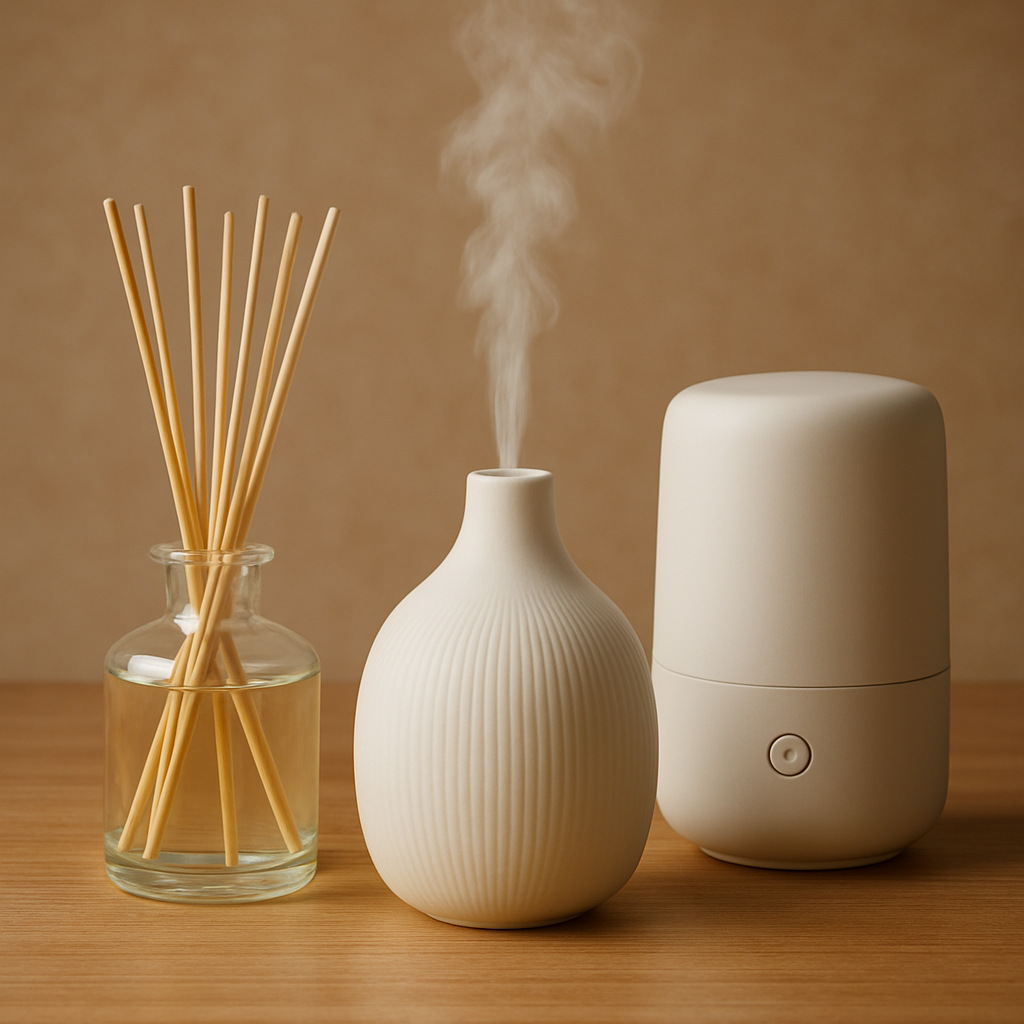
The HS code for fragrance diffusers is not one universal number. In practice, non-electric reed diffusers and other non-electric room fragrance diffusers are commonly classified under HS 3307.49 — often written in U.S. tariff terms as 3307.49.0000 — while electric aroma diffusers may fall under a different heading such as 8509.80, depending on how the product works and what its primary function is.
That distinction matters. A reed diffuser that simply releases scent from fragrance liquid and reeds is not treated the same way as an ultrasonic or powered aroma diffuser. If you are trying to confirm a final country-specific code, it helps to start with the product type, then verify the destination-country suffix and classification approach. For a broader overview of how tariff numbers are structured, see this guide on how to find and format the right HS tariff classification number.
Because HS classification is one part of the wider customs process, it also sits alongside issues such as origin and valuation. If you need a refresher on those broader compliance areas, read customs classification, origin, and valuation.
What Is the HS Code for Fragrance Diffusers?
The correct answer depends on the diffuser type. There is no single HS code that covers every fragrance diffuser on the market.
- Non-electric reed diffusers and similar room fragrance preparations are commonly classified under HS 3307.49 / 3307.49.0000.
- Electric aroma diffusers may classify under 8509.80 in some cases, especially where the item is treated as an electromechanical domestic appliance.
- Some powered or mechanically driven diffusers may fall under other headings depending on their design, mechanism, and main function.
The key point is simple: do not assume every diffuser belongs under the same tariff heading just because it disperses fragrance. Customs looks at what the product actually is, not only what it does in a general sense.
| Product type | Common HS heading seen in the supplied sources | Why it may fit |
|---|---|---|
| Reed diffuser | 3307.49 / 3307.49.0000 | Non-electric room fragrance preparation |
| Other non-electric room fragrance diffuser | 3307.49 / 3307.49.0000 | Preparations for perfuming or deodorising rooms |
| Electric aroma diffuser | 8509.80 | May be treated as an electromechanical domestic appliance |
| Other powered diffuser designs | Depends on mechanism | Function, electrical parts, and dispersion method can change the code |
For a practical explanation of why different diffuser styles can land in different headings, see the source discussion on decoding the diffuser HS code. It notes that classification can change depending on the diffuser’s primary function, electrical parts, materials, and the substance or mechanism being diffused.
Reed Diffusers: Why They Usually Fall Under HS 3307.49
Reed diffusers are usually treated differently from electric aroma diffusers because they are non-electric room fragrance preparations. They do not spray, heat, or mechanically disperse fragrance in the same way an appliance does. Instead, the liquid fragrance moves up the reeds and evaporates into the room over time.
That is why customs rulings and classification references repeatedly point to 3307.49.0000 for reed diffusers and similar room fragrance products. In the supplied rulings, the U.S. customs ruling for a room aroma diffuser classifies the item under 3307.49.0000, and another ruling on room spray and reed diffuser products also places the reed diffuser under that same subheading.
A later ruling, NY N339704, likewise classifies a room spray and reed diffuser combination under 3307.49.0000. That is useful because it shows the heading is not just a website guess; it appears in actual customs decisions.
This is the strongest practical evidence for importers handling reed diffuser shipments. If your product is a typical reed diffuser set and not an electric device, HS 3307.49 is the first place to look.
Why the full code may still differ by country
Even when the first six digits are the same internationally, the full code can change by destination market. One source in the supplied research notes that the first six digits are shared across countries using the Harmonised System, but the full 8- to 10-digit national code depends on the country of import.
So if you see 3307.49.0000 in a U.S. ruling, that does not mean every market uses that exact suffix. The heading may be the same, but the national tariff line can differ. Always confirm the destination-country code before filing documents or calculating duty.
When an Electric Aroma Diffuser May Use a Different HS Code
Electric aroma diffusers are a separate classification question. Some are simple domestic appliances; others use ultrasonic technology, nebulising systems, heating elements, air pumps, or car-socket power. Those features can push the product away from the fragrance-preparation heading used for reed diffusers.
In the supplied research, one source supports 8509.80 for certain electric aroma diffusers, especially home-use ultrasonic diffusers. The same source also explains that powered diffusers may be classified under other headings depending on how they disperse liquids or powders, or how the appliance functions. In other words, 8509.80 is a supported classification for some electric aroma diffusers, but not a universal code for all diffusers.
The practical classification factors are:
- Primary function — is it mainly a fragrance appliance, a spray device, or a domestic electrical appliance?
- Electrical components — does it contain a motor, pump, heating element, transducer, or other powered parts?
- Dispersion mechanism — does it heat, nebulise, atomise, spray, or merely allow scent to evaporate?
- Product form and presentation — is it a standalone appliance, a refillable fragrance unit, or a room fragrance preparation?
The same source also flags possible alternatives such as 8424.89 for some mechanical spraying or dispersing appliances and 8543.70 for certain other electrical devices, depending on the exact product design. That is why electric diffusers need a closer technical review than reed diffusers.
A useful takeaway for importers is this: if the diffuser has a power source and active dispersing mechanism, do not assume it belongs in 3307.49. A powered device may be classified differently even if its commercial purpose is to scent a room.
Reed, ultrasonic, nebulising, heat-based, and car diffusers are not the same
These products may all be sold as “diffusers”, but customs may see them as different goods:
- Reed diffusers rely on capillary action and evaporation.
- Ultrasonic diffusers use electrical vibration to create a fine mist.
- Nebulising diffusers use air pressure or an air pump to disperse fragrance.
- Heat diffusers use heat to release scent more quickly.
- Car diffusers may plug into a vehicle socket and can be classified based on their electrical function.
That distinction is important because the tariff heading follows the product’s physical characteristics and operation, not the marketing name alone.
What If You Are Searching for the HS Code for Scented Diffusers?
Scented diffusers follow the same logic as fragrance diffusers. The word “scented” does not create a separate tariff category. Instead, customs still asks whether the product is a non-electric reed diffuser, an electric aroma diffuser, or another kind of appliance.
So if you are asking about scented diffusers, the answer is still type-based:
- Non-electric scented or fragrance reed diffusers are commonly aligned with 3307.49 / 3307.49.0000.
- Electric scented diffusers may fall under 8509.80 or another heading depending on their mechanism.
In short, the adjective “scented” changes the marketing description, not the customs logic.
What Does HS Code 99050000 Represent?
This is a separate customs-code question, and it should not be confused with diffuser classification. The supplied evidence does not verify 99050000 as a diffuser code or as the answer for fragrance diffusers.
If you have seen 99050000 in another customs context, treat it as a different issue until you confirm the jurisdiction and the relevant tariff schedule. For fragrance diffusers, the evidence in this article points instead to 3307.49 for non-electric reed-style products and 8509.80 for some electric aroma diffusers.
What Is the IFRA Category for Diffusers?
IFRA category is not an HS code question. It belongs to fragrance safety and formulation rules, not customs tariff classification.
That said, the supplied IFRA-related material does help explain how diffusers are viewed in fragrance compliance. In the cited reference, reed diffusers are listed under category 10A for household care with hand contact. The same source also places candles, plug-ins, and car air fresheners in category 12. This is about fragrance-use limits and exposure assumptions, not customs duty coding.
The key distinction is:
- HS code tells customs how to classify the product for import and export purposes.
- IFRA category tells fragrance formulators how a fragrance may be used safely in a given product type.
If you are a manufacturer or brand owner, you may need both answers — but they solve different problems. IFRA does not determine the HS code, and the HS code does not determine IFRA compliance.
What Is the HS Code for Fragrance?
Fragrance itself is a different classification problem from fragrance diffusers. Finished fragrance goods such as perfumes are usually classified under fragrance-specific chapters and headings, while diffusers are assessed based on whether they are preparations for perfuming rooms or electrical appliances.
Do not conflate a diffuser with a perfume bottle, essential oil, or raw fragrance material. The customs logic is different:
- Finished perfume or toilet waters follow fragrance-product headings.
- Essential oils and aromatic raw materials may sit elsewhere again.
- Diffuser products are classified according to whether they are non-electric room fragrance preparations or powered devices.
That is why the HS code for fragrance is not the same question as the HS code for a diffuser. A diffuser may contain fragrance, but it is still classified as a different product category.
How to Choose the Right HS Code for a Fragrance Diffuser
If you are preparing an import entry or commercial invoice, use this practical decision path:
- Identify the product type — reed diffuser, electric aroma diffuser, ultrasonic diffuser, nebulising diffuser, heat diffuser, or another model.
- Check whether it is electric — powered units often require a different heading analysis.
- Look at the main function — room fragrance preparation, appliance, spray device, or another purpose.
- Review the mechanism — evaporation, heat, vibration, atomisation, or pumping.
- Confirm the destination-country tariff line — the first six digits may be shared, but the national suffix usually is not.
- Check customs rulings or a broker’s advice if the design is unusual or multi-functional.
If you want a practical refresher on the next step after identifying the heading, read how duties and taxes are paid on imported goods. The code you declare affects the duty calculation, customs value review, and the import cost you actually pay.
If your shipment is time-sensitive and you are choosing between shipping methods, it can also help to understand the paperwork flow in air freight vs courier shipping.
Bottom Line for Importers
If you are importing a fragrance diffuser, the safest short answer is this: non-electric reed diffusers and similar room fragrance preparations are commonly classified under HS 3307.49 / 3307.49.0000, while some electric aroma diffusers may fall under HS 8509.80 or another heading depending on how they are built and how they function.
Use customs rulings, not just product descriptions or search snippets, to confirm the final code. And before you file, check the destination-country tariff schedule so you do not stop at the six-digit level when a national code is required.