Canada Export Declaration: CERS Requirements, Exemptions, and Filing Guide
 Import Export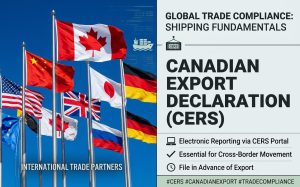
Canada Export Declaration: CERS
A Canada export declaration is the electronic report an exporter submits to the Canada Border Services Agency (CBSA) for goods leaving Canada when reporting is required. It is filed through the Canadian Export Reporting System (CERS), not on the former paper B13A form. Whether you need one depends on the shipment's value, destination, and whether the goods are controlled or otherwise regulated; an exemption must be valid for the specific shipment.
What Is a Canada Export Declaration?
An export declaration tells the CBSA what commercial goods are leaving Canada. The report contains shipment information such as the goods' description, quantity, value, destination, and export date. It supports export reporting and allows the CBSA to assess export shipments.
The CBSA's guidance for exporting commercial goods identifies CERS as the portal used to submit export documents electronically. The declaration is an export-reporting document; it does not replace a commercial invoice, transport document, export permit, or other paperwork a carrier, buyer, or regulator may require.
Is an Export Declaration Form Mandatory?
It is mandatory when the shipment falls within Canada's export-reporting requirements, but not every export needs a declaration. Exports to the United States and lower-value shipments are commonly cited situations in which a declaration may not be required, while controlled and regulated goods may still require reporting and export permissions.
As a practical rule, do not treat a destination or a low declared value as a universal exemption. The product, purpose of export, and applicable controls matter. The Cross-Border Institute notes that controlled and regulated goods can require an export declaration as well as permits and licences, and that the declaration must be made before goods reach the border.
Canada Export Declaration Requirements: When to Check CERS
For commercial goods valued above CAD 2,000 and exported to a country other than the United States, exporters will commonly need to file through CERS. A CERS and Canadian export declarations guide describes this threshold and the usual U.S. and lower-value exceptions.
Check the reporting position before booking collection or delivering freight to the border, particularly when goods are controlled, regulated, being shipped temporarily, or are returning to Canada after export. A carrier's request for information does not decide whether an exemption applies; the exporter should determine the reporting requirement and provide accurate instructions.
Who Is Responsible for CERS?
The exporter is generally responsible for ensuring that a required export declaration is filed correctly and on time, even if a customs broker, freight forwarder, or courier helps prepare it. In straightforward sales, this is usually the Canadian person or business selling or sending the goods abroad.
CERS is the CBSA's web-based reporting platform. The Canadian Export Reporting System overview explains that users enter shipment details before export and that the system replaced the paper-based B13A Export Declaration. This is why a search for a Canada export declaration PDF may lead to outdated material: the current reporting process is electronic.
How to File a Canada Export Declaration in CERS
Filing should be completed early enough for the declaration to be submitted before the goods leave Canada. Build the process into your dispatch controls rather than treating it as paperwork to finish after a courier collection.
- Confirm whether the goods require reporting or qualify for a CBSA exemption.
- Gather the commercial details: a clear goods description, quantity, value, destination, and the intended export date.
- Check whether the goods are controlled or regulated and whether separate permits or licences are needed.
- Submit the declaration in CERS, or instruct an authorised service provider to do so on your behalf.
- Give the carrier the reporting reference or the appropriate exemption information it needs to move the shipment.
- Keep your shipment records aligned with the declaration, invoice, and transport documents, and correct discrepancies promptly.
Accuracy matters. A vague description, inconsistent value, or incorrect export date can create avoidable questions between the exporter, carrier, and border authorities. If a broker files for you, review the data supplied to the broker; delegating entry does not remove the exporter's responsibility for the information.
Canada Export Declaration Exemption Numbers
An exemption number indicates why a shipment does not need an export declaration. It is not a general-purpose code to use simply because a carrier asks for one. The correct number must correspond to the shipment's actual exemption.
The CBSA publishes a list of goods that do not need an export declaration, including specified situations involving temporary exports, repairs, returns, emergencies, and certain government or military goods. The list uses NDR designations. Review the official wording rather than assuming that a search result for "Canada export declaration exemption number 01", "02", or "03" applies to your goods.
For exempt goods transported by a carrier that has an export memorandum of understanding with the CBSA, the CBSA says the exporter may tell the carrier that no declaration is required, using NDR. That does not remove other export obligations, including any permits, licences, or carrier documentation relevant to the shipment.
FedEx, Couriers, and Other Carrier Shipments
A Canada export declaration for FedEx or another courier shipment follows the same CBSA reporting logic: the transport method does not itself create an exemption. The courier may request a CERS proof of report, declaration reference, or valid exemption information before it accepts or exports the consignment.
Prepare the customs and shipping documents as a consistent set. The description, value, quantities, exporter details, and destination on the commercial invoice should not conflict with the CERS submission. Where a courier offers to transmit data or a broker files the declaration, confirm who is performing each task and retain the resulting reference and records.
Before You Send the Shipment
Start with the destination, value, and exact goods, then check whether the export is reportable, exempt, or controlled. File required information in CERS before export, use an exemption number only when it genuinely fits the shipment, and give your carrier complete, consistent documents. That approach reduces the risk of a border hold caused by missing export-reporting information and helps ensure your Canada export declaration process is ready before the goods move.