Why Are Trucking Companies Going Out of Business in 2026?
 Import Export
The Great Freight Recession.
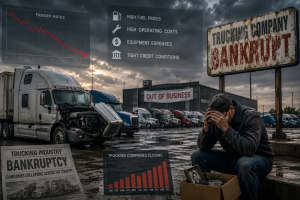
Are trucking companies going out of business in 2026? Yes. A massive wave of trucking bankruptcies is currently sweeping across the logistics sector, driven by a prolonged freight recession, historically low spot market rates, and crippling operating costs. Thousands of small fleets and regional carriers are shutting down or filing for Chapter 7 liquidation because capacity simply outweighs consumer demand. While this consolidation is painful for independent owner-operators drowning in equipment debt, this market correction is actively removing excess capacity, which will eventually stabilize shipping rates and create a much healthier environment for the surviving transportation companies.
Are Trucking Companies Going Out of Business in 2026?
The current market update reveals a sobering reality for supply chain operators who expanded too aggressively during the pandemic boom. A recent freight distress report tracking widespread logistics closures confirms that capacity contraction is accelerating at a historic pace, with over 8,000 operators exiting the market recently. Every major closing sends shockwaves through the regional economy, leaving massive manufacturing hubs scrambling to reroute their critical supply chains in an environment where reliable asset-based carriers are becoming increasingly scarce.
Observers often wonder: Is the industry trouble merely temporary, or is this a permanent structural shift? The reality is that the sector is undergoing a necessary, albeit brutal, recalibration to correct the massive oversupply of commercial vehicles introduced between 2021 and 2022. Shippers and freight brokers are actively witnessing a fundamental restructuring of domestic transit, where only the most financially disciplined and strategically aligned trucking companies possess the stamina required to outlast the ongoing economic pressure.
The Brutal Reality of Carrier Bankruptcies and Major Closures
Keeping track of the official out list in the USA for carrier liquidations has become a daily routine for freight brokers and dispatchers trying to protect their outstanding invoices. It seems like every morning, industry professionals scan the headlines to find out which company went bankrupt today, watching as historical institutions and new digital brokerages alike collapse under immense financial strain. Overcapacity remains the primary culprit, as the tens of thousands of new operating authorities granted during the recent peak have left too many trucks chasing far too little freight, causing an inevitable deflation of shipping rates.
When these carriers are failing, they do not just vanish quietly; their exits leave thousands of independent contractors stranded with worthless lease agreements and massive fuel debts. A comprehensive look at the transportation sector bankruptcies and closures reveals that operators running fewer than ten trucks are bearing the absolute brunt of the devastation. These micro-fleets lack the massive cash reserves and favorable corporate credit lines required to absorb consecutive months of operating at a net loss, forcing them into Chapter 7 liquidation, where their assets are auctioned off for pennies on the dollar.
As stakeholders question how much longer these distressed fleets will stick around, the answer looks increasingly grim for those refusing to adapt to dedicated freight models. The surviving entities are those actively pivoting away from the chaotic spot market to secure long-term, contracted lanes that offer predictable revenue streams. Even with these strategic shifts, the overarching sentiment among drivers and fleet managers reflects deep exhaustion, knowing that they must endure several more quarters of financial pressure before the massive oversupply of commercial vehicles is fully flushed from the national network.
Evaluating the Market Crash and Which Trucks Depreciate Most Quickly
With spot prices crashing to unsustainable lows across multiple regions, owner-operators are discovering that their most valuable assets are rapidly becoming financial anchors. When individuals ask if there is a chance of a market crash, they are failing to realize that for the spot freight sector, the crash has already happened and is currently bottoming out. The immense drop in per-mile compensation means that hauling standard dry van or refrigerated loads barely covers the cost of diesel fuel, commercial insurance premiums, and routine maintenance, making it incredibly hard to turn a profit anymore.
This financial squeeze leads directly to severe equipment valuation issues, forcing buyers to aggressively research which trucks depreciate most quickly before signing predatory lending agreements. Generally, legacy models lacking modern fuel-efficiency aerodynamics, as well as specific engine platforms notorious for expensive after-treatment system failures, shed their resale value at an alarming velocity. When the market floods with repossessed equipment from collapsed logistics firms, the secondary truck market becomes completely saturated, destroying the equity of responsible operators who kept their payments perfectly current.
The rapid depreciation of commercial vehicles complicates debt restructuring efforts for logistics managers desperately trying to save their life's work. Banks and alternative lenders have severely tightened their underwriting standards, refusing to refinance loans on aging trucks that are now worth less than the remaining principal balance. This toxic combination of underwater assets and depressed freight rates creates an inescapable debt trap for many independent contractors, pushing them out of the transportation sector entirely and forcing their heavily depreciated trucks straight to the auction block.
Why So Many Truck Drivers Are Quitting Amid Expanding Costs
Understanding why so many truck drivers are quitting requires looking past the raw compensation data and examining the immense physical and psychological toll of the modern supply chain. The harsh reality of the so-called average lifespan driver syndrome highlights the severe health consequences of a sedentary lifestyle, chronic sleep deprivation, and relentless stress, causing many veterans to abandon the highway entirely to save their own lives. When prospective trainees ask if getting a CDL is worth it in the current economic climate, veteran operators often warn them about the unpaid detention time at distribution centers and the sheer hostility of navigating congested national infrastructure.
The persistent debate regarding whether there is really a trucker shortage often ignores the fact that there is no shortage of licensed personnel; rather, there is a massive shortage of decent, livable jobs. Discussions surrounding regulatory changes, such as the initiatives and pilot programs associated with what rules did Trump pass under his administration to lower the interstate driving age, remain highly controversial among safety advocates. While Trump's new CDL law proposals aimed to introduce eighteen-year-old drivers to interstate commerce to alleviate supposed labor bottlenecks, many experienced operators argue that flooding the market with inexperienced teenagers only further depresses wages and decreases highway safety.
Determining what's the worst company to work for has become a popular online topic, as drivers share horror stories of predatory lease-purchase programs and dispatchers forcing them to run illegal hours. Meanwhile, massive corporate conglomerates continue to consolidate wealth, prompting intense speculation about who the richest owner is in the logistics sphere while the actual laborers sleep in their cabs to save money. This extreme wealth disparity, coupled with skyrocketing operational liabilities, guarantees that the exodus of highly skilled, safe drivers will continue unabated until base compensation structures fundamentally change to reward loyalty and experience.
The Future of the Industry and Will 2027 Be Any Better?
Looking ahead to the 2026 trucking forecast, analysts and supply chain managers are eager to understand the future of the freight economy. According to insights from a recent report detailing how companies are growing despite the freight recession, success now demands extreme specialization, such as focusing strictly on less-than-truckload (LTL) consolidation or niche heavy-haul logistics. Those who insist on running standard, non-specialized routes will likely continue to face a grueling uphill battle, as major shippers heavily leverage the current capacity glut to keep their own transportation budgets artificially low.
The burning question among remaining stakeholders is whether conditions will be better soon or if they must simply hold on and try to get to 2027 intact. Economic indicators suggest that as thousands are shutting down, the aggressive removal of excess trucks is slowly restoring the historical balance between freight supply and carrier demand. Once the seasonal retail replenishment cycles normalize and excess inventories burn off, the surviving trucking operations will finally regain the pricing leverage required to negotiate sustainable contracts with massive retail corporations.
Ultimately, traversing the remainder of this brutal market cycle requires impeccable financial discipline, strict maintenance schedules, and a refusal to haul cheap freight simply to keep wheels turning. The operators who weather this storm are restructuring their debt, aggressively trimming back-office bloat, and utilizing advanced routing technologies to squeeze every possible ounce of efficiency from their dispatch systems. By adopting hyper-focused survival mechanisms, logistics professionals can outlast the current devastation and position themselves for immense profitability when the global shipping market inevitably rebounds.
- Strategic Lane Diversification: Carriers must immediately stop relying on highly volatile, singular geographic regions and instead build dense, overlapping networks that guarantee return trips with minimal empty miles. By ensuring that every outbound shipment has an immediate, contracted backhaul, fleets can eliminate the deadhead miles that completely consume profit margins. This geographical balancing act is how elite dispatchers isolate their assets from sudden regional rate collapses.
- Contractual Resilience: Shifting freight volume away from digital spot boards toward direct, legally binding shipper agreements provides the necessary cash flow stability to survive prolonged economic downturns. These dedicated contracts essentially insulate the carrier from the wild, daily fluctuations of the open market, allowing management to accurately forecast revenue and schedule preventative maintenance. Without this foundational baseline of guaranteed income, standard operational survival becomes a mathematical impossibility.
To gain further perspective on how these macro-level failures are unfolding in real-time, watching this Trucking Bankruptcies 2026 Analysis provides a comprehensive breakdown of the financial erosion impacting the modern freight sector.

One thought on “Why Are Trucking Companies Going Out of Business in 2026?”