Why Governments Impose Export Controls for the Purpose of National Security and Sanctions Policy
 Import Export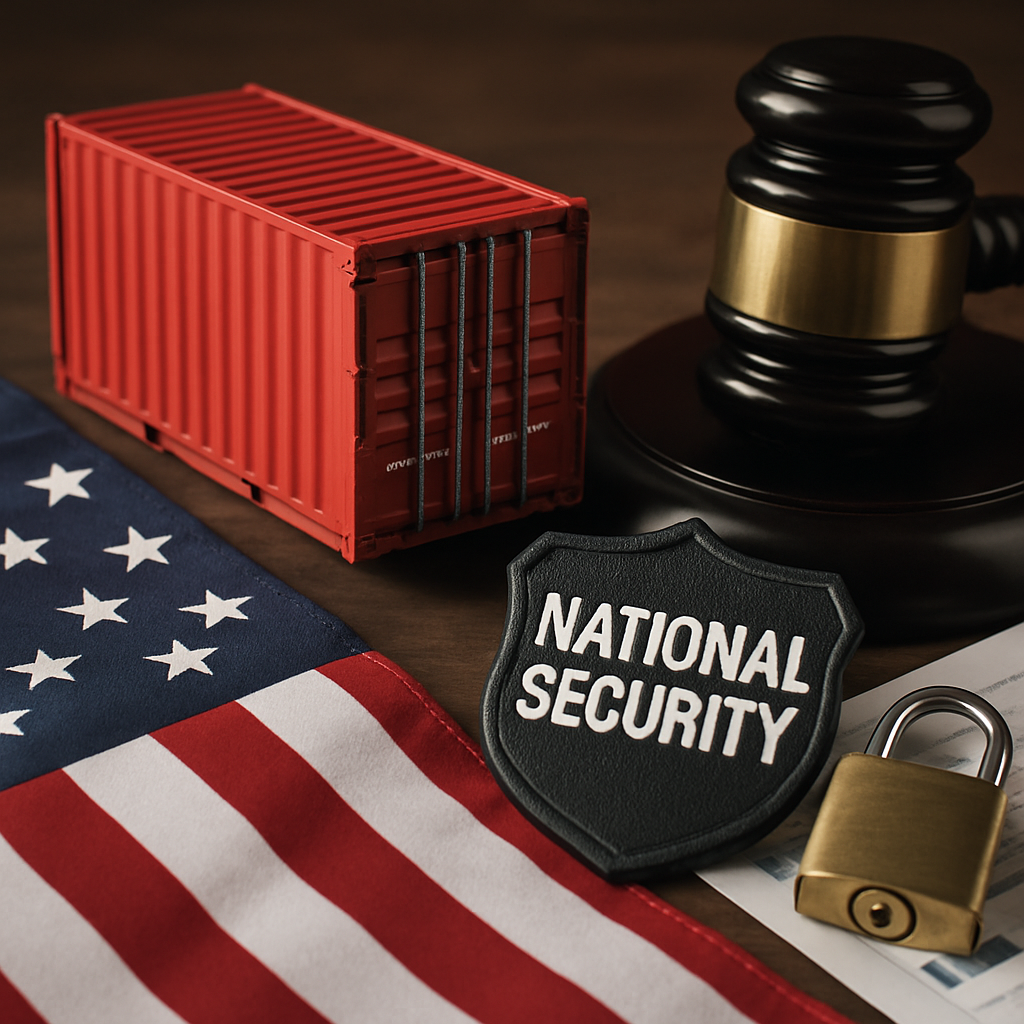
Understanding the Core Reason Governments Rely on Export Controls
Governments impose export controls for the purpose of protecting their national security, enforcing policy objectives such as sanctions, and safeguarding vital economic interests. These measures specifically regulate or restrict the movement of certain goods, technologies, and technical information to international destinations. Items such as advanced semiconductors, nuclear materials, and sensitive data frequently fall under these controls to prevent adversaries or hostile entities from acquiring capabilities that could threaten a country's safety or policy priorities. Export controls represent a critical tool for balancing international economic activity with national defense and strategic interests. [source]
National Security as the Foundation of Export Restriction Policies
National security is the engine driving most export control regimes. Countries carefully screen exports that could be directly used in weapons programs, intelligence operations, or military modernization efforts by adversarial states. The Bureau of Industry and Security (BIS), for example, plays a pivotal role in the United States by classifying items under the Export Administration Regulations (EAR) and determining which exports require licenses.
Recent examples include the tightening of export restrictions against countries like Russia, Belarus, and Iran in response to international conflicts and nuclear proliferation risks. Governments update their lists of controlled goods to adapt to global security changes and emerging threats from new technologies such as artificial intelligence or advanced computing chips. [read more]
By targeting critical technologies and knowledge transfers, nations reduce the risk that strategic adversaries can enhance their military power or disrupt global stability. This prevention-focused approach also covers dual-use items — products that have both civilian and potential military applications.
Sanctions Implementation and Export Controls: An Interlocking Framework
Sanctions often work in concert with export controls as part of a larger foreign policy toolkit. Governments employ comprehensive or selective trade restrictions to pressure target countries, organizations, or individuals that are engaged in activities contrary to their interests, such as terrorism, human rights violations, or the development of nuclear weapons. The Office of Foreign Assets Control (OFAC) in the U.S. is tasked with the enforcement of such programs, managing embargoes on nations like Syria and updating blacklists as international situations evolve.
Export restrictions are tailored based on the specific aims of a given sanctions regime. For instance, controls on semiconductor exports to Russia and Belarus are designed both to degrade military capabilities and limit economic growth in sensitive sectors. International collaboration frequently supplements these efforts, as seen in joint actions with trading partners like the UK, the Netherlands, and France to close loopholes and achieve collective enforcement goals.
Maintaining this framework requires ongoing coordination between agencies, with constant conference updates and policy adjustments as circumstances shift. Technology-related controls are particularly challenging as countries like China and Brazil seek to circumvent restrictions by developing indigenous capabilities or alternative supply chains.
Export controls tied to sanctions must also remain flexible to grant relief in humanitarian crises or to account for global emergencies that might call for temporary policy modifications.
Challenges of Enforcement and Global Compliance
Enforcing export controls is inherently complex due to the sophisticated nature of international trade and the ingenuity of those seeking to evade restrictions. The proliferation of digital commerce and global supply chains increases the risk of unauthorized exports slipping through the regulatory net. This is where agencies such as the BIS, as well as international bodies, amplify cooperation and intelligence sharing to track high-risk shipments and illicit transactions.
National governments face ongoing policy challenges as they update their regulations to keep pace with technology advancements and shifting geopolitical alliances. High-profile cases involving major exports, such as advanced semiconductors or AI-enabling hardware, underscore the stakes for both private firms and government agencies striving to maintain compliance. Trading partners must also develop robust screening and auditing processes to ensure that international obligations are met without unduly stifling legitimate economic activity.
Human rights considerations increasingly shape enforcement priorities, as export controls expand to cover items that might enable repression or surveillance in authoritarian countries. The evolving nature of global human rights standards means regulators must weigh economic consequences against ethical imperatives, especially as more nations call for coordinated international action.
Impact on Importers, Exporters, and International Trade Partners
The ripple effects of export control policies are felt across the global economy. Exporters must navigate complex regulations to determine what products require licensing and which destinations are subject to comprehensive or targeted restrictions. International conference updates are often necessary to explain policy changes to stakeholders in industries ranging from pharmaceuticals to nuclear technology.
For importers, understanding these controls is essential to ensure compliance and avoid secondary sanctions or penalties. Major trading partners, such as the European Union, Brazil, and the United States, frequently consult and negotiate to harmonize their approaches, minimizing disruptions while advancing shared policy goals.
The balance between national security and economic openness often emerges as a central theme in export control discussions. Countries face increasing pressure to clarify their definitions of "national security" and establish transparent processes, as illustrated by the U.S. government's 2022 review of its own export policies to encompass new technology markets and supply chain vulnerabilities. [investopedia]
Ongoing updates and international dialogue help policymakers address enforcement challenges, allowing them to adapt strategies, tackle illicit trade, and protect both global security and economic interests.
It is clear that governments impose export controls with the purpose of managing both risk and opportunity in an increasingly interconnected trading environment.

One thought on “Why Governments Impose Export Controls for the Purpose of National Security and Sanctions Policy”