How Much Does a 20ft Shipping Container Weigh? Empty, Loaded, and 40ft Comparison
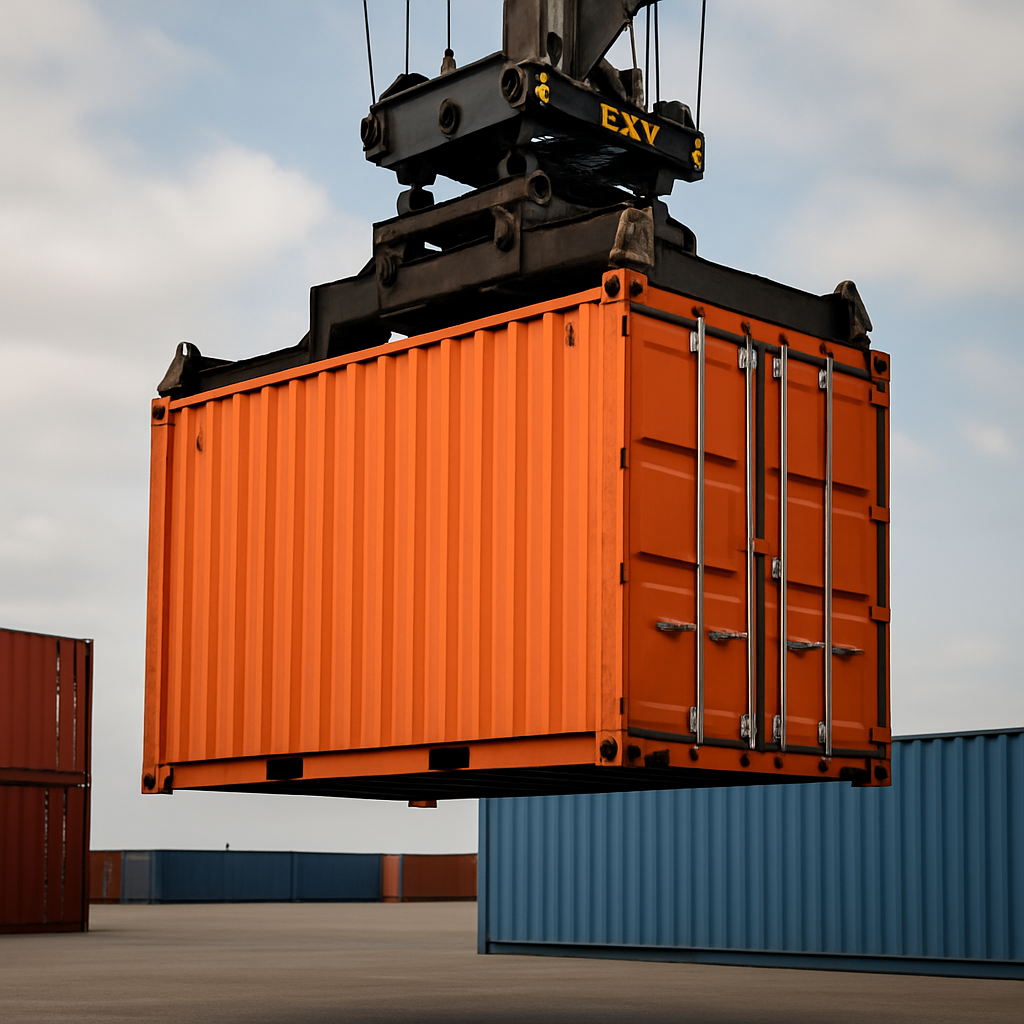
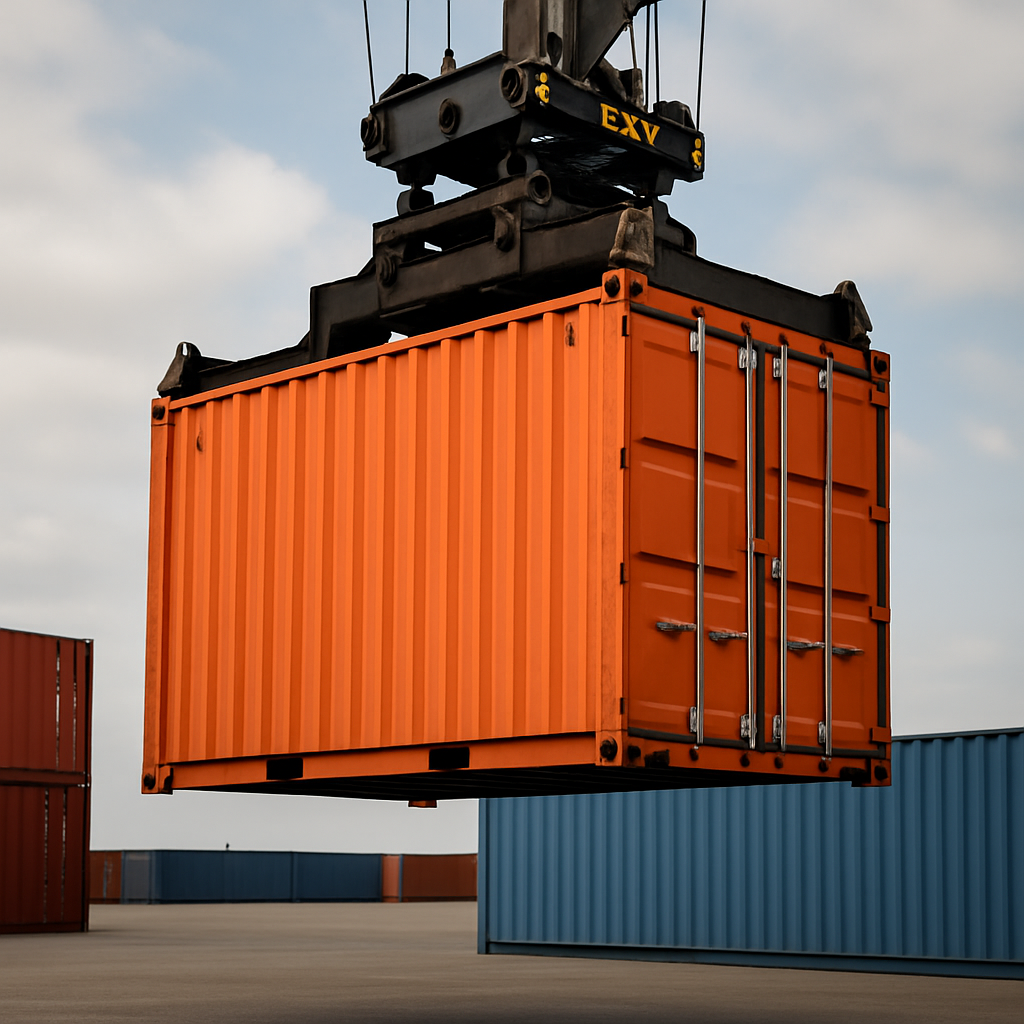
A standard empty 20ft dry shipping container commonly weighs about 2.05 to 2.30 metric tonnes, or roughly 4,520 to 5,070 lb (2,050 to 2,300 kg). This is its tare weight: the weight of the container itself, without cargo. It is an approximate range, not a universal specification. The actual weight for lifting, road transport, loading, or freight planning is the figure on that individual container’s CSC plate.
When expressed in tons, that empty weight is approximately 2.05 to 2.30 metric tonnes. A metric tonne equals 1,000 kg, whereas a US short ton equals 2,000 lb, so the two should not be treated as interchangeable. An empty 20ft container in the range above is about 2.26 to 2.54 US short tons.
How Much Does an Empty 20ft Shipping Container Weigh?
For a standard 20ft dry container, a sensible working estimate is around 2,050 to 2,300 kg, or about 4,520 to 5,070 lb, when empty. Published figures differ because containers of the same nominal length are not necessarily built to identical specifications. For example, one source reports an approximate tare weight of 2,200 kg (4,850 lb) for a standard 20ft dry unit, while another reports about 2,280 kg (5,030 lb) for a 20ft container.
The term tare weight means the empty weight of the container, including its steel structure, floor, doors, and fixed fittings, but excluding cargo. A container-weight guide explains the related terms as tare weight, payload, and gross weight; keeping those terms separate is essential when planning a shipment or a lift.
Do not use a general online average as the operating weight for a particular container. Before arranging a lift, transport, export shipment, or load calculation, check the container’s CSC plate, normally found on or near the doors. The plate identifies that unit’s tare weight, maximum gross weight, and payload rating. As noted in this guide to 20ft container weight, those ratings provide the proper starting point for calculating what that specific unit may carry.
Empty Weight vs. Payload vs. Maximum Gross Weight
Asking how much a 20ft shipping container weighs can mean three different things. The terms below are related, but they are not interchangeable.
| Term | What it means | Why it matters |
|---|---|---|
| Tare weight | The empty container’s weight, with no cargo inside. | It is the baseline for lifting and calculating the loaded total. |
| Payload | The weight of cargo only. | It indicates how much cargo the container is rated to carry. |
| Gross weight | The total of the container and its cargo. | It affects handling, transport planning, and shipping compliance. |
The calculation is:
Maximum payload = maximum gross weight – tare weight
Several supplied sources report 30,480 kg (67,200 lb) as a common published maximum gross-weight figure for a standard container. For instance, the 20ft empty-versus-loaded comparison describes that figure as an international maximum. It should be used only as an example of a published limit, not as a guaranteed rating for every 20ft container.
For illustration, a container with a 30,480 kg maximum gross rating and a 2,200 kg tare weight would have a theoretical payload of 28,280 kg. The actual rating on the CSC plate controls. Equally important, a container’s structural rating is not automatic permission to load to that weight for every movement. Carrier, port, road-transport, and lifting-equipment limits may be lower and must be checked for the route and operation concerned.
This distinction matters because a loaded 20ft container is dramatically heavier than an empty one. Planning equipment or site access from an empty-weight estimate can create a serious handling risk. Readers deciding whether they need a full container for cargo may also find it useful to consider whether less-than-container-load shipping may suit a smaller shipment. For broader context, see how containers fit into ocean-shipping operations.
Why 20ft Shipping Container Weights Vary
The figures above apply most naturally to a standard 20ft dry container. Length alone does not establish an exact tare weight. Differences can arise from the manufacturer, construction materials, structural design, container condition, and added features.
High-cube dry containers are taller than standard-height dry containers, so they weigh more. Refrigerated containers, often called reefers, have different construction and payload specifications from dry containers; a reefer payload figure should not be substituted for a standard dry-container payload. Modifications and installed equipment can also affect a unit’s actual tare weight.
Construction is one reason apparently similar units can have different figures. Learn more about how shipping-container wall materials and thickness vary, but use the CSC plate rather than estimating from wall construction or length. For any real loading, lifting, or transport decision, the plate on the individual unit remains the relevant record.
How 20ft Container Weight Compares With 10ft and 40ft Containers
A comparison is useful for scale, but each figure remains specification-dependent. The table separates approximate empty weights from commonly reported gross limits so that container weight is not confused with cargo capacity.
| Container size | Approximate empty or tare weight | Gross-weight context |
|---|---|---|
| 10ft container | About 1.3 metric tonnes, according to one supplied source-reported example. | Check the individual unit’s CSC plate; specifications vary. |
| 20ft standard dry container | About 2.05 to 2.30 metric tonnes (2,050 to 2,300 kg; roughly 4,520 to 5,070 lb). | Several supplied sources report 30,480 kg (67,200 lb) as a common maximum gross figure, but individual ratings may differ. |
| 40ft standard dry container | About 3,750 kg (roughly 8,267 to 8,300 lb). | Several supplied sources also report 30,480 kg (67,200 lb) as a common maximum gross figure, subject to the individual unit’s rating. |
The supplied 10ft and 40ft figures are approximate comparisons, not handling instructions or guaranteed specifications. A container-weight overview reports approximately 1.3 metric tonnes for a 10ft unit and around 3,750 kg for a 40ft unit. A 40ft container may be much longer and heavier when empty, but its permitted gross weight can still be constrained by its own rating and by the transport method.
Can You Fit a Car in a 20ft Container?
Possibly, but it depends on the particular vehicle and container. One supplied reference gives general internal dimensions of approximately 19 ft 4 in long, 7 ft 9 in wide, and 7 ft 10 in high for a 20ft container. Those dimensions can be a useful initial comparison point, but they do not guarantee that a particular car will fit.
Before booking, compare the vehicle’s actual exterior length, width, height, and clearance needs with the provider’s exact internal and door-opening dimensions. The loading method, securement requirements, and carrier acceptance requirements also matter. The available evidence does not provide door-opening dimensions, vehicle-loading procedures, cargo-securing rules, or a basis to guarantee fit for a specific car.
Moving a 20ft Container: What the Weight Means for Equipment
There is no universal answer to whether a skid steer can move a shipping container. Feasibility depends on the actual tare or loaded weight, the skid steer’s rated operating capacity, the attachment rating, lift geometry, ground conditions, and the method of movement. An empty 20ft container may already weigh more than two metric tonnes, while a loaded unit can be far heavier.
One supplied source notes that 20ft containers generally have fork pockets. Their presence does not establish that any skid steer, forks, or attachment can safely lift the container. Fork-pocket use, attachment suitability, and lifting capacity must be assessed for the exact container and equipment. Never plan a lift using only an empty-weight estimate when cargo may be inside.
Before attempting a relocation, verify the CSC plate, the equipment and attachment documentation, and the site plan with a qualified container-moving provider or equipment professional. Site access and ground bearing are also planning issues: one source observes that delivery vehicles themselves have substantial weight, although this should not be treated as a universal vehicle specification.
Foundation and placement requirements require separate local and site-specific advice. The supplied evidence does not establish whether a concrete slab is required, or provide a basis for recommending a particular foundation, anchoring method, soil treatment, or drainage arrangement.
How Much Does a 20ft Shipping Container Cost?
Container purchase price is separate from container weight. One supplied source reports a broad illustrative purchase range of $2,500 to $6,000 for a new 8 x 20 container and states that used units can cost less. This is a source-reported, non-current, and non-location-specific example, not a current market quote.
The available evidence does not establish current prices by country, condition, grade, delivery distance, modifications, or supplier. Tare weight should not be used to calculate a purchase price. Request a current quote for the required condition and delivery location, and separately confirm the container’s CSC plate information if weight is relevant to the intended use.
Key Takeaway
An empty standard 20ft dry shipping container typically weighs about 2.05 to 2.30 metric tonnes, or 4,520 to 5,070 lb. That is only the tare weight. For cargo planning, subtract the actual tare weight from the container’s actual maximum gross rating to determine its rated payload, then confirm any carrier, port, road, and equipment limits that may apply. For lifting, moving, loading, or transporting a real container, use the CSC plate on that unit rather than a generic online figure.