Crossing Border and In Transit to Carrier Hub: Meaning, Timing, and What Happens Next
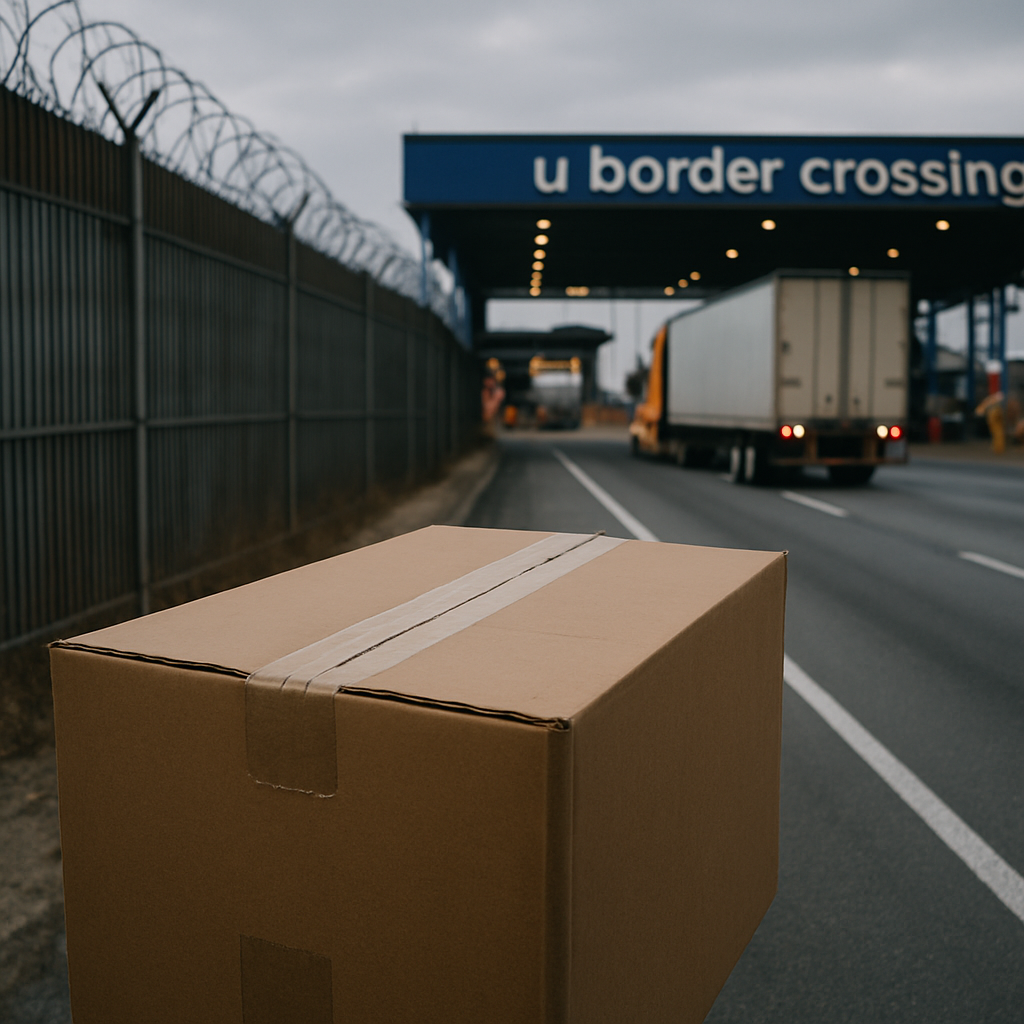
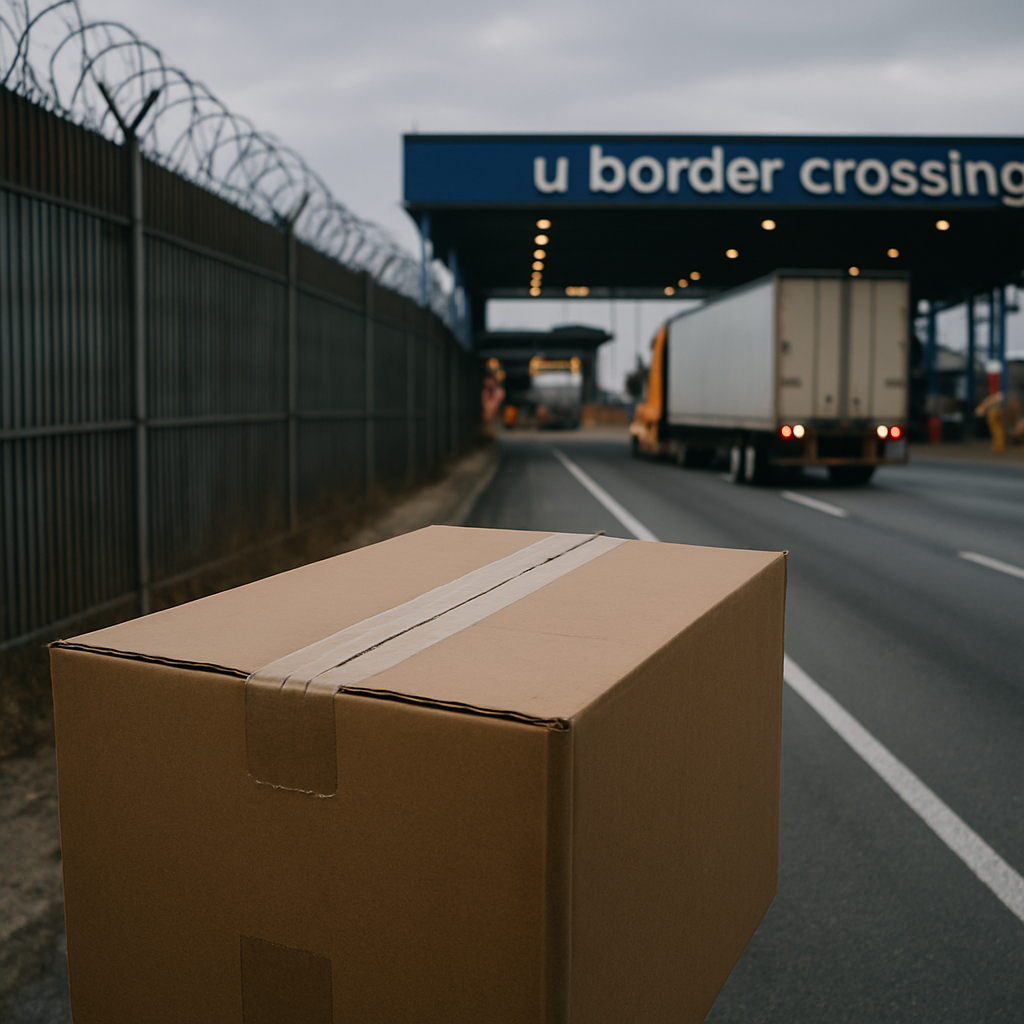
“Crossing border and in transit to carrier hub” generally means an international parcel is progressing through a cross-border stage and towards a carrier facility that will sort, transfer, or route it onward. It describes a shipment phase, not necessarily one instant event or a promise of delivery. There may be a carrier handoff, a transport connection, or an operational queue between the border movement and the parcel’s arrival at the hub.
Most importantly, this status alone does not prove that the parcel has arrived at your local depot, that final customs release has been completed, or that it will be delivered on a particular day. Read it alongside the carrier name, tracking-number format, origin and destination, and the scans that follow.
What “Crossing Border and In Transit to Carrier Hub” Means
The phrase combines two related parts of an international delivery journey:
- Crossing border indicates movement associated with an international border transition. Depending on the route and carrier system, that movement can involve a line-haul transfer, an airport or other transport connection, customs-related activity, or a change between logistics providers.
- In transit to carrier hub indicates movement towards a facility in the carrier’s network. A hub is used to receive, sort, consolidate, transfer, or route parcels rather than to make the final delivery.
In other words, the parcel may be travelling between network stages, not waiting on a local delivery vehicle. As a general description of parcel tracking, in transit can encompass sorting-centre activity, warehouse and hub transfers, border crossings or inspections, loading and unloading, and movement by road, air, or ocean.
The wording should not be read as a precise physical-location statement. A status may reflect a consolidated shipment, a planned transfer, or an update sent after the physical movement began. As the explanation of this combined status from Peak Transport notes, border crossing and arrival at a hub are not necessarily back-to-back actions; custody changes and operational queues can sit between them.
What is a carrier hub?
A carrier hub is a processing or transfer point in a delivery network. The parcel may be scanned and sorted there, remain inside a container while the container is transferred, or be assigned to its next route. A hub can play different roles:
| Hub role | What it may do | What it does not prove |
|---|---|---|
| Origin hub | Receives parcels after collection and prepares them for longer-distance movement. | That the parcel has left the origin country or cleared destination-country customs. |
| Transit or relay hub | Connects long-haul routes and may transfer trailers, containers, or custody between providers. | That the parcel is close to the delivery address. |
| Destination hub | Sorts parcels for a regional facility, local delivery station, or another carrier. | That the parcel is out for delivery. |
Therefore, “in transit to hub” means the parcel is moving towards a sorting or transfer facility. It is different from an “arrived at hub” update, which indicates that the carrier has recorded its arrival at that facility. For a related status, see what arrival at a processing centre means.
What may happen next
The next visible update depends on the carrier and route. A parcel may arrive at and be processed by a hub, be transferred into a domestic carrier network, move to a regional or local facility, and later enter the last-mile delivery stage. Not every carrier displays every one of these scans, and the sequence is not identical for every shipment.
A regional-carrier scan is still not the same as delivery. E-commerce buyers who see that later update may find it helpful to compare it with what a regional carrier facility update means.
Landmark Global note
This exact wording is associated with Landmark Global tracking in the PackageRadar entry for the Landmark Global status. That association is useful context, but tracking labels are carrier- and system-specific. It does not establish a Landmark Global customs rule, a completed customs release, or a guaranteed delivery timeframe. Where possible, use the carrier’s own tracking page and the complete scan history to interpret the parcel.
“In Transit to Carrier” Is Not Always the Same Status
“In transit to carrier” commonly has a different meaning from the longer cross-border status. It can mean that an item has left a warehouse and is being moved into the carrier’s network, for example by a collection vehicle or transfer movement. Pango’s explanation of “in transit to carrier” describes this as movement from the warehouse towards the carrier network.
By contrast, “crossing border and in transit to carrier hub” adds an international-border and hub-routing context. It may involve a handoff between providers, but it should not automatically be treated as the same physical milestone, the same customs state, or the same amount of time remaining until delivery.
Similar-looking tracking labels are not fully standardised across carriers. A phrase can refer to an early fulfilment-to-carrier handoff, a line-haul transfer, or movement between carrier networks. The exact carrier, tracking number, scan order, and route matter more than a generic interpretation. For another example of how a handoff update differs from a delivery scan, see how a carrier handoff status differs from a delivery scan. You can also compare it with what “item en route to postal facility” means.
How Long It Can Take—and When a Hub Status May Be Normal
There is no single reliable answer to how long a package stays at a hub or how long after an in-transit scan it will be delivered. The status can cover many activities, including sorting, facility transfers, international handoffs, border crossings, loading, unloading, and movement by different transport modes. It is not a delivery commitment.
The role of the hub matters. An origin hub may be preparing a consolidated shipment for departure; a transit or relay hub may be connecting long-haul services; and a destination hub may be sorting a parcel for a regional facility. Each stage has different transport connections and processing requirements, so an identical-looking hub status can last for different periods.
Why an update may remain unchanged
Timing can vary because of route length, transport mode, international transfers, carrier or custody handoffs, and peak-season capacity constraints. A road route may remain in transit during a long-haul journey, while air freight can include movement to the airport, a flight, and international-hub transfers. Ocean movement can also include loading, unloading, and facility transfers. Status duration alone does not identify the transport mode or prove that there is a problem.
Customs is a separate consideration. If a parcel is at a customs-related facility or otherwise awaiting customs action, it may be unable to continue until customs releases it. That legal and operational state is distinct from ordinary carrier-network movement. The hub-status explanation from eFulfillment Service notes that customs processing can take days or weeks depending on the country, the time of year, and the package contents. That qualification applies to customs processing; it is not a normal or universal duration for every hub stop.
If the tracking specifically refers to a clearing agency, final release, customs clearance, or a request for information, interpret that wording separately rather than assuming that a normal carrier-hub update means the same thing. See a package awaiting final customs release for the distinction.
Likewise, a parcel may remain at an earlier air-transport stage before any carrier-hub update appears. For that different situation, see arrived at the origin airport awaiting transit.
Practical next steps
- Check the complete scan sequence. Look at the most recent dated event and the events immediately before it. A later arrival, processing, handoff, or regional-facility scan provides more useful context than the phrase alone.
- Identify the actual carrier. A marketplace, consolidator, international carrier, and local delivery carrier may show different versions of the same journey. Use the carrier’s tracking detail where available.
- Separate carrier movement from customs wording. A carrier-hub update normally describes network movement. A scan that expressly refers to customs release or a clearing agency concerns a different process.
- Avoid treating an anecdotal timeline as an ETA. Individual forum experiences cannot account for the route, customs position, transport connection, capacity, service level, or handoff arrangements for a particular parcel.
In short, this status is usually a sign that an international parcel is still progressing through the network, but it does not by itself show completed customs release, arrival at the local depot, or imminent delivery. The most reliable interpretation comes from the next carrier-specific scans, not from the wording in isolation.