Customs Broker vs Freight Forwarder: Roles, Costs, and When You Need Both

A customs broker and a freight forwarder solve different parts of an international shipment. A freight forwarder arranges the movement of cargo, while a customs broker handles the import-entry and compliance work needed for goods to be admitted into the destination country. Many businesses need both services, although one provider may offer them together.
The distinction matters because booking transport does not automatically mean customs clearance is covered. Before accepting a quote, confirm who will arrange carriage, prepare the customs entry, classify the goods, pay or account for duties and taxes, and respond if customs asks questions.
Customs broker vs freight forwarder at a glance
In simple terms, the forwarder manages the journey and the broker manages the border formalities. Their work overlaps around shipment documents and timing, but their primary responsibilities are different.
- Freight forwarder: coordinates transport from origin to destination, which may include carrier bookings, routing, consolidation, collection, storage, cargo insurance options, and delivery arrangements.
- Customs broker: assists an importer with customs entry, admissibility, tariff classification, valuation, and the duties, taxes, or other charges connected with importation.
- Combined provider: a forwarder may have in-house brokerage or arrange brokerage through a partner, but this should be confirmed for each shipment and destination.
For the United States, the distinction is particularly clear. U.S. Department of Commerce guidance states that customs brokers are licensed and regulated by U.S. Customs and Border Protection, and describes their role in customs entry, admissibility, classification, valuation, and duties. The same guidance describes international freight forwarders as agents for exporters that can provide dock-to-door cargo services.
What does a freight forwarder do?
A freight forwarder is a logistics intermediary. Rather than operating every ship, aircraft, lorry, or rail service itself, it commonly plans the shipment and obtains capacity from carriers. It can organise the physical route from a supplier or factory to a port, airport, warehouse, or final delivery point.
Depending on the agreement and Incoterm, a forwarder may arrange pickup, ocean or air freight, transhipment, consolidation, terminal handling, onward trucking, and shipment documentation. It may also explain estimated freight charges, port charges, insurance costs, and handling fees. Ascent Logistics’ comparison of forwarders and brokers similarly describes forwarders as transport and supply-chain specialists that coordinate cargo from origin to destination.
A forwarder can be especially useful when a shipment has several legs, such as factory collection in one country, ocean freight, port handling, customs clearance, and inland delivery. For a fuller view of the transport side, see Export Import Academy’s guide to how the international freight forwarding process works.
What does a customs broker do?
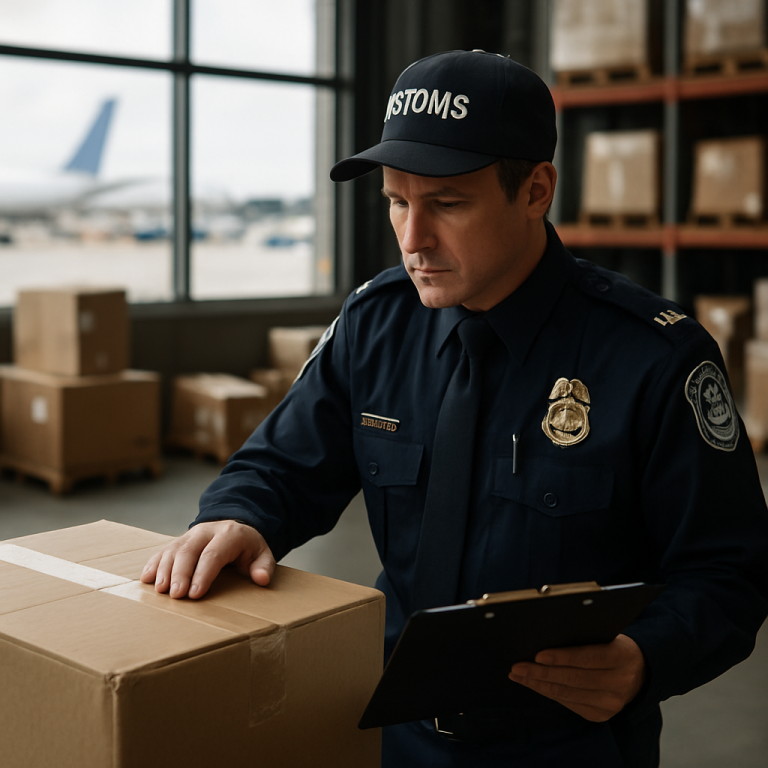
A customs broker focuses on the legal and administrative side of bringing goods into a country. In the U.S. context, that can include preparing and filing a customs entry, assessing the information used for classification and valuation, and helping to address duties, taxes, admissibility, refunds, rebates, or duty drawback matters.
The broker needs accurate information from the importer and supplier. That commonly means a clear product description, quantity, value, country of origin, commercial invoice, packing details, and transport documents. Product classification should not be treated as a guess: the correct code can depend on the product’s material, construction, function, and other details. A broker can advise on entry requirements, but engaging one does not make incomplete or inaccurate commercial information acceptable.
In the U.S., an importer may also need identifying information for the entry process. Our explanation of an Importer of Record number and CBP registration provides related background for businesses bringing goods into the country.
Do you need a customs broker, a freight forwarder, or both?
You may need a freight forwarder when the main challenge is moving commercial cargo internationally: finding a suitable air, ocean, road, or rail option, coordinating collection, or managing multiple transport stages. You may need a customs broker when you are importing and require help with the destination country’s customs entry and compliance requirements.
For many commercial imports, using both is sensible. The forwarder can keep the cargo moving, while the broker handles entry at the border. A forwarder may include brokerage in its service, but do not assume this. Shipping Solutions notes that many forwarders are also brokers or have access to brokerage services, while not every customs broker is a freight forwarder. Its explanation also usefully highlights that customs brokerage is chiefly an import-side function in the destination country.
Ask one direct question before booking: Who is responsible for customs clearance at destination, and is the brokerage fee included in this quotation? Also ask whether that party is providing the brokerage itself or passing the work to another firm.
Why one company may offer both services
A single provider can make communication easier because transport milestones, shipping documents, and customs-entry deadlines can be managed through one contact. It can also reduce the risk that a forwarder assumes the broker has received a document while the broker assumes the forwarder is still collecting it.
That said, a combined service is not automatically the best fit. A specialist broker may be valuable where the goods are regulated, unusually complex, subject to trade remedies, or repeatedly imported under classifications that require close attention. Conversely, a business shipping several containers or frequent air consignments may place particular value on a forwarder’s carrier relationships and operational control.
Confirm the scope in writing. The quotation should distinguish freight, origin charges, destination charges, customs brokerage, disbursement or advancement fees where applicable, duties and taxes, inspection-related costs if any arise, and final delivery. Charges and responsibilities can otherwise be misunderstood, particularly where the sale is agreed under DDP, DAP, FOB, or another Incoterm.
How to choose the right provider
Start with the shipment, not the provider’s job title. A small parcel sent by an express carrier may use the carrier’s own clearance process. A recurring commercial import may need a broker that understands the products and a forwarder that can manage the route. A one-off export may primarily need a forwarder, while the overseas buyer arranges brokerage in the importing country.
- Ask whether the provider handles your origin and destination countries directly or through agents.
- Check which party prepares transport documents and which party submits the customs entry.
- Provide detailed, consistent product descriptions rather than vague labels such as “parts” or “samples”.
- Ask how classification, customs value, origin, duties, taxes, and government-agency requirements will be addressed.
- Compare quotations on scope, not only the headline freight price.
- Agree who will receive and answer customs queries while the shipment is in transit or at the port of entry.
If tracking shows that a U.S.-bound shipment has reached a broker facility, it usually means the brokerage or clearance stage is being processed rather than that final delivery has begun. Export Import Academy explains this status in its guide to a shipment arriving at a customs clearance broker facility at LAX.
Common mistakes when arranging freight and customs clearance
The most common error is assuming that a freight booking includes every border requirement. Another is sending the broker documents too late, or providing an invoice that does not adequately describe what is being imported. Both can leave the broker unable to complete the entry promptly.
It is also risky to select a provider solely because it promises the lowest transport price. Freight, brokerage, customs duties, taxes, carrier charges, insurance, terminal costs, and inland delivery are separate parts of a shipment’s landed cost. Compare like with like, and make sure the quote identifies exclusions.
Finally, remember that customs rules belong to the importing jurisdiction. A U.S. customs broker assists with U.S. imports; an exporter shipping goods out of the U.S. may need a broker or customs representative in the destination country instead. The practical answer to customs broker vs freight forwarder is often not either-or: use the forwarder to manage the cargo movement, use the broker to manage import compliance, and make sure both parties know exactly where their responsibilities begin and end.