
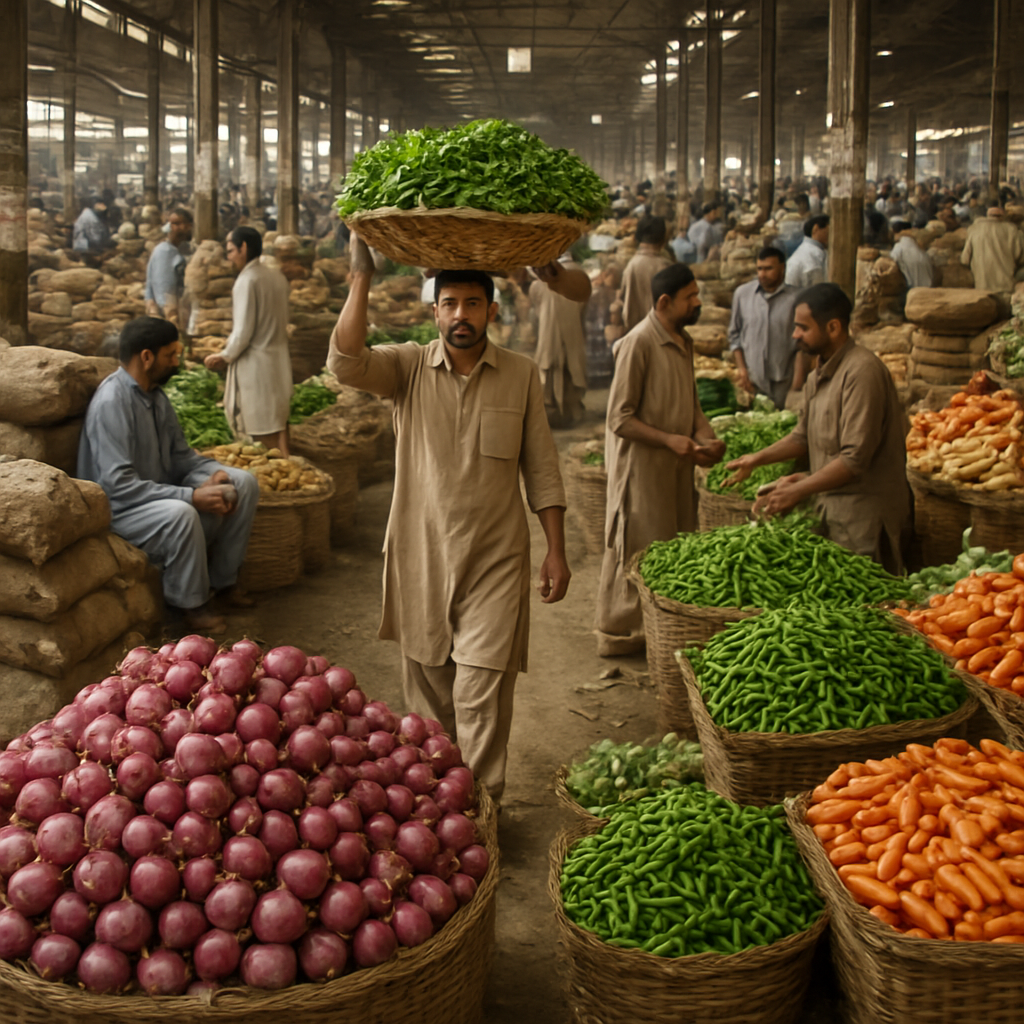
The best short answer is: Pakistan does not have one officially verified “largest” wholesale market based on a single nationwide ranking in the sources available here. If you are looking for the most widely recognised wholesale hub, Jodia Bazaar in Karachi is the name that comes up most often, with Shah Alam and Bolton Market also standing out as major wholesale districts in Pakistan’s commercial landscape.
So, if your question is really asking which market matters most for bulk buying and resale, Jodia Bazaar is the safest practical answer. But if you mean “largest” in a strict measurable sense — by area, trader count, turnover, or number of shops — the evidence we have does not support a definitive nationwide ranking.
Which is the largest wholesale market in Pakistan?
In practical search and trade terms, Jodia Bazaar is the best-known wholesale market associated with Karachi and is often treated as the leading answer when people ask about Pakistan’s largest wholesale market. However, that should be understood as a qualified, market-recognition answer, not a formally proven national ranking.
The reason for that caution is simple: “largest” can mean different things. A market may be the largest by:
- physical size
- number of traders
- daily footfall
- wholesale turnover
- importance in a particular product category
The available evidence identifies recurring wholesale hubs — especially Jodia Bazaar, Shah Alam, and Bolton Market — but does not provide the official data needed to rank them against one another with precision. For a useful, reliable article, it is better to say that Jodia Bazaar is the most prominent and most commonly associated wholesale hub in this search context.
What counts as a wholesale market in Pakistan?
A wholesale market is not the same as a retail shop or a shopping mall. It is a place where businesses, resellers, distributors, and bulk buyers source goods in larger quantities, often at prices that support resale margins. That distinction matters because many people search for the “best shop” or “largest bazaar” when what they really need is a place to buy inventory efficiently.
In Pakistan, wholesale markets tend to be useful when you need:
- better unit prices through bulk purchasing
- a wide range of suppliers in one location
- fast comparison between competing sellers
- stock for retail shops, online resale, or distribution
- access to product categories that move quickly in local trade
TDAP’s guidance on market selection for exporters is useful here because it stresses that a seller should understand the market, the distribution channel, the segment, and the regulations before buying or selling into it. You can read more in the Trade Development Authority of Pakistan’s frequently asked questions.
For broader trade context, Pakistan’s commercial landscape is shaped by the roles of the Federal Board of Revenue, Pakistan Customs, the National Tariff Commission, and the Ministry of Commerce. A useful overview of those bodies appears in Trade Regulators of Pakistan.
The main wholesale hubs people compare
Rather than one universally measured “largest” market, search demand in Pakistan tends to revolve around a few major wholesale names. The most important ones are:
| Wholesale hub | Why it matters | How to think about it |
|---|---|---|
| Jodia Bazaar | Most commonly associated with Karachi’s wholesale trade and the strongest candidate for the “largest” answer in everyday use | Best-known wholesale hub, but not officially ranked here by size |
| Shah Alam | Frequently cited as a major wholesale market district | Important for buyers seeking dense supplier access and bulk sourcing |
| Bolton Market | Another historic and active wholesale name that appears in market discussions | Significant commercial area, especially in wholesale trade conversations |
These markets are best understood as major wholesale centres, not as retail malls. That distinction is important because a mall ranking tells you very little about where traders actually source bulk goods.
Why Jodia Bazaar is usually the first name mentioned
Jodia Bazaar is so often the first answer because it sits at the intersection of recognition, scale, and wholesale reputation. It is the name most readers are likely to recognise when they ask about Pakistan’s largest wholesale market. That said, the safest phrasing is still: Jodia Bazaar is widely regarded as one of Pakistan’s leading wholesale markets and is commonly treated as the main answer to this question.
That wording matters because it avoids claiming a measured fact that the available evidence does not prove.
Are Pakistan’s biggest bazaars the same as its biggest wholesale markets?
Not necessarily. A bazaar is a broader commercial term. It may include retail stores, wholesale stalls, informal traders, service businesses, and mixed-use commerce. A wholesale market, by contrast, is specifically a sourcing place for bulk trade. A mall is usually a retail-focused shopping centre and is not the same thing at all.
This is why a question such as “Which is the biggest bazaar in the world?” does not automatically lead to the same answer as “Which is the largest wholesale market in Pakistan?” They are different comparisons with different definitions and different kinds of evidence.
For readers in Pakistan, the more practical question is usually not world ranking. It is this: Which market is most important for bulk buying, reselling, or distribution? That is where Jodia Bazaar, Shah Alam, and Bolton Market come into the picture.
Why wholesale markets matter for profitable business in Pakistan
Wholesale markets matter because they can improve margins. If you buy inventory at wholesale prices, you may have more room to price competitively while still earning a profit. That is one reason wholesale sourcing remains central to many trading, retail, and distribution businesses in Pakistan.
But wholesale access does not automatically make a business profitable. Profitability depends on:
- product demand
- purchase price and supplier terms
- transport and freight costs
- storage and handling
- competition in the selling market
- customs and compliance requirements where imports are involved
Pakistan’s export and trade environment is also shaped by regulatory compliance and logistics realities. For instance, import-export guidance from practitioners highlights the importance of correct classification, valuation, documentation, and procedural discipline. You can see a more detailed compliance discussion in Import Export Compliance Pakistan (2026) Explained and Import Export Compliance Pakistan: 2026 Guide.
If you are buying goods in bulk and moving them on, freight costs also affect your final margin. For readers who want a deeper logistics breakdown, how freight charges are calculated is a useful next read. If you are moving larger consignments, you may also find 20-foot container shipping costs relevant.
How to use a wholesale market if you are buying for resale
If your goal is to source inventory rather than just browse, a wholesale market works best when you treat it like a procurement channel, not a shopping trip. The most effective buyers usually:
- know the exact product category they want
- compare several suppliers before placing orders
- ask about minimum order quantities
- confirm packaging, quality, and lead time
- factor in transport from market to warehouse or shop
- check any import or customs issues if the goods cross borders
For online resellers, a useful companion guide is buying wholesale inventory and reselling it online. Even though that article focuses on online sourcing, the same margin logic applies to wholesale market buying: the lower and more stable your input costs, the better your resale control.
What products move through large wholesale markets?
Large wholesale markets often handle fast-moving consumer goods, general merchandise, garments, electronics accessories, household items, packaging materials, and imported stock. The exact mix depends on the market and the trader base.
If you want a broader sense of the product categories that commonly move through import and trade channels, common imports and why they matter offers a useful context for understanding the kind of stock wholesalers may carry or distribute.
In practice, this is why major wholesale hubs remain important even when retail shopping shifts online: businesses still need places to source goods in volume, compare supply, and manage replenishment efficiently.
So, what is the safest final answer?
If you need one concise answer, the safest and most practical version is this:
Jodia Bazaar is the best-known and most commonly identified wholesale market in Pakistan, but the available evidence does not verify a single official nationwide “largest” ranking. Shah Alam and Bolton Market are also major wholesale hubs that frequently appear in the same conversation.
That answer is careful, accurate, and useful. It tells the reader what the market is, why it matters, and where the major wholesale names cluster — without overstating a claim that the evidence does not support.