
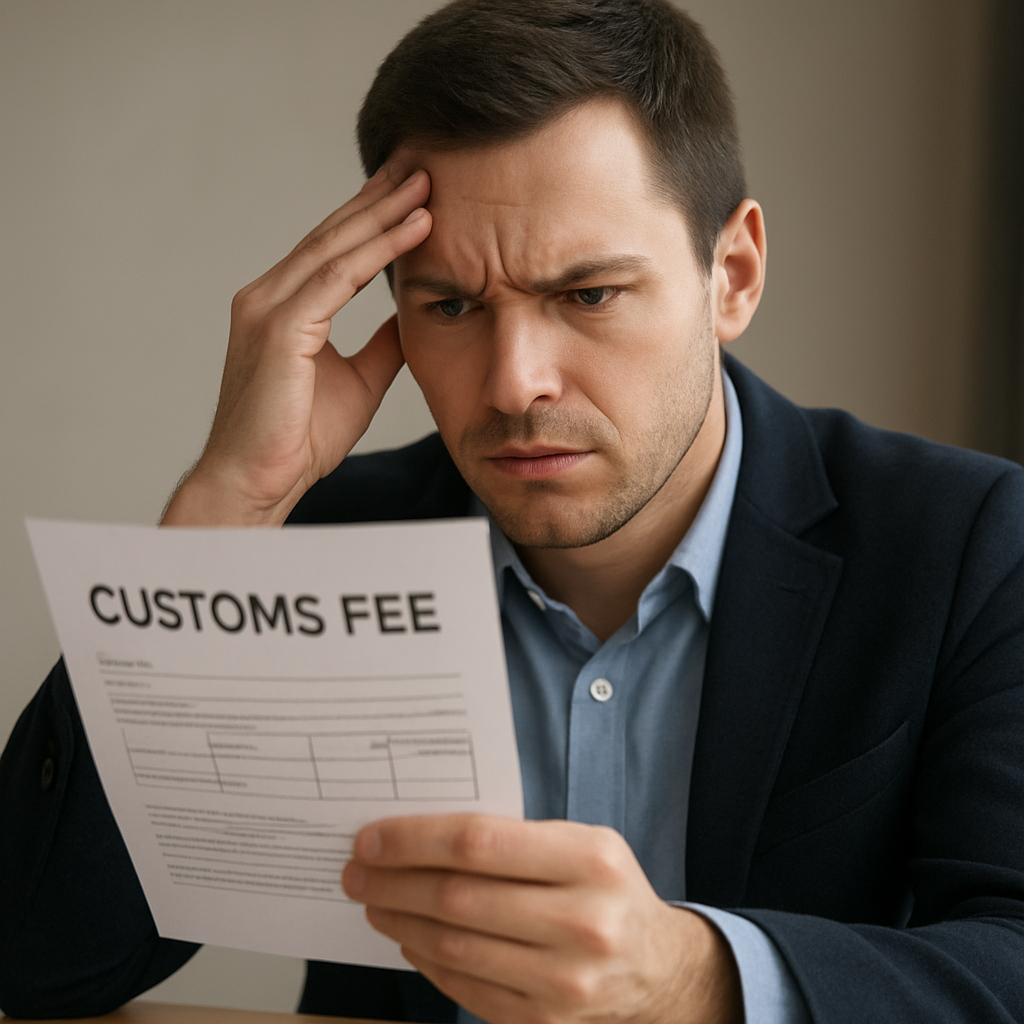
If you are being charged a customs fee, it is usually because your parcel has been assessed for government import charges and, in some cases, the carrier or customs broker has paid those charges on your behalf and is now billing you. The notice may include customs duty, import tax such as VAT/GST/sales tax, brokerage fees, and carrier processing or handling fees. Shipping and import charges are separate, so you can still be asked to pay even if postage was already included at checkout.
In other words, the fee is not automatically a “penalty” or a random extra charge. It usually reflects the destination country’s import rules, the product’s classification, its declared value, and who is responsible for clearing the shipment.
Why you’re being charged a customs fee
Customs charges exist because imported goods can trigger duties and taxes in the destination country. Governments use these charges for revenue, trade policy, and border control. A carrier may also add its own service fee if it handled customs clearance, advanced payment, or processed the entry paperwork.
That is why one notice can contain more than one line item. The amount you see may combine a government charge with a carrier or broker fee, and the two should not be treated as the same thing.
For a plain explanation of how import duty works, DHL’s overview of import duty and import tax is useful background. The U.S. government also explains that tariff resources do not include every other charge that may be collected at customs clearance in its import tariffs and fees overview.
What the charge may include
- Customs duty: a government charge on certain imported goods, often based on the product’s customs classification and origin.
- Import tax: VAT, GST, sales tax, or a similar tax applied by the destination country.
- Brokerage fee: a fee for customs clearance services when a carrier or broker handles the entry.
- Carrier processing or handling fee: an administrative charge some carriers apply for advancing duties, taxes, or paperwork.
UPS says governments impose import fees for a variety of reasons, and that duties, taxes, and specialised fees such as the Merchandise Processing Fee are set by the government rather than by UPS. UPS also notes that it may pay the charges upfront to move the parcel through customs and then bill the exporter or importer depending on the shipment terms and Incoterms.
How customs fees are calculated
There is no single universal customs-fee formula, because the amount depends on the destination country and the type of shipment. Customs authorities usually look at several factors: the commodity type, quantity, value, and country of manufacture or origin. For many products, duty is a percentage of the declared import value, but some goods can be assessed a fixed amount per unit, or a combination of percentage plus fixed duty.
In some cases, the customs value may also take account of shipping and insurance, depending on the valuation method used by the importing country. Taxes such as VAT, GST, or sales tax are often calculated on a base that can include the goods value, shipping, and the duty amount. That is one reason a shipment can end up with several separate charges instead of one flat fee.
The exact fee also depends on the customs classification assigned to the goods. The same item can be treated differently depending on its code, origin, and whether extra duties apply. A customs fee calculator can help you estimate costs, but it cannot guarantee the final amount because the actual assessment depends on the entry data and the destination country’s rules.
| What affects the amount | Why it matters |
|---|---|
| Product type / classification | Different goods can have different duty rates, and some are taxed differently. |
| Declared value | Duty and tax are often based on the value declared on the entry. |
| Country of origin | Origin can change the duty rate or trigger additional duties. |
| Quantity | Some products are charged per unit rather than only as a percentage. |
| Shipping and insurance | These may be included in the taxable base in some jurisdictions. |
| Carrier service fees | Brokerage or handling fees may be added if the carrier clears the shipment. |
Trade.gov notes that tariff estimates can help, but the actual tariff rate is determined by the importing country’s customs authority and may differ from an estimate. Pitney Bowes similarly explains that duties, taxes, and tariffs are separate concepts and that local taxes are often applied to the combined value of the product, shipping, and duties.
For a practical cost example, customs and clearance charges can also include fee structures such as the U.S. Merchandise Processing Fee. GoFreight notes that many goods face duties that vary by HTSUS code and country of origin, and that shipments can also be subject to extra customs-related charges depending on the entry type.
Does shipping cost include tariffs or customs fees?
Usually, no. The shipping price generally covers transportation and sometimes carrier handling, but it does not automatically include import duty, VAT, GST, sales tax, or other customs-related charges. Those import charges are separate unless the seller used a landed-cost or Delivered Duty Paid arrangement.
If the seller used DDP, the seller or shipper has typically agreed to include import costs upfront. If the shipment was sent DAP, or the checkout page did not clearly state that duties and taxes were prepaid, the recipient should expect possible charges on arrival. This is one of the most common reasons shoppers are surprised by a bill after they have already paid for shipping.
For more context on how this works in practice, see our guide on EU duties, VAT, and parcel rules. That topic is especially relevant when an order shows shipping paid at checkout but the parcel still attracts import charges later.
How to pay customs fees and carrier charges
The payment process depends on the carrier and who is acting as importer of record. With express couriers, the carrier often clears the parcel, pays the government charges, and then asks you to reimburse them. The notice may arrive by email, in tracking, or through the carrier’s online portal.
UPS says that if a yellow banner appears in tracking, you can use the Pay Now link, review the fee details, and choose from the available payment options. UPS also notes that a driver may be able to accept payment at delivery in some cases, although a surcharge may apply and payment options are limited. To avoid that surcharge, the carrier advises paying online before delivery when possible.
That workflow is not identical across carriers. USPS, UPS, FedEx, and DHL may each use different payment portals, collection methods, and timing. The key point is to check the tracking page, the email notice, and any customs paperwork before assuming the fee is fraudulent or misdirected.
What to check before you pay
- Confirm the tracking number matches your parcel.
- Read the fee breakdown and identify whether it is duty, tax, brokerage, or a handling fee.
- Check whether the notice came from the carrier’s official email or tracking portal.
- Review the shipment terms if you know them, especially DDP, DAP, or another delivery arrangement.
- Compare the declared value and product description with your order details.
If you are unsure why a customs form was requested alongside a fee notice, our article on why eBay asks for a customs form explains how customs paperwork can be tied to clearance and payment.
What happens if you don’t pay the customs fee
In most cases, non-payment means the parcel will not be released for final delivery. The common outcome is delay, held clearance, return to sender, or another form of non-delivery until the charges are settled. Carrier rules differ, but the practical result is usually that the shipment stays stuck until payment is made.
UPS says charges must be resolved before the parcel can move through the import process, and other carriers generally follow a similar principle: if the import charges are not paid, the shipment cannot be completed. In some situations, a carrier may apply extra fees or a late-payment surcharge if payment is made at delivery or after the normal deadline, where that is allowed under its rules.
For shoppers asking specifically about consequences, the important point is simple: ignoring the notice rarely makes the charge disappear. It usually creates a delivery problem instead. If you want the item, paying the bill is normally the fastest way to move the shipment forward.
When customs fees start by country and threshold
Thresholds vary by country, and they can also vary by product type, shipping method, and customs channel. That is why a parcel that ships freely in one country may trigger import charges in another. This is especially common on cross-border online orders, gifts, and courier shipments.
For the UK, there is no single universal figure that applies to every situation. The threshold question depends on the destination rules in force, the type of goods, and the shipping route. Rather than relying on a general rule of thumb, check the UK customs authority guidance or the carrier’s country guide for the current threshold and any exceptions.
Some shipments also attract charges because they do not meet a country’s duty-free or tax-free threshold, or because the goods fall into a category that is treated differently. That is one reason a fee can appear even when the parcel looks low value.
If you are dealing with a gift shipment, it is worth reading our guide to gift limits and customs rules, because gifts can still trigger import charges depending on the destination and the value of the goods.
Why the fee can appear even after you already paid for shipping
Paid shipping and paid import charges are not the same thing. A checkout total may cover transport from the seller to your address, but that does not automatically mean the seller has prepaid duties, import taxes, or customs brokerage charges. Unless the listing or shipping terms clearly state that import costs are included, a separate customs bill can still arrive.
This is where the wording matters. DDP generally means import charges are prepaid. DAP or an unspecified shipping arrangement usually means the recipient may have to pay when the parcel reaches customs. If the seller did not clearly state that the delivery was landed-cost or duty-paid, the fee is not unexpected from a customs perspective, even if it feels surprising to the buyer.
That distinction matters because many disputes begin with the assumption that “shipping paid” should have covered everything. In reality, transport charges, customs duty, import tax, and brokerage fees are separate items unless the seller made a specific all-in arrangement.
How to tell whether the charge is a customs bill or a carrier fee
A government customs charge is imposed by the destination country’s customs authority, while a carrier fee is charged by the company handling the shipment. Both can appear on the same notice. If you are looking at a bill from UPS, DHL, FedEx, or another courier, check whether the amount is labelled as duty, tax, disbursement, brokerage, or handling.
That difference matters because not every line item is a tariff. A tariff, duty, tax, and processing fee each have different functions. Some notices combine them into one payment request, but the underlying charges may come from different entities.
DHL’s explanation of import duty and trade.gov’s overview of tariffs are useful reminders that customs and carrier charges are not the same thing. If a parcel notice looks unclear, the safest next step is to review the tracking page, invoice, and customs breakdown before paying.
What to do next if you received a customs fee notice
Start by confirming the parcel details and reading the fee breakdown. Then decide whether the amount is a government duty/tax, a broker fee, or a carrier handling charge. If the bill came from a courier portal, look for the official payment option in tracking or the carrier email rather than replying to an unsolicited message.
If the shipment terms were DDP, the fee may need to be queried with the seller or shipper because the import charges should already have been covered. If the shipment terms were DAP or not specified, the carrier notice may be exactly how the import charges are supposed to be collected.
If the parcel is time-sensitive, paying promptly is usually the simplest way to avoid delay. If you think the amount is wrong, ask for the entry breakdown before you pay, because once the parcel is released it can be harder to correct a misunderstanding later.
For broader context on customs release and timing, you may also find our article on import customs clearance helpful if your package is sitting in clearance rather than moving to delivery.
The short answer is that you are being charged because international shipments can trigger government duties, taxes, or carrier clearance fees, and those charges are usually separate from shipping. Once you know which part of the bill is which, the notice becomes much easier to understand and much easier to deal with.