
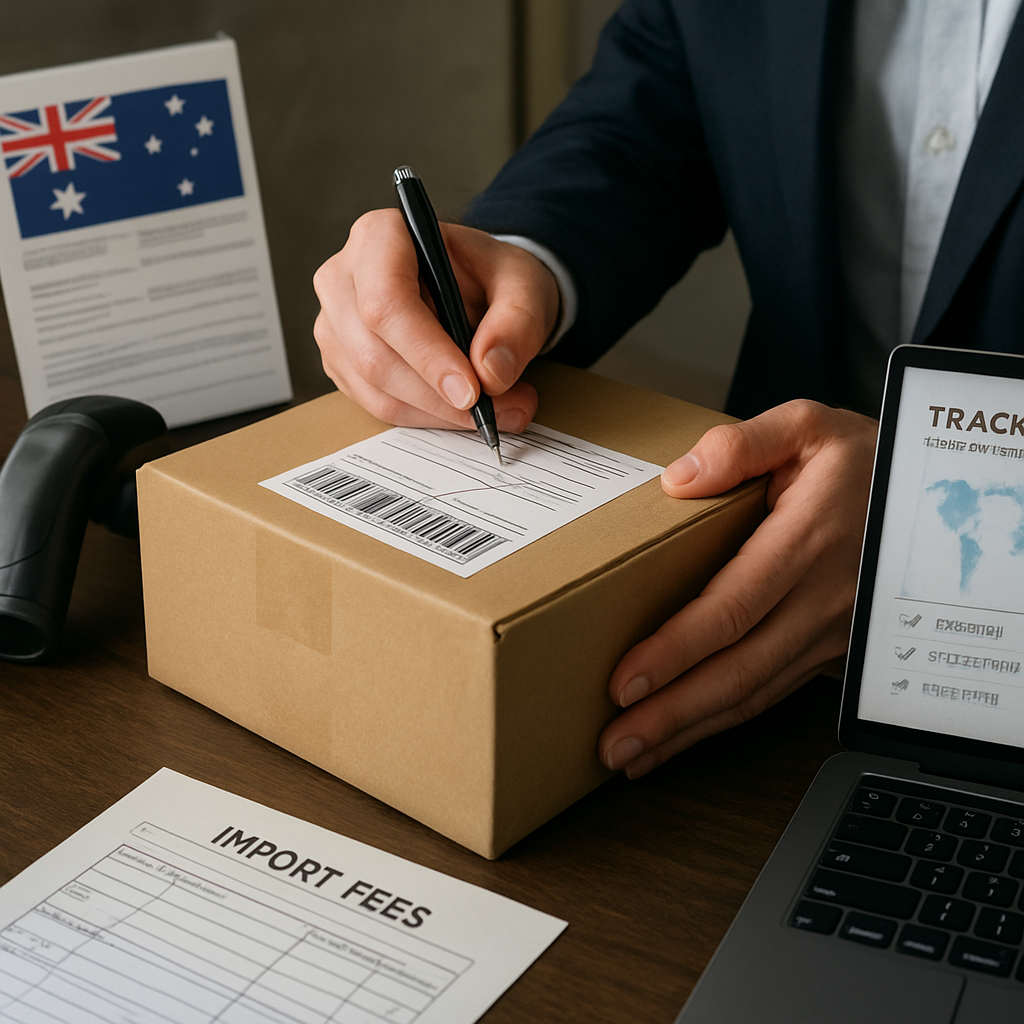
If you are buying or selling through eBay Australia international shipping customs tracking, the key point is simple: the shipping journey is often split in two. The seller usually handles the domestic leg to eBay’s designated hub or domestic destination, and eBay then handles the cross-border leg, customs paperwork, import charges where applicable, and tracking for the international stage.
This matters because tracking can look confusing at the handoff, customs delays are common in cross-border shipping, and import fees can change the real total price of an item. It also means that whether a parcel reaches Australia smoothly depends on the listing, the seller’s setup, and the shipping programme being used — not on eBay alone.
How eBay international shipping works
For eligible international shipping programmes, the basic model is straightforward. The seller ships the item domestically to eBay’s hub or accepted domestic destination with tracking. Once the parcel is accepted there, eBay takes over the cross-border part of the journey, including export handling, customs paperwork, and international transport. In some programmes, eBay also manages protection if delivery issues arise after the handoff.
This is not the same as ordinary domestic delivery within Australia. It is an international shipping workflow that may be used by sellers in one country to reach buyers in another. As eBay explains in its international updates, the platform has been expanding shipping solutions that show import charges at checkout, handle paperwork after purchase, and streamline the customs process for eligible cross-border orders.
Put another way, the seller’s job is usually to pack the item correctly, label it for the domestic leg, and get it to the required hub with the right tracking. eBay’s role begins once the hub accepts the parcel.
Buyer responsibilities versus seller responsibilities
| Stage | Usually responsible party | What happens |
|---|---|---|
| Packing and labelling | Seller | Item is prepared for shipment and sent to the domestic hub or destination. |
| Domestic transit to hub | Seller / domestic carrier | The parcel moves through the seller’s home-country postal or courier network. |
| Hub acceptance | eBay / programme operator | The shipment is received, checked, and moved into the cross-border flow. |
| Customs paperwork | eBay / programme operator | Required documentation is prepared for export and import processing. |
| International transport | eBay / programme operator | The parcel moves to the buyer’s country, including Australia where eligible. |
| Import charges | Buyer, depending on listing terms | Charges may be shown at checkout or, in some cases, paid on arrival. |
If you want a deeper explanation of the seller side, see our guide on how eBay international shipping works for sellers.
How eBay tracking works after customs and hub handoff
Tracking often looks like two separate journeys stitched together. First, there is the domestic leg from the seller to the hub. Then, after acceptance, there is the international leg that eBay manages. That is why the tracking number or status may appear to pause, change systems, or show little movement at the moment the parcel enters customs or the hub process.
That pause does not automatically mean the item is lost. Cross-border parcels often wait while the hub processes them, prepares paperwork, or passes them through customs clearance. As discussed in this explanation of eBay International Shipping tracking, the seller’s responsibility generally ends when the hub accepts the parcel, and the handoff is often the point where tracking becomes most confusing for buyers.
The practical rule is to watch for the key milestones, not every minute-by-minute scan. The most important events are:
- the seller’s parcel acceptance on the domestic route,
- arrival at the eBay hub or processing point,
- customs paperwork and customs clearance, and
- movement after customs release towards the buyer.
If the parcel is in customs or at the hub and scanning stops for a while, that can be part of the normal process. A temporary lack of scans is not proof of loss, especially on international orders where the parcel may be moving between systems or waiting for processing rather than physically moving from one depot to another.
Import fees, duties, and taxes on eBay purchases
Import charges can be one of the biggest surprises in international eBay purchases. For eligible programmes, eBay may show import charges on the item page or at checkout, and the buyer pays them upfront. In some cases, depending on the listing and available checkout options, the buyer may be able to pay import charges when the item arrives instead.
The important point is that duties, taxes, and import fees affect the total landed cost. A listing that looks inexpensive at first can become much more expensive once import charges are added. That is why buyers should look at the full checkout total, not just the item price and domestic postage.
eBay’s cross-border programme materials say that import charges are shown automatically on the item page for eligible destinations and paid by buyers at checkout, and that eBay then handles the required paperwork, customs clearance, and tracking. For a related overview of those payment mechanics, see the programme summary in eBay’s international updates. A separate explanation of checkout-versus-arrival payment options is also covered in this tracking and import-charge guide.
If import charges are paid at checkout under the programme terms, the buyer generally should not be charged additional import fees for that shipment up to delivery, subject to the specific programme conditions shown at purchase. If the buyer chooses or is offered payment on arrival, the final amount due can depend on the options available at checkout and the destination’s customs process.
For Australia-specific importing context, the Australian Border Force notes that goods imported by post or mail may be subject to border procedures and charges depending on the shipment. You can read the general guidance on importing by post or mail.
What buyers should check before paying
- Whether import charges are shown at checkout.
- Whether the listing says duties and taxes are included or collected separately.
- Whether the seller is using an eligible international shipping programme.
- Whether the final total still makes sense after fees are added.
For more detail on customs paperwork itself, see our guide on why eBay asks for a customs form.
Does eBay deliver to Australia?
Yes, eBay can deliver to Australia in many cases, but the answer is not universal for every item. eBay is a global marketplace operating in more than 190 markets, yet actual delivery depends on the seller, the listing, and the shipping programme used. A country having an eBay site does not mean every listing on that site ships to Australia.
Some eBay international shipping programmes do explicitly include Australia as a destination market. The shipping model described in eBay’s own materials shows Australia as one of the countries served by newer cross-border shipping options. However, availability remains listing-specific and programme-specific, so you should always check the item page before assuming Australia is covered.
If you are trying to understand why a particular item will not ship internationally, our related guide on why international shipping is unavailable for some eBay items explains the common restrictions and eligibility limits.
So the nuanced answer is this: eBay does deliver to Australia in some cross-border cases, but not every eBay listing is eligible, and not every seller uses the same programme.
How sellers enable eBay international shipping
If you are a seller, the workflow is usually practical rather than complicated. The research-supported steps are:
- Confirm that your account and items are eligible for the international shipping option.
- Enable the international shipping setting or preference in your listing or shipping settings.
- List your item as normal.
- When the order comes in, send the parcel domestically to the hub or domestic destination with tracking.
- Let eBay handle the export paperwork, the international leg, and the buyer-facing cross-border process.
In some programmes, eligible listings can become visible to international buyers automatically once the option is enabled. Some sellers are enrolled automatically in certain cross-border shipping arrangements, while others choose destinations through their shipping settings. The key point is that the seller’s main obligation is to get the item safely and trackably to the designated domestic destination.
For a fuller seller-focused walkthrough, read how eBay international shipping works for sellers.
Why eBay international packages get stuck or delayed
International eBay parcels can appear stuck for reasons that are normal rather than alarming. The most common delay points supported by the research are the hub inspection, customs paperwork preparation, customs clearance, and the post-customs movement stage. A parcel can spend time at any of these stages without being lost.
In practice, this means a shipment may look stalled because it is waiting for the hub to inspect it or prepare the required documents. It may also pause while customs reviews the parcel, or after customs release while the next leg of delivery is arranged. Anecdotal reports in shipping discussions show that long waits after customs are plausible, and the supplied research also notes that some packages take additional time after customs clearance before final delivery.
The safest response to a delayed shipment is methodical, not panicked:
- Check the latest tracking scan.
- Compare the current status with the estimated delivery date.
- Allow for customs and hub processing time before assuming loss.
- Keep the order page and tracking number accessible in case support is needed.
For broader context on customs-related delays, our article on why international shipments are taking so long explains how customs and carrier processing can add time without signalling a failed shipment.
Australia customs basics for eBay imports
When an eBay parcel is sent to Australia by post or mail, Australian Border Force procedures may apply depending on the shipment. That does not mean every parcel is charged the same way, but it does mean buyers should expect customs review and possible import charges on some orders.
This is the reason Australian-bound eBay shipments can be delayed or repriced during transit. Customs handling is part of normal cross-border movement, and the import outcome depends on the goods, their declared details, and the applicable rules at the border. For high-level Australian guidance, the Australian Border Force’s importing by post or mail page is the right starting point.
Keep in mind that this section is intentionally high-level. The supplied evidence does not support a full duty calculator or a universal tariff schedule for Australian eBay purchases, and those figures can vary by product category and shipment details.
What to do first if your eBay parcel to Australia looks delayed
If your parcel seems stuck, start with the facts in front of you rather than assuming the worst. A good sequence is:
- Open the latest tracking scan and note the last confirmed location or event.
- Check whether the parcel is still within the estimated delivery window.
- Look for wording such as “received at hub”, “customs”, “clearance”, or “in transit”.
- Allow time for the next scan if the parcel is in customs or hub processing.
- Contact the appropriate party based on where the shipment is in the chain.
If the parcel has not yet reached the hub, the seller or original domestic carrier may still be the relevant contact. If the parcel has already been accepted by the international programme, the issue may sit with eBay or the cross-border shipping process rather than the original seller. That distinction matters because responsibility shifts when the hub accepts the parcel.
If you want to understand extreme customs problems, our article on what to do after a customs seizure letter covers the more serious end of the spectrum. For most buyers, though, a slow scan or customs delay is not the same thing as seizure.
What this means for buyers and sellers
For buyers, the main takeaways are to check the final price with import charges included, expect tracking to change at the hub, and treat customs delays as a possible normal part of international shipping. For sellers, the main job is to meet the domestic leg requirement, provide the right tracking, and understand where responsibility ends and eBay’s cross-border process begins.
Used correctly, eBay’s international shipping model can make cross-border buying into Australia simpler. But the process is still shaped by customs, import fees, and the handoff between domestic and international networks — which is why tracking can look messy even when everything is working as intended.
If you buy internationally through eBay often, it is worth also understanding return rules. Our guide to eBay’s return policy for international purchases explains what happens if an item arrives damaged, late, or not as expected.