
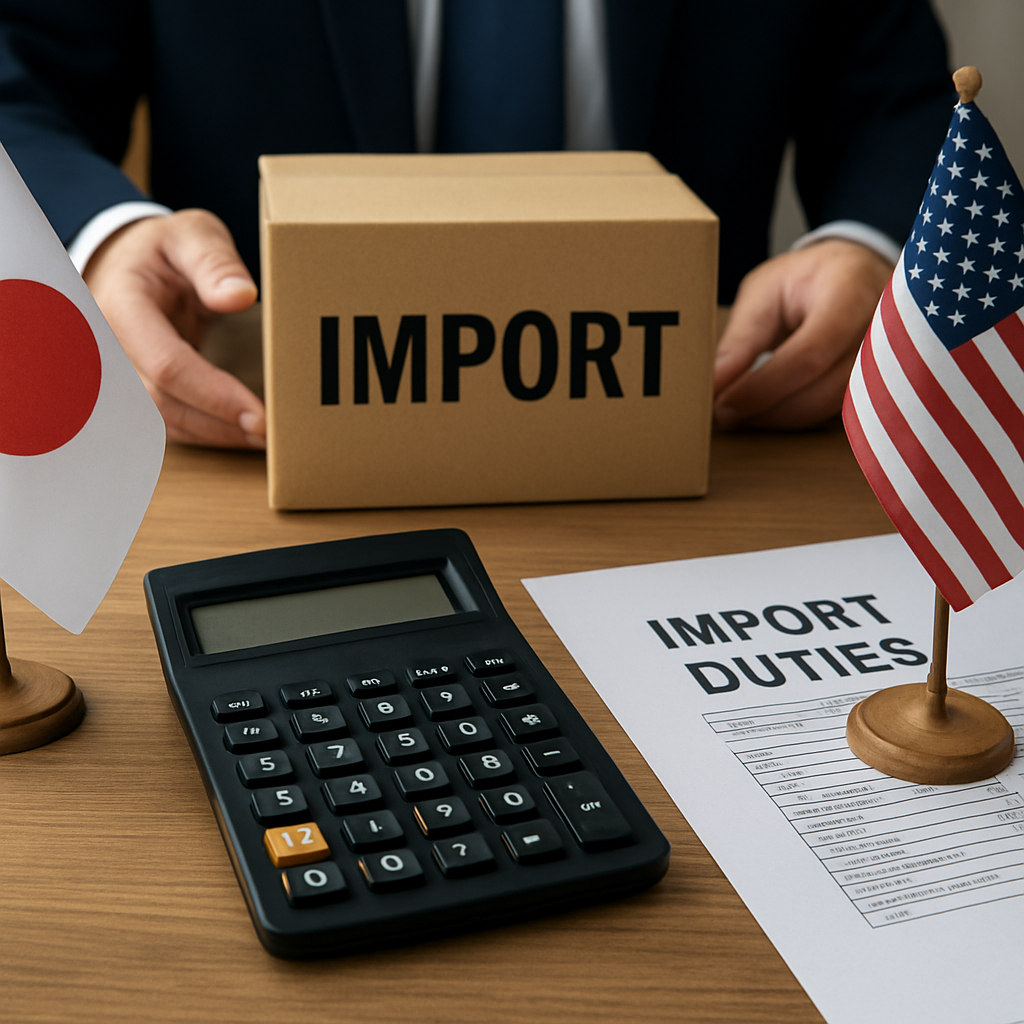
Yes, imports from Japan to the USA can owe duty, but there is no single blanket rate for every shipment. The amount depends on the product’s HTS classification, its origin treatment, and any special trade or customs rule that applies. In practice, the final cost is usually the item price plus duty and any other import-related charges, so you need more than the country of origin to estimate what you will pay.
If you want a current context figure, the average effective U.S. tariff rate for Japan was 10.8% in August 2026, according to USAFacts’ Japan tariff data. That number is useful for context, but it is not a quote for your individual parcel. Customs duty on a single shipment can be much higher, much lower, or even zero depending on the exact item.
Do imports from Japan to the U.S. have duty?
In many cases, yes. U.S. import duty can apply to goods from Japan, but the duty rate is not determined by Japan alone. Customs looks at the product classification, the declared value, the origin rules, and any applicable duty programme or special measure. The same country can produce very different results for different products.
That is why search terms such as tariff, duty, import tax, and customs fees often get used interchangeably by shoppers, but they are not always identical in legal treatment. A tariff or duty is generally the tax assessed on the imported product itself, while other customs-related charges can include brokerage or handling costs depending on the shipment channel. The U.S. government’s own guidance explains that tariff rates are only one part of the landed cost picture and that actual assessments can vary by product and destination market rules. See Trade.gov’s overview of import tariffs and fees for the basic framework.
For a plain-English view: if you buy something from Japan, the landed cost is usually not just the sticker price. It may also include import duty, shipping, insurance, and any carrier or customs charges that apply when the shipment arrives.
What are the current U.S. tariff rates on Japanese imports?
There is no single universal tariff rate for all Japanese imports. The best current context is that the average effective U.S. tariff rate for Japan was 10.8% in August 2026, 10.9% in 2025, and 11.1% over the first eight months of 2026. That is an average effective rate, not a legal promise that every shipment from Japan will pay roughly 10.8%.
That distinction matters because the average is a national trade measure, while your actual bill is product-specific. A shipment of one item may face a normal MFN duty rate, another may qualify for reduced or eliminated treatment under a trade arrangement, and another may be subject to a different special duty regime entirely. Customs makes the final classification and duty determination at import time.
For that reason, the right question is not just “What is the tariff rate from Japan?” but “What is the tariff rate for this product under this HTS code?”
Do you pay tariffs under $800?
Do not assume a shipment is duty-free just because it is under $800. The evidence supplied for this topic indicates that duty-free de minimis treatment for shipments under $800 has been suspended, so low-value shipments may still owe duty. In other words, the old shortcut of “under $800 means no duty” is not safe to rely on for current U.S. imports.
That said, the way a low-value parcel is handled can still depend on the shipping channel. Postal shipments, courier entries, and brokered commercial entries may involve different operational steps, documentation, or payment processes. If your shipment is close to the threshold or is being sent by post, confirm the exact rules with your carrier or customs broker rather than guessing.
This is especially important if you are ordering from marketplaces or small sellers, because the platform itself does not decide the duty. The customs classification and current low-value rules do.
How to estimate import duty from Japan to the U.S.
The most reliable way to estimate duty before buying or shipping is to work from the product, not just the seller country. A practical workflow is:
- Identify the exact product you are importing.
- Find or estimate the HTS code.
- Confirm the origin and any preferential treatment that may apply.
- Use a tariff or duty calculator to estimate the rate.
- Add shipping, insurance, and other import-related charges to estimate the landed cost.
This is the approach recommended by the main calculator tools in the market, and it matches how customs classification actually works. A useful external reference is the Flexport Tariff Simulator, which lets users estimate U.S. import duties and customs fees by product name or HTS code. For a broader official explanation of why estimates are only estimates, Trade.gov notes that tariff resources can help you approximate rates, but actual customs charges may differ from your estimate because customs can classify goods differently or apply additional rules.
If you are shopping on eBay or another marketplace, that same logic still applies. The seller platform may give a rough estimate, but the duty result depends on the item’s classification, not the marketplace listing alone. That is why classification is the key input, and why a free calculator is useful only if you feed it the right product information.
A simple landed-cost example workflow
Use this sequence if you want a rough pre-purchase number:
- Product price: what you are paying the seller.
- Duty estimate: based on HTS code and origin.
- Shipping and insurance: the transport charges.
- Other charges: any carrier or customs processing fees that apply.
- Landed cost: the total amount you should budget.
If you want to go one step further, see our guide on how to calculate landed cost for a practical formula-based breakdown.
Why duty can vary so much by product type
Product category drives duty outcomes. Cars, watches, electronics, clothing, tools, and collectibles can all be treated differently because customs classification is based on the item’s technical description, materials, use, and origin rules. That means there is no sensible way to give one universal rate for every “import from Japan” query.
For example, a vehicle import from Japan cannot be answered with a generic country-wide percentage. Cars need a vehicle-specific classification and rule check. The same is true for watches: the material, movement, origin, and exact tariff classification can change the duty outcome. A mechanical luxury watch, a fashion watch, and a smartwatch may not be treated the same way.
The important takeaway is simple: product details matter more than the country headline. If you do not know the HTS code, you do not have a reliable duty estimate.
Cars from Japan
If you are asking about a car imported from Japan to the U.S., do not apply an average tariff figure and call it done. Vehicle imports can involve separate rules, emissions or safety compliance issues, and product-specific duty treatment. You need the exact model and import scenario before you can estimate the charge properly.
Watches from Japan
Watches are another good example of why a broad “Japan duty rate” is not enough. The classification can change based on the watch type and materials, and that changes the duty result. If you are importing watches for resale or personal use, verify the HTS classification rather than assuming all watches from Japan share the same rate.
How U.S. customs duty rates for Japan are determined
At a high level, U.S. customs duty rates are tied to tariff classification and can come from MFN rates, preferential treatment, or other trade measures. The U.S.-Japan trade framework has reduced or eliminated tariffs on certain products, but not on all products, and the affected tariff lines are specific rather than universal.
The U.S. Customs and Border Protection Japan trade agreement page explains that the United States will provide tariff elimination or reduction on selected tariff lines, including some agricultural and industrial goods. That is important because it shows why country of origin alone is not enough: two items from Japan can face very different treatment depending on whether they fall within an affected line.
If you want a fuller understanding of how duty authorities can differ and potentially stack depending on the product and policy basis, our article on Section 232 tariffs and IEEPA explained is a useful background read. The key point for importers is that customs will always make the final determination at import time.
What to do before you buy from Japan online
If you are buying from a Japanese seller, especially on a marketplace, it is worth checking duty before you pay. A quick pre-check can prevent a nasty surprise when the parcel clears customs.
- Ask for the exact product description and model number.
- Look up the HTS code if you can.
- Use a tariff calculator to get a rough estimate.
- Confirm whether the shipment method is postal, courier, or commercial freight.
- Budget for duty, shipping, insurance, and possible clearance charges.
If you are unsure who is responsible for paying, shipping terms also matter. Under DDP, for example, the seller or shipper may agree to cover duties and certain charges, but that depends on the transaction terms. If you need a refresher on that concept, see our guide to DDP shipping terms.
What happens when the shipment arrives
Once a shipment reaches the U.S., customs and the carrier may assess duty and related charges before delivery. If payment is required, the carrier usually notifies the recipient or importer and provides a way to pay before the package is released.
If you need help with that part of the process, our practical guide on how to pay import customs duty explains the common payment routes for carriers, CBP, and USPS. That can be especially helpful if your package is being held pending payment or paperwork.
Remember that a customs hold is not the same as a seizure, and a tracking delay is not the same as a final duty decision. The charge, if any, is usually resolved at the clearance stage rather than at checkout.
Practical bottom line for import duties from Japan to the USA
If you are importing from Japan to the U.S., the safest assumption is that duty may apply unless you have checked the product’s classification and current rules. There is no single universal rate for all Japanese goods. The most useful current context is the average effective tariff rate for Japan, which was 10.8% in August 2026, but that is only a macro-level average.
For your own shipment, the steps are always the same: identify the product, find the HTS code, confirm origin treatment, run a calculator, and then add shipping and other charges to estimate landed cost. Do not rely on a seller’s guess, and do not assume that under-$800 shipments are automatically duty-free.
If you want an estimate that is actually useful, start with the HTS code. That is the number customs will care about.