
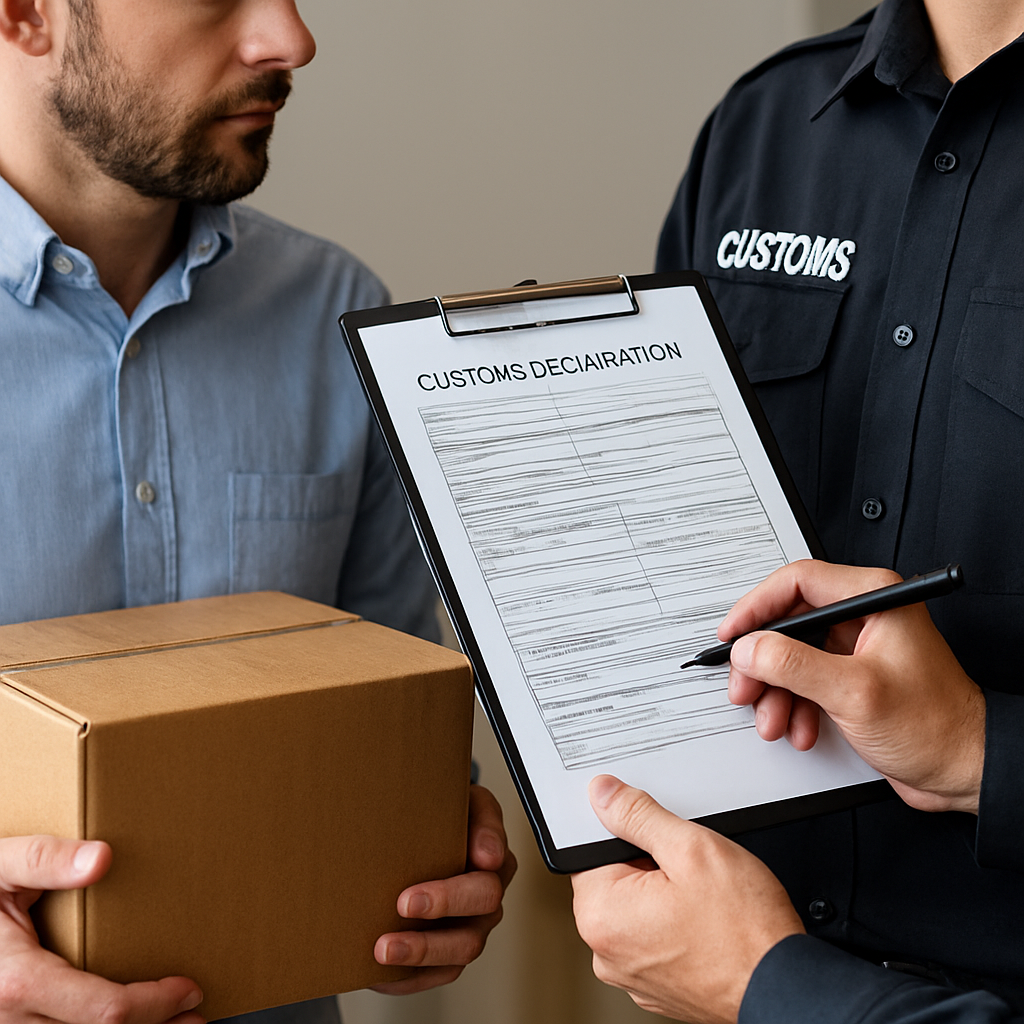
If your tracking says the shipment is declared at customs clearance in the United States, it usually means the goods have been declared to U.S. Customs and Border Protection (CBP) and are now in the customs clearance process. In plain English, the parcel or cargo is not fully released for domestic delivery yet. It is being reviewed, assessed for duties or fees if applicable, and either cleared, held for more information, or selected for inspection.
That status is different from “out for delivery”. It tells you the shipment has entered customs processing, not that customs has finished with it. Once CBP is satisfied, the shipment can be released and then handed on to the domestic carrier for final delivery.
For a broader explanation of the process, it helps to think of customs clearance as the official review that allows goods to legally enter the country after the declaration is checked, duties or taxes are handled, and release is authorised. U.S. brokerage and freight guidance from GoFreight’s U.S. customs clearance overview and UPS Supply Chain Solutions’ customs clearance guide both describe customs clearance as the formal process of reviewing shipment details, validating compliance, and releasing the cargo.
What does “shipment declared at customs clearance” mean?
In simple terms, the shipment has been declared to customs and is waiting inside the clearance workflow. The declaration tells CBP what the goods are, where they came from, how much they are worth, and who is responsible for the entry. Customs then checks whether the information is complete and consistent before deciding whether to release the shipment.
So, if you see a status like this, the likely sequence is:
- The goods arrived at or near the U.S. port of entry.
- A customs declaration or entry was filed.
- CBP or the broker is reviewing the paperwork and shipment data.
- Customs may release the shipment, request more information, or place it on hold for examination.
This is why the status should not be read as final delivery. It normally means the shipment is still moving through customs, not that it has completed the import process.
A useful way to understand the terminology is:
- Declared: the shipment information has been submitted to customs.
- Under customs review: customs is checking the declaration and compliance details.
- Held: customs has paused release until it gets more confidence in the shipment information or more documents.
- Examined: customs may inspect the cargo physically, electronically, or by document review.
- Released: customs has completed its review and the shipment can move on.
That sequence is consistent with the step-by-step customs process described by ForwarderOne’s customs clearance guide and VinWorld’s explanation of customs clearance.
Why customs holds or inspects a shipment
A customs hold means clearance has been paused while CBP or another border authority verifies the shipment details. An inspection does not automatically mean the shipment is suspected of fraud. In many cases, it is simply a verification step to make sure the declaration matches the goods.
Common reasons for a hold or inspection include:
- Incomplete or inaccurate paperwork — missing invoices, missing forms, or unclear descriptions can slow clearance.
- Wrong HTS or classification — if the goods are classified incorrectly, duties and admissibility may be wrong.
- Suspicious or inconsistent value — values that do not fit the product, quantity, or normal transaction pattern can trigger review.
- Misdeclared products — the shipment description does not match what is actually inside the parcel or container.
- Random or targeted inspection — customs may select shipments for examination based on risk screening, route, product type, or compliance concerns.
The major themes above are repeated across the supplied freight and customs sources, including Border Buddy’s explanation of a U.S. customs hold, USA Customs Clearance’s guide to holds and exams, and Vastlog’s overview of U.S. customs inspections.
One of the most common mistakes importers make is assuming a hold means the shipment is “in trouble”. Often, it simply means customs needs a clearer or more reliable record before release. The cleaner the declaration, the less likely the shipment is to stall.
If customs needs more information, the delay may continue until the missing detail is provided. If the issue is serious enough, CBP may keep the shipment under review longer or change its status until the problem is resolved.
What is a 5H customs hold?
The term “5H customs hold” is not safely verifiable as a universal CBP code from the evidence supplied here. In practical terms, you should treat it as a hold or review status unless your carrier, broker, or tracking system explains the exact code.
That means the safe interpretation is:
- the shipment is being held for review;
- customs or the carrier needs more information; or
- the release is paused until the issue is clarified.
Because the meaning of “5H” may be carrier-specific, system-specific, or interface-specific, do not assume it has one official CBP meaning in every case. If you see this status, the best next step is to ask the carrier or customs broker which system generated it and what document or action is needed.
Who is the exporter in a shipment?
The exporter is the party responsible for sending goods out of the origin country or the party identified as the exporting party in the export transaction. In customs paperwork, that role matters because the export declaration, commercial invoice, and shipping records should identify the relevant parties correctly.
It is easy to confuse the exporter, shipper, importer of record, and receiver, but they are not always the same person or company:
| Role | What it generally means | Why it matters in customs |
|---|---|---|
| Exporter | The party sending the goods out of the origin country | Usually linked to the export side of the transaction and the export declaration |
| Shipper | The party that physically ships or tenders the goods | May be the same as the exporter, but not always |
| Importer of record | The party legally responsible for the import entry in the destination country | Responsible for accurate declarations, duties, and compliance |
| Receiver | The person or business receiving the shipment | Not necessarily the party responsible for customs filing |
That distinction matters because customs is concerned with who is legally accountable for the information in the declaration. The importer of record remains responsible for accuracy even if a supplier, freight forwarder, or broker prepared the filing. If you need a deeper breakdown of how those roles differ, see our shipping roles guide and our article on importer of record rules.
For export filings, the Federal Register material supplied in research also reflects that the exporter can be the U.S. seller, manufacturer, order party, or another qualifying party depending on the transaction structure and filing context. In other words, the exporter is not just “whoever posted the parcel”; it is the party identified on the export side of the customs record.
How long customs clearance takes in the U.S.
There is no single guaranteed clearance time, but a realistic expectation for clean U.S. shipments is usually around 1 to 5 business days once the entry is filed. Air cargo often clears in under 24 hours when documentation is complete. Ocean freight often takes longer, and any exam or agency hold can add several more business days.
The supplied research from GoFreight states that typical clearance runs 1 to 5 business days, with air cargo often clearing in under 24 hours on clean filings. It also notes that ocean cargo without an exam may clear in about 1 to 3 business days, while cargo selected for examination may take 3 to 7 business days or longer. If a Partner Government Agency such as FDA, USDA, EPA, FCC, or CPSC is involved, the delay can extend further.
Here is a practical timing guide:
| Shipment type | Typical customs clearance timing | What can slow it down |
|---|---|---|
| Air freight | Often under 24 hours on clean filings | Missing documents, valuation questions, inspections, agency review |
| Ocean FCL | Often 1 to 3 business days without an exam | CBP exam, PGA hold, incomplete entry data |
| Ocean LCL | Often 2 to 5 business days on clean filings | Consolidation issues, documentation gaps, inspection selection |
| Exam or hold | Can extend to 3 to 7 business days or longer | Physical inspection, request for information, agency clearance |
Timing varies because customs clearance is not just a transit event. It depends on the quality of the declaration, the transport mode, whether the shipment is selected for inspection, and whether any other agency must sign off. Clarksons’ customs glossary also notes that the nature of the goods, the destination country, the completeness of the documentation, congestion, and transport mode all affect how long customs clearance takes.
If your shipment seems stuck longer than expected, that does not automatically mean it has been rejected. It may simply be waiting for review, additional documents, or a queue at the port.
What to do if your shipment is stuck in customs
If the shipment has been declared but not yet released, the most useful response is to move quickly and check the details that customs may be waiting on.
- Check the tracking status carefully — look for words like “held”, “under review”, “customs clearance in progress”, “awaiting documents”, or “released”.
- Verify the paperwork — confirm the commercial invoice, packing list, description of goods, value, country of origin, and any required customs form.
- Contact the broker or carrier — ask whether CBP has requested more information or whether the shipment has been selected for an exam.
- Respond quickly to any request — if customs asks for a document, missing value proof, or classification explanation, delays can grow if you wait.
- Confirm who is responsible — make sure the importer of record, exporter, shipper, and receiver are all identified correctly.
If the issue is paperwork-related, our missing customs form guide explains how missing or incomplete forms can delay a package and what to do next.
If the problem is duties or taxes, the shipment may not be released until the amount due is settled. Our guide to paying import customs duty online explains the common payment routes used in the U.S. system.
And if the delay is tied to inaccurate declarations, it is worth taking that seriously. False, incomplete, or misleading customs information can lead to penalties, seizure, or other enforcement action. See our article on false customs declaration penalties for the risks involved.
What happens after customs releases the shipment?
Once customs clears the goods, that does not always mean the parcel appears instantly at your door. The shipment may still need to be transferred back to the domestic carrier for final delivery. In many cases, the customs part is complete, but the carrier still has to sort, scan, and move the parcel into the local delivery network.
This is why you may see a gap between “customs released” and “out for delivery”. Customs has finished its part, but the physical hand-off and last-mile movement still have to happen. That hand-off is normal and does not usually mean there is another customs problem.
If your shipment has been released but is not moving, the next check is usually the domestic carrier’s tracking page rather than the customs broker’s page. After release, the status often changes from a customs process update to a standard carrier movement update.
How to reduce the chance of customs delays next time
The best way to avoid customs holds is to make the declaration as clear and accurate as possible before the shipment moves.
- Use a precise description of the goods, not a vague one.
- Classify the product correctly with the proper HTS code.
- Declare the value honestly and consistently with the invoice.
- Include all required forms and supporting documents.
- Make sure the exporter, importer of record, shipper, and receiver details are correct.
- Check whether the product is subject to extra rules from FDA, USDA, EPA, FCC, CPSC, or another agency.
When customs has a complete, believable record, the shipment is less likely to be delayed. If the paperwork is sloppy or inconsistent, the probability of review rises. That is why good customs compliance is not just an administrative task; it directly affects speed.
If you want to go deeper into the responsibilities and risks around improper filings, our article on false customs declaration penalties is a useful companion read for importers and exporters.
In short, when a shipment is declared at customs clearance in the United States, the goods have entered the customs review process. They are not fully cleared yet. The shipment may be released quickly, held for more information, or inspected before customs authorises onward movement. If you know who filed the entry, what documents were provided, and whether anything unusual appears in the tracking status, you will usually be able to understand the next step more confidently.