
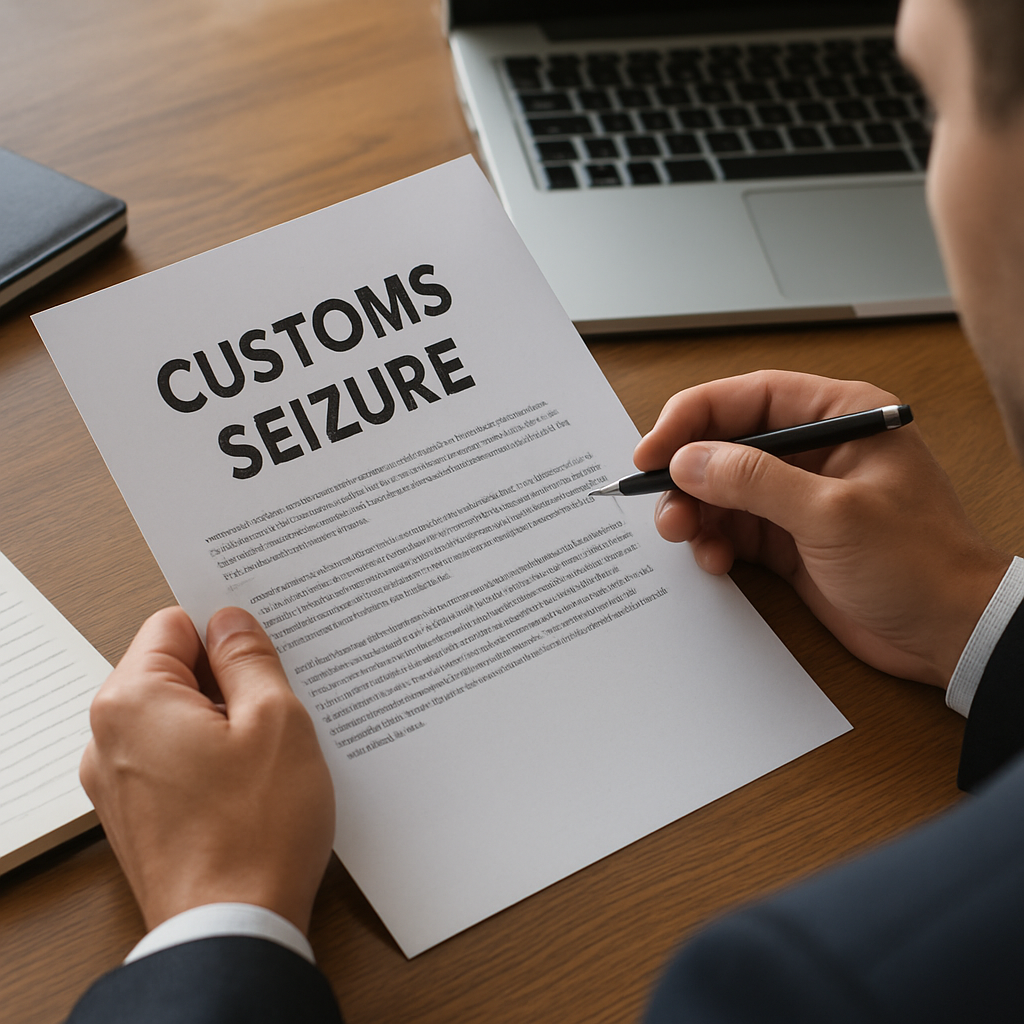
If you get a customs seizure letter, it usually means customs has formally taken the goods into legal custody and started a forfeiture process. It is not just a routine delay or inspection. The letter normally identifies the goods, explains the alleged issue, and tells you what you can do next — and the deadline matters because doing nothing can cost you the goods by default.
In plain English: a seizure letter means the shipment is no longer simply being held for review. Customs has moved from checking the goods to beginning a legal process that could end in release, destruction, forfeiture, or another outcome depending on the notice and the jurisdiction.
What a Customs Seizure Letter Means
A customs seizure letter is an official notice saying that customs has seized your goods. In U.S. cases, CBP uses a Notice of Seizure; in the UK, HMRC or Border Force may issue seizure-related notices that can lead to condemnation proceedings if a claim is made. The key point is that the letter is not a casual update — it is the formal start of a legal process.
The letter usually does three things:
- identifies the goods that were seized;
- states, at least in broad terms, why customs believes the goods were seized;
- sets out the response options and deadline.
That is why it is important not to confuse a seizure notice with a regular customs hold. A hold, detention, or inspection can sometimes be resolved with documents or clarification. A seizure letter means customs has gone further and is treating the goods as seized property.
For a related explanation of the difference between a hold and a customs problem that is not yet a seizure, see customs delays and what the status means. If the issue is simply missing paperwork, customs form mistakes may be the better comparison.
What Happens After You Receive the Letter
Once the seizure letter arrives, the goods remain under government control while the case moves forward. You generally cannot treat the shipment as if it is still in normal transit. Instead, you need to look carefully at the notice and decide whether to respond, contest the seizure, or accept the consequences described in the letter.
The exact process depends on the issuing authority and the wording of the notice, but the practical pattern is similar: customs has seized the goods, and now a deadline-driven process begins. In some cases the notice may allow a claim, petition, or other formal response. In others, the notice may explain how to seek administrative relief or how the goods may be disposed of if nobody acts.
For U.S. cases, several trade law sources note that CBP seizure notices typically create a short response window, often around 30 days for some options, and that the notice itself explains what the recipient can do. For example, this practical CBP seizure guide explains that the deadline is usually narrow and that the wrong choice can affect whether the goods are lost permanently. A separate FAQ on CBP seizures for online purchases also explains that the notice of seizure will set out the response options and related deadlines.
For UK-linked cases, the government guidance on things seized by HMRC or Border Force says that when HMRC or Border Force receives a notice of claim, they will apply to the appropriate court for condemnation proceedings. You can read that process in the official guidance here: what you can do if things are seized by HMRC or Border Force.
What Happens If You Ignore It
Ignoring a customs seizure letter is usually the fastest way to lose the goods. In U.S. cases, inaction can lead to administrative forfeiture, which can mean permanent loss of the property. In other words, the seizure notice is not just information — it is a trigger for action.
That does not mean the letter automatically creates criminal liability. The immediate and most common risk is civil or administrative loss of the goods. But if you do nothing, you generally weaken your position and give customs a clearer path to complete the forfeiture process.
Several sources on CBP seizures emphasise this point. The seizure notice is the point at which deadlines begin, and ignoring the notice may allow the government to proceed without opposition. The result can be permanent loss of the merchandise, even if you believed the issue would resolve itself.
If you are trying to understand the wider risk behind the seizure, it can help to read about false customs declaration penalties, because seizure often comes from a declaration, classification, valuation, or origin problem rather than from the carrier simply misplacing a parcel.
Your Response Options and Next Steps
The notice should tell you what response options are available. Depending on the jurisdiction and the document, those options may include filing a claim, submitting a petition, asking for release, or allowing the government to move ahead with forfeiture or destruction.
There are a few practical differences between the main options:
- Claim or challenge — you formally say that you are contesting the seizure and want the matter reviewed;
- Petition or request for relief — you may ask customs to reconsider, mitigate, or otherwise resolve the matter;
- Do nothing — the government may continue towards forfeiture or disposal under the procedures in the notice.
A response can be important even when the chance of getting the goods back is uncertain. One benefit is procedural: responding creates a record that you are contesting the allegations and trying to clear the name of the interested party. That may matter later if the issue is part of a wider compliance problem, or if the same issue affects other entries.
That said, a response does not guarantee release. The available outcomes depend on the facts, the goods, the reason for seizure, and the customs authority involved. If the allegation is serious, the value is high, or the facts are unclear, professional help from a customs lawyer or trade compliance specialist may be sensible.
For readers dealing with a UK notice, remember that the official GOV.UK guidance says that a notice of claim can move the matter into court condemnation proceedings. For readers dealing with a U.S. notice, CBP seizure notices commonly give a short window and the notice should be read closely before the deadline expires.
How Long It Can Take and What Happens to the Goods in the Meantime
A seizure letter does not always arrive immediately after the physical seizure. There can be a lag between the moment customs takes the goods and the moment the formal notice is issued. In some U.S. cases, one trade law source says CBP often takes around 90 days to issue the seizure notice, although that timing is not universal. You should treat that as an example of variability, not a fixed rule.
While the case is being processed, the goods may be moved to a warehouse or another storage location. Some sources also note that storage fees can accumulate during this period, which becomes important if release is later granted.
This timing issue matters because people often assume a long silence means the shipment will eventually be released. That is not safe. A case can sit for a while and still end in forfeiture or destruction if no one responds properly once the notice arrives.
For background on the way detentions can develop into seizure cases and how storage can become part of the process, see this discussion of import detentions and seizures. It explains that seized goods may be transferred to a bonded warehouse and that storage charges may follow.
Why Customs Seizes Goods and What It May Signal
Customs seizures can happen for many different reasons. A seizure letter may be linked to prohibited goods, counterfeit merchandise, controlled substances, misclassification, incorrect valuation, origin problems, documentation problems, or other admissibility issues.
Examples often come up in search because readers want concrete context. Cigarettes, certain medicines, and steroids are all examples of goods that can trigger seizure risk depending on the rules that apply. But it is important not to assume every case will end the same way. The real question is what the notice says, what law customs is relying on, and what facts support the seizure.
A seizure can also be a warning sign of a wider compliance issue. If the problem is misclassification, incorrect origin, or undervaluation, the same issue may affect previous or pending entries as well. That is why a seizure letter should make you ask not only “How do I respond?” but also “Why did this happen in the first place?”
For a broader overview of the kinds of goods that are commonly restricted or prohibited, see prohibited items and restrictions. If the seizure relates to a false declaration problem, the article on false customs declaration penalties is also relevant.
UK and U.S. Procedures Are Not the Same
One common mistake is treating Border Force/HMRC notices and CBP notices as if they follow exactly the same procedure. They do not. The broad idea is similar — customs has seized the goods and you need to act quickly — but the legal steps and terminology differ by jurisdiction.
| Jurisdiction | What the notice means | What may happen next |
|---|---|---|
| UK (HMRC / Border Force) | A seizure-related notice indicates the goods have been seized and a response may be possible. | If a notice of claim is received, HMRC or Border Force may apply to the appropriate court for condemnation proceedings. |
| U.S. (CBP) | A Notice of Seizure means CBP has seized the goods and the notice should explain the allegations and options. | The recipient may have a short deadline to petition, claim, or otherwise respond; ignoring the notice can lead to administrative forfeiture. |
That means you should not rely on a generic online answer without checking which authority issued the notice. If the document is from Border Force or HMRC, UK guidance is the right starting point. If it is from CBP, U.S. seizure and forfeiture rules are the relevant framework.
Some searchers also ask about Border Force Notice 12A. The evidence available here does not clearly establish what that specific notice is, so it would be unsafe to describe it as a seizure letter or to give document-specific deadlines. The safe advice is simply this: if you have any UK customs notice, read it carefully, check the deadline, and act promptly because customs notices can trigger formal legal steps.
What to Check as Soon as You Open the Letter
When you receive a seizure notice, do not just skim it. Look for the details that determine your next move:
- the exact goods seized;
- the authority that issued the notice;
- the reason or alleged violation stated in the letter;
- the deadline for response;
- the response options available to you;
- where the goods are being held, if that is stated;
- whether the notice mentions destruction, forfeiture, petition rights, or court action.
If the notice is unclear, that is another reason to get help quickly. Seizure letters are deadline documents, not just explanatory letters.
When to Get Help
You do not always need a lawyer for every customs notice, but a seizure letter is the point where getting advice becomes much more sensible than guessing. Legal or customs-compliance help is especially worth considering if:
- the goods are valuable;
- the allegation is serious;
- the goods involve regulated, restricted, or prohibited products;
- you are not sure whether the notice is from HMRC, Border Force, or CBP;
- you are unsure whether to file a claim, petition, or another response;
- you think the seizure may point to a bigger compliance issue.
The point is not to panic. It is to act within the deadline, preserve your options, and avoid losing the goods simply because the notice was put aside.
If you want to understand the difference between a seizure and a less serious customs issue, the following internal guides may also help: FedEx clearance delays, inspection and customs clues, import duty payment required, and awaiting final release.
The Short Version
If you get a customs seizure letter, customs has formally seized the goods and started a process that could end in forfeiture if you do not act. The letter usually explains the reason, the deadline, and the options available. Do not treat it like a routine delay. Read it carefully, respond within the deadline, and get advice if the value, allegation, or procedure is unclear.
In other words: the letter is not necessarily the end of the road, but it is definitely the start of a serious deadline-driven process.