How to Verify a Chinese Business License Online: GSXT, USCC, and Fake-Document Red Flags
 Import Export
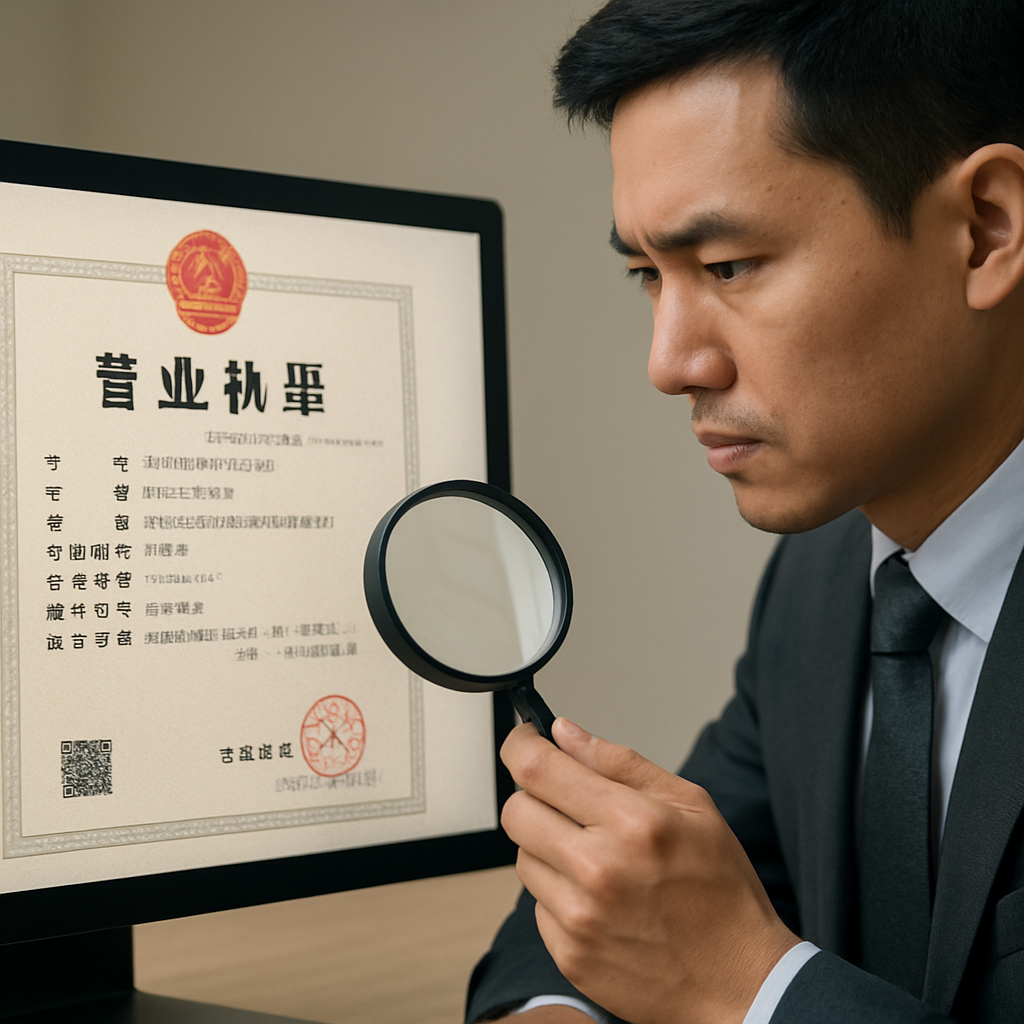
The most reliable way to verify the authenticity of a Chinese business license is to check the company against China’s official public registry, the National Enterprise Credit Information Publicity System (NECIPS) at gsxt.gov.cn, and then compare the registry record with the license copy you were given. Search by the company’s exact Simplified Chinese legal name or, preferably, its 18-character Unified Social Credit Code (USCC). If the details do not match, treat that as a stop sign and do not proceed until the discrepancy is explained.
A license copy on its own is not enough. The point is to corroborate the document with official public records, not to trust the scan in isolation.
How to verify a Chinese business license step by step
The official registry method is the core check. China’s National Enterprise Credit Information Publicity System is the public-facing registry used for company registration information, and basic searches are free. You do not normally need an account, but you will need to complete a CAPTCHA. A practical walkthrough is explained in this guide to checking a Chinese business license on NECIPS and in this step-by-step verification guide.
- Ask the supplier for a clear, complete copy of the business license.
- Take the USCC from the license and use it as your main search key.
- Go to gsxt.gov.cn and search the company record.
- If needed, search by the exact Simplified Chinese legal name instead of an English trading name.
- Compare the registry result with the license copy line by line.
- Save or export the registry result for your records.
Using the USCC is usually cleaner than searching by name, because common company names can produce confusing or incomplete results. A name search still has value, but the code is more precise when you want to verify a specific document. The official search is the starting point for anyone asking how can I verify a Chinese business license online or how to verify Chinese company records without relying on a seller’s own paperwork.
What the registry search should show
Once you find the record, the details should line up with the license copy. The most important fields are the Unified Social Credit Code, the legal name, the legal representative, the company type, the business scope, the registration authority, and the current registration status. If the document and the registry disagree on any of those core fields, you should pause and reconcile the mismatch before sending money or signing a contract.
| Field | Why it matters | What a mismatch means |
|---|---|---|
| Unified Social Credit Code | Primary identifier for the company | The license may be fake, altered, or not the same entity |
| Legal name | Must match the registered Chinese entity | An English trade name may be being used in place of the real company |
| Legal representative | Shows the authorized representative on record | The document may be outdated or not genuine |
| Registration status | Shows whether the entity is active, cancelled, revoked, or otherwise flagged | You should stop and investigate further |
| Business scope | Indicates what the company is legally registered to do | The seller’s claims may go beyond the registered scope |
| Registration authority | Should make geographic sense for the registered address | The information may be inconsistent or suspicious |
Chinese company registration information on the public registry is the authoritative reference point. As explained by China Justice Observer’s registration certificate check guide, if the company information found in the official system matches the registration certificate, the certificate is authentic. That logic is the same whether you call it a business license check, China company registration check online, or an AIC China company registration check website search.
What details on the Chinese business license must match
To answer the broader question of how to verify the authenticity of a business, focus on the fields that can be checked against official records. The Chinese legal name matters more than any English name in an email signature, marketplace profile, or website banner. Chinese companies do not usually have a separate legal English name in the same way many overseas buyers assume; the registered Chinese entity is what matters for verification.
That means a company called one thing on a marketplace and something else on the license needs extra scrutiny. A supplier might present a branded English name, but the registry will identify the real legal entity. The business scope also needs care: it tells you what the company is registered to do, but it does not prove what the company actually owns, produces, or ships.
Why business scope is useful, but not proof of a factory
Business scope can help you understand whether the company is registered for manufacturing, wholesale, import, export, or other activities. But scope alone does not prove that the company is a factory, that it owns a production line, or that it has the capacity it claims. A valid business license proves legal existence and registration information; it does not prove production capacity, factory ownership, or operational quality.
This distinction matters for buyers who ask whether a Chinese company is legit. A company can be legally registered and still not be the kind of supplier you expected. If you are trying to buy directly from Chinese manufacturers, use the license only as one part of the due-diligence process, not as proof that the company is a genuine factory. For more on that distinction, see buying directly from Chinese manufacturers.
How to spot a fake Chinese business license
A suspicious-looking image is not proof by itself, but the copy can still reveal warning signs. Common red flags include a cropped image, a blurred screenshot, missing fields, incomplete document details, or obvious editing around the text or seal. If the supplier only sends a partial image, push for a full copy rather than trying to make a decision from an incomplete document.
The decisive test is still whether the official record matches. If the license copy looks altered and the registry record does not match character-for-character, you should stop. That applies to the code, the legal name, the legal representative, and the status. When the data does not reconcile, do not treat the discrepancy as a minor formatting issue.
It is also sensible to save the registry result as a PDF or image for your files after checking it. That way, if you later need to review the supplier’s claims, you have both the original document copy and the official record side by side.
Other ways to search a Chinese company by name or code
If you are trying to search a Chinese company by name and the official interface feels difficult to use, you are not alone. Users who look for GSXT gov cn English or an online China company registration system are usually trying to access the same official data in a simpler format. The official registry remains the authority, but English-friendly or third-party tools can sometimes make it easier to find or interpret the record.
Some platforms package the public information in English or make the search process easier. That can be useful for navigation, but those tools should be treated as aids, not as replacements for the official registry. The priority is still to verify the company in the public system and compare the result with the license copy. A convenience tool can help you locate the record, but it should not be treated as the final authority.
In practice, China company search by name and China company search free usually lead back to the same workflow: locate the company on the official public registry, then verify the match. The official search itself is free, even if some third-party services add convenience layers or English presentation.
Why USCC searches are usually better than name searches
Name searches can be useful, but they can also be messy. Common company names, transliterations, or similar business names may produce too many results or the wrong one. The USCC is more precise because it identifies the legal entity directly. If you have both the exact Chinese legal name and the USCC, use the USCC first and use the name to confirm that the result is the correct company.
If you only have an English name, ask for the Chinese legal name immediately. Without that, proper verification becomes much harder. A legitimate supplier should be willing to provide the full license copy and let you reconcile the details against the registry.
How to tell if a Chinese company is legitimate
Legitimacy is broader than document authenticity. A valid business license proves the company exists in the Chinese registration system, but it does not prove the company is trustworthy, able to deliver, or suitable for your transaction. This is especially important for buyers wondering whether a B2B marketplace listing or a platform presence means a seller is genuine. Marketplace presence alone is not proof of legitimacy.
To judge whether a Chinese company is legitimate, combine the license check with basic due diligence:
- Verify the company on the official registry.
- Ask for the current full business license copy.
- Match the legal name, code, status, and representative.
- Check whether the business scope fits the seller’s claim.
- Review public risk signals where available.
- Be cautious if the company’s claims change between website, marketplace, and documents.
A company can be active and still not be a safe counterparty for your needs. The registry confirms existence and registration data, not commercial honesty, delivery reliability, or product quality. That is why the question how to verify if a Chinese company is legit needs a broader answer than “look it up once and move on”.
For readers choosing where to source, it can also help to think about choosing the right sourcing platform before or alongside verification. A better platform does not remove the need for due diligence, but it can reduce avoidable risk.
What a Chinese business license proves, and what it does not
A business license proves that the entity is registered and identifiable in China’s system. It also gives you the official fields needed for verification, such as the USCC, legal name, and registration authority. That is important, but the limits are just as important.
The license does not prove the company is a manufacturer. It does not prove production capacity. It does not prove the company holds every sector-specific approval it may need. And it does not prove that the seller can deliver your order on time or to specification.
That means buyers should separate three questions:
- Is the license authentic?
- Is the company legally registered and active?
- Is the company actually capable of doing the work it claims?
The first question is a registry-and-document match. The second is a broader status check. The third requires additional commercial and operational due diligence. The license is only one piece of the picture.
How to verify export or foreign-trade claims separately
If the supplier claims import/export capability, do not assume the basic business license proves those rights. Foreign trade registration and export/import licenses may need separate verification. The process is not always one universal search in one database. Depending on the claim, you may need the license number, the issuing authority, or a separate official database check.
China Checkup explains that foreign-trade registrations cannot simply be checked the same way as ordinary business registrations and may require confirming the issuing authority or cross-checking other official records. Their overview of how to verify Chinese foreign trade import/export registration is useful when a supplier says it can handle customs-facing activity but you need proof beyond the standard license.
This distinction matters because a business registration check and a foreign-trade registration check are related, but not the same thing. If the seller’s offer depends on customs clearance, export rights, or import rights, ask for the exact documentation that supports that claim and verify it separately.
What to do if the license does not match
If the company’s license copy does not match the official registry, stop before you pay, ship, or sign anything binding. Ask for a current full copy of the license and request clarification for the mismatch. Sometimes the issue is a genuine administrative update or a poor-quality scan, but you should not assume that without evidence.
If the supplier cannot reconcile the discrepancy, treat the situation as a failed verification. At that point, your next step may be to pause the deal, escalate internally, or consider recovery options if money has already been sent. If you need practical next steps after a failed check, our guide on what to do if a Chinese supplier seems fake covers refund, chargeback, and legal escalation options.
For readers who are still early in the sourcing process, it is better to resolve the verification issue before moving on to samples, purchase orders, or payment terms. A clean registry match is not a guarantee of performance, but a failed match is a serious warning sign.
Quick checklist before you proceed
- Get the full business license, not a cropped or blurred image.
- Search the company on NECIPS/GSXT using the USCC first.
- Confirm the legal Chinese name matches exactly.
- Check the legal representative, company type, and registration status.
- Review whether the business scope fits the supplier’s claims.
- Make sure the registration authority makes geographic sense.
- Save the registry result for your records.
- Verify export or foreign-trade claims separately if relevant.
If you approach the process this way, you are no longer relying on a license copy alone. You are using the official Chinese registration system to test whether the document is authentic, whether the entity is real, and whether the seller’s claims hold up against public records.