40 ft Container Shipping Cost from China to Pakistan: Rates, Transit Time, and Hidden Charges
 Import Export
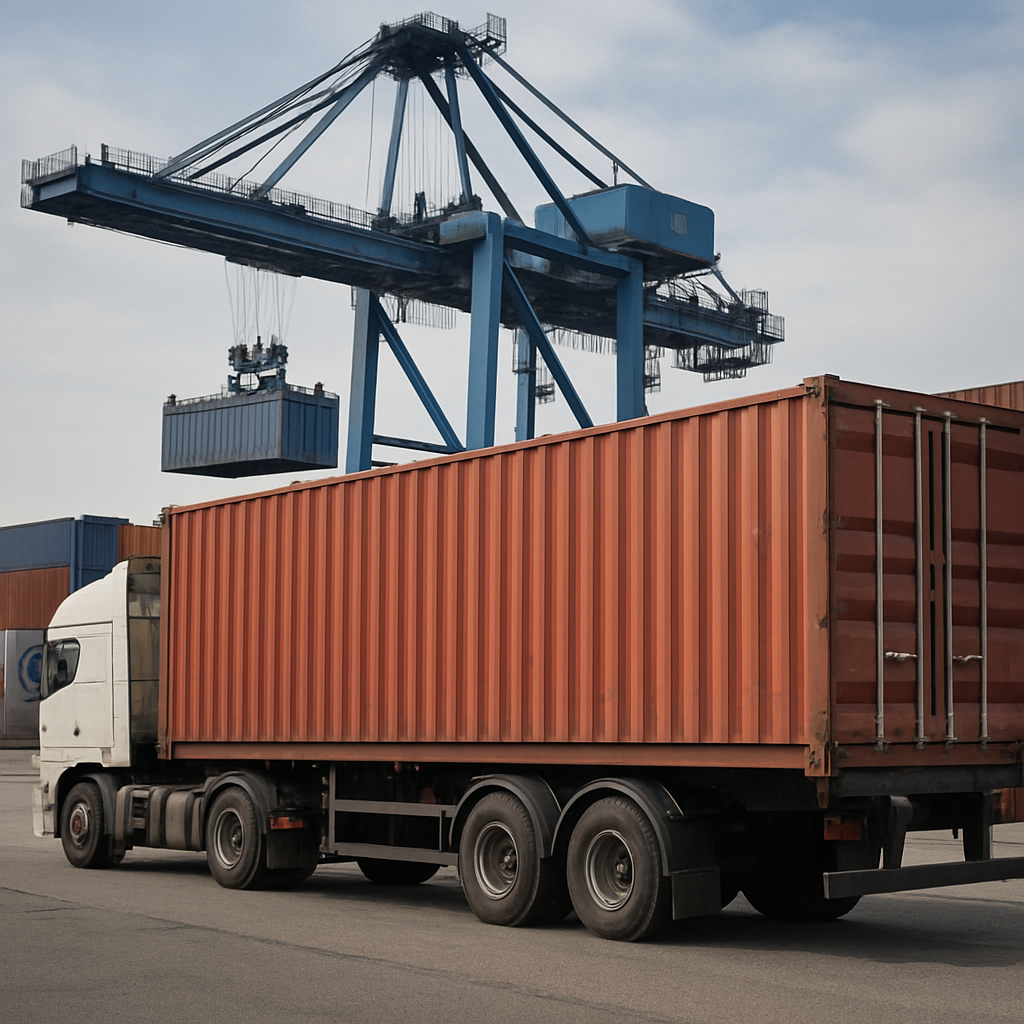
If you are looking for the 40 ft container shipping cost from China to Pakistan, the key point is that it is usually quoted as ocean freight for a full container load (FCL) rather than as a per-kilogram rate. There is no single fixed universal price for this lane because the final quote changes with the origin port in China, destination port in Pakistan, carrier space, seasonality, cargo type, and whether you are comparing port-to-port or door-to-door service.
In practical terms, a 40 ft container is a sea-freight solution for bulk cargo, not a kg-based cargo service. If you are comparing quotations, make sure you are comparing the same scope, because the base ocean freight is only one part of the total cost. Extra charges, customs exposure, and inland delivery can change the final amount significantly.
How much does a 40 ft container from China to Pakistan cost?
The most accurate answer is that the price depends on the route and the quote scope, so you should expect the rate to vary rather than settle on one fixed number. Freight providers and rate calculators generally treat 20 ft and 40 ft containers as standard FCL options, and the size of the container affects the price, but not in a simple linear way. Freightos notes that a 40 ft container usually costs only about 20–25% more than a 20 ft container on the same route, even though it has much more capacity, which is why many shippers use a 40 ft unit for better value when the cargo volume justifies it. Freightos’ container shipping cost guide
For China to Pakistan specifically, the supplied research does not give a single verified live spot rate that should be presented as a guaranteed market price. That is important: you should treat any generic freight figure as a benchmark or example only, unless it comes directly from a current quote for your exact origin, destination, cargo, and service level. A serious quotation should specify:
- origin port in China
- destination port in Pakistan
- container type and load status
- carrier or sailing schedule
- whether the quote is port-to-port or door-to-door
- which surcharges and local charges are included
Is a 40 ft container price calculated per kg?
No. A 40 ft container is normally priced per container, not per kilogram. That is one of the most common points of confusion when people search for a 40 ft container shipping cost from China to Pakistan per kg. Per-kg pricing is usually relevant to air freight, express freight, or some road cargo services, not to a full ocean container.
That distinction matters because FCL and kg-based cargo are not the same shipping model. In a full container load quotation, the carrier or forwarder is selling space and container transport, not a kilo-by-kilo parcel service. If you are shipping a small or urgent consignment, kg-based pricing may be more relevant. If you are moving bulk goods, machinery, cartons, or consolidated stock, the 40 ft sea container is usually the better framework for comparison.
When kg-based pricing does make sense
Kg-based rates are more useful when your shipment is small, urgent, or being moved by air or express service. In the supplied research, China-to-Pakistan express examples show that pricing can be quoted in PKR per kilogram, with different weight bands for different carriers and service types. Goodhope Freight’s published examples include air-express pricing bands from China to Pakistan such as UPS, DHL, and FedEx quotations that are priced per kilogram rather than per container. China to Pakistan express shipping rate examples
That does not mean you should compare those figures directly with a 40 ft ocean container quote. Air freight and express cargo solve a different problem: they trade higher transport cost for speed and smaller shipment suitability. A sea container is designed for larger loads, longer transit, and lower cost per unit of cargo volume.
What goes into a container shipping quote?
To understand why the final number varies so much, it helps to break a container quote into its parts. The rate is not just the vessel freight itself. It usually combines the base ocean charge plus a set of operational and documentation costs. Suaid Global’s ocean freight cost breakdown highlights common line items such as terminal handling charge (THC), documentation fee, seal fee, ISPS security surcharge, and peak season surcharge. Ocean freight cost components and surcharge examples
Typical quote components include:
- Base ocean freight — the core carrier charge for moving the container
- Terminal Handling Charge (THC) — origin and destination terminal handling
- Documentation fee — paperwork such as bill of lading processing
- Seal fee — the container seal charge
- ISPS surcharge — security-related port and vessel cost
- Peak Season Surcharge (PSS) — applied when demand is high
Some quotes are also only port-to-port, while others are door-to-door. That difference matters because door-to-door service can include inland collection, customs handling, and final delivery, while port-to-port usually stops at the seaport. If a quote looks unusually low, check whether it excludes inland transport, customs work, or destination delivery.
It is also important to note what may be excluded unless the forwarder explicitly says otherwise. The supplied research indicates that quotes often leave out customs duties, drayage, and last-mile delivery. Those items can materially change the landed cost even if the freight rate itself looks competitive.
What do current freight-rate benchmarks suggest?
If you want to understand the market environment, benchmark data can help, but it should not be confused with a guaranteed China-to-Pakistan quote. Global indices and route examples show that container rates move constantly and can differ widely by lane. For example, a public benchmark source cited in the research shows a global average 40 ft container price of US$4,434 on 1 October 2026, while other route examples in the research show much higher or lower figures depending on trade lane and market conditions. Global 40 ft container benchmark pricing
That is useful context, but it does not mean a reader should expect that exact figure for China to Pakistan. Rates are shaped by capacity, carrier pricing, port congestion, and the specific route. A benchmark tells you the market is moving; it does not replace a live quotation for your shipment.
Freight rate pages and calculators also emphasise that rates move because of supply and demand, blank sailings, congestion, and carrier strategy. YQN’s market update notes that space constraints and port disruption can affect availability and push pricing higher on some lanes. That is why two shippers asking for the same container size can receive very different quotes if they are not shipping on the same day, from the same port pair, with the same service scope. Container shipping rate market trends and disruption factors
How long does sea freight from China to Pakistan take?
Sea freight from China to Pakistan typically takes roughly 18 to 35 days, depending on the origin port, carrier schedule, and congestion at Karachi or Port Qasim. The supplied research from BSI Freight states that sea freight from China to Karachi or Port Qasim usually falls in that range, and it also notes that peak-season congestion can add delays. China to Pakistan sea freight transit-time guide
Transit time matters because it can affect the effective cost of the shipment. Faster or more reliable sailings may cost more than the cheapest option if they reduce delay risk, storage exposure, or production interruption. In other words, the lowest freight quote is not always the lowest landed cost.
Common factors that stretch transit time include:
- different origin ports in China
- carrier schedule frequency
- transhipment versus direct sailings
- port congestion at Karachi or Port Qasim
- peak season demand
- weather or operational disruption
If your cargo is time-sensitive, it is worth reading more about why international shipments take so long so you can understand how congestion, customs processes, and carrier schedules interact.
What is the difference between a 40 ft container and a 20 ft container?
A 40 ft container gives you roughly double the capacity of a 20 ft container, but it does not cost double. Freightos explains that a 40 ft container usually costs only 20–25% more than a 20 ft container on the same route, which is why 40 ft units often provide strong value for larger loads. 20 ft versus 40 ft container cost relationship
That comparison is useful when you are deciding whether to consolidate cargo into one larger shipment or split it into smaller ones. A 40 ft container is often the more economical option when:
- your cargo volume is high enough to fill space efficiently
- you want to reduce the number of bookings
- the cargo is bulky but not especially heavy
- you are optimising freight cost per unit of product
However, efficiency depends on how well the cargo is packed. A 40 ft container is more valuable when the shipment makes full use of the internal volume. If the cargo is light and bulky, or poorly palletised, you may pay for unused space. If the cargo is dense and heavy, weight limits and packing configuration become more important than total cube alone.
When does kg-based cargo pricing make more sense than a 40 ft container?
If you are asking about the shipping cost per kilogram from China to Pakistan or how much is 1 kg of cargo, you are usually looking at a different service model. Kg-based pricing is typically used for air freight, express freight, or some road-cargo services. It is not the normal way to price a full 40 ft container by sea.
The research package includes examples from China to Pakistan where express shipments are quoted by kilogram, not by container. Goodhope Freight’s published examples show that different carriers use different weight bands, and the quoted price per kilogram changes by service and shipment weight. That is useful for small parcels and urgent cargo, but it should not be used to estimate a 40 ft FCL sea freight rate. Per-kilogram shipping examples from China to Pakistan
The simplest way to think about it is this:
- Sea freight FCL — priced per container; best for bulk cargo
- LCL sea freight — often priced by cubic metre or chargeable volume; best for smaller sea shipments
- Air freight / express — often priced by kilogram; best for urgent or lightweight cargo
- Road cargo — may also be priced by weight or service band, depending on the route
So if your real need is a sea shipment of a full container, do not let a per-kg rate mislead you. The economics are completely different.
How to judge whether a quote is good value
When comparing quotes for a 40 ft container from China to Pakistan, focus on more than the headline freight number. A proper comparison should answer these questions:
- Is the quote port-to-port or door-to-door?
- Are THC, documentation, seal, and security surcharges included?
- Does the rate include inland drayage at origin or destination?
- Are customs clearance, duties, and local charges excluded?
- Which Chinese origin port and Pakistani destination port are being used?
- What is the expected transit time and sailing frequency?
Those details are what determine whether a quote is genuinely cheap or simply incomplete. A low base freight rate can become expensive once destination charges, inland handling, and customs-related costs are added.
If you want to understand how the duty side affects your landed cost, see our guide on how to know if you’ll have to pay customs. If the responsibility split between buyer and seller is unclear, our explanation of how Incoterms change shipping responsibility will help you understand why two similar-looking quotes can produce very different total costs.
Practical takeaway for importers
If you are trying to budget a 40 ft container shipping cost from China to Pakistan, the safest approach is to treat the first number you receive as a starting point, not a final answer. Ask for a quotation that clearly states the route, the service scope, and the surcharges included. Then compare that with the transit time, customs exposure, and inland delivery cost.
In short:
- a 40 ft container is priced as ocean freight/FCL, not per kg
- the final cost varies by route, season, carrier, cargo, and quote scope
- common extras include THC, documentation, seal, ISPS, and peak season charges
- quotes often exclude customs, drayage, and final delivery unless stated
- sea freight to Pakistan commonly takes around 18 to 35 days, with delays possible at Karachi or Port Qasim
- a 40 ft container usually costs only moderately more than a 20 ft container, while carrying far more volume
That is the most reliable way to interpret the market: not as one fixed number, but as a combination of freight rate, service scope, and landed-cost risk. If your shipment is not urgent and you have enough volume, a 40 ft sea container can be one of the most cost-effective ways to move goods from China to Pakistan.