DHL “Delivery Attempt Could Not Be Completed”: Meaning, Causes, and Next Steps
 Import Export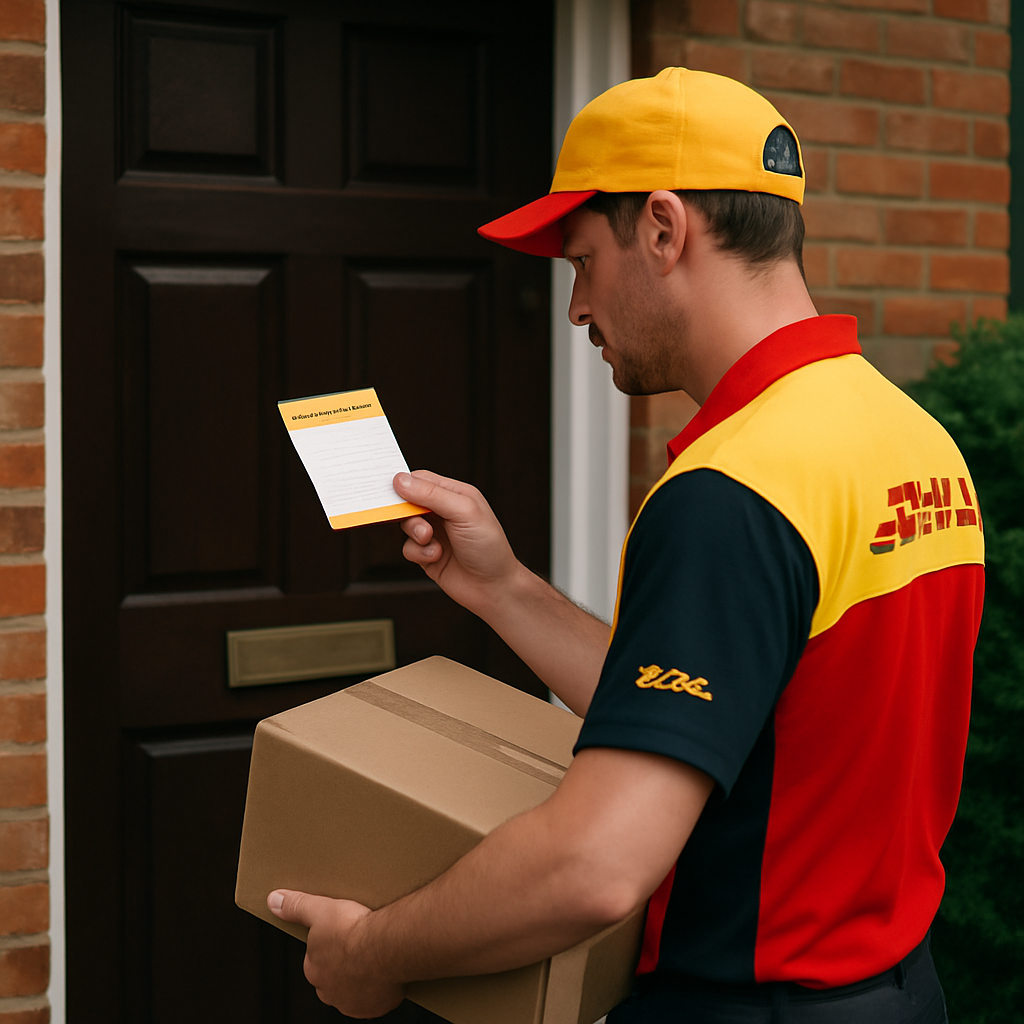
“Delivery Attempt Could Not Be Completed” on DHL tracking means delivery was not successfully completed on that attempt. The message does not, by itself, say why it happened. It is not proof that the parcel is lost, stolen, returned to sender, permanently undeliverable, or delivered to the wrong address. Check the full tracking history, any DHL notice, and DHL’s shipment-specific instructions before drawing conclusions or changing delivery details.
What “Delivery Attempt Could Not Be Completed” Means on DHL Tracking
This status indicates an interruption at the delivery stage: DHL was unable to complete the planned handover of the parcel. The generic wording cannot establish whether the issue involved the recipient, the address, building access, a route disruption, or another circumstance.
It is useful to distinguish this from a broader delivery exception. DHL’s logistics glossary describes a delivery exception as an event that disrupts normal delivery and can result in a delay, reroute, or failed attempt, requiring further action before delivery can be completed. In other words, an unsuccessful attempt can be one type of exception, but an exception may also occur before a driver reaches the address. See DHL’s explanation of a delivery exception for that broader concept.
Community posts may describe recipients who say they were at home or saw no courier. Those reports can explain why the status is frustrating, but they cannot verify what happened to a particular parcel. Likewise, this scan alone does not prove that DHL definitely visited the address, that the recipient was unavailable, or that DHL made an error. The shipment’s actual scan sequence and DHL’s response are the evidence that matter.
Common Reasons a DHL Delivery Attempt May Not Be Completed
The following are plausible causes, not diagnoses. DHL-related guidance and delivery-exception explainers identify address, access, recipient availability, operational problems, and weather-related issues as circumstances that can disrupt a delivery. The tracking wording alone does not identify which one applies to your shipment.
| Possible issue | What to check | What not to assume |
|---|---|---|
| Receipt or signature could not be obtained | Whether the shipment needs a person to accept it and whether an authorised person can be available. | That every DHL parcel requires a signature or that no one was present. |
| Incomplete or inaccurate address | House/building number, street, flat or suite, postal code, locality, and business name where relevant. | That an address is wrong merely because an attempt failed. |
| Restricted access | Gate code, intercom or buzzer details, concierge/reception arrangements, security procedures, and access hours. | That a driver could enter every residential complex or business premises. |
| Business closed or unavailable | Whether the named business, reception point, or mailroom was open at the relevant time. | That DHL’s delivery timing always aligns with a business’s normal hours. |
| Operational disruption | The newest tracking events for a delay, facility, route, or local operational message. | That the problem is necessarily recipient-related. |
| Severe weather or safety conditions | Whether DHL provides a more specific event or notice explaining the disruption. | That weather caused this particular scan without confirmation. |
Guidance on this exact status notes that a courier may be unable to deliver because the recipient is unavailable, the address is incomplete, or access restrictions prevent reaching the delivery point. It also recommends reviewing DHL’s notice and arranging redelivery or collection where those options are offered. See this overview of possible reasons for an incomplete DHL delivery attempt.
Check the delivery details before requesting a change
Before contacting DHL, review the original order confirmation and confirm the details below. This helps avoid a second failed attempt, but do not submit an address amendment or payment simply because of the generic tracking message. Make a change only if the tracking, DHL, or the sender identifies a relevant problem.
- Full recipient name and, for workplaces, the company or department name.
- Building number, street, flat, apartment, unit, or suite number.
- Postal code and locality.
- Recipient phone number and email address.
- Intercom name, buzzer, gate code, reception instructions, or other access information.
- Whether someone authorised to receive the parcel can be available if a signature or handover is required.
What to Do Next and What May Happen After a Failed DHL Delivery Attempt
A failed attempt is a reason to act promptly, but it does not automatically mean the parcel will immediately be returned. It also does not guarantee that another attempt will be made. The available choices depend on the DHL service, destination, sender instructions, and local delivery arrangements.
- Read the newest tracking entry and the earlier events. Look for a more specific reason, a delivery notice, a pickup location, or a link or instruction for managing delivery.
- Check for a physical or electronic notice. It may state the next action, such as a new attempt, collection, or a request to contact DHL.
- Confirm address and access details. Correct only an identified issue, and make sure contact details are reachable.
- Use any shipment-specific option offered by DHL. Depending on the parcel, this may include redelivery, a different delivery arrangement, redirection, or collection from an available location.
- Contact local DHL customer service if the reason or options are unclear. Have the tracking number ready and ask what the latest event means, whether action is needed, and whether a redelivery, collection, or address update is permitted.
- Contact the seller or shipper where necessary. Involve them if they need to approve an address correction or delivery change, if sender restrictions apply, if DHL cannot resolve the issue with the recipient, or if tracking indicates a return-to-sender risk.
Possible outcomes include a rescheduled delivery, an alternate delivery arrangement or redirection, a hold for collection, or, if delivery cannot be completed, eventual return to sender. DHL’s description of exception handling similarly notes that disrupted shipments may be rescheduled, redirected, held for pickup, or returned, depending on the situation.
How many delivery attempts will DHL make?
There is no universal attempt count that can safely be applied to every DHL shipment from this status alone. The number of attempts, any collection deadline, and the handling after an unsuccessful attempt can vary by service, country or area, and the sender’s delivery instructions. Confirm the rule that applies to your parcel through its tracking page or local DHL customer service rather than relying on a fixed number quoted for another service or location.
What happens if my DHL delivery fails?
First, DHL may provide a new delivery option or place the parcel into a process for collection or further instructions. If the underlying issue remains unresolved, the parcel may remain paused and may ultimately be returned to the sender. A failed attempt is therefore best treated as a prompt to verify the details and obtain a shipment-specific next step, not as confirmation of either a new delivery date or an immediate return.
If USPS is shown in the latest event
Do not assume DHL and USPS follow the same delivery-attempt rules. If the latest tracking entry explicitly identifies USPS as the active delivery carrier, consult the applicable USPS delivery-attempt and hold-time rules. Those rules are not evidence of DHL’s policy. The available information does not establish DHL-USPS handoff mechanics, which carrier controls a particular delivery change, or which attempt rule applies at every stage; the current carrier named in the latest tracking event is the practical starting point.
If Tracking Also Says “Shipment on Hold,” “Local Issue,” or Mentions Duties
These messages are related to delivery disruption but are not automatic synonyms for “Delivery Attempt Could Not Be Completed.” A delivery exception is a broad category; a hold, a local operational issue, a customs matter, or a payment request may interrupt movement or delivery for different reasons.
“Shipment on hold”
A hold generally indicates that normal shipment progress needs further resolution or action before it can continue. Depending on the tracking detail, possible contributors can include address issues, a missed attempt, a payment requirement, customs processing, or an operational delay. Do not infer the cause from the word “hold” alone. Review the event history for a specific instruction and ask DHL if there is no clear next step.
“Cannot move the shipment or attempt delivery due to a local issue”
At a general level, this points to a local operational or delivery-network interruption that may prevent movement or a planned delivery. It does not establish a specific cause, a guaranteed resolution time, or a universal escalation route. Check whether a later scan shows that the parcel has resumed movement; a later shipment onforwarded by a delivery facility status can be relevant when tracking indicates onward movement after an interruption.
A hold after duties have been paid
Payment of duties may be one required step, but payment alone does not establish why a hold remains or prove that every required process is complete. The parcel may need another tracking update, further carrier handling, or resolution of a separate issue. Wait for the next specific DHL event or contact DHL with the tracking number if no explanation appears.
Customs clearance and final-mile delivery are separate stages. If your tracking specifically refers to release by customs, read what a DHL customs release status means. For broader context on the period between clearance and receipt, see what happens after customs clearance.
When to Contact DHL Immediately
Contact DHL promptly when tracking gives no usable instruction, the parcel has a time-sensitive need, the address or access information needs correction, a collection or return deadline may be approaching, or the status repeats without explanation. Give the representative the tracking number, the complete delivery address, any relevant access details, and the exact wording and time of the latest scan.
If you are trying to determine whether DHL is having issues today, this article cannot confirm a live network or regional disruption. That requires current, location-specific information from the parcel’s live tracking, DHL notifications, or local DHL contact. A generic failed-attempt scan is not enough to confirm an outage or service-wide problem.
Bottom line: treat “DHL delivery attempt could not be completed” as confirmation that delivery was not completed on that occasion, not as a diagnosis. Use the detailed tracking history and DHL’s instructions to identify the actual issue, then arrange the available next step before the shipment progresses to a return process.