
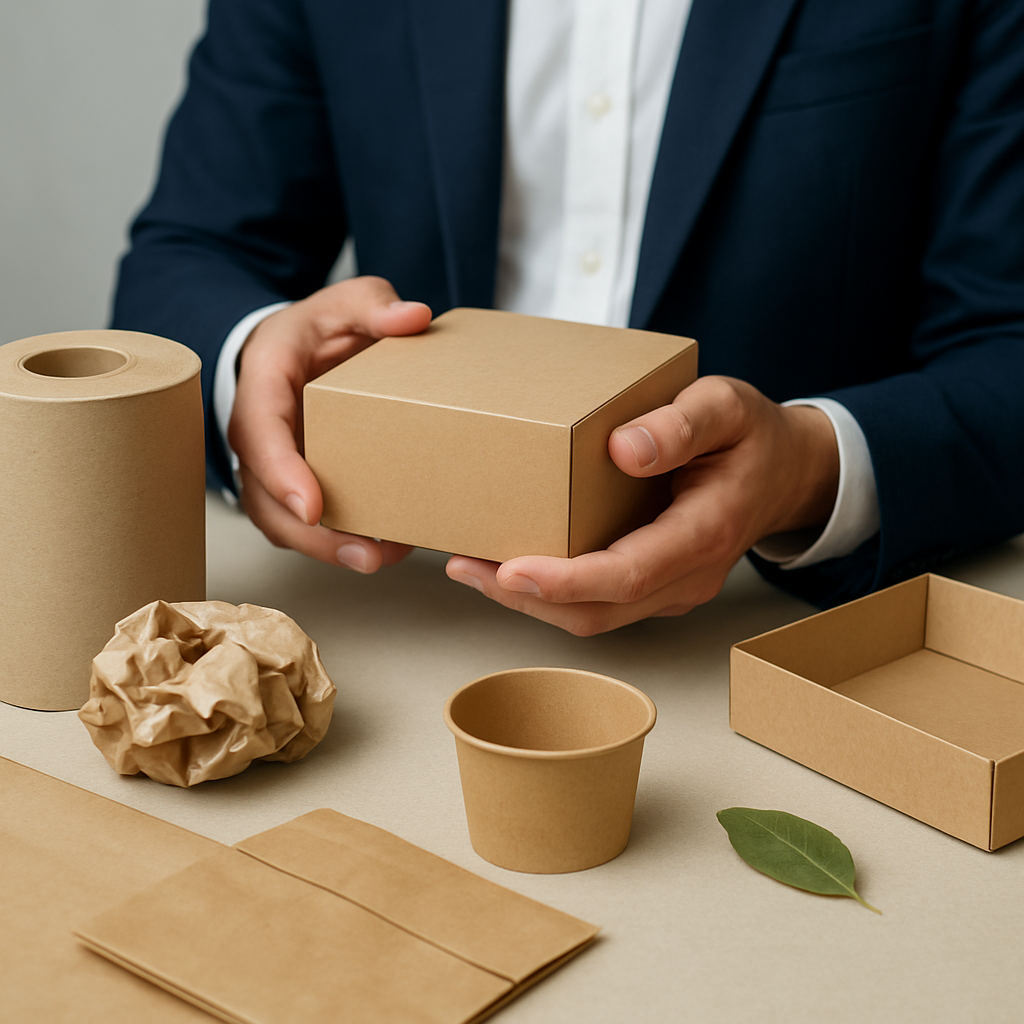
If you need small quantity sustainable packaging suppliers near New York, NY, the best place to start is with local packaging companies, packaging design studios, food packaging suppliers, paper and box suppliers, and contract packaging or fulfilment firms that are willing to handle smaller runs. In New York City and nearby Brooklyn, Queens, and the wider Metro New York area, the practical goal is not just finding “eco-friendly” packaging — it is finding a supplier that can meet your minimum order size, provide samples, ship quickly, and match your product’s functional needs.
That usually means using local business directories and supplier listings to narrow the field, then contacting vendors directly to confirm minimum order quantities, custom print options, turnaround time, food-contact suitability, and sustainability claims. A useful local example is Commonwealth Packaging Company in New York, which is described as offering custom packaging solutions plus design, distribution, warehousing, and inventory management. For food packaging leads, the BBB directory of food packaging suppliers near New York, NY is also a practical starting point.
Where to Find Small-Quantity Sustainable Packaging Suppliers Near New York, NY
The search results for this topic are dominated by directories and local business listings for a reason: many packaging suppliers are set up for broader commercial use, while smaller brands, cafés, boutiques, and private-label sellers need vendors that will accept lower-volume orders. In practice, the most relevant supplier types near New York are:
- Local packaging companies that can handle custom boxes, mailers, cartons, sleeves, inserts, and branded packaging.
- Packaging design studios that help with structure, artwork, print set-up, and material selection, including eco-conscious options.
- Paper and box suppliers that can supply paperboard, corrugated, cartons, and related packaging materials in smaller batches.
- Food packaging suppliers that focus on containers, wraps, pouches, cups, trays, closures, and other food-service packaging.
- Fulfilment and contract packaging providers that can assemble, label, pack, or kit products for retail and e-commerce.
For New York buyers, proximity matters. Local or nearby suppliers can reduce shipping friction, make sampling easier, and often respond faster when you need to adjust artwork, sizing, or pack-out details. The goal is not just “closest on the map”; it is the supplier most likely to support a small run without forcing you into a large industrial contract.
When you review local listings, use them as a shortlist, not as a final verdict. Directory pages can help you identify businesses in Manhattan, Brooklyn, Queens, or the broader New York area, but they do not replace direct supplier checks.
What Counts as Eco-Friendly Packaging?
Eco-friendly or sustainable packaging is packaging designed to reduce environmental impact across material use, transport efficiency, recyclability, biodegradability, and end-of-life handling. It is not one single material, and it is not automatically “green” in every use case.
According to the Sustainable Packaging Coalition, sustainable packaging is considered in the context of the whole packaging lifecycle, from sourcing to end-of-life. The EPA’s containers-and-packaging data also shows that packaging is made from several material streams, including paper and paperboard, plastics, glass, metal, and wood, so sustainability choices have to be made case by case rather than by slogan alone.
In commercial buying, common eco-friendly packaging options include:
- Paper and paperboard for cartons, sleeves, inserts, and many retail boxes.
- Corrugated packaging for shipping cartons and protective outer packs.
- Flexible packaging for certain food, health, and consumer goods applications, especially where lower transport weight matters.
- Compostable or recyclable components such as labels, inserts, or closures where the overall system supports them.
- Minimalist packaging designs that reduce excess material while still protecting the product.
The key point is that “eco-friendly” must fit the product. A package that is recyclable in theory may not be recycled if local collection systems do not accept it. A biodegradable material may still need specific end-of-life conditions. And a low-impact design is not useful if it fails during shipping or damages the product.
The peer-reviewed literature on sustainable packaging also reflects this practical tension: consumers tend to value recyclability, biodegradability, and reduced material use, but they also expect packaging to protect the product properly. In other words, sustainability and performance have to work together, not compete.
How to Think About the Top Packaging Companies in the USA
If you searched for the top five packaging companies in the USA, you are probably looking for trusted suppliers with scale and reliability. However, for a buyer in New York who needs a small quantity and sustainable materials, a national ranking is less useful than a fit-for-purpose evaluation.
Instead of chasing a generic “top 5” list, compare suppliers on these points:
- Minimum order quantity — can they supply a small run, pilot order, or startup quantity?
- Sustainability capability — do they offer recyclable, paper-based, or other lower-impact options?
- Customisation — can they print, size, die-cut, or label the packaging?
- Food-safety fit — if relevant, can they support food-contact use?
- Local service — can they communicate quickly and ship to New York efficiently?
- Sample support — will they send samples before you commit?
This is especially important because many larger packaging suppliers are built around bulk production. If you only need a few hundred units, the best supplier may be a regional company, a design studio with sourcing support, or a local packaging business that is comfortable with smaller commercial orders.
How Much Does Biodegradable Packaging Cost?
There is no single universal price for biodegradable packaging. Cost depends on the material, the structure, the print specification, the order size, and whether the packaging needs to meet food-contact or protective-performance requirements.
For small quantities, unit cost is usually higher than in bulk. That is one of the most important realities for New York buyers: short runs are convenient and flexible, but they rarely achieve the lowest per-unit price.
A snippet-level search result for a Queens-area packaging business suggests that some NYC packaging services may advertise low starting prices, but that should be treated only as a directional clue, not a verified market rate. In practice, the main cost drivers are:
| Cost driver | Why it matters |
|---|---|
| Material type | Paperboard, corrugated, compostable materials, and specialty films all price differently. |
| Order size | Small runs usually cost more per unit than bulk orders. |
| Print and branding | Custom printing, colours, finishes, and artwork set-up raise cost. |
| Food-contact requirements | Packaging for food often needs extra performance, testing, or compliant materials. |
| Protection level | Fragile products may need inserts, padding, or stronger structures. |
| Supplier type | A local designer, distributor, or manufacturer may price differently depending on service scope. |
If you are comparing quotes, ask for the price at a realistic test quantity, not just at a large run you do not intend to order. That gives you a clearer view of whether the supplier is truly suitable for a small business.
If You Need Sustainable Food Packaging, What Should You Look For?
Food businesses need a slightly stricter checklist than general retail buyers. If you are sourcing sustainable food packaging in or near New York, ask every supplier to confirm the following:
- Food-contact suitability — is the packaging appropriate for direct or indirect contact with food?
- Seal and closure performance — will it stay closed, resist leaks, and maintain product integrity?
- Barrier protection — does it protect against moisture, grease, oxygen, or contamination where needed?
- Sustainability claims — is the packaging recyclable, compostable, paper-based, or otherwise positioned as lower impact, and under what conditions?
- Small-order availability — can the supplier support a smaller production run?
For food packaging, local directories are often a useful discovery tool because they help you identify nearby suppliers before you start quoting. The BBB food packaging directory and local business listings can be especially helpful when you want to compare options quickly and avoid wasting time on suppliers that only serve very large accounts.
It is also worth remembering that not every “eco-friendly” food pack is ideal for every menu. For hot foods, greasy foods, chilled items, and dry goods, the best sustainable option may differ. A packaging choice that works well for a salad bowl may fail for a saucy take-away meal or a frozen item. The right supplier should help you balance sustainability with performance.
How to Choose a Small-Quantity Supplier Without Getting Trapped by Minimums
The biggest mistake small brands make is assuming every packaging supplier can handle a small order. Many cannot. Before you request a quote, decide whether you need a manufacturer, a distributor, a design studio, or a fulfilment partner.
Use this simple filter:
- If you need custom structure or artwork, start with a packaging company or design studio.
- If you need standard cartons, boxes, or paper packaging, look at paper and box suppliers.
- If you need food containers or meal packaging, focus on food packaging suppliers.
- If you need packing, labelling, assembly, or kitting, look for a fulfilment or contract packaging provider.
Then ask each supplier these five questions:
- What is your minimum order quantity for this item?
- Can I order samples before placing a full run?
- Do you support custom printing or branding?
- What is the usual lead time for a small order?
- Do you ship easily into New York City, Brooklyn, or Queens?
If you are working with a supplier outside the immediate area, or with a vendor you have not used before, it is sensible to check basic business details carefully. For non-local sourcing, our guide on how to verify a supplier shows the kind of due diligence that can protect you from avoidable problems.
How to Evaluate Sustainability Claims Responsibly
Sustainability claims in packaging can be helpful, but they should be checked carefully. A supplier saying a package is “eco-friendly” is not enough on its own. Ask what makes it sustainable, and in what context.
Good questions to ask include:
- Is the packaging recyclable in the systems my customers actually use?
- If it is compostable or biodegradable, under what conditions does that happen?
- Does the packaging contain recycled content?
- Does the material reduce total packaging weight or transport emissions?
- Are there any certification claims or testing references the supplier can share?
The Sustainable Packaging Coalition’s approach is useful here because it treats sustainability as a lifecycle issue, not a single label. Likewise, the EPA’s packaging data reminds buyers that packaging materials are diverse, and disposal pathways vary by material type. That means a responsible buyer should avoid blanket assumptions such as “paper is always better” or “biodegradable always means better.”
For many small businesses, the best answer is not perfect packaging but better packaging for the specific product and channel: a smaller amount of material, a recyclable structure where practical, and a supplier who can make short runs without unnecessary waste.
A Practical Shortlist Approach for New York Buyers
If you are trying to source locally, the fastest route is to build a shortlist from the following categories and then contact each one directly:
- New York City packaging companies with custom capability
- Queens or Brooklyn packaging businesses that serve local brands
- Paper and box suppliers in the metro area
- Food packaging suppliers listed in local directories
- Packaging design studios that can help source the right sustainable materials
Look for clear evidence that the supplier works with smaller accounts, not just major industrial orders. A good sign is when a company discusses custom packaging, branding support, warehousing, inventory management, or service for retail and hospitality clients, because those capabilities often translate better to startup and small-business needs.
If your product is fragile or shipping-sensitive, it is worth thinking about packaging as part of the transport process, not just the shelf appearance. For example, our article on packaging and shipping protection explains why protective design matters when product safety during transit is just as important as presentation.
The Bottom Line
For small quantity sustainable packaging suppliers near New York, NY, the smartest approach is to combine local discovery with practical supplier screening. Use directories and nearby listings to find candidates in New York City, Brooklyn, Queens, and the wider metro area, then verify whether they truly support small orders, samples, customisation, and the type of sustainable packaging you need.
Eco-friendly packaging can mean paperboard, corrugated, flexible packaging, reduced-material designs, or specific compostable or recyclable components, but the right choice depends on product protection, food safety, and disposal reality. If you focus on MOQ, lead time, food-contact suitability, and honest sustainability claims, you will be far more likely to find a supplier that fits your business — not just your search term.