
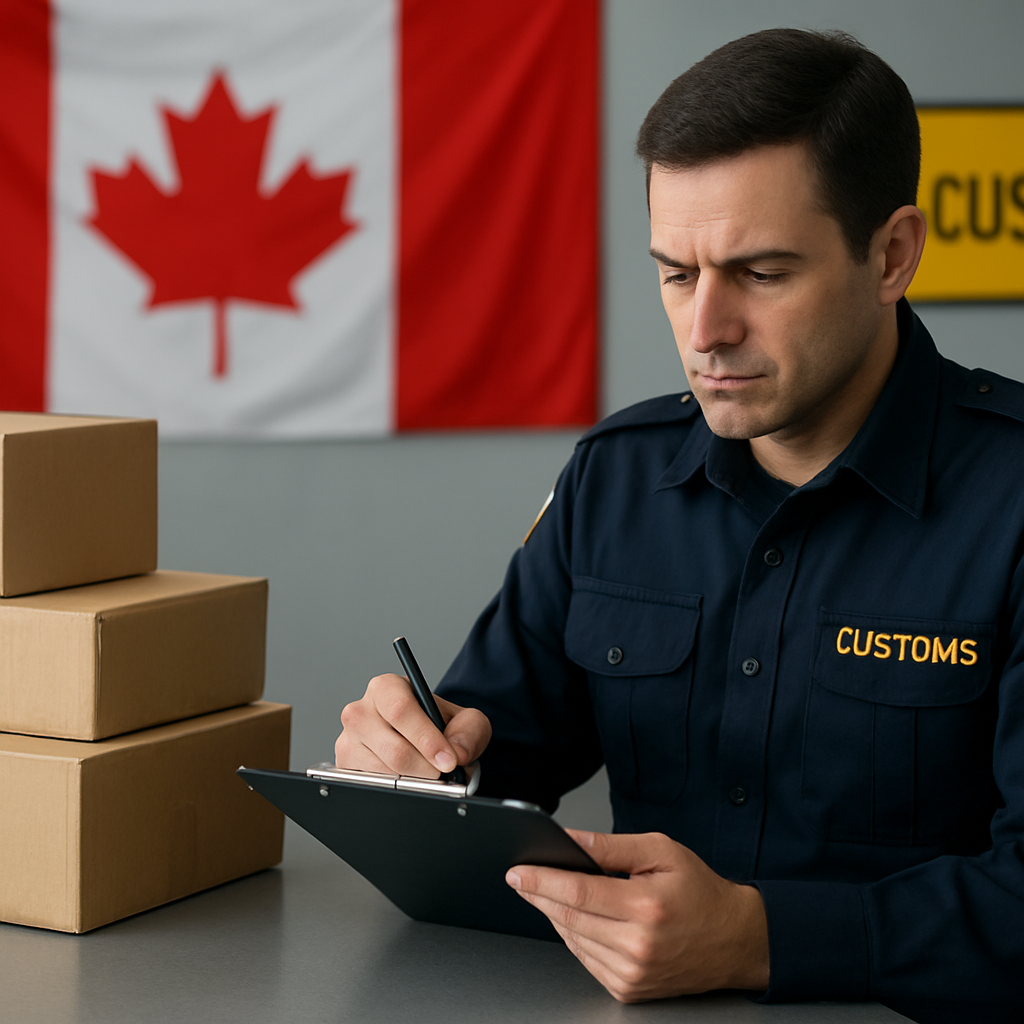
Commercial goods for customs usually means goods imported for sale, resale, lease, or business use rather than for personal consumption. In Canada, the customs meaning is broader than “goods a business buys”: items can still be commercial even if they are not immediately resold, as long as they are intended for commercial, industrial, occupational, institutional, or similar use. That distinction matters because commercial goods usually need a proper declaration, supporting documents, and customs accounting before release.
If you are importing into Canada, the Canada Border Services Agency (CBSA) is the customs authority to know. CBSA treats commercial imports differently from personal items, and commercial goods are accounted for in the CBSA Assessment and Revenue Management (CARM) system using a Commercial Accounting Declaration (CAD). The importer remains responsible for the accounting, duties and taxes, and any corrections even if a customs broker handles the filing.
What commercial goods mean for customs
In a customs context, commercial goods are goods brought in for a business purpose. That usually includes goods intended for sale or resale, but it also includes goods used in a business, trade, professional practice, or institution. It can also include goods that are inputs to make, manufacture, or repair something else.
This is why the question is not simply “Was the seller a company?” or “Is the package a gift?” Customs looks at the purpose of importation. A shipment can be commercial even if it is not for immediate resale, and a shipment can be non-commercial even if it came from a foreign vendor, depending on who is importing it and why.
In practical terms, declaring commercial merchandise means you are telling customs what the goods are, how much they are worth, and why they are being imported. Customs uses that information to decide how the shipment is classified, whether duties or taxes apply, and whether any other requirements must be met before release.
How Canada treats commercial imports at customs
For Canada, the CBSA is the agency that oversees customs entry and import compliance. Its import guidance makes clear that commercial importers must meet Canadian import requirements, and those requirements can include using the correct tariff classification and completing the right accounting process. CBSA also notes that some goods are subject to requirements from other government departments, which may mean permits, certificates, or inspection in addition to customs formalities.
Canadian commercial imports are handled through CARM, and the live guidance available for importers describes commercial goods as goods that are bought for sale, resale, lease, or business use. That means the customs process is not just about border inspection; it is also about accounting for the shipment correctly in the system of record and paying any duties and taxes that apply.
Even when you use a licensed customs broker, the importer is still ultimately responsible for the accounting documentation, payment of duties and taxes, and later corrections. A broker can help prepare or transmit the documents, obtain release, maintain records, and respond to CBSA concerns, but the responsibility does not disappear.
You can read more about the Canadian import process in the CBSA’s guide to importing commercial goods into Canada and its commercial import services and programmes. A recent CBSA update also highlighted that proper compliance means accounting correctly for commercial goods and meeting the relevant import requirements.
What CBSA means
CBSA stands for Canada Border Services Agency. It is the Canadian government body responsible for border enforcement and customs administration. If your shipment is entering Canada, CBSA is the authority that reviews the goods, the paperwork, and the import compliance obligations tied to them.
Examples of commercial goods and how they differ from personal items
The simplest way to test whether something is commercial is to ask: Is this shipment being imported for business use, trade, or professional activity? If yes, it is likely commercial, even if you are not reselling the exact item immediately.
| Likely commercial goods | Likely personal or non-commercial goods |
|---|---|
| Goods intended for sale or resale, such as wholesale inventory | Items imported only for personal use or consumption |
| Tools, equipment, or stock used in a business | Personal belongings for household use |
| Goods used in a trade or professional practice | Gifts or consumer items not tied to a business purpose |
| Inputs used to manufacture, assemble, or repair other goods | Items not intended for resale, distribution, or business use |
A few practical examples help:
- Commercial: a retailer importing 200 phone cases to sell in a shop.
- Commercial: a repair business importing replacement parts to service customer equipment.
- Commercial: a manufacturer importing raw materials to produce finished goods.
- Commercial: an architect importing specialist tools for professional use.
- Non-commercial: a traveller bringing back a jacket for personal wear.
- Non-commercial: a family shipping household items for their own use after moving.
The important nuance is that commercial goods whether or not for resale can still be commercial. A shipment does not have to be destined for the retail shelf to fall into the commercial category. If it supports a business, trade, or professional activity, customs may treat it as commercial.
For a broader practical comparison of duties and roles when a shipment is being sold under different terms, see our guide on what DDP means in shipping terms.
What declaring commercial merchandise means in practice
Declaring commercial merchandise is the act of presenting customs with the information it needs to identify the shipment and process it correctly. In practice, that means describing the goods clearly, stating their value, identifying the importer, and showing the purpose of the import.
Customs does not just want a label like “samples” or “goods”. It needs a precise description that allows the shipment to be identified. The declaration also helps customs determine whether the shipment is commercial, whether duties or taxes apply, and whether additional documents are required.
For commercial imports, the declaration is tied to accounting. In Canada, that process often runs through CARM and the Commercial Accounting Declaration. That is why customs declarations and the commercial invoice matter so much: they are not just paperwork; they are the basis for release, valuation, and compliance.
What documents customs usually needs for commercial goods
For commercial clearance, customs usually looks for a core set of documents. The exact list can vary by product, country, and route, but the most common documents are:
- Commercial invoice
- Packing list
- Bill of lading or airway bill
- Customs declaration
- Any applicable import licences, permits, or certificates of origin
The commercial invoice is especially important. It is a legal document between seller and buyer that records the sale details, including what was sold and how much the buyer is to pay. Customs uses it to help determine the value of the goods and assess duties and taxes. Trade.gov’s guidance on common export documents explains that the commercial invoice is one of the main documents used by customs to determine customs duties.
If you want a clearer breakdown of how the invoice fits into shipping paperwork, our article on shipping marks and document details can help you understand how goods are identified through the process.
Why the commercial invoice matters most
If customs has to choose one document to review first, it is often the commercial invoice. That is because it ties together the buyer, seller, product description, quantity, and price. In other words, it is the main document showing the commercial nature of the transaction.
Without a proper invoice, customs may have trouble confirming value or verifying the details of the shipment. That can slow release, trigger questions, or lead to requests for more information.
What importation means in this context
Importation is the act or process of bringing goods into a country under customs control. Once goods enter that process, they are subject to customs supervision until the required formalities are completed. That is why customs clearance is not optional: the goods must be processed before they are released for free circulation or final delivery.
For commercial goods, importation usually means more than simply shipping a parcel across a border. It can involve declaration, valuation, duties or taxes, and in some cases permits or inspection. The exact steps depend on the goods and the destination country.
How customs clearance works for commercial shipments
Customs clearance is the government approval process that allows goods to cross the border legally after the required documents are submitted and any duties or taxes are paid. The practical steps usually include document review, value assessment, and release once customs is satisfied.
Every international shipment must clear customs, regardless of whether it is a small parcel or a large freight movement. What changes is the level of documentation and the complexity of the review.
If you are trying to understand status updates or delays, our guide on how long customs clearance takes explains why there is no single universal timeframe. Clearance can be quick in straightforward cases and slower when customs needs more information.
For a shipment that has already entered review, this related article on shipment declared at customs clearance is useful for understanding what that tracking phrase usually means.
How long will my package be in customs clearance?
There is no fixed answer. The supplied evidence supports only a cautious explanation: clearance time varies depending on the shipment, the accuracy of the paperwork, whether customs needs to ask questions, and whether other agency requirements apply. A package can clear quickly, or it can remain in review longer if documents are incomplete or the shipment is flagged for further checks.
The most reliable way to avoid avoidable delay is to make sure the commercial invoice, declaration, and any supporting documents are complete and consistent before the shipment arrives.
What happens after customs classifies goods as commercial
Once customs treats a shipment as commercial, the practical consequences are straightforward: the importer may need to provide more complete accounting, pay duties and taxes if applicable, and submit supporting documents before the goods are released.
Commercial classification can also trigger requirements from other government bodies. For example, some goods may need permits, licences, or certificates of origin, depending on what they are and where they are coming from. CBSA’s importer guidance makes clear that more than one government department may be involved in the import requirements for certain goods.
If you import regularly, some customs tools and procedures can become important operationally. For example, a continuous customs bond may matter for U.S.-facing trade, and importers sometimes need extra identity or clearance information from carriers. If that situation sounds familiar, you may also find these guides useful: continuous customs bond and why DHL is asking for your Social Security Number.
Practical note for US to Canada customs
If you are sending goods from the US to Canada, the same core principle applies: customs looks at the purpose of the goods, not just their origin. If the shipment is for sale, resale, lease, or business use, it is likely to be treated as commercial and handled accordingly under Canadian customs procedures.
That means the importer should be ready with a proper commercial invoice, clear product description, and any supporting permits or certificates that the goods may require. It also means the importer should be prepared for duties, taxes, and possible customs review before release.
For cross-border cost planning, our separate guide on import tax and customs fees can help you estimate the broader financial impact of shipping into a different country.
Quick checklist: is your shipment commercial?
Use this simple checklist before you file or hand a shipment to a carrier:
- Is the shipment intended for sale or resale?
- Will the goods be used in a business, trade, or professional practice?
- Are the goods inputs for manufacturing, assembly, or repair?
- Will customs need an invoice showing value and transaction details?
- Could the shipment need permits, licences, or certificates?
- Does the import involve a commercial accounting process such as CARM/CAD in Canada?
If you answer yes to one or more of those questions, the shipment is likely commercial and should be treated as such from a customs perspective.
The bottom line
So, what does commercial goods mean for customs? It means goods imported for business-related use rather than personal use. In Canada, that usually includes goods for sale, resale, lease, or use in a business, trade, professional practice, or similar activity. The customs consequence is that the shipment must be declared properly, supported by the right documents, and accounted for correctly before release.
The most important thing to remember is that customs classification is about purpose. A shipment can be commercial even if it is not immediately for resale, and it can still require full documentation even when it looks like a small parcel. If you get the classification right early, you reduce the risk of delays, extra questions, and avoidable compliance problems.