Can I Buy an iPhone Directly from China? Safety, Compatibility, and Price Guide
 Import Export
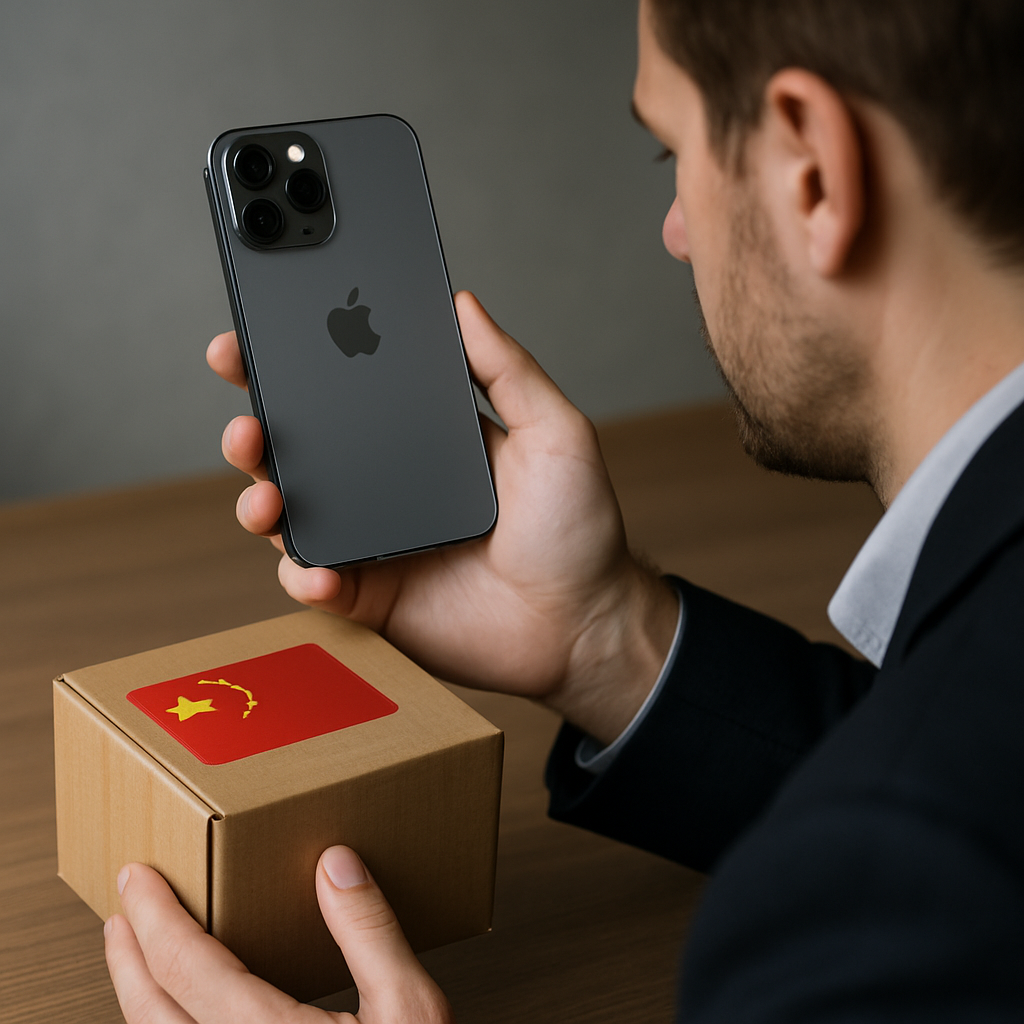
Yes—you can buy an iPhone directly from China, but the right approach depends on whether you want a brand-new retail phone, a marketplace listing, or a used or refurbished unit from a Chinese supplier. The key things to check before you buy are seller legitimacy, IMEI status, warranty terms, network compatibility, customs costs, and whether the model is intended for China-only use or international use.
Can You Buy an iPhone Directly from China?
In practical terms, there are three main ways buyers source iPhones from China: official Apple retail channels in China, Chinese online retail or marketplace listings, and B2B supplier platforms that specialize in wholesale or refurbished devices. That is why the answer is not simply “yes” or “no” — the buying experience changes a lot depending on the channel.
If you buy from an official Apple store in China, you are usually using the safest route for authenticity. If you buy through a third-party marketplace, you need to verify the seller. If you buy from a B2B supplier, especially for used or refurbished devices, you need to treat it like a sourcing decision rather than a simple consumer purchase.
In other words, there is no single official “international direct order” program for every buyer. A direct purchase from China can mean a retail purchase for personal use, or a wholesale-style sourcing arrangement for resale or business procurement.
Where to Buy an iPhone in China
The main source categories are straightforward, but the risk profile changes from one to the next:
- Official Apple retail in China: best for authenticity and straightforward retail buying.
- Chinese online retail and marketplaces: convenient, but the buyer must verify the seller, model, and warranty terms.
- B2B supplier platforms: better suited to bulk buyers, resellers, and buyers looking for refurbished or second-hand stock.
On the marketplace side, platforms such as AliExpress listings for iPhone China products and Alibaba-style supplier marketplaces may show devices described as “original,” “unlocked,” or “global version.” Those labels are useful, but they are not enough on their own. You still need to verify the listing details and the seller’s track record.
For supplier-style buying, the market is especially active in Shenzhen and Guangzhou, where many listings focus on used or refurbished iPhones rather than brand-new retail stock. That distinction matters because a “China iPhone website” search often surfaces third-party sellers, not Apple-owned retail pages.
Is It Safe to Order an iPhone from China?
It can be safe to order an iPhone from China, but only if you use reputable sellers and do proper checks. The main risk is not China itself; it is the quality of the seller, the clarity of the listing, and whether the phone has been properly documented.
The most important safety checks are:
- Verify the seller: look for established supplier profiles, trade assurance-style protection, or strong transaction history.
- Ask for the IMEI: confirm the device is not reported lost, stolen, or blocked.
- Check warranty terms: do not assume Apple’s support or international warranty coverage will be identical for every purchase channel.
- Confirm unlock status: especially if you need to use the phone on a foreign carrier.
- Check the condition grade: for used or refurbished phones, ask whether the unit is Grade A, Grade B, or another grading standard.
- Request authenticity documentation where possible: invoice details, supplier documentation, and device specifications should be clear before payment.
Price alone is not a safety signal. A very cheap listing may be genuine, but it can also mean hidden defects, poor battery health, missing accessories, or a seller who is not willing to document the phone properly. If a seller refuses to share basic verification details, that is a warning sign.
For buyers comparing broader supplier risk, this guide to secure purchase on eBay is useful for understanding how buyer protection and payment safety can change the risk profile on marketplace orders.
Can a China iPhone Work in the USA or Other Countries?
Yes, a China-bought iPhone can often be used in the USA or another country, but you must check network compatibility before you buy. The most important issue is LTE and 5G band support. According to the supplied research, China models generally support most global bands, but they may miss U.S.-specific mmWave and some low-band LTE frequencies.
That means the phone may still work, but not always with the same full network performance you would expect from a domestic U.S. model. A device may connect normally for voice, messaging, and data, yet still lack one or more high-performance bands used by some U.S. carriers or in certain locations.
So if you are asking, “Can I buy an iPhone in China and use it in the USA?”, the correct answer is: usually yes, but only after you verify the exact model number, LTE bands, and 5G compatibility for your carrier. Do not assume that all China-market iPhones are identical to U.S. versions.
One additional practical point: some China models can differ in configuration or feature availability from other regional models. That is why it is better to check the exact model specification than to rely on the phrase “China model” alone. If you are buying for cross-border use, compatibility should be treated as part of the purchase decision, not something to check after delivery.
Is It Cheaper to Buy iPhones in China?
Sometimes yes, but the savings depend on the model, the condition, and the channel. China can be cheaper than some other markets, especially for used and refurbished stock, but the final economics change once you add shipping, customs, and warranty limitations.
For new retail stock, one research source places the iPhone 13 in China at roughly ¥5,199–¥5,699 for a new, unlocked 128GB model, which was about $720–$790 USD at the time of that source. Another source notes that the iPhone 13 can be around $70–$100 cheaper than in the U.S. for the 128GB model, depending on timing and market conditions. These figures are not a universal price guarantee, but they do show that China can be competitively priced for some new models.
The deeper savings usually show up in the secondary market, especially for used and refurbished phones. That is where many China-based suppliers list iPhone 13 units at lower prices than new retail stock, but the buyer has to pay close attention to grade, battery health, and MOQ.
Here is a practical comparison based on the supplied research:
| Buying route | Typical price signal | Best for | Main risk |
|---|---|---|---|
| Official retail in China | Higher than used stock; competitive for some models | Consumers wanting a new phone | Cross-border warranty and compatibility checks |
| Refurbished / Grade A | Often significantly below new retail | Value buyers and resellers | Condition variation and warranty limits |
| Used / Grade B | Lowest price tier for many listings | Budget buyers | Battery wear and cosmetic/functional issues |
| Wholesale lots | Lowest per-unit pricing at higher MOQ | Distributors and B2B buyers | Inventory risk and import complexity |
If you are looking at newer-model search demand such as “China iPhone 17 price,” be careful not to assume every search result is a verified market price. The evidence supplied here is strongest for the iPhone 13 and second-hand market ranges, not for a reliable universal iPhone 17 price point.
For customs and landed cost context, see the difference between duty and tariff and AliExpress tariffs in the USA. Those costs can change whether a China purchase is actually cheaper after import.
New, Used, and Refurbished iPhones from China: What’s the Difference?
The China market is not just a new-retail market. A large part of the available supply is second-hand or refurbished, especially on B2B platforms and in regional electronics hubs.
New retail
A new retail iPhone is the closest to what you would buy from an official Apple channel. It should come sealed, with standard retail packaging and the clearest authenticity trail. This is the least complicated option for ordinary consumers, but it is not always the cheapest.
Used
A used iPhone has already been owned and operated. It may still work perfectly, but the buyer must check battery health, cosmetic condition, IMEI status, and whether the unit is unlocked. Used devices are often the lowest-priced option, but they carry the most variability.
Refurbished
A refurbished phone has usually been inspected, repaired if necessary, and resold after some form of quality control. The quality of refurbishment varies widely, so the buyer should ask what parts were replaced, what testing was done, and whether the seller provides any warranty.
Grade A, Grade B, and wholesale lots
Grade A usually indicates a high-condition unit, often described as “99% new” or similar. Grade B generally means visible wear or a more modest condition level. Wholesale lots are bulk orders where the buyer receives multiple units, often with mixed grades or more limited condition guarantees.
According to the supplied research, many Chinese supplier listings for iPhone 13 and iPhone 13 Pro Max units describe batteries above 80% health, unlocked devices, and grade-based condition labels. Those signals matter because they tell you more about the real quality of the phone than a generic “original” claim ever will.
For most ordinary users, the safest compromise is usually a Grade A refurbished phone from a verified supplier. For value buyers, a used phone can be acceptable if the price reflects the risk. For resellers or telecom buyers, wholesale lots may offer the best per-unit economics, but only when the supplier is transparent and the import route is workable.
How to Choose Reliable iPhone Suppliers in China
If you want to buy directly from China, especially from a supplier or marketplace seller, use supplier checks instead of price alone. A reliable listing should give you enough information to compare the phone, the seller, and the delivery terms before you pay.
The most useful questions to ask are:
- What is the exact model number and storage variant?
- Is the phone unlocked?
- What is the IMEI status?
- What condition grade is the device?
- What is the battery health?
- Is there a warranty, and how long does it last?
- What is the expected delivery time?
- What is the minimum order quantity, if this is a bulk listing?
For B2B buyers and resellers, response speed, shipment consistency, and quality-control documentation matter just as much as price. The live research shows supplier listings with features such as fast response times, high on-time shipment rates, and clear MOQ thresholds. Those are useful signals because they show how likely the supplier is to fulfill orders consistently.
A practical rule is this: if two suppliers offer similar prices, choose the one with better transparency, better response time, clearer warranty terms, and stronger shipping consistency. If one supplier is much cheaper but will not disclose IMEI, unlock status, or quality grade, the apparent savings may disappear quickly.
For a broader sourcing framework, this guide to choosing reliable iPhone suppliers in China is directly relevant because it focuses on authenticity, legal compliance, and supply-chain transparency.
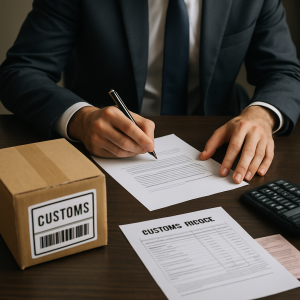
What to Know About Customs and Import Rules When Buying from China
Customs and import rules can change the final cost of your iPhone and can also affect how easy the purchase is to complete. A phone that looks cheap at checkout may become much more expensive once duty, tax, handling fees, and shipping are added.
This is why landed cost matters. When people ask whether buying from China is cheaper, they often compare the listing price only. That misses the full picture. You may also face delays during customs clearance, especially if the courier needs extra information or if the shipment is selected for inspection.
Cross-border buying can also create support issues. Even if the phone is technically compatible, the warranty response, returns process, or carrier setup may be less convenient than buying domestically.
To understand the cost side more clearly, it helps to read about the meaning of Made in PRC. A China origin label tells you where the item was produced or assembled, but it does not guarantee authenticity, compatibility, or customs treatment in your destination country.
If you expect courier delays, the article on FedEx clearance delay is useful background on why imported shipments can pause in customs even when nothing is “wrong” with the parcel.
Practical Buying Advice Before You Order
If you want a simple checklist, use this before placing an order for an iPhone from China:
- Choose your route: official retail, marketplace, or supplier listing.
- Confirm the exact model: especially if you need use in the USA or another destination country.
- Check network bands: do not assume China models are identical to your domestic model.
- Verify IMEI and unlock status: essential for used and refurbished phones.
- Ask about battery health and condition grade: particularly for second-hand stock.
- Read the warranty terms carefully: cross-border support can be limited.
- Add customs and shipping to the total cost: this determines whether the deal is truly cheaper.
If you are a consumer, official retail or a verified marketplace seller is usually the simplest path. If you are a reseller, refurbished supplier, or bulk buyer, the China market can be attractive because it offers broader model availability and lower unit prices, but only if you manage the sourcing risk properly.
So, can you buy an iPhone directly from China? Yes. Is it automatically the cheapest or safest option? No. The smartest purchase is the one where the seller, model, compatibility, and landed cost all make sense before money changes hands.