Can You Import Absinthe Into the U.S.? Federal Rules, Labels, and Seizure Risk
 Import Export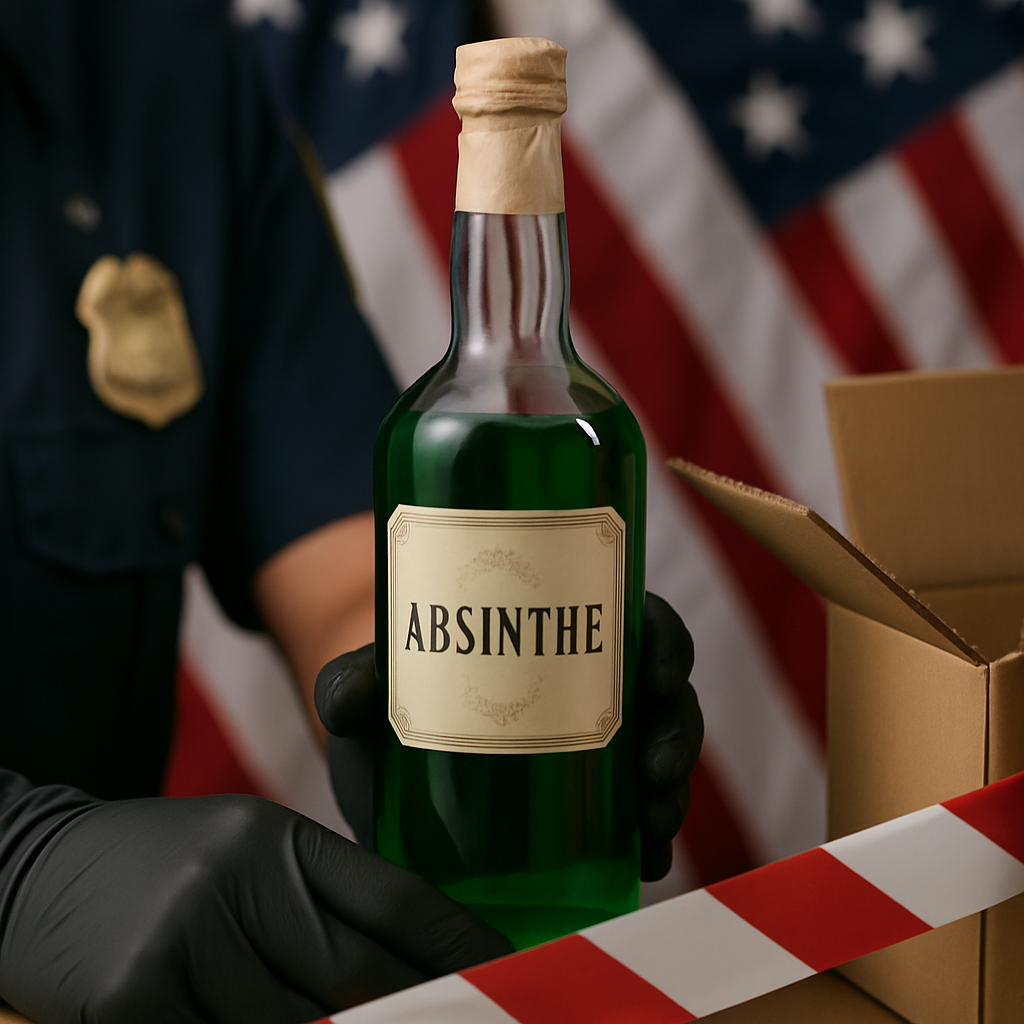
Absinthe is not an automatically prohibited product in the United States, but neither is it an unrestricted alcohol import. Whether a bottle can enter depends on the product meeting applicable federal requirements, being truthfully declared, and complying with any relevant state and local alcohol rules. This is different from simply being old enough to carry alcohol or being within a duty-free allowance. A non-compliant absinthe product may be subject to seizure even if it is only one bottle.
The most important practical distinction is the import scenario: a traveler carrying a bottle in personal baggage, a business importing bottled absinthe for sale, and a bottle sent through the post or by a carrier do not follow the same process. Before moving or ordering a bottle, identify the exact product, its labeling and thujone information, the destination state, and whether the transaction is personal travel or commercial importation.
Can You Legally Import Absinthe Into the United States?
Yes, absinthe may be imported into the United States when the applicable requirements are met. The word absinthe alone does not decide admissibility. The relevant question is whether the particular product, its composition, its label and presentation, and the import transaction comply with the rules that apply.
TTB's absinthe guidance treats a product as "thujone free" when it contains less than 10 parts per million (ppm) of thujone. TTB also restricts the way absinthe may be presented: "absinthe" cannot be the brand name or stand alone on the label, and artwork or graphics cannot project hallucinogenic, psychotropic, or mind-altering effects. An absinthe-specific secondary source, Baja Re Group's guidance on what may be brought from Mexico, summarizes related import conditions.
Those detailed conditions should be treated as a compliance screen, not as blanket approval of any particular bottle. This article cannot determine whether a specific label, formula, laboratory result, or SKU satisfies the current rules. For a commercial shipment, obtain confirmation of the requirements for the exact product before it is shipped. Absinthe imported in violation of applicable requirements may be subject to seizure. That does not mean every questioned bottle will necessarily be seized, but it means payment of duty or a carrier's acceptance does not resolve a product-compliance problem.
Duty-free treatment is not the same as admissibility
Three issues are often confused:
- Admissibility: whether the product may lawfully enter under the applicable federal, state, and local requirements.
- Duty and tax treatment: whether customs duty or internal-revenue tax may be payable.
- Traveler allowance: a duty-free allowance available to eligible travelers in particular circumstances.
A traveler allowance can affect what is duty free; it does not make a non-compliant absinthe product admissible. Likewise, declaring and paying applicable charges does not cure a formula, label, presentation, or state-law issue.
If You Are Bringing a Bottle Back as a Traveler
Personal baggage is usually the most straightforward situation, but it is still an importation. Keep the bottle in its original commercial packaging where possible, declare it accurately, and be prepared for customs officers to assess it under the rules that apply to the product and your entry.
The U.S. Embassy's customs information for travelers states that residents and non-residents aged over 21 may bring up to one liter of alcoholic beverages into the United States duty free. This is a traveler duty-free allowance, not an unconditional entitlement to bring in any alcoholic beverage. A bottle of absinthe still needs to be admissible, and destination-state or local alcohol rules may add requirements.
CBP explains in its customs duty information for travelers that merchandise imported into the United States is subject to the relevant rules and that additional liters of alcohol can be dutiable and subject to internal-revenue tax. Do not assume that alcohol above the duty-free allowance is prohibited; equally, do not assume that paying duty guarantees entry.
Declare the bottle accurately
Declare alcohol when entering the United States and describe it truthfully if asked. Do not relabel it, describe it as another beverage, or omit it in an attempt to avoid examination. Accurate declaration gives the authorities the information needed to assess admissibility and any charges. If you need help with the traveler paperwork, see our guide to how to complete the CBP traveler declaration.
State and local rules still matter
Federal entry requirements are only one layer. The Alcohol and Tobacco Tax and Trade Bureau (TTB) states in its guidance on importing bottled alcoholic beverages into the United States that importers must also meet the requirements of the state and local jurisdictions in which they import beverage alcohol products. TTB advises contacting the relevant state alcohol control board or local authorities. This is particularly important if the bottle will be sent onward, resold, or used in a manner beyond personal carriage.
If You Plan to Import Absinthe for Sale or Distribution
Commercial importation is not simply personal travel on a larger scale. It involves an importer of record, customs-entry responsibilities, alcohol-specific compliance, and state and local licensing or control requirements. Clearance by CBP is one part of the process, not the whole process.
CBP, TTB, and FDA are key bodies involved in alcohol imports; other agencies may also be relevant depending on the product and transaction. At a high level, TTB's role includes permits, labels, and formulas for imported alcoholic beverages. The exact approvals and filings depend on the facts, so an importer should not assume that one approval applies to every absinthe product or import arrangement.
TTB also makes clear that state and local requirements can apply in addition to federal requirements. A federal compliance review is therefore not a substitute for checking the rules in the destination jurisdiction.
Importer-of-record responsibilities
According to the supplied industry guidance from PCBUS on importing alcoholic beverages, the importer of record is ultimately responsible for the accuracy and completeness of the import declaration and for payment of applicable duties and taxes. This responsibility makes it important to confirm the product description, country of origin, value, and supporting records before entry is filed.
The available guidance also supports the general point that duty and tax can be payable on importation and that imported distilled spirits may attract federal excise-tax obligations. However, the applicable tariff classification, customs duty, excise-tax calculation, possible bond requirements, and origin treatment are transaction-specific. Do not rely on a generic absinthe duty rate or an assumed HTS classification without obtaining current professional advice for the shipment.
Documents commercial importers should prepare
A legal-industry source on how to import alcohol into the U.S. identifies these common commercial documents:
| Document | Practical purpose |
|---|---|
| Commercial invoice | Records the purchase price and typically identifies the goods, country of origin, and other transaction details needed for customs entry. |
| Packing list | Sets out the contents, quantities, packaging, and shipment details. |
| Bill of lading | Serves as transport documentation and a receipt for the goods carried by the transport provider. |
Further documents may be needed depending on the product, origin, mode of transport, and transaction. Alcohol-specific compliance records, product specifications, and label information may be especially important for absinthe. For a broader explanation of entry records, read about the broader customs-clearance process and import documents.
Before arranging a commercial shipment, seek transaction-specific guidance from TTB, CBP, the relevant state alcohol control authority, and a qualified customs broker or alcohol-import professional. That review should cover the exact bottle rather than a general description of absinthe.
Do Not Treat Mailing or Customs Clearance as a Workaround
Mailing a bottle is not a simple way around traveler or commercial-import requirements. The U.S. Embassy source states plainly that alcoholic beverages may not be mailed to the United States. See our overview of USPS international shipping restrictions for wider postal and customs context.
This practical warning should not be confused with every possible courier arrangement. CBP's traveler guidance separately states that federal law prohibits business-to-private-consumer shipping of alcoholic beverages by mail within the United States. That domestic-mail rule and the Embassy's warning about mailing alcohol to the United States should not be expanded into an unsupported conclusion about every international courier scenario. A courier's willingness to accept a parcel does not establish that the goods are lawful, admissible, or permitted under destination-state alcohol rules.
Carrier tracking does not prove admissibility
A tracking update, carrier acceptance scan, or a status suggesting customs processing reports only part of the transport or clearance process. It does not confirm that the absinthe has satisfied product, label, federal, state, or local requirements. In particular, a customs-clearance status should not be read as a legal opinion on thujone content or label compliance.
If a parcel is delayed or held, retain the purchase record, product specification, label images, and any thujone information available from the manufacturer. Review carrier or CBP communications carefully and provide truthful documentation if requested. A general customs-delay article can help explain process signals, but it cannot decide alcohol or absinthe admissibility; see what a customs-delay status can and cannot tell you. For a commercial, disputed, or potentially seized shipment, obtain qualified advice rather than assuming a release date, refund, return-to-sender option, or appeal outcome.
Absinthe Import Checklist Before You Travel or Ship
Use this checklist before carrying, ordering, or commercially importing absinthe into the United States:
- Identify the exact product. Record the producer, bottle size, alcohol content, country of origin, and full label details.
- Check product compliance information. Obtain reliable thujone information for that bottle and review the label and imagery. TTB treats "thujone free" as less than 10 ppm and restricts certain uses of the word "absinthe" as well as hallucinogenic or mind-altering imagery.
- Choose the correct import scenario. Establish whether you are carrying a personal bottle as a traveler, arranging a commercial import, or considering shipment by post or courier.
- Check the destination jurisdiction. Confirm any applicable state and local alcohol requirements with the relevant alcohol control board or local authority.
- Prepare truthful records. Keep invoices, product descriptions, transport documents where applicable, and supporting product information.
- Declare accurately. Do not misdescribe alcohol or conceal the contents from customs or the carrier.
- Get specialist confirmation for commercial imports. Obtain current advice for the particular product and transaction before shipment, especially where permits, labels, formulas, taxes, classification, or state distribution rules may be involved.
The Bottom Line
You can import absinthe into the United States only when the applicable requirements are met. For a traveler, an over-21 duty-free alcohol allowance may be relevant, but it does not override admissibility rules. For a business, the import requires more than ordinary customs clearance: product compliance, accurate entry, applicable duty and tax obligations, and federal, state, and local alcohol requirements all need attention.
The safest approach is to verify the exact bottle's thujone information and label presentation, declare it accurately, avoid mailing alcohol to the United States, and obtain current specialist or agency guidance before sending a commercial shipment. Non-compliant absinthe may be subject to seizure, so it is better to resolve compliance questions before the product reaches the border.