Consignment With Your Postal Item Has Been Received By Carrier For Further Transportation Meaning
 Import Export
What does "Consignment With Your Postal Item Has Been Received By Carrier For Further Transportation" mean
The status "consignment received by carrier" indicates that the shipping company or post office has physically taken possession of your package from the merchant or sorting warehouse. This means your item is officially packed, labeled, and logged into the courier's active logistics network for transport.
Before this scan appears, your order exists merely as a digital shipping label created by the seller. Once handed over, physical custody and legal responsibility shift directly to the courier service. According to logistical explanations on received by carrier, this initial scan marks the exact moment an item enters transit, meaning any subsequent delays or routing updates stem from carrier operations rather than merchant preparation.
How Airport Transit Status Impacts Your International Dispatch Time
When tracking displays "consignment sent from the airport," your parcel has been loaded onto an outbound aircraft or released from an air cargo terminal. This status confirms international departure, but ground movement pauses until customs officials at the arrival hub process the freight.
Air transport represents one of the fastest legs of international shipping, yet it frequently introduces extended tracking silences. Parcels sitting in airport holding bays wait for plane cargo space, export clearance, and import screening. Standard parcel aggregators note that packages crossing international borders often experience multi-day status gaps while held in customs transit hubs before re-entering national postal channels, as detailed by cross-border transit analysis.
Should You Worry If Postal Scans Pause for Five Days?
No, a five-day pause in tracking updates is generally normal during domestic or international transit and does not mean your package is lost. In-transit items often travel long distances inside bulk containers without triggering intermediate barcode scans.
Modern postal services like USPS utilize automated sorting facilities that scan items only when entering or exiting major distribution hubs. If a truck carries freight across several states or if an item waits in a customs queue, system updates stall temporarily. Standard e-commerce guidelines for in-transit arriving late statuses show that automated messages usually auto-generate to keep the tracking record active while the physical parcel remains moving toward its destination.
Expected Delivery Times for Packages Sent From Ukraine to America
Shipping a package from Ukraine to the United States typically takes 10 to 21 business days via standard postal services like Ukrposhta or express operators like Meest. Delivery timelines fluctuate depending on international customs processing speed and domestic postal handoffs.
When goods depart Ukrainian origin hubs, they route through European gateway airports before crossing the Atlantic. Once landed on American soil, US Customs and Border Protection inspects the shipment prior to handing custody over to USPS for final delivery. Tracking details provided through 17TRACK shipping terminology guides help monitor these major cross-border handoffs step by step.
When Is a Delayed Shipment Officially Considered Lost by Postal Authorities?
USPS and international postal carriers generally classify a domestic package as officially lost after 7 to 15 consecutive days with no tracking updates. For international shipments, carriers typically require 21 to 30 days of complete inactivity before opening a formal missing mail claim.
Before declaring a package lost, postal systems conduct automated inventory searches across regional bulk distribution hubs. Frequently, delayed packages turn up in backlogged sorting bays or resurface after passing through secondary customs holds. If tracking remains stagnant past the carrier's designated grace period, senders can initiate a missing mail search or file an insurance claim to receive financial reimbursement.
What Does Consignment Received at Transit Point Mean in Shipment Tracking and Warehouse Logistics?
What Does Consignment Received at Transit Point Mean
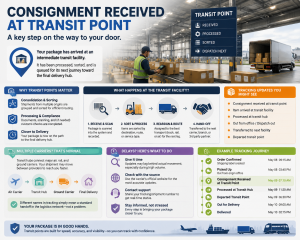
If you have tracked a package and seen 'consignment received at transit point,' you are looking at a pivotal shipping milestone. This status means your goods have reached an intermediary warehouse or transit centre facility, not yet the final delivery hub, but an important stop along the route. It often signals that your shipment has successfully moved out from the origin office, been processed at an intermediate logistics hub, and is queued for dispatch toward its ultimate destination. Understanding what happens at this stage gives you more control and confidence during order tracking, especially as cargo passes through different logistics providers or third-party sort facilities.
Meaning and Importance of Transit Points in Distribution Hubs
Transit points act as the middlemen in the vast network of logistics and freight forwarding. When your consignment is received at a transit point, it typically means your item has arrived at an official facility where shipments from multiple origins are consolidated and sorted. This hub, sometimes managed by large companies like DHL, Aramex, or specialized centers in Germany or the Netherlands, helps streamline further transportation toward your delivery address.
Warehouses at these points handle everything from offloading cargo from inbound trucks or rail to re-processing for outgoing routes. Items aren't lost; they're grouped for efficient movement with others going to similar destinations. This phase is where terms like 'processed' or 'out from office' appear frequently in tracking updates. In case your shipment is handled by a company like Center Point Logistics Pvt Ltd, expect a clear highlight when your package switches carriers or moves between branches.
Why does this matter for you? Because knowing your consignment has reached a legitimate transit centre facility usually guarantees that the paperwork and customs (if international) are largely complete. Only local delivery remains. You get a much better sense of timing and reassurance about your shipment's journey.
Key Steps After Arrival at a Transit Facility or Warehouse
Once your item is marked as received at a transit point in logistics tracking, several things might happen:
- Sorting and Scanning: The package is scanned into the facility's system, sometimes marked as 'item arrived' at specific international hubs like NL DEFRAA or DE ARAMEX.
- Reallocation to Trucks or Railway: Depending on the route, your package may be assigned to better trucks for the fastest road delivery or shifted to a railway tracking crew, especially when moving between regions like Portage MI or through mobile AL express connections.
- 3rd Party Transitions: Some consignment shipments are transferred to partner sort agencies or 3rd party logistics for the last-mile delivery step.
Information about these transitional steps can often be confirmed using a reliable tracker, as described in consignment received at transit point - Package Radar. This lets you know where your cargo currently sits, easing anxiety about its whereabouts.
How Facility Processing Impacts Delivery Timelines and Tracking Transparency
Every transit point runs on efficiency. The facility processes received consignments according to strict schedules to reduce holding times and avoid backlogs. When your goods are being processed—sometimes shown in tracking as 'consignment dispatch out from office' or 'processed'—this step is all about systemic accuracy, not just speed.
Facilities use advanced warehouse management systems to route every item. At origin centers, packages might be grouped for large regional deliveries; at local hubs, they're likely dispatched out by branch for faster handoff to carrier crews. Modern sorting technologies recognize shipments registered in shipping items databases and prioritize based on category, destination, or delivery mode (such as goods shipped FOB or through express carrier connections).
Often, you will see tracking updates highlighting where your consignment stands in line. If there is a delay, it's usually due to volume surges, customs checks on international goods, or inefficiencies at branch hubs. Still, each tracking message provides a breadcrumb trail for better peace of mind.
Reddit users sometimes ask about the true meaning of these updates, as in the post What is Consignment Received at Transfer Point, Superbuy Air Mail. In nearly all cases, it simply marks another step closer to delivery, not a problem or reroute.
Carrier Connections and Hand-Offs: Why Multiple Providers May Appear in Tracking
As your shipment travels, you might notice references to Proactive Outpost logistics companies—whether on a highway out of Portage, Michigan, or transferred to Proactive Outpost LLC for specialty routing. This happens because transit points often function as connection hubs, bridging major air, rail, and ground carriers under one facility management system.
For example, a consignment might arrive via air at a sorting center in NL DEFRAA, then transfer to a ground-based delivery crew, or move from a branch in Germany handled by Aramex logistics, before being sorted for last-mile destination delivery. Such network flexibility ensures faster, more reliable service regardless of destination complexity.
Many sorting points, like those along Hwy 64 or large facilities tied to the echelon system, operate around the clock. They pass packages through sophisticated checkpoints with detailed record-keeping, so if your tracking status jumps from one provider to another, it only indicates a standard hand-off, not misplacement.
What to Do If Your Consignment Status Doesn't Update at the Transit Hub
If your tracking seems stuck on 'consignment received at transit point,' patience is key. In rare cases, logistics updates may lag behind actual sorting due to reporting delays between interconnected systems or high cargo volumes at hub/branch offices.
Consider these practical actions while you wait:
- Check for parallel updates directly from your logistics provider's website, especially if using third-party sort companies or international networks.
- Contact the shipping company with your tracking or shipment number. They can verify if your item has moved to dispatch or if additional processing (such as customs in Germany or NL) is temporarily holding things up.
- Don't panic if multiple hand-offs are listed. Every branch or proactive outpost in the chain has accountability, and delays rarely mean lost cargo—just extra sorting steps.
The definition of package statuses differs slightly between companies, but standards are explained in the article What's the definition of each package status? - Help Center. Each transit point status gives you real-time visibility.
By following your shipment through each transfer point and trusting the logistics network's established hub and branch system, you gain a better grasp of when your item will arrive and what each status genuinely means.

One thought on “Consignment With Your Postal Item Has Been Received By Carrier For Further Transportation Meaning”