What Are the UPS Customs Clearance Documents Required for Imports Online?
 Import Export
What Are the UPS Customs Clearance Documents Required for Imports Online?
To successfully navigate global trade, importers must provide specific paperwork to avoid costly delays. The core files required for border processing include a detailed commercial invoice, a packing list, and an official air waybill. Certain high-value or regulated commodities will also trigger the need for a power of attorney and partner government agency permits. Submitting these digital forms accurately ensures swift transit, prevents unexpected brokerage charges, and keeps your freight moving seamlessly across international borders without getting trapped in a pending resolution status.
UPS Customs Clearance Documents Required for Imports Online
Understanding the Essential Paperwork to Clear Border Processing
To successfully process international goods, carriers require a commercial invoice, packing list, and an air waybill at minimum. Specialized goods might also demand a power of attorney, electronic export information, or specific agency permits.
The commercial invoice acts as the foundational contract and valuation record for any cross-border transaction. It explicitly dictates the buyer, seller, country of origin, and a granular description of the physical merchandise passing through a port. Missing signatures or vague item descriptions routinely trigger automated holds, forcing compliance agents to request a simplified entry procedure form or updated valuation data to satisfy legal mandates. You cannot simply list "parts" or "samples" on this sheet; border authorities demand precise, harmonized tariff language to assess taxes properly.
Furthermore, an air waybill functions directly as the official contract of carriage between the shipper and the logistics provider. It secures the chain of custody and ensures accountability from the origin warehouse all the way to the final delivery destination. You can often submit these mandatory files digitally through the UPS forms library, bypassing the friction associated with physical paperwork attached to exterior boxes. Digitizing this workflow prevents documents from tearing off in transit, which remains a leading cause of massive port delays.
Regulated commodities introduce another layer of bureaucratic complexity, demanding specialized certificates before a truck can leave the facility. Items like medical devices, agricultural products, or complex electronics inevitably trigger secondary reviews by partner government agencies like the FDA or FCC. If a buyer fails to provide a power of attorney granting the carrier permission to act on their behalf, the entire load stalls immediately. The broker cannot legally submit your information to the federal database until you formally sign over that temporary administrative authority.
Why Do Shippers Pay Brokerage Fees on Foreign Shipments?
Logistics companies charge brokerage fees to cover the administrative labor of preparing entries, calculating duties, and submitting data to regulatory agencies on your behalf. You can sometimes bypass these charges by self-clearing the parcel at a local commercial port.
The phenomenon of unexpected invoice charges shocks many first-time global buyers, but these levies stem from strict administrative labor costs rather than arbitrary corporate greed. Whenever merchandise crosses an international threshold, a licensed broker must manually translate the commercial invoice into standardized tariff codes, calculating exact tax obligations. This specialized labor commands a premium, which the carrier subsequently passes down to the importer as a flat rate or percentage-based disbursement fee. Even if the item itself qualifies for duty-free status, the act of processing the paperwork generates a billable event.
Beyond the baseline tariff assessed by the federal government, private carriers routinely front the cash required to release your package immediately. By advancing these funds to the regulatory authorities, the logistics company takes on a brief financial risk, justifying their advancement fee upon final delivery. If an importer refuses to settle this balance at the door, the carrier retains the legal right to abandon the shipment, auction it off, or return it directly to the sender at the buyer's expense.
Proactive importers occasionally dodge these steep premiums through a process known as self-clearing, which demands direct coordination with the local government office. By obtaining your own entry forms and driving physically to the commercial port, you assume the broker's responsibilities directly. While this method saves cash, it requires significant logistical maneuvering and a deep understanding of harmonized tariff schedules to avoid severe administrative penalties.
- Standard Disbursement Tariffs: Carriers apply these when they advance cash to regulatory bodies to expedite your freight, ensuring goods do not sit rotting in a warehouse. This percentage covers the brief credit line extended to the buyer during transit.
- Ancillary Administrative Costs: If your paperwork contains vague descriptions, brokers spend extra hours researching the correct classification codes. The resulting administrative penalties easily eclipse the original value of the actual merchandise being transported.
- Partner Government Agency Approvals: Commodities requiring agricultural, medical, or electronic inspections incur massive processing surcharges
Which UPS Customs Clearance Documents Are Required for Imports Online?
Moving freight across borders successfully demands precise paperwork. To clear an import through the UPS network, you must accurately submit a Commercial Invoice outlining the transaction specifics alongside an official Air Waybill. Depending on commodity type and overall valuation, border agents frequently request supplementary materials like a packing list, an Electronic Export Information (EEI) filing, or a Power of Attorney (POA) granting brokerage authorization. Missing or incorrect attachments trigger immediate delays, generating pending resolution alerts while accruing potential storage penalties. Preparing these exact files ahead of transit ensures your merchandise clears checkpoints swiftly without unexpected taxation surprises.
Exploring the mechanics of international shipping reveals how deeply logistics providers depend on digitized information flow. When a merchant hands a box to the driver, the physical journey relies completely on the parallel transmission of digital declarations. Modern trade operates efficiently because of the simplified entry procedure designed for authorized carriers. This specific methodology allows manifest details to arrive at government desks long before the cargo plane actually lands on the tarmac. By transmitting accurate commodity descriptions early, brokers can pre-clear standard parcels, bypassing physical border inspections almost entirely.
However, this seamless motion halts the moment a discrepancy appears in the submitted profile. If a declared value seems unusually low or a tariff code contradicts the written description, software systems automatically flag the shipment for human review. Importers must proactively understand the exact regulatory demands matching their specific goods to prevent delays. You cannot simply tape a generic packing slip to a crate and hope for swift transit across international lines. Navigating global logistics requires strict adherence to standardized documentation practices to keep the supply chain moving without expensive bottlenecks.
Understanding the Essential Paperwork Needed to Move Cargo Across Borders
The foundation of every international transaction rests heavily upon the Commercial Invoice. This non-negotiable instrument acts as the ultimate source of truth for border protection agencies worldwide. It must explicitly identify the buyer, the seller, the country of origin, the precise manufacturing materials, and the agreed-upon purchase price. Vague descriptions like "apparel" or "electronics" will instantly trigger a rejection from regulatory software. Instead, you need granular definitions such as "100 percent cotton women's knit shirts" to secure accurate tariff classification. You can effortlessly submit this primary record digitally or attach three physical copies directly to the exterior pouch.
Accompanying that financial record is the Air Waybill, which functions as the binding contract of carriage between the sender and the logistics provider. This standardized form contains the unique tracking sequence assigned to the journey, alongside routing instructions and weight metrics. Beyond acting as a receipt, the Air Waybill provides structural liability parameters if the merchandise sustains damage during transit. It directly links the physical pallet to the digital data stream flowing into government databases, creating an unbroken chain of custody from origin to destination.
For highly regulated commodities or unusually large consolidations, border officials expect several additional supporting instruments. A detailed packing list becomes mandatory when multiple cartons are bundled together under a single master tracking number, allowing inspectors to locate specific items without dismantling an entire pallet. Furthermore, if you are relying on a third-party broker to interface with authorities on your behalf, you must sign a formal legal authorization. Finding the required templates within the official forms library guarantees your paperwork complies with current trade mandates. Accessing proper essential supply chain tools is the fastest way to compile these necessary files.
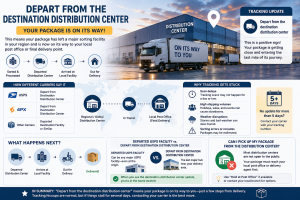
Why Is My Tracking Status Showing Pending Resolution?
When monitoring an inbound delivery, nothing creates more anxiety than seeing an alert indicating a hold state. This notification simply means the automated processing software encountered a data gap that prevents immediate clearance. The most common culprit involves a missing or severely incomplete commercial invoice, leaving the assigned broker unable to determine the appropriate harmonized system code. Sometimes, a shipper simply forgets to attach the physical paperwork, or the digital upload failed to synchronize with the main database. Without this identifying information, government inspectors refuse to authorize release, forcing the courier to sideline the container inside a bonded warehouse facility.
Another frequent roadblock involves restricted materials requiring specialized government agency approval prior to final admission. Products like medical devices, cosmetics, organic agricultural goods, and particular chemical compounds trigger mandatory oversight from specific federal departments beyond standard border patrol. If the importer neglected to secure the proper advance permits aligned with Bureau of Industry and Security regulations, the logistics provider must suspend movement until those certificates arrive. The courier will typically attempt to reach out to the recipient using the provided telephone contact details to request the absent files. Ignoring these inquiries ensures the freight remains frozen and will eventually be marked for return to the sender or outright destruction.
You can significantly reduce the duration of these administrative delays by responding to brokerage requests instantly. Most major carriers offer an online dashboard where receivers can upload digitized versions of missing records directly into the clearance queue, generating a fast pending or resolution update in the tracking system. By establishing an active communication channel with the broker, you provide the missing context necessary to appease the inspecting officer. Proactive buyers frequently supply comprehensive ingredient lists, manufacturing schematics, or end-use statements preemptively. Reviewing a detailed brokerage methodology guide equips importers with strategies to avoid these exact bottlenecks while awaiting the message that their request package has cleared.
How Do Officials Know What You Bought and Assess Fees?
A pervasive myth among novice importers is that government agencies randomly inspect boxes to determine taxation liabilities. In reality, modern border security operates almost entirely on predictive data analytics and digital declarations submitted by the sender. Before a cargo plane even departs the foreign runway, the carrier transmits the complete flight manifest directly to destination authorities. This transmission includes the declared value, origin territory, and precise commodity descriptions provided on the shipping labels. The receiving government’s algorithm cross-references these details against current trade agreements, immediately calculating the exact tariff percentage owed.
When consumers ask why they are suddenly facing unexpected duties, the answer always lies in the regulatory thresholds established by their local jurisdiction. Most nations enforce a specific de minimis value, which dictates the price point at which imported goods become subject to taxation, as outlined in official U.S. Customs and Border Protection directives. If the commercial invoice indicates a total purchase amount exceeding this baseline, the assigned broker will automatically pay the levy on the receiver’s behalf to keep the freight moving. The logistics provider then bills the end consumer for both the government tax and a separate administrative advancement charge.
Attempting to circumvent these financial obligations by intentionally under-declaring merchandise value carries severe consequences. Automated risk assessment software easily detects when a high-end electronic device is inexplicably listed at a fraction of its retail market price. Such discrepancies immediately trigger physical examinations, resulting in the confiscation of the property and the issuance of steep monetary penalties against the buyer. Complete transparency regarding purchase prices, including any paid shipping costs, guarantees accurate tax assessment and prevents the shipment from becoming entangled in fraud investigations. You can further clarify these specific procedures by studying the expert breakdown of import requirements available to trade professionals.
Resolving a Stuck Package by Submitting Your SSN Securely
First-time international buyers frequently express alarm when a logistics company suddenly requests highly sensitive personal information, such as a Social Security Number or an Employer Identification Number. This request is neither a scam nor an arbitrary internal policy; it is a strict federal mandate enforced upon all licensed customs brokers. When the declared value of an incoming commercial shipment exceeds a specific monetary limit, the government requires a formalized entry procedure. To process this formal entry, the broker must identify the ultimate consignee using an officially recognized tax identification metric.
Without this critical identifier, the courier legally cannot file the required paperwork with border authorities, causing the freight to stall indefinitely at the port of entry. The broker acts as a bonded intermediary, meaning they are legally responsible for submitting accurate data into the federal system. If you refuse to provide the requested identification metric, the clearance process terminates immediately. The cargo will remain locked in a holding facility until storage fees surpass the value of the goods, at which point the carrier will abandon the freight or ship it back to the foreign supplier at the buyer's expense.
Sharing sensitive tax details naturally requires caution, so consumers must ensure they transmit this data through encrypted, official channels rather than standard email replies. Reputable couriers utilize secure web portals designed specifically to collect and hash this private information safely. Once you input the required digits into their centralized database, it attaches directly to your importer profile, expediting future transactions without requiring repeated submissions. If you remain hesitant about supplying this data directly to the carrier, you possess the legal right to hire an independent broker to manage the transaction privately.
Disputing Unexpected Charges or Duty Invoices from Couriers
Occasionally, importers receive a billing statement that seems disproportionately high compared to the original purchase price of the merchandise. These financial surprises usually stem from incorrect tariff classification applied by the original shipper, or a misunderstanding regarding how specific trade treaties govern origin materials. If a vendor mistakenly categorizes a duty-free electronic component as a heavily taxed consumer luxury item, the software will automatically generate an inflated invoice. Fortunately, receivers possess a formalized mechanism to contest these assessments if they can prove the underlying data was fundamentally flawed at the time of entry.
To successfully appeal a levied tax, you must compile compelling evidence supporting your claim before reaching out to the UPS customs clearance phone number or equivalent administrative billing department. A well-structured dispute relies entirely on providing verifiable proof that contradicts the broker's initial classification.
- Gather Original Manufacturing Specifications: Procure detailed schematics, material safety data sheets, or ingredient breakdowns directly from the factory floor. These technical documents empower tariff specialists to accurately re-evaluate the product against the harmonized code schedule, proving that the item legitimately qualifies for a lower taxation bracket.
- Secure a Corrected Commercial Invoice: Request that the foreign vendor issue a revised billing statement that rectifies the previous classification errors. Submitting a newly minted, accurate invoice demonstrates a clear administrative mistake occurred during the initial export phase, giving authorities the legal justification needed to issue a financial refund.
Initiating a formal protest requires patience, as government revenue agencies move deliberately when processing financial reimbursements. You must generally pay the disputed amount upfront to secure the physical release of your property, preventing the accumulation of exorbitant daily storage penalties at the warehouse. Once you possess the freight, you can file the post-summary correction paperwork through the logistics provider, triggering a secondary review by federal officers. Should the agency rule in your favor, they will authorize a direct refund for the overpaid duties, though the carrier's internal administrative advancement fees typically remain non-refundable.