


Parcel in Transit During Last-Mile Delivery: Meaning & Timing
“Parcel in transit during last-mile delivery” means your parcel is in the final-stage delivery network and progressing towards its destination. It may be moving between local facilities, being processed or routed, or—depending on the carrier and scan—travelling on a delivery vehicle. The status alone does not show which activity is happening, confirm that the parcel […]
UPS Mail Innovations Paperless Drop-Off: Return Label Options, Locations, and Key Limits
Paperless or QR-code drop-off is documented for UPS Mail Innovations Returns in ShipEngine's workflow, but it is not a universal option for every UPS Mail Innovations shipment, retailer, or shipping platform. If your return was issued with a paperless label link or QR code, follow the retailer's, marketplace's, or platform's instructions for that specific label. […]
DHL Shipment Given a Release Status by Customs: Meaning, Delivery Timing, and Next Steps
If DHL tracking says your shipment has been given a release status by customs, it generally means the shipment has been released from the customs-clearance stage and can continue through the delivery journey. It is a positive clearance milestone, but it does not mean the parcel has been delivered, is out for delivery, or is […]

How Much Does Shipping From Australia to the US Cost? Rates, Delivery Times, and Customs
Shipping from Australia to the US does not have one fixed price. Your final quote depends on the packed weight, outside dimensions and chargeable weight, Australian collection point, full US destination, carrier, service speed, and any added services such as tracking, insurance, or signature options. As a broad indication only, Couriers & Freight reports that […]

How Much Does a 20ft Shipping Container Weigh? Empty, Loaded, and 40ft Comparison
A standard empty 20ft dry shipping container commonly weighs about 2.05 to 2.30 metric tonnes, or roughly 4,520 to 5,070 lb (2,050 to 2,300 kg). This is its tare weight: the weight of the container itself, without cargo. It is an approximate range, not a universal specification. The actual weight for lifting, road transport, loading, […]
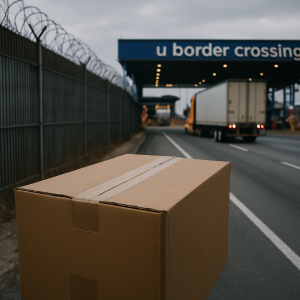
Crossing Border and In Transit to Carrier Hub: Meaning, Timing, and What Happens Next
"Crossing border and in transit to carrier hub" generally means an international parcel is progressing through a cross-border stage and towards a carrier facility that will sort, transfer, or route it onward. It describes a shipment phase, not necessarily one instant event or a promise of delivery. There may be a carrier handoff, a transport […]
Commercial Invoice for International Shipping: Required Fields, Template Checklist, and Customs Basics
A commercial invoice for international shipping is an exporter-issued document that describes goods sold and shipped across a border. It records the cross-border transaction and gives the importer and customs authorities information about the goods, their value, and the parties involved. Customs may use that information when assessing the shipment for valuation, duties, taxes, and […]

Cargo Container Ships: Capacity, Costs, and What Importers Need to Know
A cargo container ship is a specialised cargo vessel designed to carry standardised intermodal containers, usually measured in twenty-foot equivalent units (TEU). For an importer or exporter, the useful questions are not only how large the vessel is, but also whether your goods move as a full container load (FCL) or less-than-container load (LCL), what […]

What "Scheduled to Be Tendered to UPS" Means: Handoff Status and Delivery Timing Limits
If UPS tracking says your package is scheduled to be tendered to UPS, it indicates that a handoff to UPS is planned. In logistics, tendered means offered or handed over to a carrier for carriage. Crucially, the phrase describes a scheduled future handoff; it does not, by itself, confirm that UPS has already accepted the […]

How Thick Are Shipping Container Walls? mm, Inches, Materials, and 40ft Specs
Typical standard dry shipping-container side and end walls have a corrugated steel skin commonly reported at about 1.6 mm to 2.0 mm thick. That is approximately 0.16 cm to 0.20 cm, or 0.063 in to 0.079 in. A frequently cited nominal reference is 14-gauge steel at about 0.075 in, or roughly 1.9 mm. These figures […]