How Wild Wheat vs Domesticated Wheat Changed Summer Seeds in US and European Fields
 Import Export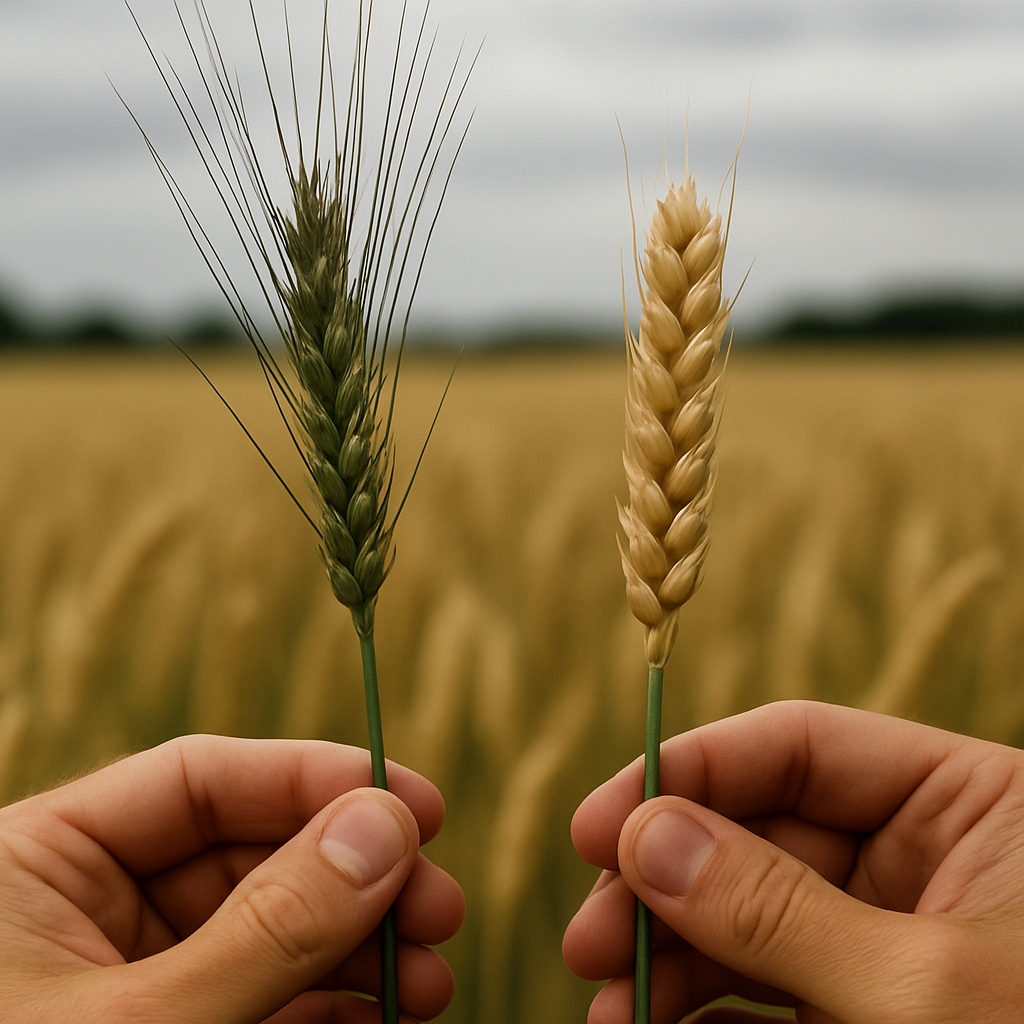
Wild wheat vs domesticated wheat comes down to one simple idea: it's a story of survival versus harvest. Wild wheat, once spread across ancient ridges and valleys, relies on natural seed dispersal—meaning those grains shatter and scatter as soon as they're ripe. Domesticated wheat, however, stays intact, letting farmers grab every seed straight from the head. This basic change in seed behavior completely transformed wheat from a challenging wild grass into the backbone of US and European agriculture, shaping how we plant, breed, and even export crops today.
The Origins: Wheat Seeds and Early Domestication
On the Tareshigh ridges and fertile lands of the Fertile Crescent, the shift from wild to domesticated wheat kicked off a farming revolution. While wild emmer and einkorn were originally collected as summer seeds by early foragers, repeated selection for plants that held their seeds longer gave rise to our earliest cultivated wheat.
Domestication was gradual, spanning thousands of springs and summers. Researchers agree that this process first took root in the Middle East, where people encountered both true wild grasses and promising hybrids. As examined in the detailed account on History and Origins of Wheat Domestication, the leap from wild to tamed wheat changed both diets and landscapes.
In these early days, the goal was simple: harvest bigger, non-shattering seeds that made breadmaking easier. This key difference between wild and domesticated plants became a recurring theme across emerging agricultural communities.
Spring vs Winter Wheat: Adapting to Seasons and Regions
The origin of wheat profoundly impacted its adaptation to local climates, giving rise to both spring and winter varieties. Spring wheat is typically sown as the last snow melts—its growth cycle matches the shorter summers in northern US states and many European regions. Winter wheat, on the other hand, is planted in the fall and lies dormant over winter, sprouting as soon as spring arrives, maximizing long, cool seasons typical of more temperate areas.
This seasonal flexibility doesn’t exist in the same way among wild wheats, which are tuned to their untamed habitats rather than farming schedules. Domesticated wheat varieties have been refined for centuries to match the timing, climate, and soil of their target region, helping to boost yields and support export markets like the 2022 lift on certain wheat bans saw in some territories.
Understanding these cycles also allows modern breeders in both the US and Europe to fine-tune wheat crops, ensuring reliable harvests year after year, whether exporting durum grains or milling flour for domestic use.
The Anatomy: Seed Structure and Harvesting Differences
Why do domesticated wheats stick in the head, while wild wheats shower the ground with seeds at the lightest touch? It all comes down to the rachis—the stalk connecting each grain to the central stem.
In wild wheat, as soon as seeds mature and dry under the summer sun, the rachis shatters cleanly. Each kernel falls to the soil, ready to germinate in the next cycle. Domesticated types, though, have evolved (through selective breeding) to hold their grains tightly. This means generations of farmers could sweep large fields, collecting nearly every seed in one pass, with minimal loss to wind or scavenging animals.
As documented in A summary of some of the major differences between a wild and domesticated wheat, this shift in seed retention made scaling up wheat farming possible and set the stage for global distribution and modern wheat exports.
Everything from ancient hand-threshing to today's combine harvesters capitalizes on the seed-retaining trait forged through centuries of careful selection.
Genetic Lineage: How Hybridization Brought Modern Wheat
At the genetic level, springing from wild ancestors required a complex dance of hybridization. Wild emmer (Triticum turgidum ssp. dicoccoides) boasts an AABB genome, formed when separate wild grasses—closely related to Triticum urartu and Aegilops speltoides—merged their DNA long before human cultivation.
These hybrid wheats were eventually domesticated into robust forms like emmer, durum (for pasta), and bread wheat. Each step in this lineage involved picking plants that thrived under human care, not just wild survival.
Parallel evolution happened in what is now Turkey, Italy, and Spain, with varieties like einkorn and spelt still surviving in remote areas. You can learn more about these genetic backgrounds in Case Study: Wheat Domestication and Breeding – Crop Wild Relatives and their Use in Plant Breeding, which explains how both wild and modern wheats remain essential for crop improvement.
Ongoing use of wild relatives continues to give breeders new genes—sometimes for disease resistance or adaptability—in high summer or when dealing with unpredictable export markets.
Global Impact: Wheat Export, Corn, and Soybean Connections
The transformation from wild to domesticated wheat didn’t just fill breadbaskets—it set up vast wheat export economies, making the crop as central as corn or soybeans in global trade. In 2022, for example, bans and tariff changes affected shipments and pricing from both US and European growing regions.
Unlike highly domesticated wheat, wild relatives aren’t suited for mass export. Their shattering seeds and low productivity limit their economic potential. Only domesticated forms can be reliably planted, reaped, and transported in large-scale spring or winter cycles.
Yet, wild species are not obsolete. They remain a genetic reservoir for the future, especially as climate, disease, and market demands shift. Cross-breeding with wild wheat allows ongoing innovation in everything from export resilience to new palworld-adapted seed genetics.
So, every time you see a loaded grain train or hear about a wheat export ban being lifted, remember: it all started with the simple difference between a wild seed that shatters and a domesticated one that stays.