
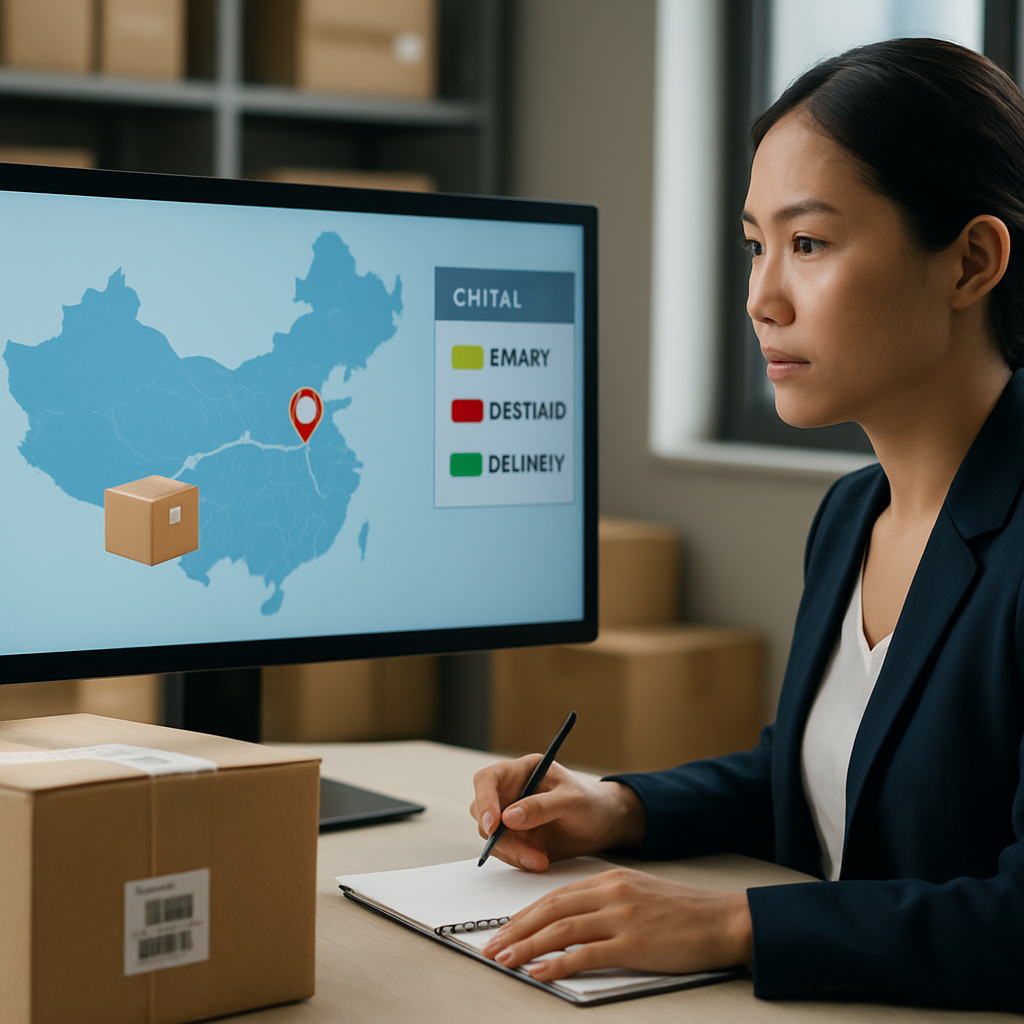
If you are relying on China-origin ecommerce stock, the practical answer is this: use tracking to monitor where the parcel is, whether it has cleared customs, and whether it has handed off to the next carrier, then build buffer time into your fulfilment plan because tracking visibility is not the same as guaranteed delivery. That is the core of just in time ecommerce China shipping tracking: reducing uncertainty fast enough to keep customers informed and inventory decisions realistic.
Tracking is useful for visibility, but it does not give you control over the carrier’s network, customs processing, address changes, or claims. For that reason, the best approach is to check the official carrier first, then use a multi-carrier tracker when you need broader visibility across China Post, EMS, destination postal operators, and partner logistics networks.
What Just-in-Time China Shipping Tracking Means for Ecommerce
In a time-sensitive ecommerce context, China shipping tracking helps you answer three immediate questions: has the parcel actually moved, is it stuck at a handoff point, and is there a customs or delivery exception that needs attention? That is especially important when you are promising customers narrow delivery windows, replenishing fast-moving stock, or trying to avoid running out of saleable inventory.
The key limitation is that tracking only shows what the network has scanned. It does not guarantee that a parcel is lost, nor does it guarantee that the next scan will appear immediately. China-origin shipments often move through several stages, and there can be quiet periods even when nothing is wrong.
In other words, just-in-time planning should use tracking as an early warning system, not as a promise of exact arrival. That distinction matters because a shipment can be in transit, held for processing, or waiting for handoff without the tracking page showing much movement.
How to Track a China Parcel Accurately
The most reliable workflow is simple:
- Start with the official carrier-orientated China Post tracking page on 17TRACK or the carrier’s own portal when you want the originating scan data.
- Then check a multi-carrier tracker when you need visibility across China Post, EMS, destination postal operators, and ecommerce logistics partners.
- Compare the latest scan with the seller’s fulfilment message, marketplace update, or shipping notification.
The tracking number is the essential input. Enter it on the official carrier portal or a reputable aggregator, then compare the event history. If the parcel moved from one network to another, a multi-carrier tracker may show the handoff more clearly than the original carrier site.
That said, third-party tracking platforms have clear limits. As 17TRACK notes, it can help identify the current status and responsible carrier, but customs issues, address correction, redelivery, claims and refunds must be handled by the official carrier, customs authority, seller or marketplace. In practical terms, a tracker can improve visibility, but it cannot change an address, intercept a parcel, release a customs hold, issue a refund, or approve a claim.
For broader parcel visibility, platforms such as ParcelsApp can also translate status events, show cross-carrier movement, and estimate delivery time for China Post parcels. That is useful for ecommerce monitoring, but it remains an estimate, not a binding delivery commitment.
How to Read China Post Tracking Updates
A China Post parcel normally moves through a recognisable sequence: collection, sorting or processing, outward dispatch, export departure, arrival in the destination country, customs, local delivery, and final delivery. You do not need to memorise every status label to understand the journey; you only need to know what stage the parcel has reached and which organisation has control at that point.
What each stage usually means
| Stage | What it means operationally | What to expect next |
|---|---|---|
| Collection / acceptance | The parcel has been received by the carrier or posting network. | Sorting, processing, and dispatch preparation. |
| Outward dispatch | The item has been processed and sent towards the export gateway. | Export clearance and departure from China. |
| Export departure | The parcel has left the outward office of exchange or export point. | A quiet period is common while it is in linehaul transit. |
| Arrival in the destination country | The parcel has reached the inward office of exchange or a destination processing facility. | Import customs and local postal or courier processing. |
| Customs processing | Import authorities or the destination network are checking the parcel for release. | Release, payment request if due, or further review. |
| Local delivery | The parcel has entered the destination country’s last-mile network. | Final delivery to the address. |
| Delivered | The shipment has been completed. | No further transport action unless there is a post-delivery issue. |
A useful reference point is that the parcel may look “inactive” after export departure even though it is still moving. A long quiet period often reflects transit time between countries, not necessarily a problem. Pango AI’s explanation of China Post statuses notes that after export departure there can be a one- to three-week gap before arrival at the inward office of exchange appears, which is why a lack of updates is not automatically a failed shipment.
China Post tracking also may not display an exact delivery date. You may see progress updates, but the status history is not the same thing as a guaranteed ETA. ParcelsApp similarly treats timing as an estimate rather than a promise. For ecommerce planning, that means you should not assume the latest scan equals imminent delivery.
China Shipping Time: What Tracking Can and Cannot Tell You
Shipping times from China vary widely because service level, destination, export processing, customs, and local delivery all affect the journey. The evidence available here supports a broad range rather than a single universal timeline. In practice, delivery can take from about seven days to three months depending on the service and route, which is why tracking should be used to manage expectations rather than to guarantee an exact date.
That range matters in just-in-time ecommerce. If you are ordering to replenish stock, fulfil orders, or support a seasonal sale, you should not schedule on the assumption that the first scan means the package is nearly there. The early stages can move quickly, then the parcel can slow during export transit or customs handoff.
The safest operational approach is to build buffer time into your inventory plan, customer messaging, and reorder point calculations. If your supply chain can only survive on the fastest possible scan history, your delivery promise is too tight for cross-border ecommerce.
Customs Clearance in China Shipping Tracking
Customs is one of the most important points in China-origin ecommerce tracking because it is a control point, not just a transport point. A transit scan tells you the parcel is moving through the network; a customs-related scan tells you the parcel is under regulatory processing or release.
That distinction matters. If a parcel is marked for customs review or customs clearance, the issue is no longer just linehaul movement. The shipment may need documentation review, tax or duty assessment, or an additional release step before the next scan appears.
The General Administration of Customs of the People’s Republic of China provides a Clearance Status service, which shows how customs clearance is handled as an official process rather than a tracking-platform function. A tracker can display the event, but the carrier, customs authority, seller, or marketplace controls the resolution.
In many cases, customs clearance can take hours or a few days, but that is not a fixed promise for every parcel. If duty or tax is due, the destination post may ask for payment before delivery. That is a normal part of the import process, not a tracker error.
If you need to understand which document or party is responsible for import-side handling, our guide to bill of lading vs bill of entry is useful background. For readers dealing with destination-country import review, it is also worth understanding what CBP means in shipping, because customs holds are handled by the relevant authority, not by the tracking site.
How China Parcels Move from Export to Last-Mile Delivery
China-origin ecommerce parcels often travel through more than one network. A shipment may begin with China Post, EMS, or another China-based logistics partner, then transfer to a destination-country postal operator or last-mile courier after arrival.
This handoff explains why tracking terminology changes. A Chinese export scan may stop appearing once the parcel leaves China, and a destination-country scan may only appear after local processing starts. The shipment has not vanished; it has simply moved from one operational system to another.
That handoff is especially relevant for ecommerce sellers because the parcel may be in transit internationally but not yet under local delivery control. The final stage of delivery is a separate process, often called last-mile delivery, and it can add delays even after customs release. For a fuller explanation of that stage, see our article on e-commerce last-mile delivery.
Once the parcel reaches the destination network, the local postal operator or courier becomes the key actor. If the latest scan shows arrival at the destination country but there is no movement after that, the issue may be in local processing, not in China export transport.
What to Do When China Shipping Tracking Stops Updating
A stalled tracking page does not always mean a lost parcel. The most common reasons for slow updates are export transit time, customs processing, destination-post handoff, address or routing issues, or a carrier-specific delay.
Use the following decision process:
- If the parcel was just shipped: wait for the first real scan. Sometimes a seller creates a label before the carrier has physically accepted the parcel.
- If the parcel is in export transit: allow time for linehaul movement. Quiet periods are normal here.
- If the parcel shows customs activity: check whether tax, duty, or documents are required and contact the seller or marketplace if the record looks incomplete.
- If the parcel has arrived in the destination country but not moved: check the destination postal operator’s site or the local last-mile carrier.
- If the parcel still shows no meaningful movement after a reasonable period: contact the seller, marketplace, or official carrier to verify the tracking number and shipping status.
Do not rely on the tracking platform alone if the issue involves a hold, address problem, failed delivery attempt, or customs review. The tracker can display the status, but it cannot resolve the exception.
It is also worth avoiding a common assumption: not every delay is a customs problem. Some parcels are simply in transit, and some are delayed because of routing congestion or carrier handoff timing. Likewise, not every quiet period means the shipment is lost.
If the delay appears to be caused by documentation or import-side mistakes, our guide to import shipping mistakes to avoid can help you identify where the process may have gone wrong. If the parcel has already reached the destination country and the issue is about arrival control rather than export movement, our article on port of destination arrival may also help you interpret the scan correctly.
Can China Post Tracking Show an Exact Delivery Date?
Not reliably. China Post tracking can show shipment progress, but it may not display an exact delivery date. At best, some tracking tools provide an estimate based on historical movement patterns and current scan events, but that is still an approximation.
This is an important distinction for ecommerce planning:
- A status update tells you where the parcel has been scanned.
- A delivery estimate tries to predict when the next stage may happen.
- A guaranteed ETA would be a commitment, and tracking does not provide that.
So if you are managing customer expectations, avoid promising a specific arrival day unless you have a carrier service level that genuinely supports it. The latest scan may look encouraging, but it is not the same as a confirmed delivery appointment.
Tracking China Shipments at Scale: APIs and Automation
For ecommerce operators handling many China-origin parcels, manual tracking becomes inefficient very quickly. This is why some businesses use tracking APIs or automated tracking tools to monitor shipment events across carriers and marketplaces.
The operational value is straightforward: automated tracking reduces the need to check each parcel one by one, helps surface exceptions earlier, and makes it easier to keep buyers informed. However, the same limitation still applies. Automation improves visibility, but it does not replace carrier action, customs handling, or destination-post processing.
That means business-grade tracking tools are useful for workflow management, not for forcing operational outcomes. A parcel can still be delayed, rerouted, or held even if it is being monitored automatically.
If you are also working with sourcing, freight coordination, or cross-border seller workflows, our broader shipping guides can help place tracking in context. The key point for just-in-time ecommerce remains the same: the more time-sensitive the order, the more important it is to monitor exceptions early and keep a realistic buffer between purchase, dispatch, and final delivery.
Practical Takeaway for Time-Sensitive Ecommerce
Just-in-time ecommerce China shipping tracking is most useful when you treat it as a visibility tool, not a guarantee. Check the official carrier first, use a multi-carrier tracker for handoffs, watch for customs and destination-country events, and remember that a quiet period after export departure is often normal.
If a parcel stalls, work through the problem in the right order: verify the tracking number, compare the official carrier and aggregator views, contact the seller or marketplace, and escalate to the responsible carrier or customs-related channel if a hold or exception is shown. Most importantly, do not base inventory promises on a single scan or on an estimated date from a tracker.
For ecommerce teams, the real advantage of good tracking is not perfect certainty. It is earlier warning, better communication, and fewer surprises when China-origin parcels move through export, customs, and last-mile delivery.