
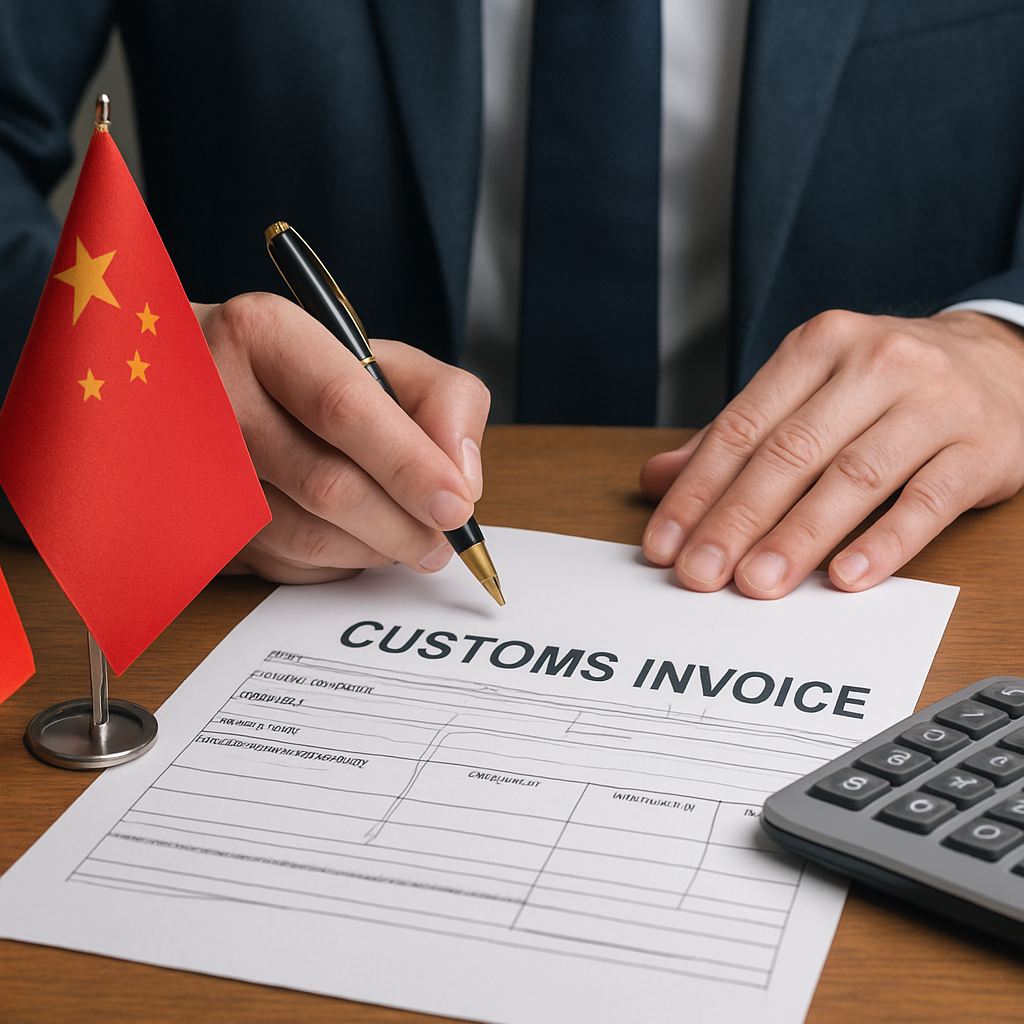
If you are using a China buying agent to ship goods into Germany, the key document is a properly prepared commercial invoice that customs can use to assess value, duty, and import VAT. In practice, the invoice must match the packing list, describe the goods clearly, show the correct quantity and value, and be consistent with the shipping documents. If the paperwork is vague or inconsistent, German customs may ask for clarification, delay release, or hold the shipment for inspection.
This guide explains what a China buying agent should prepare for Germany customs clearance, how duty and import tax in Germany are typically handled, and what you need to declare so the shipment can move smoothly.
What a China Buying Agent Must Put on the Germany Customs Invoice
For Germany imports, the invoice is not just a payment record. It is the document customs uses to assess the shipment. The most important point is simple: the invoice must be commercially valid, readable, and consistent with the rest of the shipment file.
A practical customs invoice for a China-to-Germany shipment should include:
- buyer and seller details
- clear product description for each line item
- quantity for each product
- unit price and total price
- currency
- country of origin
- relevant trade term or Incoterm, where applicable
- invoice number and date
- matching line items that agree with the packing list
Customs needs enough information to classify the goods and verify the value. A description such as “parts” or “sample goods” is often too vague. A specific description is better because it helps determine the correct tariff code and supports smoother clearance.
In the sources we reviewed, English-readable or English-translated commercial invoice documents are commonly expected in Germany import workflows. That does not mean every shipment needs a special official form, but it does mean your paperwork should be easy for customs, the carrier, and any customs broker to read and reconcile.
The safest way to treat the invoice is as part of a document set, not as a standalone file. If the invoice says one thing and the packing list says another, customs may question the shipment.
What documents the buyer should send the agent
A China buying agent handling a Germany-bound shipment should usually receive the following documents before arrival:
- commercial invoice
- packing list
- bill of lading, air waybill, or other shipping document
- freight invoice, if separate
- insurance invoice, if separate
- EORI number
- VAT ID, where relevant
- any product classification or compliance information needed for clearance
For a practical document-preparation reference, see our guide on commercial invoice and packing list template. The value of that kind of resource is not the layout itself, but the principle: the documents must line up line by line.
Will You Pay Customs Duty or Import Tax in Germany for Goods from China?
Yes, you may have to pay customs duty and import VAT when importing goods from China into Germany. The exact amount depends on the product classification, customs value, and the applicable tariff measures for that goods category.
German import VAT is commonly referred to as EUSt. The sources supplied for this brief support a standard rate of 19% in Germany, with 7% applying to some goods. Duty is separate from VAT and depends on the tariff code, so you should not guess the rate from the invoice alone.
The important distinction is this:
- Duty depends on the product’s tariff classification.
- Import VAT / EUSt is charged on the import value calculation used by customs.
- Customs value drives both figures.
For a broader explanation of how EU import taxes work for Chinese goods, see EU tax on Chinese goods.
How customs value affects duty and VAT
Customs value is the basis customs uses to calculate import charges. In the supplied research, the customs value is described as being tied to the invoice price and, depending on the calculation approach, may include freight and insurance or transport to the first destination in Germany. That means the landed-cost basis is usually higher than the factory price alone.
As a practical rule, if the declared customs value goes up, duty and VAT exposure can also go up. If the value is under-declared, customs may ask questions, add back taxes, or impose penalties.
Some of the supplied sources also note that anti-dumping duty may apply to certain goods and that this can increase the VAT base as well. That is another reason the tariff code matters: the invoice value is important, but classification can change the total tax result significantly.
Can regular importers defer duty and EUSt?
Yes, in the business-importer scenario, regular importers may be able to defer duty and EUSt, and a VAT-registered importer may be able to deduct EUSt under the applicable tax rules. This is a cash-flow and compliance issue, not a universal consumer rule. If you import stock or run recurring shipments, it is worth discussing deferment and recovery options with your customs broker or tax adviser.
What Must Be Declared to German Customs for a Shipment from China
For the customs declaration, the most important thing is accuracy. Customs needs the real customs value, a clear description of the goods, and consistent supporting documents.
In practical terms, what must be declared includes:
- the true value of the goods
- the correct goods description
- the quantity
- the relevant tariff classification
- supporting shipment and transport data
The commercial invoice is central to that declaration because it is usually the primary document customs uses to assess value. If the invoice is incomplete, too general, or inconsistent with the packing list, customs may request clarification.
One of the main risks in under-declaring value is that the shipment may be treated as non-compliant. That can lead to back taxes, delays, or penalties. The invoice is therefore not only an accounting document; it is a compliance document.
A detailed packing list helps customs verify the shipment against the invoice. It should show what is in each carton, the item quantities, and any other useful shipment details. When the packing list and invoice tell the same story, clearance is usually easier.
Why vague descriptions cause problems
Goods descriptions should be specific enough to support classification. If the description is too broad, customs may not be able to confirm the right code or product measure. That can lead to a query, a manual check, or a hold.
Common problem points include:
- missing documents
- unclear item descriptions
- wrong HS code or tariff code
- inconsistent values across documents
- product compliance issues
- customs inspection or additional questions
For a practical reminder about what causes shipment errors, see our article on import shipping mistakes.
The Customs Clearance Steps a China Buying Agent May Need in Germany
A China buying agent or customs representative often fits into a larger clearance workflow rather than handling everything by itself. The supplied sources describe a practical sequence that is useful for importers shipping into Germany.
| Step | What happens | Why it matters |
|---|---|---|
| EORI number | The importer obtains an EORI number on the Zoll-Portal. | Needed for customs processing. |
| TARIC check | The goods are classified and the tariff code is checked. | Determines duty and any trade measures. |
| Entry summary declaration | The carrier files safety and entry data before arrival. | Supports arrival processing. |
| Customs declaration in ATLAS | The customs agent or certified user files the declaration. | Creates the customs entry for release. |
| Duty and EUSt payment or deferment | The importer pays, or uses an authorised deferment arrangement. | Completes the clearance financial side. |
This workflow shows why the invoice matters so much. It feeds the classification, valuation, and declaration steps.
What the agent needs before filing
To keep clearance moving, the importer should send the agent the shipping and customs file before the goods arrive. That usually includes the commercial invoice, packing list, shipping document, freight and insurance invoices, EORI number, VAT ID where relevant, and any classification or compliance information the broker needs.
The supplied sources also note that customs agents may act in their own name but for the importer’s account. That means the agent is handling the declaration process, but the importer still remains responsible for the accuracy of the data and the overall import compliance position.
If you want a broader explanation of responsibility in shipping, see importer versus shipper.
Who Pays and Who Is Responsible When a China Buying Agent Handles the Shipment?
Using a buying agent does not remove the importer’s responsibility. Operationally, the agent may help source goods, collect documents, or coordinate shipping, but the importer of record still matters for customs purposes.
The practical responsibility split is usually this:
- Buying agent: helps prepare paperwork, coordinate shipment, and manage supplier-side tasks.
- Customs broker or representative: files or supports the customs declaration.
- Importer: remains responsible for the accuracy of the declared data and the import compliance outcome.
Trade terms such as EXW, FOB, or DDP may affect who arranges transport or pays certain charges, but they do not remove the need for accurate customs documentation. If the invoice and declaration data are wrong, the customs problem remains even if a third party organised the shipment.
Why China-to-Germany Shipments Get Delayed at Customs
The most common reasons for delays are usually documentary or classification issues rather than the mere fact that the goods came from China. Customs may pause a shipment when it sees missing papers, inconsistent values, vague descriptions, or signs that the goods need more review.
Typical delay triggers include:
- missing or incomplete invoice data
- packing list that does not match the invoice
- wrong HS code or tariff classification
- unclear product description
- product compliance issue
- customs inspection
- inconsistency between transport documents and commercial documents
In the source material, customs may ask for clarification when the documents do not fit together cleanly. That is why a good invoice is both a pricing document and a risk-reduction tool.
For a practical shipping-and-clearance angle, you may also find it useful to read our article on shipping agents from China, especially if you want to compare how agent-led logistics and customs handling work across trade lanes.
Practical Invoice Checklist for Germany Customs Clearance
If you are preparing paperwork for a China buying agent to ship goods to Germany, use this as a practical checklist before dispatch:
- Does the invoice identify the buyer and seller clearly?
- Are the product descriptions specific enough for customs classification?
- Do the quantities match the packing list?
- Do the unit prices and totals look commercially realistic and consistent?
- Is the country of origin stated correctly?
- Are the shipping terms or Incoterm shown if needed?
- Are the transport documents aligned with the commercial invoice?
- Is the EORI number available for the declaration?
- Is the VAT ID ready, if the importer is VAT-registered?
- Are any compliance documents needed for the product type attached?
If the answer to any of those points is no, fix it before the shipment moves. Small mismatches are one of the fastest ways to create customs delays.
How Customs Value Is Calculated for Imports from China
Customs value is central to the tax calculation because it drives both duty and import VAT. The supplied sources describe customs value as being based on the invoice price and, depending on the calculation method, possibly including freight, insurance, or transport to the first destination in Germany.
The practical takeaway is straightforward: the customs value is not always the same as the factory invoice amount. If freight or insurance is added to the taxable base, the final import charges will be higher than a buyer might expect from the goods price alone.
That is why it is risky to prepare an invoice only as a sales document. It must also be suitable for customs valuation. If the declared value is too low, the importer may face rework, additional duty, or penalties. If the declared value is too high, the importer may overpay duty and VAT unnecessarily.
For a more detailed review of valuation logic and tax calculation, see EU tax on Chinese goods and the supporting discussion of customs value in the live sources used for this guide.
What to Remember Before You Ask the Supplier or Agent for an Invoice
If you only remember one thing, remember this: Germany customs clearance depends on a clean document set, not just on the invoice alone. The commercial invoice must match the packing list, the value must be credible, and the goods description must be precise enough for customs to classify the shipment.
When a China buying agent prepares the shipment correctly, customs clearance is usually much easier. When the invoice is vague, inconsistent, or unsupported, customs may ask questions before the goods can be released. For recurring imports, it is worth building a standard document workflow with your agent and broker so every shipment follows the same structure.
That is the best way to avoid surprises with duty, import VAT, and customs holds on the China-to-Germany route.