Are Products Made in China Good Quality? What Buyers Should Know
 Import Export
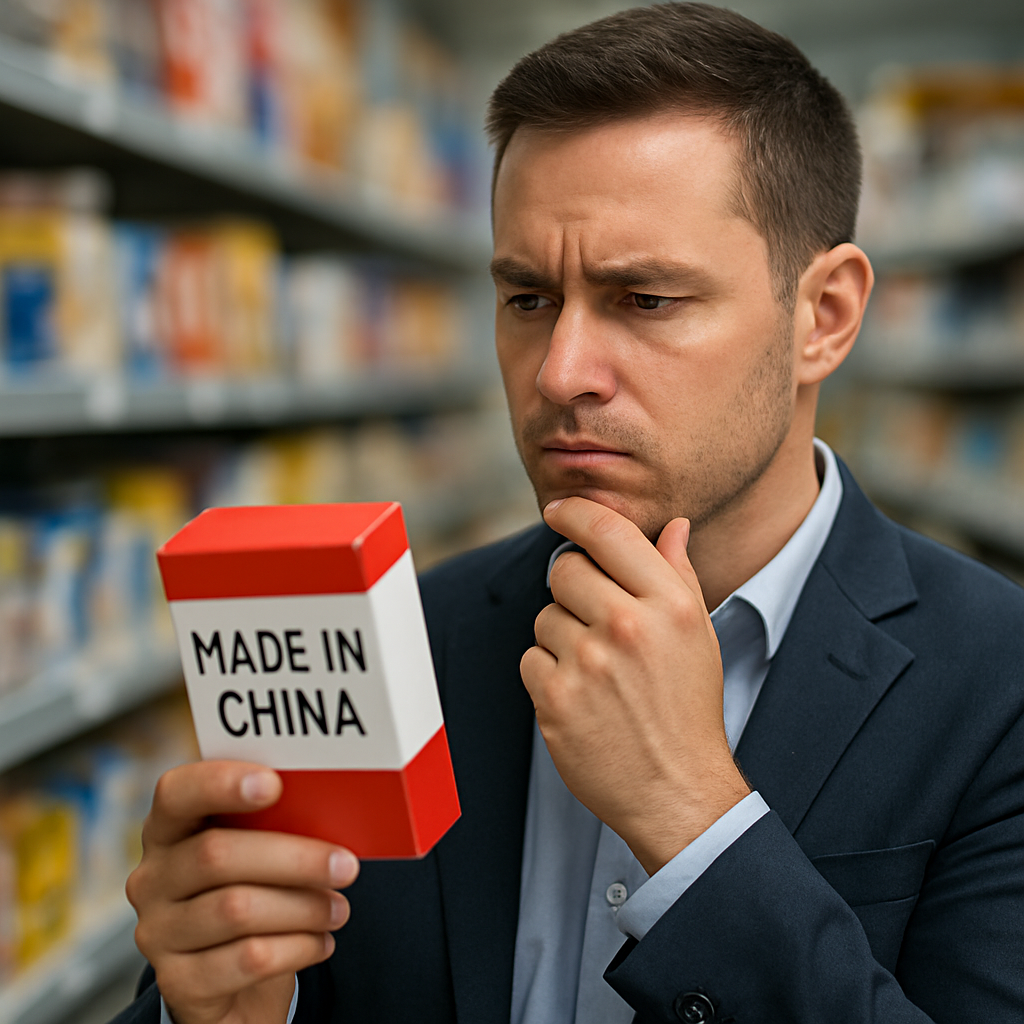
Yes — products made in China can be very good quality, but the quality varies widely by manufacturer, brand, materials, specifications, and quality control. “Made in China” is not a quality rating on its own. It covers everything from budget items to premium goods that meet international standards, so the label alone tells you very little about how well a product will perform.
The practical question is not “Is China good or bad?” but “Who made it, to what standard, and under what controls?” That is why some Chinese-made products are excellent and others are disappointing, even when they look similar on the surface.
Are Products Made in China Good Quality?
The short answer is yes, they can be. High-quality products made in China are widespread across many categories, including electronics, smartphones, laptops, televisions, automotive products, furniture, textiles, and branded consumer goods. As one of the live research sources notes, many people already use high-quality smartphones, laptops, and televisions that were manufactured in China, either as OEM products for foreign brands or under Chinese brands such as Lenovo, Xiaomi, Huawei, and TCL. You can read that perspective in this overview of high-quality products made in China.
That said, China also produces very low-cost, lower-quality goods. The country’s manufacturing base is so large that it naturally includes factories at very different levels of capability. So the honest answer is: yes, some products made in China are excellent, some are average, and some are poor.
Why Quality Varies So Much Between Chinese Manufacturers
Quality differences are usually caused by manufacturing choices, not the country label itself. A product may look good in photos and still fail in use because of weak materials, poor process control, vague specifications, cost-cutting, or weak oversight. The same design can be built well by one factory and badly by another.
This is why buyers sometimes complain that products made in China look impressive but turn out to be junk. The issue is often not the concept of manufacturing in China, but the way the product is specified and managed. If the buyer is vague about dimensions, tolerances, materials, packaging, testing, or acceptable defect rates, the factory will usually optimize for cost and speed rather than durability.
One useful way to think about it is this: product design and factory execution are separate things. A well-designed item can still be poorly made if the manufacturer uses substandard inputs or does not follow the agreed process. The reverse is also true — a modest product can be built reliably if the specifications are clear and quality control is strong.
For a deeper explanation of this manufacturer-by-manufacturer variation, see Is the Quality of Products Made in China Really That Bad? and Is “Made in China” Quality Good Enough?.
Why pushing price too low can damage quality
Another common mistake is assuming that a lower purchase price always means better sourcing. In reality, trying to push costs down too far can be counterproductive. If your target price leaves no room for decent materials, testing, labour, and supervision, quality usually suffers. A factory can only do so much within a squeezed budget.
That does not mean expensive products are always better. It simply means that price should be realistic for the quality level you want. Low cost and low quality are not the same thing, but unrealistically low cost often leads to quality problems.
Examples of High-Quality Products Made in China
If you are trying to understand what products from China are actually good, it helps to look at categories rather than stereotypes. The most widely recognized examples include:
- Electronics: smartphones, laptops, tablets, televisions, audio equipment, and accessories.
- Consumer technology: devices from brands such as Lenovo, Xiaomi, Huawei, and TCL.
- Automotive products: parts, components, and complete vehicles in some segments.
- Furniture: especially when sourced from reputable factories with clear quality standards.
- Textiles and apparel: where factory capability, fabric choice, and workmanship matter more than the country label alone.
- Branded consumer goods: products made in China for international brands as OEM or contract manufacturing.
These examples matter because they show that “Made in China” is not limited to cheap, disposable goods. The modern manufacturing base includes products that are technically advanced and commercially competitive on a global scale. A useful summary of these category examples can be found in top products manufactured in China.
OEM products versus Chinese brands
It is also important to distinguish between two different situations:
- OEM manufacturing for foreign brands: a Chinese factory makes products to another company’s design, standards, and quality requirements.
- Products sold under Chinese brands: the company itself designs, produces, and sells the product, often competing internationally.
This distinction matters because many people own high-quality products made in China without realizing it. In the OEM model, the visible brand may be American, European, or another international label, but the factory is in China. In the branded-product model, the Chinese company may be competing on innovation, design, and performance rather than just price.
So if you ask whether Chinese-made products can be good quality, the answer is already embedded in the market: many major products are made in China to a high standard every day.
Why ‘Made in China’ No Longer Means Cheap by Default
The reputation of Chinese manufacturing has changed. The old assumption that “Made in China” automatically means cheap and low-end no longer describes the full market. Today, the label includes innovation, premium consumer goods, and internationally competitive brands.
Well-known brands and manufacturers such as Huawei, DJI, BYD, Lenovo, Xiaomi, and TCL have helped shift perceptions. At the same time, global brands such as Apple, Coach, and Armani have also produced goods in China that consumers regard as high quality. The point is not that every product from these companies is perfect, but that manufacturing in China is fully capable of supporting premium output when the design and controls are right.
This is one reason the phrase “Made in China” should be treated as neutral until you know more. It is not a reliable shortcut for quality, and it is not a reliable shortcut for inferiority either.
How to Check Whether a Chinese Manufacturer Can Deliver Good Quality
If you are buying from a Chinese supplier or factory, the right question is how to verify quality before you place a serious order. Whether you are using Alibaba, Global Sources, AliExpress, or another sourcing platform, the platform itself does not guarantee product quality. It is only a starting point.
Good sourcing decisions depend on due diligence. Before trusting a supplier, check the following:
- Reputation: look for evidence that the supplier has a real trading history and a track record with buyers.
- Certifications: ask for product-specific and factory-relevant certificates where appropriate.
- Samples: always evaluate samples before confirming mass production.
- Product specifications: make sure materials, dimensions, tolerances, finish, and performance standards are written clearly.
- Factory capability: confirm that the supplier can actually produce the item at the required standard and volume.
- Business identity checks: verify that the supplier is legitimate and that company documents are consistent.
For a practical next step on supplier checks, see how to source a manufacturer in China and verify a Chinese business license online.
If you are comparing marketplaces such as Alibaba, Global Sources, and AliExpress, keep one rule in mind: listings are not proof of quality. Photos can be polished, descriptions can be vague, and a good-looking listing does not guarantee a reliable factory or consistent production.
What to do before placing a large order
- Request a sample and test it properly.
- Ask for written product specifications.
- Confirm the materials and components used.
- Check whether the factory has experience with your product type.
- Clarify inspection standards and acceptable defect levels.
- Set expectations for packaging, labeling, and shipment details.
How Buyers Can Get High Quality When Manufacturing in China
If you are a brand owner or importer, you can absolutely get high-quality results from China — but you must manage the process. Quality is a managed outcome, not a passive result of choosing a country of manufacture.
The buyer or brand has a major role in the final result. That means:
- creating precise product specifications;
- choosing the right supplier;
- approving samples carefully;
- setting realistic quality targets;
- monitoring production;
- and maintaining oversight at the factory level.
In practice, a strong brand does not just ask for a quotation and hope for the best. It defines the standard, checks that the supplier can meet it, and keeps control of the process as production moves from sample to mass order.
This is especially important for buyers who come to China with the assumption that the country itself determines quality. It does not. The product outcome is shaped by design decisions, supplier selection, communication, and ongoing quality control.
If you are also selling or buying Chinese-made apparel, you may find this guide useful: find a wholesale clothing factory in China.
What Are the Best Products from China?
There is no honest universal ranking of the “best” products from China, and there is certainly no single “best” Chinese clothing brand that fits every buyer. What you can say with confidence is that China is strong in several major product categories where manufacturing scale, component ecosystems, and production expertise are well developed.
The most reliable answer is category-based rather than brand-based:
- Electronics and consumer tech are among China’s strongest areas.
- Mobile phones, laptops, and televisions are widely manufactured there at both mass and premium levels.
- Furniture and textiles can be high quality when sourced from capable factories.
- Automotive goods and components are another major manufacturing segment.
- Branded consumer products can also be excellent when the company has a strong quality system.
If you are asking, “What are the best products from China?” the most accurate answer is: the best products are the ones made by the right factory to the right specification, with the right quality control. The country alone will not tell you that.
The Bottom Line for Buyers
Products made in China can be very good quality, but they are not all the same. Some are excellent, some are average, and some are poor. The difference usually comes down to the manufacturer, the product specification, the materials used, the brand’s quality standards, and how carefully the factory is managed.
If you want good quality from China, do not rely on the label. Verify the supplier, request samples, check documents, define your specifications, and manage quality throughout the order process. When those steps are done properly, China can produce outstanding products at almost any level of the market.
If you are simply shopping online, remember that platform listings are not a guarantee. If you are sourcing for business, remember that quality is something you build into the process — not something you assume from the country of origin.