What Happens If There Is a Discrepancy in a Letter of Credit? Meaning, Charges, and Next Steps
 Import Export
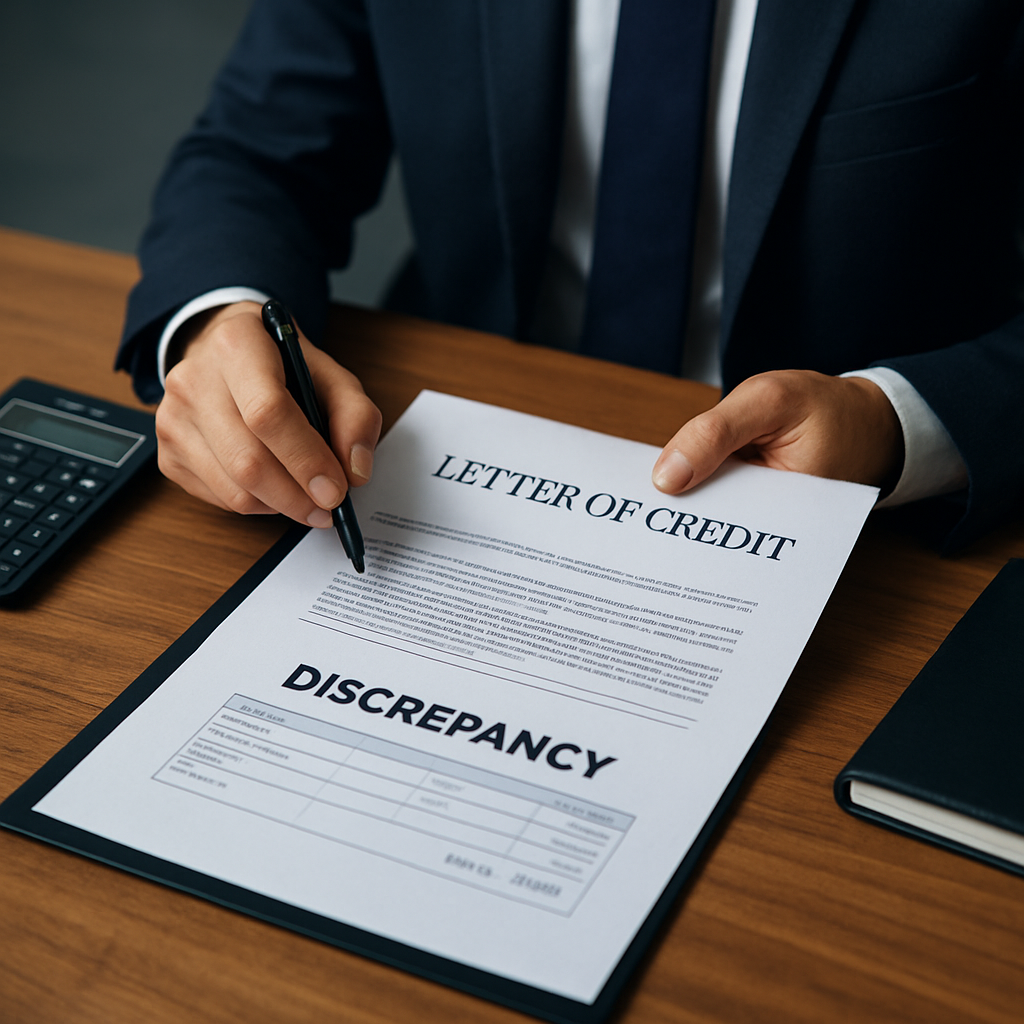
If there is a discrepancy in a letter of credit, the usual outcome is that payment is delayed, refused, or held until the buyer or applicant agrees to waive the problem or the documents are corrected and re-presented. In simple terms, a discrepancy means the documents do not exactly match the letter of credit terms and conditions. Because banks examine documents, not the goods themselves, even a small mismatch can stop payment.
That is why exporters, importers, and freight teams need to treat document checking as a critical step, not a formality. A discrepancy notice from the bank is the warning sign that something in the presented documents does not comply and needs attention before funds are released.
What a Letter of Credit Discrepancy Means
A letter of credit discrepancy is documentary non-compliance. The papers presented to the bank do not fully match what the credit requires. That may involve the invoice, bill of lading, insurance certificate, packing list, dates, names, freight wording, or other required documents.
This is different from a dispute about the physical goods. Under documentary credit rules, the bank is checking whether the documents comply with the credit, not whether the cargo itself is perfect. As U.S. export guidance explains, discrepant documents can negate the bank’s payment obligation because the bank deals with documents rather than the shipment itself. You can see that principle in the U.S. government’s letter of credit guidance and in the International Trade Administration overview of letters of credit.
A discrepancy letter or discrepancy notice is the bank’s written notice listing the variances it found. It tells the beneficiary what does not comply so the parties can decide whether to fix the documents, ask for a waiver, or accept non-payment for that presentation.
It is also worth separating discrepancy from fraud. A discrepancy is usually an unintentional failure to comply with the LC terms, such as a wrong date, missing signature, or description mismatch. Fraud is different: it involves intentional falsification, forged signatures, or non-existent goods. Those are not the same problem, and they are not handled the same way. A useful explanation of that distinction is available in the DocShipper glossary on discrepancy letter of credit.
What Happens After the Bank Finds a Discrepancy
Once the documents are presented, the bank examines them against the letter of credit terms. If it finds discrepancies, it issues a notice identifying the defects. From there, the transaction can go in one of several directions depending on timing and the buyer’s response.
The main outcomes after a discrepancy notice
- The buyer/applicant waives the discrepancy. If the buyer agrees, the bank may proceed with payment or release the documents subject to the agreed instructions.
- The documents are corrected and re-presented. If there is still time and the mistake can be fixed, the beneficiary can amend or replace the documents and present them again.
- The documents are returned unpaid. If the applicant refuses to waive the discrepancy and the documents are not corrected in time, the issuing bank may return the documents without payment.
This is the practical reason discrepancy handling matters so much: the seller may lose the LC’s payment protection for that presentation if the issue is not resolved. Trade finance guidance repeatedly notes that the path after a discrepancy depends on the facts and the deadlines, and that the bank may refuse payment when the documents do not comply. See, for example, this overview of common discrepancies that lead to refused payment and the Trade Finance Global guide to handling document discrepancies.
In practice, that means a discrepancy is not just a paperwork annoyance. It can pause the whole payment chain until the buyer, seller, and banks decide what to do next.
How to Resolve a Letter of Credit Discrepancy
The standard ways to resolve a discrepancy are straightforward, but they depend on speed and cooperation. The best outcome is to prevent the problem before presentation. If the documents are already at the bank, the next step is to decide whether they can be corrected or whether the buyer will accept them as they are.
The usual resolution routes
- Correct the documents and re-present them. If the discrepancy is administrative and the deadline has not passed, the exporter can amend or replace the documents.
- Ask the buyer for a waiver or acceptance. The applicant can instruct the issuing bank to accept the discrepant documents.
- Renegotiate if correction is not possible in time. If the documents cannot be fixed before deadlines expire, the parties may need to renegotiate the commercial settlement directly.
One important point is that the issuing bank cannot simply waive discrepancies on its own. Buyer or applicant consent is needed. That is why many trade practitioners recommend pre-clearing issues before the documents are formally presented to the bank. The Prima Trade article on discrepant letters of credit is useful here because it explains that the exporter and buyer should sort out the issue between themselves, then give clear instructions to the banks.
If you want a practical next step after a refusal or dispute, Export Import Academy also has a guide on how to get money back from a supplier, which can be helpful when payment has already stalled and the buyer will not waive the discrepancy.
What an acceptance or waiver letter does
When people search for an LC discrepancy acceptance letter sample, they are usually looking for the idea, not a universal legal template. The purpose of such a letter is to show that the buyer accepts the discrepancy and authorises the bank to proceed according to the agreed instructions.
A typical waiver or acceptance instruction should clearly identify the transaction, state which discrepancy is being accepted, and confirm that the applicant authorises the bank to honour or release the documents despite the variance. The exact wording should come from the bank or the parties’ legal and trade finance advisers, because the bank will rely on the instruction in a live transaction.
That means the key commercial issue is not only whether the documents can be fixed, but whether the buyer is willing to accept them in their discrepant form. In some cases, the buyer may even agree to payment but negotiate a lower price or other settlement terms as part of the acceptance.
How Long Banks Have to Notify Discrepancies
Timing is critical. The research package indicates that banks notify discrepancies within five banking days. That time window matters because it tells the beneficiary whether the bank will honour the documents as presented or reject them as discrepant.
If the bank fails to notify within the required period, the documents may have to be honoured as presented under the UCP 600-based rule referenced in the research. For the exporter, that can be decisive. If the notice arrives on time, there may still be an opportunity to correct the problem, seek buyer acceptance, or re-present the documents before deadlines expire.
So the key takeaway is this: a discrepancy is serious not only because of what it means, but because time is often short. Once the clock runs, the chance to cure the problem can disappear quickly.
Common Letter of Credit Discrepancies That Trigger Refusal
The most common discrepancies are usually documentary and often look minor at first glance. Even a small mismatch can lead to a discrepancy notice and delayed or refused payment.
| Common discrepancy | What it means in practice |
|---|---|
| Invoice description mismatch | The goods description on the invoice does not match the LC wording exactly. |
| Late shipment | The goods were shipped after the latest shipment date allowed by the credit. |
| Late presentation | The documents were presented after the permitted deadline. |
| Stale documents | A required document is outdated or no longer valid for presentation. |
| Bill of lading errors | The transport document contains a mistake, such as the wrong consignee, date, or freight status. |
| Missing documents | One or more documents required by the LC are absent. |
| Inconsistent weights or quantities | The figures do not align across the document set. |
| Insurance non-compliance | The insurance document does not satisfy the LC requirements. |
| Party-name inconsistencies | The names of buyer, seller, shipper, consignee, or beneficiary do not match across documents. |
These examples are consistent with the supported research on common LC discrepancies. The practical lesson is that banks look for exact compliance, not near enough compliance. The more document fields that must align, the more chance there is for a mismatch.
Transport documents can also create problems over freight wording. If the LC does not allow extra charges, but the bill of lading or air waybill shows charges in addition to freight, that may be treated as a discrepancy. Likewise, if the credit requires freight to be prepaid or collect, the transport document must reflect that status correctly. The principle is explained in Shipping Solutions Software’s discussion of what constitutes a discrepancy.
If the dispute is specifically about a transport or shipping charge shown on the document set, you may also find our guide on how to dispute shipping charges useful for the commercial side of the issue.
Can Letter of Credit Discrepancies Lead to Charges or Extra Costs?
Yes, but it is safer to think of the consequence as extra cost and commercial friction rather than a fixed bank fee schedule. The evidence supplied supports the idea that discrepancies often create delay, additional handling, amendment work, and possible renegotiation. What it does not support is a universal charge table or standard fee amount.
In real transactions, the cost impact can include:
- bank processing or handling friction from re-checking documents,
- time spent correcting and re-presenting the set,
- possible courier or re-documentation costs,
- commercial pressure to accept a lower settlement price, and
- delays that may disrupt the shipment or release process.
In some cases, the buyer may ask for a price reduction before waiving the discrepancy. That is a commercial negotiation outcome, not a universal LC rule. The bank is not automatically charging a discrepancy penalty just because a document is wrong; rather, the transaction becomes more expensive and less efficient because people have to fix, resend, or renegotiate the paperwork.
Discrepancy vs Fraud: Why They Are Not the Same
A discrepancy is usually unintentional non-compliance. Fraud is intentional wrongdoing. That distinction matters because the remedy and risk profile are completely different.
Examples of discrepancy include:
- wrong dates,
- missing signatures,
- description mismatches,
- inconsistent quantities or weights, and
- documents that do not match the LC wording exactly.
Examples of fraud include forged signatures, falsified documents, or goods that do not exist at all. Fraud can trigger investigations and different legal consequences, whereas discrepancies are typically resolved by amendment, waiver, or re-presentation.
So, if you are asking whether discrepancy is a mistake, the careful answer is: it can be a mistake, but it only becomes a problem when it causes the documents to fail the LC terms. Not every mistake is fraud, and not every discrepancy is catastrophic if it can still be resolved in time.
Why Letter of Credit Discrepancies Happen and How to Avoid Them
Most discrepancies happen because documents are not fully aligned before presentation. Common causes include deadline misses, omitted signatures, inconsistent data across documents, and wording that does not match the LC exactly.
The best prevention is document discipline. That means checking the credit line by line, preparing the document set carefully, and using trained professionals where needed. Export guidance from the U.S. government stresses that documents should be prepared by trained professionals or outsourced to avoid “not having an i dotted and t crossed” problem that can defeat payment. That advice appears in the export.gov letter of credit resource.
A practical pre-presentation checklist should include:
- confirming all names are identical across documents,
- checking dates against shipment and presentation deadlines,
- matching descriptions exactly to the LC wording where required,
- verifying all required documents are present,
- checking transport document wording for freight and charge references, and
- making sure quantities, weights, and insurance details are consistent throughout the file.
If you handle this carefully before presentation, you reduce the chance of a discrepancy notice, payment delay, or buyer negotiation over the document set.
Document Examples: Invoice, Bill of Lading, and Freight Terms
The easiest way to understand a discrepancy is through transport-document wording. Suppose the LC states that no charges other than freight are allowed. If the bill of lading or air waybill shows additional loading or unloading charges, the bank may treat that as a discrepancy. Likewise, if the credit requires the document to show freight prepaid but the document says freight collect, the set may not comply.
This is especially important in air cargo and other transport-document-heavy transactions because wording differences can look small but still matter. The principle is the same whether the shipment is by sea or air: if the document does not match the credit, the bank can refuse payment.
The safest approach is to check the LC language against every transport document before presentation. If there is any doubt about a charge reference, cargo wording, or shipment notation, fix it before the bank sees it.
What to Do If the Bank Refuses Payment
If the bank refuses payment because of a discrepancy, do not assume the transaction is over. The next step depends on whether the documents can still be corrected, whether the buyer will waive the issue, and whether the deadlines have already passed.
- Read the discrepancy notice carefully and identify each defect.
- Check whether any defect can be corrected immediately.
- Contact the buyer or applicant to request a waiver if correction is not practical.
- Ask the bank what instructions it needs before it can proceed.
- If payment is refused and the buyer will not waive, explore your commercial recovery options.
Where the buyer refuses to waive and the documents are returned unpaid, exporters may need to look beyond the LC itself and consider their recovery strategy. Export Import Academy’s guide on how to get money back from a supplier is a useful next read for that scenario.
Quick Answer: What Happens If There Is a Discrepancy in a Letter of Credit?
The short answer is that the bank may delay payment, refuse payment, or hold the documents until the buyer accepts the discrepancy or the documents are corrected. A discrepancy means the paperwork does not exactly comply with the LC terms. Because the bank examines documents rather than the goods, even small errors can be enough to stop the payment flow.
If the discrepancy is caught in time, the parties may still be able to fix it. If not, the beneficiary may lose the protection of that LC presentation and have to rely on waiver, renegotiation, or other recovery steps instead.
For the exporter, the safest rule is simple: treat the document set as the key to payment, check every detail against the credit, and resolve any mismatch before presentation whenever possible.