Do I Have to Pay Customs on a Returned Item? Refund Rules, Duties, and What Happens Next
 Import Export
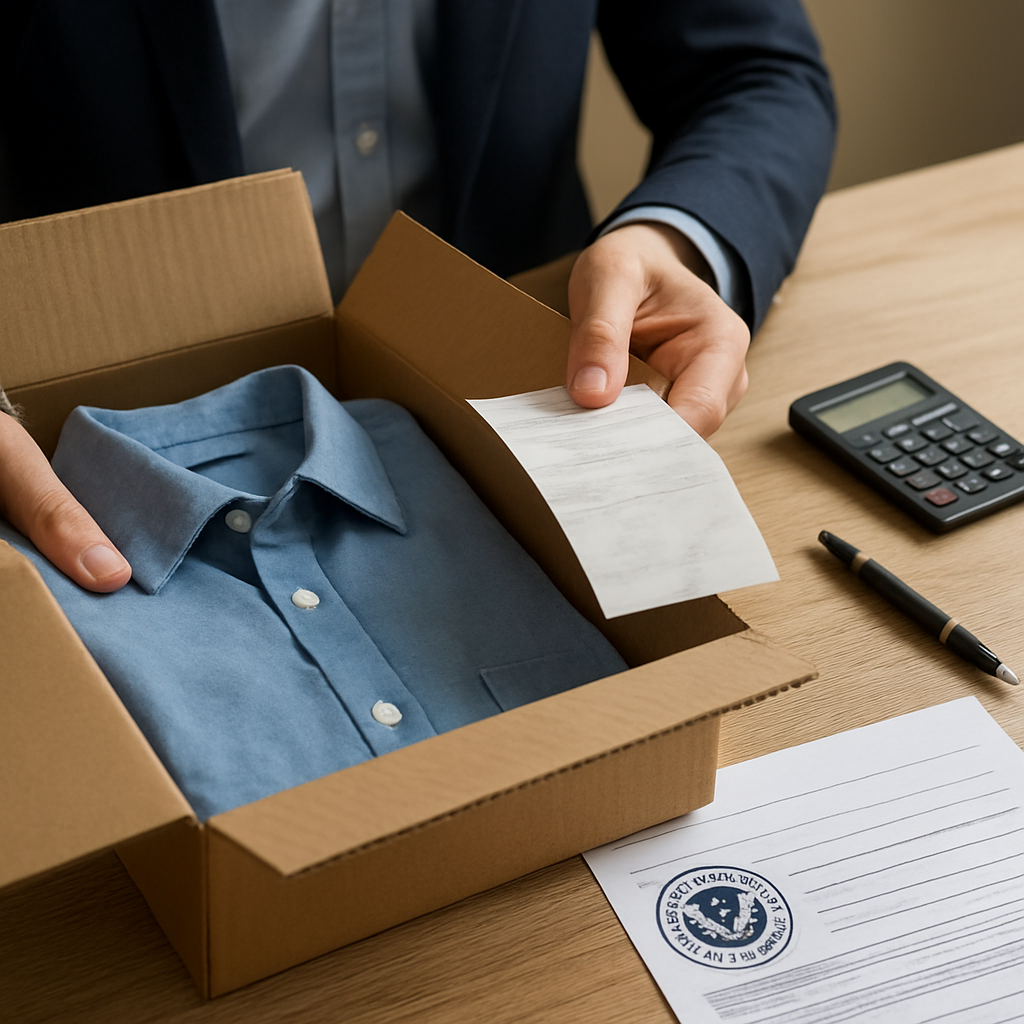
Yes, you may still have to pay customs on a returned item — but not always. Whether duty, tariff, or tax is charged depends on how the return is handled, where the goods are going, whether they qualify as returned merchandise or duty drawback, and whether you are trying to avoid a charge on the return shipment or recover customs charges already paid on the original import.
That distinction matters. In some cases, a returned item can move back across the border without being charged again. In others, the shipment may be assessed duty unless you can prove it qualifies for an exemption, a refund, or a drawback claim. If you need the broader background on why customs charges appear in the first place, see our guide on how customs charges work in the first place.
Do you have to pay customs on a returned item?
The short answer is: sometimes yes, sometimes no. A return is not automatically duty-free just because the item is going back to the seller, going back after rejection, or coming back after repair. Customs will usually care about what the goods are, where they came from, how they are classified, and why they are being moved again.
There are two separate questions:
- Will customs charge duty on the returned shipment itself?
- Can you get back duty, tariff, or taxes already paid on the original import?
Those are related, but they are not the same thing. A shipment might be exempt from duty on the way back in, yet still require a formal claim to recover charges already paid earlier. Likewise, a return might still be assessed if it does not meet the relevant exception or refund rules.
For example, the U.S. Customs and Border Protection guidance explains that American Goods Returned do not have to be declared in the usual way, but you must be prepared to prove the goods are AGR or pay Customs duty. In other words, “returned” does not automatically mean “free of duty.” The CBP Customs Duty Information page is clear that proof matters.
How customs duty refunds work in Canada
If the goods are connected to Canada, the official path is not simply to ask the courier for a refund. The Canada Border Services Agency has a formal process to request a refund or adjustment of duties and taxes paid on goods for personal use. That means the issue is usually handled as a claim after payment, not as an automatic cancellation of charges.
CBSA’s instructions are aimed at helping you decide whether your situation meets the conditions for a refund or reduction, and then follow the claim process. The important point is that a return has to meet CBSA’s conditions; you should not assume that every returned parcel will qualify. The CBSA page also makes clear that the process is claim-based, so you need to submit the required information rather than simply relying on the return label or the sender’s instructions. You can review the official process on the Government of Canada’s page: request a refund or adjustment of duties and taxes paid.
In practical terms, if you paid customs duties or taxes in Canada and later returned the goods, your next step is to check whether the situation fits CBSA’s refund rules before filing anything. The same applies whether you are dealing with a consumer return, a refused parcel, or a shipment that was sent back after import.
How U.S. duty drawback refunds work for returned or exported goods
In the United States, the main refund mechanism for eligible returned or re-exported goods is duty drawback. This is a refund programme for certain duties, fees, or taxes paid on imported goods that are later exported or destroyed under qualifying conditions. It is not a blanket refund for every return, but it can be valuable when the facts fit the rules.
According to UPS, duty drawback can allow recovery of up to 99% of certain duties, fees, and taxes on eligible goods that are later exported. Aprio likewise explains that drawback claims are filed with CBP and may involve specific forms and supporting records. The key point is that drawback is a formal customs claim, not an automatic reversal when a customer sends something back. See the UPS duty drawback guide and Aprio’s explanation of customs duty refunds.
Drawback is often relevant when:
- imported goods are later exported again,
- goods are returned unused, or
- goods are destroyed under qualifying customs conditions.
That is why a customer return does not automatically equal a drawback claim. The goods may need to be documented correctly, the claim must be eligible, and the importer has to follow the right process.
The basic claim steps in the U.S.
At a high level, the usual workflow is:
- Gather the import entry paperwork, invoices, and any evidence showing what happened to the goods.
- Identify whether the merchandise is eligible for drawback or another refund route.
- File the correct claim with CBP, using the required forms and documentation.
- Submit the claim electronically through ACE where applicable.
Aprio explains that a drawback claim may involve CBP Form 7551 and related documentation such as Form 7553 for notice of intent to export, destroy, or return goods. Kirton McConkie also notes that many drawback applications must be filed within five years of the date the item was imported into the United States. You can read more in the firm’s summary of the process at Tariff Refunds: Navigating the U.S. Customs and Border Protection’s Duty Drawback Program.
The practical message is simple: do not promise yourself a refund until you know you are eligible and have the paperwork to prove it.
What happens if you refuse to pay customs charges or the shipment is returned at customs?
This is one of the most common points of confusion. Refusing to pay customs charges does not necessarily make the charges disappear. What happens next depends on the carrier, the customs authority, and the status of the shipment.
There are several possible outcomes:
- Payment first, claim later: In some cases, the courier may still expect payment before releasing or processing the parcel, and you then pursue a refund claim separately.
- Return to sender: The shipment may be sent back if it is refused or not cleared.
- Delay: The parcel may sit in customs or carrier processing while the issue is sorted out.
- Abandonment or disposal: If no one resolves the charges or customs issue, the goods may eventually be treated as abandoned under the relevant procedures.
FedEx’s guidance on return shipments makes the same basic point: you may still need to pay duties and taxes, and then process a claim directly with the authorities if you want to reject the shipment or seek recovery. The exact sequence is not universal, so a refusal at delivery is not the same as a successful customs refund. See FedEx’s FAQ on return shipment refund of duties and taxes.
That distinction matters because “returned by customs” can mean several different things:
- customs has rejected the shipment,
- the recipient has refused to pay, or
- the goods were imported and later sent back as a return.
Each scenario can trigger a different operational outcome. You should check the carrier’s instructions and the customs rules for the route involved before assuming the parcel will simply be waved through or that the charge will vanish.
When returned goods can qualify for duty-free or reduced-duty treatment
Some returned goods do qualify for duty-free or reduced-duty treatment, but the exception must be proven. The two big examples that often matter are American Goods Returned and certain warranty or repair returns.
American Goods Returned
For U.S. imports, CBP explains that American Goods Returned do not have to be declared in the normal way, but you must be able to prove the articles are AGR. If you cannot prove that status, customs may assess duty. That means proof of origin and prior status is crucial.
This is an important distinction:
- Goods made in the U.S. and coming back: may qualify for AGR treatment if you can prove it.
- Foreign-made goods returning to the U.S.: may be treated differently and may still attract duty depending on the facts.
In other words, the label “returned item” alone is not enough.
Warranty and faulty-goods returns
Warranty returns are another common trap. A faulty item being sent back for repair, replacement, or warranty service may still be subject to duty depending on how customs rules apply and how the item is valued or classified. You should not assume that a warranty return is automatically duty-free.
That is why proof and documentation matter. If the goods were previously exported, repaired, replaced, or re-imported, customs may want to see evidence showing the item’s origin, condition, and why it is returning. This is also why some returns that look straightforward in commercial terms can still be treated differently for customs purposes.
For a closer look at how customs authorities treat U.S.-made items coming back, see the CBP guidance above, and for a practical discussion of return scenarios, see the article on U.S. made goods returned not always duty free. For Canada-to-U.S. return scenarios, BorderBuddy’s overview of returns from Canada to the U.S. and customs treatment is also useful.
Who can claim the refund and who is allowed to submit it?
Another practical question is who actually has standing to file the claim. In the U.S. context, the refund or drawback claim is generally tied to the importer of record or the authorised customs broker who filed the entry. That means the buyer, seller, or return sender cannot always just submit a claim informally and expect customs to pay it.
This matters when the order was imported through a marketplace or by a freight intermediary. The person who paid the customer-facing invoice may not be the same person who is legally allowed to file the customs refund claim. If the import paperwork was filed by a broker on behalf of the importer of record, the broker or importer may need to drive the claim process.
So if you are wondering whether a “customs refund programme” exists that any customer can use, the answer is more nuanced: the relevant programme exists, but the party who can file is usually the one connected to the import entry or its authorised representative.
If you bought from Amazon or another marketplace, do import fees get refunded on returns?
Marketplace policies are separate from customs law. If you bought from Amazon, eBay, or another platform, the platform may have its own rules about import fees, duties, and return refunds. But that does not replace the customs authority’s refund process.
In practice, you need to separate two questions:
- Will the seller or platform refund the import fee under its return policy?
- Can you recover duties or taxes through the customs authority’s official process?
Those answers may be different. A marketplace could agree to reimburse import charges as part of its commercial return policy, while customs refund eligibility still depends on the official rules and the import paperwork. So before assuming the import fee will be refunded, check the order summary, the platform’s return terms, and whether the charge was collected by the marketplace, the courier, or customs.
This is especially important if the charge was prepaid at checkout. A commercial refund from the platform is not the same thing as a customs refund or drawback claim, and the two should not be confused.
What you should do next if your item is being returned
If your shipment is being returned, rejected, or sent back after import, the best next step is to work out which of these situations applies:
| Situation | What to check | Likely next step |
|---|---|---|
| Refused at delivery | Who collected the charges and whether the carrier wants payment first | Check the carrier process and ask whether a separate claim is needed |
| Returned to seller after import | Whether the goods qualify for drawback, refund, or adjustment | Gather import documents and review the refund rules |
| U.S. goods coming back | Whether you can prove AGR status | Keep proof of origin ready for CBP |
| Warranty or repair return | How the goods are classified and valued | Do not assume duty-free treatment; check the customs rules |
| Canada personal-use return | Whether CBSA refund conditions are met | Follow the CBSA refund or adjustment process |
If you suspect the original import duty was simply overpaid rather than tied to a return, compare your situation with our guide to a refund for excess customs duty. That is a related but different path from duty drawback on returned goods.
The bottom line
Do I have to pay customs for a returned item? Sometimes yes, sometimes no. The answer depends on whether the goods qualify for an exemption, a drawback claim, or a refund/adjustment process, and on who filed the original import entry. In Canada, there is a formal CBSA refund route for eligible duties and taxes. In the United States, duty drawback may allow recovery of qualifying charges on goods later exported or destroyed, often with detailed paperwork and a filing deadline. But none of these rules mean every returned item is duty-free.
If you are dealing with a specific return, the safest approach is to identify the route, preserve the paperwork, and check whether you are looking at a carrier payment issue, a customs refund claim, or an exception such as American Goods Returned or a warranty return.