How to Apply for an MC Number Online: Requirements, Cost, and Timing
 Import Export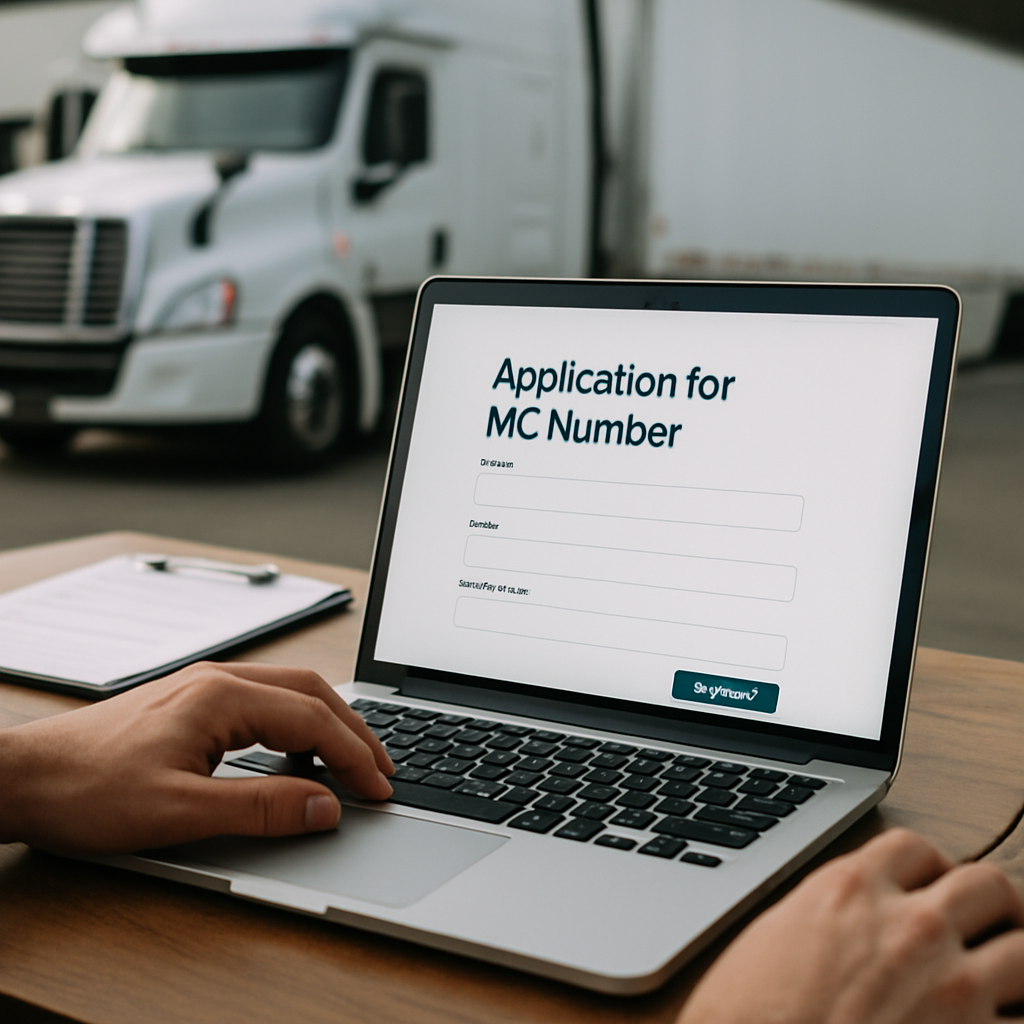
If you want to know how to apply for an MC number, the short answer is this: you apply for FMCSA operating authority through the official online registration process, pay the required filing fee, and then complete the post-filing steps that make the authority active. There is not a separate standalone “MC-number-only” form; the MC number is tied to operating authority, which is what many for-hire interstate carriers need before they can legally haul freight or passengers across state lines.
For the official starting point, the FMCSA’s registration resources explain the main online path, and FMCSA’s guidance on getting operating authority confirms that the process begins online and includes a $300 filing fee.
How to apply for an MC number online
To apply for an MC number online, you use the FMCSA registration system to file for operating authority. In practical terms, that means you log into the official FMCSA environment, choose the right authority type for your business, submit the application, and then complete whatever follow-up filings are required for activation. The process is designed for online filing, not a separate offline MC-number application that functions on its own.
If you are looking at newer portal language, some current guidance refers to FMCSA’s Motus system. The safest way to think about this is simple: use the official FMCSA registration path, follow the prompts for operating authority, and make sure every business detail matches across your filings. The exact interface may change, but the purpose does not: you are filing for federal operating authority.
What happens when you file
After submission, you should not assume you are immediately allowed to operate. Filing the application and having active authority are two different things. In many cases, your record will show a pending status until FMCSA receives and accepts the required post-application items. That is why carriers often see the application as only the first stage, not the finish line.
A practical way to think about the process is:
- Start the official FMCSA online application.
- Select the correct authority type for your operation.
- Submit the filing and pay the fee.
- Complete post-filing requirements such as insurance and BOC-3.
- Verify that your authority is active before hauling freight.
What is needed to get an MC number?
The main things you should have ready are your legal business information and the details that define your operation. At a minimum, prepare your legal business name, business address, EIN, cargo or operation type, and the authority type you need. Just as important, the information must match across filings. Name or address mismatches can slow things down or cause your application to stay pending.
MC authority is generally relevant for for-hire interstate operations. In plain English, that means if you transport regulated freight or passengers across state lines for compensation, you are far more likely to need MC authority than a carrier operating only under identification requirements. USDOT and MC are not the same thing: the USDOT number is used for safety and compliance tracking, while MC authority gives legal operating permission for qualifying interstate for-hire work.
If you are still working out whether you need a USDOT number as well, see our guide on how to apply for a USDOT number. That distinction matters because many carriers need both credentials, but they serve different purposes.
Who generally needs MC authority
- For-hire interstate motor carriers transporting freight for compensation
- Carriers transporting regulated commodities across state lines
- Passenger carriers that fall under FMCSA operating authority rules
- Many owner-operators and small fleets hauling for brokers or shippers
What to check before you start
- Legal business name exactly as it appears on formation and tax records
- Business address and contact information
- EIN and related company details
- Type of operation you will perform
- Type of cargo or commodity you plan to haul
- Payment method for the filing fee
How much does an MC number cost, and can you get one for free?
The official FMCSA filing fee for MC authority is $300. FMCSA states that the online registration process requires a credit card, so if you are asking whether you can get a free MC number, the answer is no based on the official filing process described in the supplied sources. The application itself is not free.
That said, the $300 fee is only the government filing fee. It is not the same thing as any service fee charged by a third party, and it is not a full estimate of every cost a new carrier may face. Depending on your operation, you may also need to budget for post-filing compliance items such as insurance filings, BOC-3 processing, and UCR when required. Those are separate from the base MC filing fee.
If you are comparing the cost of a DOT number and MC number together, keep the distinction clear: the MC fee is the operating authority filing fee, while the DOT registration is a separate process that may be needed as well. The official sources supplied here do not support a single universal all-in price for every carrier, because the total depends on what filings your business actually needs.
| Item | What it means | Cost status |
|---|---|---|
| MC authority filing | Application for federal operating authority | FMCSA filing fee: $300 |
| USDOT number | Safety and compliance identifier | Separate process; may have different cost implications |
| Insurance filings | Required to activate authority in many cases | Varies by insurer and operation |
| BOC-3 | Process agent designation | Varies by provider |
| UCR | Required when applicable | Varies by jurisdiction and vehicle count |
So, if your question is “How much does it cost for an MC number?”, the clean answer is that the official FMCSA filing fee is $300. If your question is “How much does it cost to get a DOT number and MC number?”, the honest answer is that the total depends on your exact filing needs and any required compliance items after the application.
How long does it take to get an MC number?
The timing has two parts: when you file and when the authority becomes active. Filing online can be quick, but active authority is not the same as a filed application. FMCSA must process the filing, and required post-application items must be accepted before your authority is usable. That is why it is better to ask not only “How long does it take to get an MC number?” but also “What still needs to be completed before I can operate?”
In the sources supplied, there is no single guaranteed timeline that applies to every carrier. The practical rule is that your authority remains pending until the required pieces are in place. If your status is pending for longer than expected, the issue is often a missing filing, a mismatch in business information, or an authority-selection problem rather than a simple delay in processing.
Pending versus active
- Pending usually means the application has been filed but something is still outstanding or not yet accepted.
- Active means the authority is in effect and you can rely on it for operating purposes, subject to the rules of your operation.
Do not load freight or assume you are ready to operate just because the application was submitted. Verify the status first.
What to do after you submit the MC application
Submitting the MC application is only part of the process. The sources consistently show that authority does not become active until post-filing requirements are handled properly. The most important follow-up items are insurance filings and BOC-3 designation, and UCR when required for your operation.
This is the point where many new carriers get stuck. They file the application, see that the MC exists in the system, and assume they are ready to haul. In reality, active authority depends on the FMCSA receiving and accepting the required compliance filings. If those filings are missing or incorrect, the authority can remain pending.
Common post-filing items
- Insurance filings: Often required before authority becomes active.
- BOC-3: Process agent designation that supports operating authority.
- UCR: Required when applicable, depending on your operation.
A good habit is to verify your records and status before accepting your first load. The fact that you filed is not the same as being cleared to operate.
Applying for DOT and MC number together
Many readers search for both credentials at once because the setup often happens together. The important thing to remember is that DOT identification and MC authority are different, even though they are frequently part of the same business launch sequence. The DOT number tracks the carrier for safety and compliance purposes. The MC authority is what grants operating permission for certain for-hire interstate operations.
In a typical combined workflow, you first obtain the USDOT number if your operation needs one, then you apply for MC authority through FMCSA’s online registration process, and then you complete the follow-up filings that activate the authority. That sequence helps reduce errors and avoids situations where you have one number but not the operating permission you actually need.
For a fuller walkthrough of the DOT side of the process, the related guide on how to apply for a USDOT number explains the identification step in more detail. Used together, the two guides give you the full picture of the filing path and the compliance distinction.
Why the order matters
- You need the correct business identity before filing.
- You need the right authority type so the application matches your operation.
- You need insurance and process-agent filings accepted so the authority can move to active.
- You should verify status before dispatching your first load.
Where to apply for an MC number on FMCSA
The official place to start is FMCSA’s registration environment. If you are asking “Apply for MC Number FMCSA,” the answer is to use the agency’s own registration resources rather than relying on an unofficial shortcut. The official pages you should know are the FMCSA registration hub and the FMCSA page for getting operating authority.
Those pages are useful because they point you to the government process itself, where the filing is made and where your authority status is tracked. If you are using a service provider, that may help with paperwork or compliance support, but the actual MC authority is still issued through FMCSA.
Simple checklist before you begin
- Confirm whether your operation needs MC authority, a USDOT number, or both.
- Gather legal business details and matching contact information.
- Decide the correct authority type for your freight or passenger operation.
- Have a payment method ready for the $300 filing fee.
- Plan for insurance and BOC-3 after filing.
In other words, the safest answer to “how to apply for an MC number” is: use FMCSA’s online registration process, file the correct authority, pay the fee, and complete the activation steps before operating.
Quick answers to the most common questions
What is needed to get an MC number?
You need accurate legal business information, the correct authority type, operation and cargo details, and a payment method for the filing fee. If your business is a for-hire interstate carrier, MC authority is often part of the required setup.
How much does it cost for an MC number?
The official FMCSA filing fee is $300.
How long does it take to get an MC number?
There is no single guaranteed timeline in the supplied sources. The authority becomes active only after FMCSA processes the filing and receives the required follow-up items such as insurance and BOC-3, when applicable.
Can I get a free MC number?
No. The official filing fee is $300, and the process requires payment.
Do I need both DOT and MC?
Often, yes, but not always. USDOT identifies the carrier for safety and compliance tracking, while MC authority grants operating permission for certain interstate for-hire work. Whether you need both depends on your operation.
If you are building a trucking or freight business, the key is to treat the MC filing as one step in a larger compliance sequence. File online through FMCSA, get the authority type right, complete the required post-filing items, and verify that the authority is active before you move freight.